Kirjojen hintavertailu. Mukana 12 016 292 kirjaa ja 12 kauppaa.

Kirjahaku

Etsi kirjoja tekijän nimen, kirjan nimen tai ISBN:n perusteella.

1000 tulosta hakusanalla Todd M. Mitchell

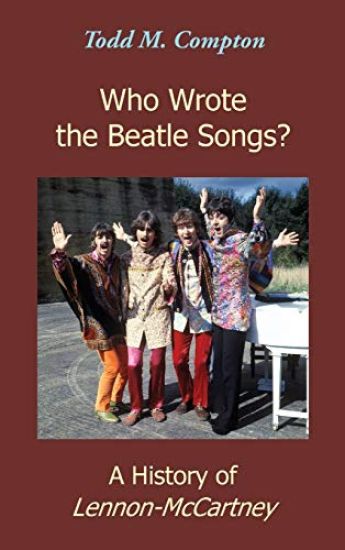
Who Wrote the Beatle Songs?: A History of Lennon-McCartney
Who Wrote the Beatle Songs: A History of Lennon-McCartney is a book in the tradition of Mark Lewisohn's The Beatles Recording Sessions, Walter Everett's The Beatles as Musicians, Ian MacDonald's Revolution in the Head, and Tim Riley's Tell Me Why --it surveys all of the songs by the Beatles. However, unlike those books, Who Wrote the Beatle Songs concentrates solely on songwriting. It also has a strong biographical element: I tell the fascinating story of John Lennon and Paul McCartney as songwriters.The Beatles are arguably the most influential group in the history of popular music, and the single most important element in their success was their songwriting. Unlike rock stars such as Elvis, Jimi Hendrix and Eric Clapton, they were songwriters first and performers second. They have been widely misunderstood because the history of their songwriting has not been examined carefully. Setting aside the songs of Harrison and Starr at this time, all their songs were attributed to "Lennon-McCartney," which suggests 50-50 songwriting ownership, in the tradition of George and Ira Gershwin. In fact, most of the Beatle songs were dominated by Paul or by John, and some were written entirely by one or the other (such as John's "Across the Universe" or Paul's "Hey Jude").After the Beatles breakup, Lennon and McCartney have given a number of interviews discussing who wrote which Beatle songs. Unfortunately, these interviews are often contradictory, a natural result of trying to remember events that took place many years (sometimes decades) earlier. John had a tendency to emphasize individual authorship in his interviews, while Paul frequently remembered collaboration (though often "finishing" collaboration, after one writer had substantially begun the song). To evaluate such complex, contradictory evidence, I've tried to use standard historical tools to come to a valid judgment on who wrote each Beatle song.The result is the first comprehensive, detailed assessment of who wrote the Beatle songs. Every chapter is devoted to a Beatles album, and its attendant singles. I give a careful attribution for every song and tell the story of how it was written. Then I evaluate conflicts or unities in the evidence. So this book is full of great stories--how John wrote "She Said She Said" after he heard Peter Fonda tell of a near-death experience at a party with the Byrds in L.A.; how Paul wrote "Yesterday" in his sleep, then sang it for months with the lyrics "Scrambled eggs--Oh baby, how I love your legs"; how George's mother, Louise French Harrison, filled in a gap in "Piggies" with "What they need's a damn good whacking ".When this survey is complete, we can draw conclusions about the individual songwriting talents of Paul, John and George, and can reject many widespread stereotypes about them. One clich is that John specialized in rock while Paul produced ballads. Actually, both of them wrote strong rock songs (like Paul's "Helter Skelter") and strong quiet songs (like John's "Goodnight"). Another common misapprehension is that the Beatles' best songs were based on close collaboration; actually, as these two songwriters progressed in maturity they wrote together less. Paradoxically, the songwriting flourished as the collaboration decreased.John became increasingly interested in lyrics, while Paul was always obsessively devoted to music (though they both wrote great music and lyrics at times). Who Wrote the Beatle Songs will celebrate and give a wealth of insight into the idiosyncratic brilliance of both of the Beatles' two main songwriters.
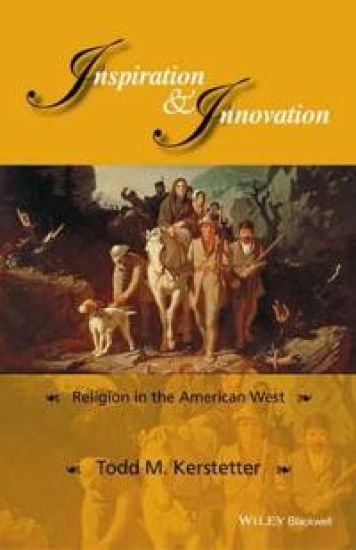
Inspiration and Innovation

Inspiration and Innovation

Todd M. Kerstetter

John Wiley Sons Inc
2014
sidottu
Covering more than 200 years of history from pre-contact to the present, this textbook places religion at the center of the history of the American West, examining the relationship between religion and the region and their influence on one another. A comprehensive examination of the relationship between religion and the American West and their influence on each other over the course of more than 200 yearsDiscusses diverse groups of people, places, and events that played an important historical role, from organized religion and easily recognized denominations to unorganized religion and cultsProvides straightforward explanations of key religious and theological terms and conceptsWeaves discussion of American Indian religion throughout the text and presents it in dialogue with other groupsEnriches our understanding of American history by examining key factors outside of traditional political, economic, social, and cultural domains
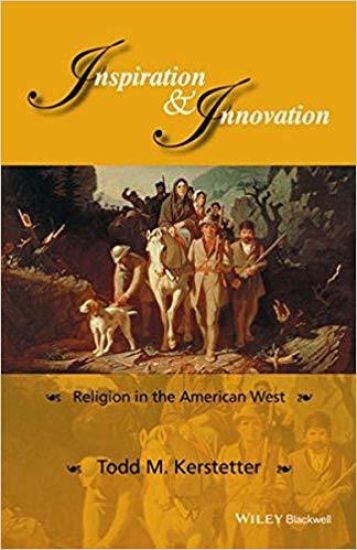
Inspiration and Innovation

Inspiration and Innovation

Todd M. Kerstetter

John Wiley Sons Inc
2014
nidottu
Covering more than 200 years of history from pre-contact to the present, this textbook places religion at the center of the history of the American West, examining the relationship between religion and the region and their influence on one another. A comprehensive examination of the relationship between religion and the American West and their influence on each other over the course of more than 200 yearsDiscusses diverse groups of people, places, and events that played an important historical role, from organized religion and easily recognized denominations to unorganized religion and cultsProvides straightforward explanations of key religious and theological terms and conceptsWeaves discussion of American Indian religion throughout the text and presents it in dialogue with other groupsEnriches our understanding of American history by examining key factors outside of traditional political, economic, social, and cultural domains
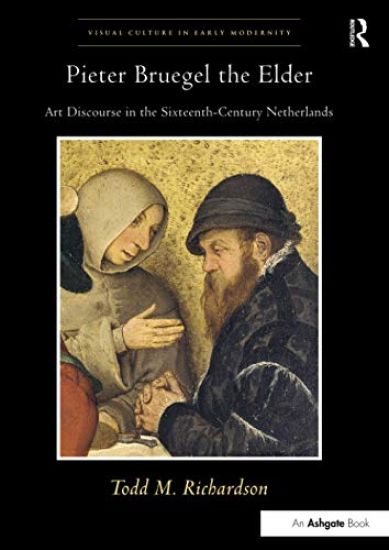
Pieter Bruegel the Elder

Pieter Bruegel the Elder

Todd M. Richardson

Routledge
2016
nidottu
Pieter Bruegel the Elder: Art Discourse in the Sixteenth-Century Netherlands examines the later images by Bruegel in the context of two contemporary discourses - art theoretical and convivial. The first concerns the purely visual interactions between artists and artistic practices that unfold in pictures, which often transgress the categorical boundaries modern scholars place on their work, such as sacred and profane, antique and modern, and Italian and Northern. In this context, the images themselves - those of Bruegel, his contemporaries and predecessors - make up the primary source material from which the author argues. The second deals with the dialogue that occurred between viewers in front of pictures and the way in which pictorial strategies facilitated their visual experience and challenged their analytical capabilities. In this regard, the author expands his base of primary sources to include convivial texts, dialogues and correspondences, and texts by rhetoricians and Northern humanists addressing art theoretical issues. Challenging the conventional wisdom that the artist eschewed Italianate influences, this study demonstrates how Bruegel's later peasant paintings reveal a complicated artistic dialogue in which visual concepts and pictorial motifs from Italian and classical ideas are employed for a subject that was increasingly recognized in the sixteenth century as a specifically Northern phenomenon. Similar to the Dutch rhetorician societies and French Pléiade poets who cultivated the vernacular language using classical Latin, the function of this interpictorial discourse, the author argues, was not simply to imitate international trends, a common practice during the period, but to use it to cultivate his own visual vernacular language. Although the focus is primarily on Bruegel's later work, the author's conclusions are applied to sketch a broader understanding of both the artist himself and the vibrant artistic dialogue occurring in the Netherl
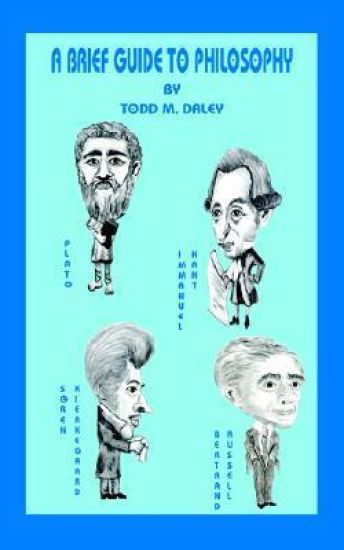
A Brief Guide to Philosophy

A Brief Guide to Philosophy

Todd M. Daley

AuthorHouse
2004
pokkari
Philosophy has been viewed as an obscure, difficult subject with no connection to the real world. This book presents a clear, concise survey the basic ideas of the major philosophers of western civilization starting form the ancient Greeks, through the philosophies of the middle ages and the renaissance to the philosophy of the modern era. The various schools of philosophy - rational, irrational, idealist, empirical, dialectical, existentialist, and analytic - are described in understandable language. Emphasis is placed on the big philosophic questions: What is ultimate reality? What is good and evil? What can we know with certainty? What is the meaning of life? Grappling with such questions helps us to conduct ourselves in this troubled world.