Kirjojen hintavertailu. Mukana 11 244 527 kirjaa ja 12 kauppaa.

Kirjahaku

Etsi kirjoja tekijän nimen, kirjan nimen tai ISBN:n perusteella.

1000 tulosta hakusanalla Traci

Tracing Tangueros

Tracing Tangueros

Link Kacey; Wendland Kristin

Oxford University Press Inc
2016
nidottu
Tracing Tangueros offers an inside view of Argentine tango music in the context of the growth and development of the art form's instrumental and stylistic innovations. Rather than perpetuating the glamorous worldwide conceptions that often only reflect the tango that left Argentina nearly 100 years ago, authors Kacey Link and Kristin Wendland trace tango's historical and stylistic musical trajectory in Argentina, beginning with the guardia nueva's crystallization of the genre in the 1920s, moving through tango's Golden Age (1925-1955), and culminating with the "Music of Buenos Aires" today. Through the transmission, discussion, examination, and analysis of primary sources currently unavailable outside of Argentina, including scores, manuals of style, archival audio/video recordings, and live video footage of performances and demonstrations, Link and Wendland frame and define Argentine tango music as a distinct expression possessing its own musical legacy and characteristic musical elements. Beginning by establishing a broad framework of the tango art form, the book proceeds to move through twelve in-depth profiles of representative tangueros (tango musicians) within the genre's historical and stylistic trajectory. Through this focused examination of tangueros and their music, Link and Wendland show how the dynamic Argentine tango grows from one tanguero linked to another, and how the composition techniques and performance practices of each generation are informed by that of the past.
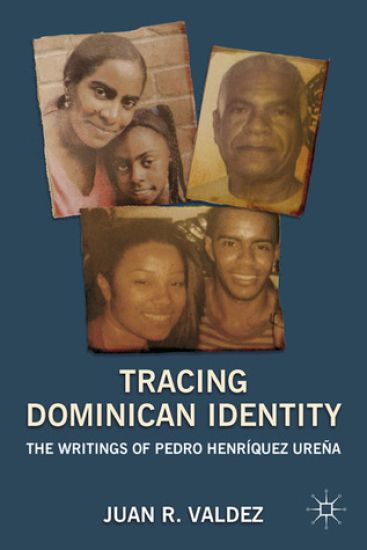
Tracing Dominican Identity

Tracing Dominican Identity

J. Valdez

Palgrave Macmillan
2011
sidottu
The author analyzes and discusses the socio-historical meanings and implications of Pedro Henríquez Ureña's (1884-1946) writings on language. This important twentieth century Latin American intellectual is an unavoidable reference in Hispanic Linguistics and Cultural Studies.
Tracing the Aesthetic Principle in Conrad's Novels
Tracing the Aesthetic Principle in Conrad s Novels sets out to revolutionize our reading of Joseph Conrad s works and challenge the critical heritage that accompanies them. Levin identifies the emergence of an aesthetic principle in Conrad s novels and theorizes that principle through the concept of the otherwise present, which Levin defines as that which provokes desire and perpetuates it by barring its appeasement. This book offers a detailed analysis of Lord Jim, Nostromo, Under Western Eyes, The Arrow of Gold and Suspense, alongside a poststructuralist-inspired explication of Conrad s literary vision and its defining principle. This study is an important source for both the newcomers and the initiated to Conrad s oeuvre.
Tracing the History of Eukaryotic Cells

Tracing the History of Eukaryotic Cells

Betsy Dexter Dyer; Robert Allan Obar

Columbia University Press
1994
sidottu
The eminent historian Richard Bushman here reflects on his faith and the history of his religion. By describing his own struggle to find a basis for belief in a skeptical world, Bushman poses the question of how scholars are to write about subjects in which they are personally invested. Does personal commitment make objectivity impossible? Bushman explicitly, and at points confessionally, explains his own commitments and then explores Joseph Smith and the Book of Mormon from the standpoint of belief.Joseph Smith cannot be dismissed as a colorful fraud, Bushman argues, nor seen only as a restorer of religious truth. Entangled in nineteenth-century Yankee culture -- including the skeptical Enlightenment -- Smith was nevertheless an original who cut his own path. And while there are multiple contexts from which to draw an understanding of Joseph Smith (including magic, seekers, the Second Great Awakening, communitarianism, restorationism, and more), Bushman suggests that Smith stood at the cusp of modernity and presented the possibility of belief in a time of growing skepticism. When examined carefully, the Book of Mormon is found to have intricate subplots and peculiar cultural twists. Bushman discusses the book's ambivalence toward republican government, explores the culture of the Lamanites (the enemies of the favored people), and traces the book's fascination with records, translation, and history. Yet Believing History also sheds light on the meaning of Joseph Smith and the Book of Mormon today. How do we situate Mormonism in American history? Is Mormonism relevant in the modern world? Believing History offers many surprises. Believers will learn that Joseph Smith is more than an icon, and non-believers will find that Mormonism cannot be summed up with a simple label. But wherever readers stand on Bushman's arguments, he provides us with a provocative and open look at a believing historian studying his own faith.
Tracing the Sign of the Cross

Tracing the Sign of the Cross

Marian Ronan

Columbia University Press
2009
sidottu
Following World War II, millions of U.S. Catholics were poised to attain the American dream, while at Vatican Council II, the liberal vision of the church seemed finally to triumph. Yet by the end of the twentieth century, American Catholicism was in crisis, plagued by grave ideological divisions; a dwindling pool of priests, nuns, and monks; and declining financial resources. What went wrong? In Tracing the Sign of the Cross, Marian Ronan identifies the roots of this crisis in an inability on the part of American Catholics to mourn a variety of losses suffered in the last third of the twentieth century. Drawing on the work of four writers with distinctively Catholic imaginations, Ronan argues that endless battles over sexuality and gender in particular have kept American Catholics from confronting these losses, thus jeopardizing the future of Catholicism. The writings of James Carroll, the archetypal liberal American Catholic, form the basis of Ronan's exploration of the church in the decades following Vatican II. Carroll's writings, especially his memoir, An American Requiem, seem to embody the very engagement with loss Ronan calls for-yet a highly gendered pattern of resistance to mourning emerges throughout Carroll's writing. Ronan discerns a similar Catholic "inability to mourn" in the early works of the novelist Mary Gordon, the feminist philosopher of science Donna Haraway, and the essayist Richard Rodriguez. While Gordon's characters gradually engage their profound losses, Haraway's female cyborg dons a crown of thorns, and Rodriguez confronts his own gay/brown identity-contributing in all cases to a new and chastened vision of the church. Framed by the author's own personal experience, Tracing the Sign of the Cross is an intimate and persuasive account of Catholic possibility in a postmodern world.
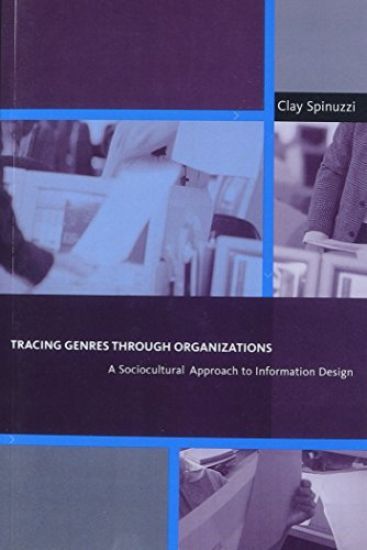
Tracing Genres through Organizations
A sociocultural study of workers' ad hoc genre innovations and their significance for information design.In Tracing Genres through Organizations, Clay Spinuzzi examines the everyday improvisations by workers who deal with designed information and shows how understanding this impromptu creation can improve information design. He argues that the traditional user-centered approach to design does not take into consideration the unofficial genres that spring up as workers write notes, jot down ideas, and read aloud from an officially designed text. These often ephemeral innovations in information design are vital components in a genre ecology (the complex of artifacts mediating a given activity). When these innovations are recognized for what they are, they can be traced and their evolution as solutions to recurrent design problems can be studied. Spinuzzi proposes a sociocultural method for studying these improvised innovations that draws on genre theory (which provides the unit of analysis, the genre) and activity theory (which provides a theory of mediation and a way to study the different levels of activity in an organization).After defining terms and describing the method of genre tracing, the book shows the methodology at work in four interrelated studies of traffic workers in Iowa and their use of a database of traffic accidents. These workers developed an ingenious array of ad hoc innovations to make the database better serve their needs. Spinuzzi argues that these inspired improvisations by workers can tell us a great deal about how designed information fails or succeeds in meeting workers' needs. He concludes by considering how the insights reached in studying genre innovation can guide information design itself.
Tracing Her Stolen Identity / Colorado K-9 Rescue

Tracing Her Stolen Identity / Colorado K-9 Rescue

Katie Mettner; Kathleen Donnelly

HARPERCOLLINS PUBLISHERS
2025
nidottu
Includes 2 titles! Perfect for fans of: ?? Romance in uniform ?? Forced proximity ?? Second chance Trust is their only weapon Skylar Sullivan’s identity has been erased, the first step in a plot to frame her for crimes she couldn't commit from her wheelchair. Out of options, she seeks help from the one person she still trusts: her ex, cybersecurity expert Reece Palmer. He failed Sky once, but this time, he vows to eliminate the threat before she disappears forever. He’d risk anything to bring her home… Mckenna Parker’s worst nightmare has come true—her kidnapper is on parole and coming for her. Now an FBI victim specialist, she and her crisis canine are assigned to work with FBI agent Evan Knox to find two missing local girls. Neither is looking for love, but when Mckenna vanishes, Evan is ready to brave the danger at any cost…
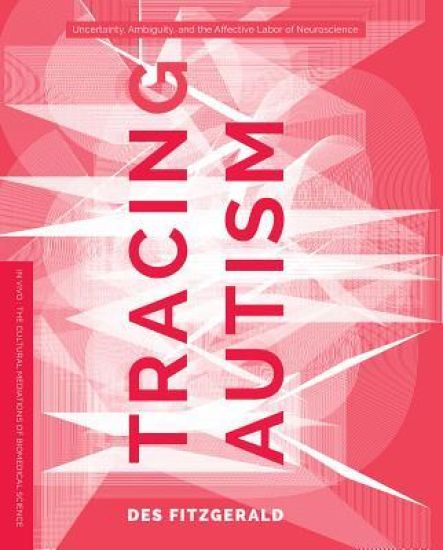
Tracing Autism

Tracing Autism

Des Fitzgerald

University of Washington Press
2017
sidottu
In Tracing Autism, Des Fitzgerald offers an up-close account of the search for a neurological explanation of autism. As autism has gained cultural prominence with more diagnoses and more controversy, its biological causes remain elusive.Through in-depth interviews with neuroscientists, psychologists, and psychiatrists, Fitzgerald examines what it means to do scientific research in the ambiguous terrain of autism research, a field marked by shifting horizons of uncertainty and ambivalence. He draws out how autism scientists talk and feel their way through their research, demonstrating its profoundly affective character, and expanding our understanding of what is at stake in the new brain sciences.
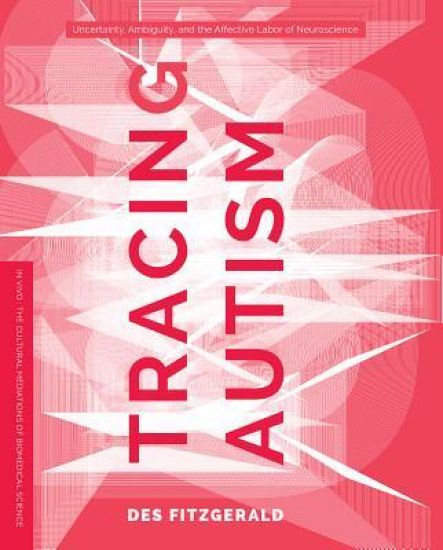
Tracing Autism

Tracing Autism

Des Fitzgerald

University of Washington Press
2017
pokkari
In Tracing Autism, Des Fitzgerald offers an up-close account of the search for a neurological explanation of autism. As autism has gained cultural prominence with more diagnoses and more controversy, its biological causes remain elusive.Through in-depth interviews with neuroscientists, psychologists, and psychiatrists, Fitzgerald examines what it means to do scientific research in the ambiguous terrain of autism research, a field marked by shifting horizons of uncertainty and ambivalence. He draws out how autism scientists talk and feel their way through their research, demonstrating its profoundly affective character, and expanding our understanding of what is at stake in the new brain sciences.
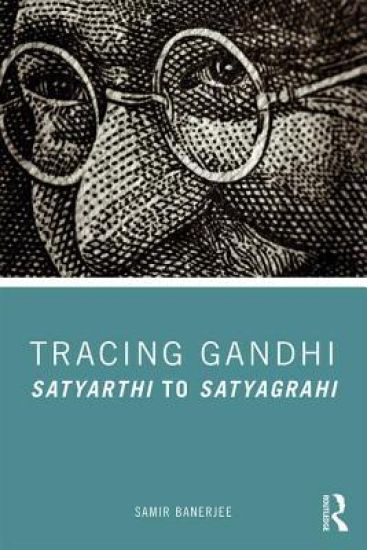
Tracing Gandhi

Tracing Gandhi

Samir Banerjee

Routledge India
2019
sidottu
This book traces the journey of Mahatma Gandhi, from being a simple and truth-seeking human being, a satyarthi, to a committed, conscious and social human being, a satyagrahi. It specifically looks at this critical transformation during the time Gandhi was in South Africa. The central argument of the book is that Gandhi evolved from being a satyarthi to a satyagrahi in South Africa. Subsequently in India, he consolidated his orientation with an emphasis on praxis, by developing his ideas as instruments for social and individual struggles. Marked by a series of events, this period was an intense quest of self-realization and understanding, and shows his journey from being Mohandas Karamchand Gandhi to being Mahatma Gandhi.The book discusses various elements of Gandhian thought and praxis – morality, wisdom, non-violence, truth, social justice, dharma, trusteeship, education, sarvodaya, Hind Swaraj, swadeshi, and social service – and interprets the relevance of Gandhi’s thought in the modern world by highlighting its unique significance for social transformation and change.Lucid and accessible, the book will be useful to scholars and researchers of Gandhi studies, Indian political thought, modern Indian history, and political studies.
Tracing Topographies: Revisiting the Concentration Camps Seventy Years after the Liberation of Auschwitz
Seventy years on from the liberation of Auschwitz, the contributions collected in this volume each attempt, in various ways and from various perspectives, to trace the relationship between Nazi-occupied spaces and Holocaust memory, considering the multitude of ways in which the passing of time impacts upon, or shapes, cultural constructions of space. Accordingly, this volume does not consider topographies merely in relation to geographical landscapes but, rather, as markers of allusions and connotations that must be properly eked out. Since space and time are intertwined, if not, in fact, one and the same, an investigation of the spaces – the locations of horror – in relation to the passing of time might provide some manner of comprehension of one of the most troubling moments in human history. It is with this understanding of space, as fluid sites of memory that the contributors of this volume engage: these are the kind of shifting topographies that we are seeking to trace. This book was originally published as a special issue of Holocaust Studies: A Journal of Culture and History.
Tracing Gandhi

Tracing Gandhi

Samir Banerjee

Routledge India
2019
nidottu
This book traces the journey of Mahatma Gandhi, from being a simple and truth-seeking human being, a satyarthi, to a committed, conscious and social human being, a satyagrahi. It specifically looks at this critical transformation during the time Gandhi was in South Africa. The central argument of the book is that Gandhi evolved from being a satyarthi to a satyagrahi in South Africa. Subsequently in India, he consolidated his orientation with an emphasis on praxis, by developing his ideas as instruments for social and individual struggles. Marked by a series of events, this period was an intense quest of self-realization and understanding, and shows his journey from being Mohandas Karamchand Gandhi to being Mahatma Gandhi.The book discusses various elements of Gandhian thought and praxis – morality, wisdom, non-violence, truth, social justice, dharma, trusteeship, education, sarvodaya, Hind Swaraj, swadeshi, and social service – and interprets the relevance of Gandhi’s thought in the modern world by highlighting its unique significance for social transformation and change.Lucid and accessible, the book will be useful to scholars and researchers of Gandhi studies, Indian political thought, modern Indian history, and political studies.
Tracing Indo-Russian Diplomatic History
The India-Russia relationship has been through a number of phases since its formal establishment in April 1947. Prime Minister Nehru’s strategic vision led him to seek diplomatic relations with the Soviet Union (USSR) even before India attained Independence. The enthusiastic Soviet response launched a relationship which has had some unique features in the past seventy-two years. The detailed history of the India-Russia relationship presented in this volume highlights the continued relevance of many of the factors that led to a close India-Russia bonding, even while identifying the slip roads into which the partnership has occasionally drifted. Politics evolves continuously, but geography remains constant. The India-Russia relationship has a mutually-recognized geopolitical logic. They have common concerns in the shared neighbourhood of West and Central Asia. Like India, Russia has had a complex relationship with China. In the quest for a multi-polar world, in which every pole seeks to protect its core interests and promote its aspirations, Russia and India, as this comprehensive volume notes, will remain staunch partners in the foreseeable future. Please note: Taylor & Francis does not sell or distribute the Hardback in India, Pakistan, Nepal, Bhutan, Bangladesh and Sri Lanka
Tracing the Trails in the Medieval World
Every human being knows that we are walking through life following trails, whether we are aware of them or not. Medieval poets, from the anonymous composer of Beowulf to Marie de France, Hartmann von Aue, Gottfried von Strassburg, and Guillaume de Lorris to Petrarch and Heinrich Kaufringer, predicated their works on the notion of the trail and elaborated on its epistemological function. We can grasp here an essential concept that determines much of medieval and early modern European literature and philosophy, addressing the direction which all protagonists pursue, as powerfully illustrated also by the anonymous poets of Herzog Ernst and Sir Gawain and the Green Knight. Dante’s Divina Commedia, in fact, proves to be one of the most explicit poetic manifestations of the fundamental idea of the trail, but we find strong parallels also in powerful contemporary works such as Guillaume de Deguileville’s Pèlerinage de la vie humaine and in many mystical tracts.
Tracing Ted Tetsuo Aoki’s Intellectual Formation
Through careful examination of Ted Aoki’s life and work within its historical, societal and intellectual context, this text advances a new appreciation of the national distinctiveness of Canadian curriculum studies. The book draws unique comparison between Aoki’s writings and Heidegger’s concept of "being-in-the-world." In exploring Aoki’s narratives on momentous life events, the author attends to the interwoven, dynamic and poetic essence of the scholar’s intellectual formation and identifies a critically reflective style of theorizing. By contextualizing Aoki’s narrations on his momentous life events, the text engages with Aoki’s critical reflective and unique style of theorizing and foregrounds the prominent influence of Heidegger’s phenomenology and writings on Aoki’s thinking.A major contribution to understanding Aoki’s curriculum scholarship, this book is an important resource for researchers and post-graduate students working across curriculum studies discourse.
Tracing Ted Tetsuo Aoki’s Intellectual Formation

Tracing Ted Tetsuo Aoki’s Intellectual Formation

Patricia Baergen

TAYLOR FRANCIS LTD
2022
nidottu
Through careful examination of Ted Aoki’s life and work within its historical, societal and intellectual context, this text advances a new appreciation of the national distinctiveness of Canadian curriculum studies. The book draws unique comparison between Aoki’s writings and Heidegger’s concept of "being-in-the-world." In exploring Aoki’s narratives on momentous life events, the author attends to the interwoven, dynamic and poetic essence of the scholar’s intellectual formation and identifies a critically reflective style of theorizing. By contextualizing Aoki’s narrations on his momentous life events, the text engages with Aoki’s critical reflective and unique style of theorizing and foregrounds the prominent influence of Heidegger’s phenomenology and writings on Aoki’s thinking.A major contribution to understanding Aoki’s curriculum scholarship, this book is an important resource for researchers and post-graduate students working across curriculum studies discourse.
Tracing the Trails in the Medieval World

Tracing the Trails in the Medieval World

Albrecht Classen

TAYLOR FRANCIS LTD
2023
nidottu
Every human being knows that we are walking through life following trails, whether we are aware of them or not. Medieval poets, from the anonymous composer of Beowulf to Marie de France, Hartmann von Aue, Gottfried von Strassburg, and Guillaume de Lorris to Petrarch and Heinrich Kaufringer, predicated their works on the notion of the trail and elaborated on its epistemological function. We can grasp here an essential concept that determines much of medieval and early modern European literature and philosophy, addressing the direction which all protagonists pursue, as powerfully illustrated also by the anonymous poets of Herzog Ernst and Sir Gawain and the Green Knight. Dante’s Divina Commedia, in fact, proves to be one of the most explicit poetic manifestations of the fundamental idea of the trail, but we find strong parallels also in powerful contemporary works such as Guillaume de Deguileville’s Pèlerinage de la vie humaine and in many mystical tracts.
Tracing Early Agriculture in the Highlands of New Guinea
In this book, historical narratives chart how people created forms of agriculture in the highlands of New Guinea and how these practices were transformed through time. The intention is twofold: to clearly establish New Guinea as a region of early agricultural development and plant domestication; and, to develop a contingent, practice-based interpretation of early agriculture that has broader application to other regions of the world.The multi-disciplinary record from the highlands has the potential to challenge and change long held assumptions regarding early agriculture globally, which are usually based on domestication. Early agriculture in the highlands is charted by an exposition of the practices of plant exploitation and cultivation. Practices are ontologically prior because they ultimately produce the phenotypic and genotypic changes in plant species characterised as domestication, as well as the social and environmental transformations associated with agriculture. They are also methodologically prior because they emplace plants in specific historico-geographic contexts.