Kirjojen hintavertailu. Mukana 11 699 587 kirjaa ja 12 kauppaa.

Kirjahaku

Etsi kirjoja tekijän nimen, kirjan nimen tai ISBN:n perusteella.

178 tulosta hakusanalla Trow M. J.

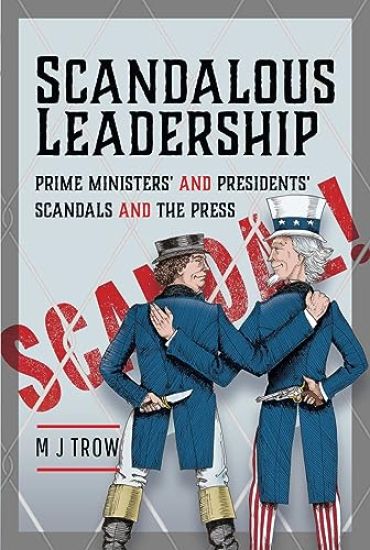
Scandalous Leadership

Scandalous Leadership

M J Trow

PEN SWORD BOOKS LTD
2023
sidottu
Before Britain had a prime minister – and before they invented America – the dictator Oliver Cromwell urged the artist Lely to paint him ‘warts and all’. This book deals with some of the ‘all’, but is mostly about the warts, the moral blemishes that have dogged the leaders of two of the greatest countries on earth for 300 years. Scandalously, there are still no qualifications necessary for the job of prime minister or president, two of the most important positions in the world. And that lack of ability shows itself in spades throughout these pages. Robert Walpole knew that ‘every man has his price’ and bought people accordingly. Viscount Goderich broke down in tears, begging the king to fire him. George Washington, the revered saint of American creation, blew with the wind and owned slaves. Abraham Lincoln was prepared to send African Americans back to Africa to save the Union. William Gladstone popped out from Downing street to ‘save’ prostitutes. David Lloyd George gave people titles for money. Warren Harding had a string of mistresses, as did John Kennedy. And all this happened before Donald Trump! Thank God the fourth estate was there, the free press watching every move of politicians. Who was watching them, of course, is another story. If you thought – and prayed – that the occupants of No. 10 and the White House were honourable, competent people, you’re in for a bit of a shock.
The Meon Hill Murder, 1945

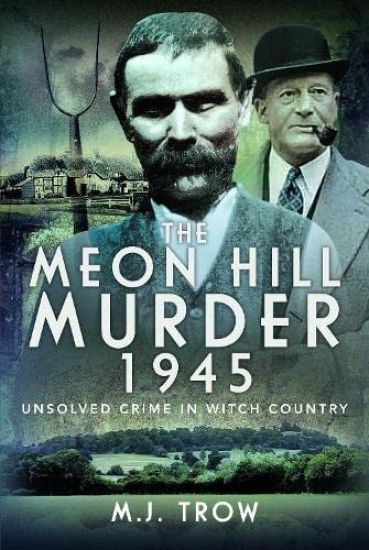
The Meon Hill Murder, 1945

M J Trow

PEN SWORD BOOKS LTD
2023
sidottu
In the closing months of the Second World War, an old hedger was found bludgeoned and hacked to death in a Warwickshire field. His name was Charles Walton and the place was the little village of Lower Quinton, under the shadow of Meon Hill. They called in the local CID; they called in Scotland Yard; they interviewed hundreds of people; they asked thousands of questions. But somebody wasn't talking. The whole village was silent, as if someone had drawn down a blind. After the case was scaled down, the rumours remained. Was Meon Hill the centre of a witches' coven? And was old Charlie Walton, with his ability to talk to birds and toads and his magic watch, a witch himself? For eighty years, the supernatural has hovered over the murder of Charles Walton, with vague, haunted memories of secret rites and black dogs. Even the dead man's grave has vanished. Rumour has been piled on innuendo, adding to the excesses of writers determined to make a supernatural mystery out of a very local tragedy, until the dead man himself has disappeared into a morass of hocus pocus. This is the first book to get past the nonsense, accessing original police files that say precisely nothing about witchcraft. Analysing the facts from the time and removing the ever-more ludicrous layers of fiction, it gets as near to solving the mystery as we are ever likely to.
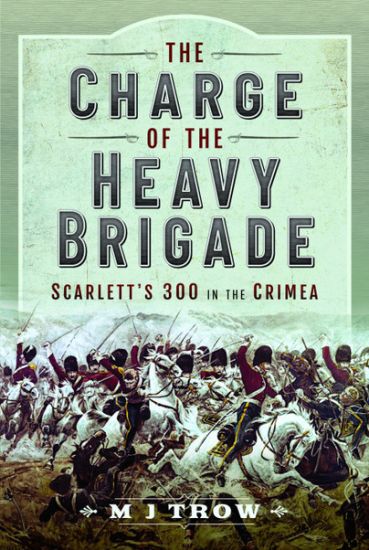
The Charge of the Heavy Brigade

The Charge of the Heavy Brigade

M J Trow

PEN SWORD BOOKS LTD
2021
sidottu
Glory to each and to all, and the charge that they made! Glory to all three hundred, and all the Brigade!' Everyone has heard of the charge of the Light Brigade, a suicidal cavalry attack caused by confused orders which somehow sums up the Crimean War (1854-6). Far less well known is what happened an hour earlier, when General Scarlett's Heavy Brigade charged a Russian army at least three times its size. That fight of heroes', to use the phrase of William Russell, the world's first war correspondent, was a brilliant success, whereas the Light Brigade's action resulted in huge casualties and achieved nothing. This is the first book by a military historian to study the men of the Heavy Brigade, from James Scarlett, who led it, to the enlisted men who had joined for the queen's shilling' and a new life away from the hard grind of Victorian poverty. It charts the perils of travelling by sea, in cramped conditions with horses panicking in rough seas. It tells the story, through the men who were there, of the charge itself, where it was every man for himself and survival was down to the random luck of shot and shell. It looks, too, at the women of the Crimea, the wives who accompanied their menfolk. Best known were Florence Nightingale, the lady with the lamp' and Mary Seacole, the Creole woman who was doctress and mother' to the men. But there were others, like Fanny Duberly who wrote a graphic journal and Mrs Rogers, who dutifully cooked and cleaned for the men of her husband's regiment, the 4th Dragoon Guards.
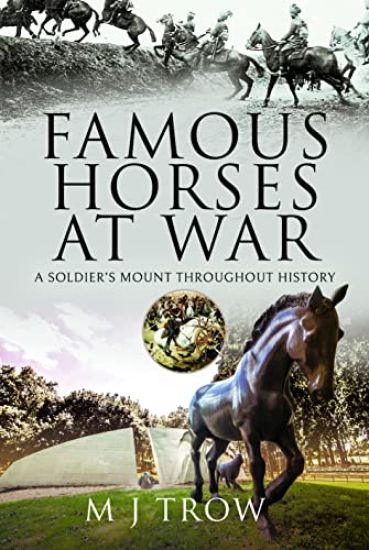
Famous Horses at War

Famous Horses at War

M J Trow

PEN SWORD BOOKS LTD
2022
sidottu
'In dreary, doubtful waiting hours Before the brazen frenzy starts, The horses show him nobler powers;- O patient eyes, courageous hearts.' Into Battle, Julian Grenfell, 1915 In the days of horsed cavalry, a soldier's mount was a living, breathing companion. It galloped into the jaws of death at the sound of the bugle and the nudge of spurs. It carried its rider over arid deserts, across swollen rivers, up near-sheer mountains. Whole societies functioned because of the warhorse - the Huns, the Mongols, and the tribes of the North American plains. Horses were worshipped as gods - the centaurs of ancient Greece, Tziminchak of the Aztecs, while the Roman emperor Caligula intended to make his horse a consul! Most of us have only ever seen warhorses at the movies - the Scots Greys at Waterloo, the Light Brigade at Balaclava, Taras Bulba's Cossacks on the Steppes and Custer's cavalry at the Little Big Horn. This book celebrates the colour and nostalgia of a fighting past, from eohippus the first horse to Sefton, the last warhorse injured in the line of duty. Not forgetting the stark reality of thousands of animals sacrificed for men's greed and ambition, those killed on campaign, the maimed cab-horses and fodder for the knacker's yard.
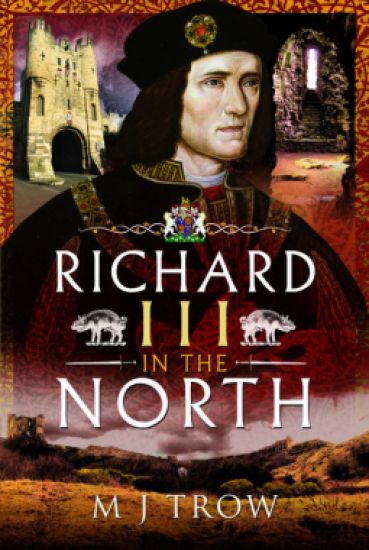
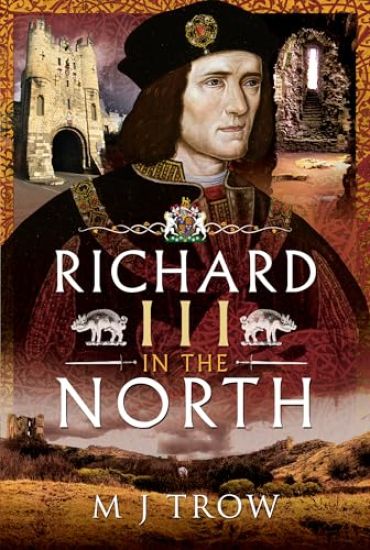
Richard III in the North

Richard III in the North

M J Trow

Pen Sword History
2020
sidottu
Richard III is England's most controversial king. Forever associated with the murder of his nephews, the Princes in the Tower, he divides the nation. As spectacular as his death at Bosworth in August 1485 - the last king of England to die in battle - the astonishing discovery of his bones under a Leicester car park five centuries later renewed interest in him and re-opened old debates. Is he the world's most wicked uncle; or is he (in the words of the man who most smeared him) 'a prince more sinned against than sinning'? Richard was not born in the North; neither did he die there, but this detailed look at his life, tracing his steps over the thirty-three years that he lived, focuses on the area that he loved and made his own. As Lord of the North, he had castles at Middleham and Sheriff Hutton, Penrith and Sandal. He fought the Scots along the northern border and on their own territory. His son was born at Middleham and was invested as Prince of Wales at York Minster, where Richard planned to set up a college of 100 priests. His white boar device can be found in obscure corners of churches and castles; his laws, framed in the single parliament of his short reign, gave rights to the people who served him and loved him north of the Trent. And when he felt threatened or outnumbered by his enemies during the turbulent years of the Wars of the Roses, it was to the men of the North that he turned for support and advice. They became his knights of the body; members of the Council of the North which outlived Richard by a 150 years. They died with him at Bosworth. Although we cannot divorce Richard from the violent politics of the day or from events that happened far to the South, it was in the North that Richard's heart lay. The North was his home. It was the place he loved.
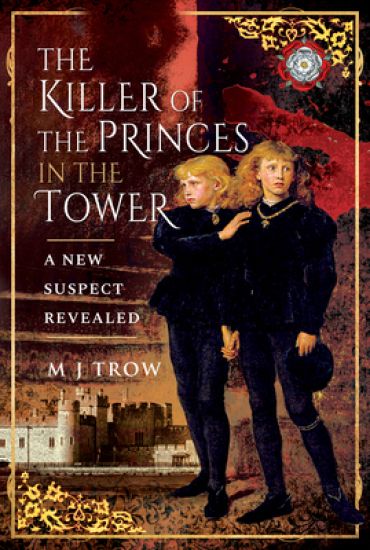
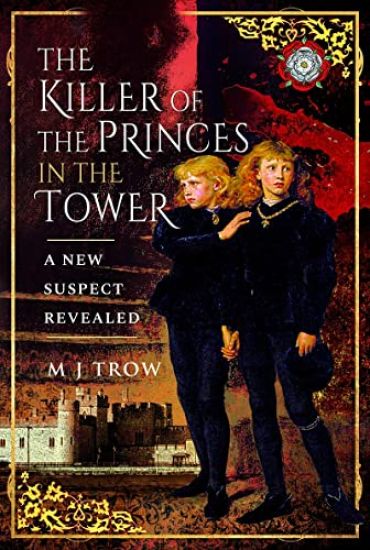
The Killer of the Princes in the Tower

The Killer of the Princes in the Tower

M J Trow

Pen Sword History
2021
sidottu
The disappearance of two boys during the summer of 1483 has never been satisfactorily explained. They were Edward, Prince of Wales, nearly thirteen at the time, and his brother, Richard of York, nearly ten. With their father, Edward IV, dying suddenly at forty, both boys had been catapulted into the spotlight of fifteenth-century politics, which was at once bloody and unpredictable. Thanks to the work of the hack 'historians' who wrote for Henry VII, the first Tudor, generations grew up believing that the boys were murdered and that the guilty party was their wicked uncle, Richard, Duke of Gloucester. Richard crowned himself King of England in July 1483, at which time the boys were effectively prisoners in the Tower of London. After that, there was no further sign of them. Over the past 500 years, three men in particular have been accused of the boys' murders - Richard of Gloucester; Henry Tudor, Earl of Richmond; and Henry Stafford, Duke of Buckingham. The evidence against them would not stand up in a court of law today, but the court of history is much less demanding and most fingers remain pointed squarely at Richard of Gloucester. This book takes a different approach, the first to follow this particular line of enquiry. It is written as a police procedural, weighing up the historical evidence without being shackled to a particular 'camp'. The supposition has always been made that the boys were murdered for political reasons. But what if that is incorrect? What if they died for other reasons entirely? What if their killer had nothing to gain politically from their deaths at all? And, even more fascinatingly, what if the princes in the Tower were not the only victims?
Richard III in the North

Richard III in the North

M J Trow

PEN SWORD BOOKS LTD
2026
nidottu
Richard III is England’s most controversial king. Forever associated with the murder of his nephews, the Princes in the Tower, he divides the nation. As spectacular as his death at Bosworth in August 1485 – the last king of England to die in battle – the astonishing discovery of his bones under a Leicester car park five centuries later renewed interest in him and re-opened old debates. Is he the world’s most wicked uncle; or is he (in the words of the man who most smeared him) ‘a prince more sinned against than sinning’? Richard was not born in the North; neither did he die there, but this detailed look at his life, tracing his steps over the thirty-three years that he lived, focuses on the area that he loved and made his own. As Lord of the North, he had castles at Middleham and Sheriff Hutton, Penrith and Sandal. He fought the Scots along the northern border and on their own territory. His son was born at Middleham and was invested as Prince of Wales at York Minster, where Richard planned to set up a college of 100 priests. His white boar device can be found in obscure corners of churches and castles; his laws, framed in the single parliament of his short reign, gave rights to the people who served him and loved him north of the Trent. And when he felt threatened or outnumbered by his enemies during the turbulent years of the Wars of the Roses, it was to the men of the North that he turned for support and advice. They became his knights of the body; members of the Council of the North which outlived Richard by a 150 years. They died with him at Bosworth. Although we cannot divorce Richard from the violent politics of the day or from events that happened far to the South, it was in the North that Richard’s heart lay. The North was his home. It was the place he loved.
The Killer of the Princes in the Tower

The Killer of the Princes in the Tower

M J Trow

PEN SWORD BOOKS LTD
2023
nidottu
The disappearance of two boys during the summer of 1483 has never been satisfactorily explained. They were Edward, Prince of Wales, nearly thirteen at the time, and his brother, Richard of York, nearly ten. With their father, Edward IV, dying suddenly at forty, both boys had been catapulted into the spotlight of fifteenth-century politics, which was at once bloody and unpredictable. Thanks to the work of the hack historians' who wrote for Henry VII, the first Tudor, generations grew up believing that the boys were murdered and that the guilty party was their wicked uncle, Richard, Duke of Gloucester. Richard crowned himself King of England in July 1483, at which time the boys were effectively prisoners in the Tower of London. After that, there was no further sign of them. Over the past 500 years, three men in particular have been accused of the boys' murders - Richard of Gloucester; Henry Tudor, Earl of Richmond; and Henry Stafford, Duke of Buckingham. The evidence against them would not stand up in a court of law today, but the court of history is much less demanding and most fingers remain pointed squarely at Richard of Gloucester. This book takes a different approach, the first to follow this particular line of enquiry. It is written as a police procedural, weighing up the historical evidence without being shackled to a particular camp'. The supposition has always been made that the boys were murdered for political reasons. But what if that is incorrect? What if they died for other reasons entirely? What if their killer had nothing to gain politically from their deaths at all? And, even more fascinatingly, what if the princes in the Tower were not the only victims?
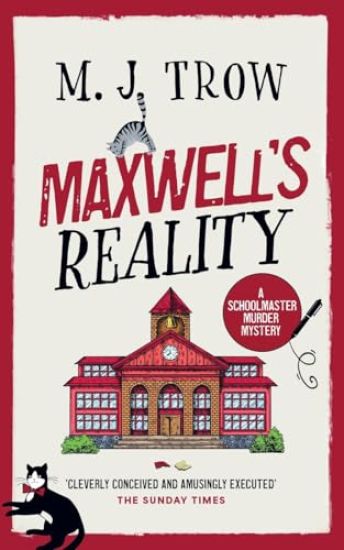
Maxwell's Reality

Maxwell's Reality

M J Trow

Joffe Books
2025
pokkari
An unputdownable cozy mystery with a touch of wry English humour.'Cleverly conceived and amusingly executed.' The Sunday TimesMeet Peter Maxwell: film buff, golden-hearted cynic, bow-tied eccentric teacher . . . and reluctant amateur sleuth.A reality TV crew descends on Leighford High . . . and Head of Sixth Form Peter Maxwell braces for disaster - but not murder.The cameras pry into every corner of the school, exposing secrets better left buried. But when a member of the TV crew is found stabbed to death in the headteacher's office, it's clear the real drama has only just begun.Then a second crew member is found sprawled in Maxwell's office. Murdered with the same knife.As Maxwell unravels the truth he finds himself facing a chilling reality: the murderer is still watching, still waiting, and ready to kill again.If you love Faith Martin, Richard Osman, the Reverend Richard Coles, Fiona Leitch, Sarah Yarwood-Lovett, Simon Brett, Janice Hallett, M.C. Beaton or Agatha Christie, prepare to be hooked by this delightful character-driven mystery Praise for Maxwell's Reality: ⭐⭐⭐⭐⭐ 'Multiple twists and a cleverly woven plot, the story keeps you engaged and guessing throughout.'⭐⭐⭐⭐⭐ 'An absolute delight. The characters are simply brilliant, I didn't guess the killer and I loved every second.'⭐⭐⭐⭐⭐ 'What a fun cozy mystery.'⭐⭐⭐⭐⭐ 'A cast of eccentric and eclectic characters and a frothy plot bursting with dry wit and outright humour.'Meet Peter MaxwellPeter Maxwell is a history teacher at Leighford High School. He's loved by his students and known as 'Mad Max' to his friends because of his love of quoting movies. His eccentricities make him a well-known figure in the small seaside town, cycling everywhere on his bike called White Surrey - after Richard III's horse. When not teaching history, he is building a diorama of the Charge of the Light Brigade in his attic and talking to his cat, Count Metternich, his sounding board and boss, and solving crimes the police are unable to crack.The SettingLeighford is a small seaside town on the South Coast. Its population trebles in the summer as tourists flock to holiday there. Unfortunately for Peter Maxwell some of these characters will end up dead.
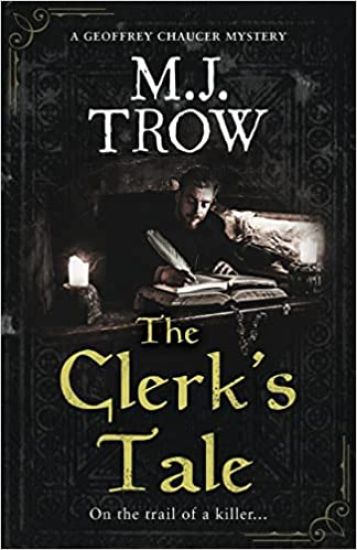
The Clerk's Tale

The Clerk's Tale

M J Trow

LUME BOOKS
2022
pokkari
In this humorous medieval mystery, Geoffrey Chaucer discovers a very un-poetic side to Oxford while tracking down a killer.The Clerk's Tale is the latest instalment in M.J. Trow's popular Geoffrey Chaucer series. As historically accurate and utterly human as its companion books, this story takes the reader on a no-holds-barred tour of medieval Oxford, as Chaucer immerses himself in the rivalries and obsessions of college life.Initially sent to investigate the death of a young student, Chaucer soon finds himself embroiled in matters of philosophy, religion, logic and death. Although he is entertainingly waylaid by tempting women, frightened cats, and even hallucinogens, as more men die Chaucer feels growing pressure to track down the killer and end the carnage.But in the city of dreaming spires and poignard-sharp minds, is he out of his depth?While it is the latest in a series, The Clerk's Tale is a hugely entertaining and fascinating book in its own right. Ideal for anyone who enjoys a top-quality murder-mystery, its historical accuracy also makes it perfect for history fans.Praise for the Geoffrey Chaucer series: 'Trow brings medieval England fully to life through well-chosen period detail, but the novel's main strength is its portrait of Chaucer. Readers will hope to see a lot more of him in his role as sleuth.' - Publishers Weekly Starred Review'A series kickoff that augurs well for more juicy Chaucer escapades.' - Kirkus Reviews'Trow creates in his hero/sleuth a larger-than-life character, spicing the stew with acerbic wit, suspense, and a gripping plot.' - Booklist
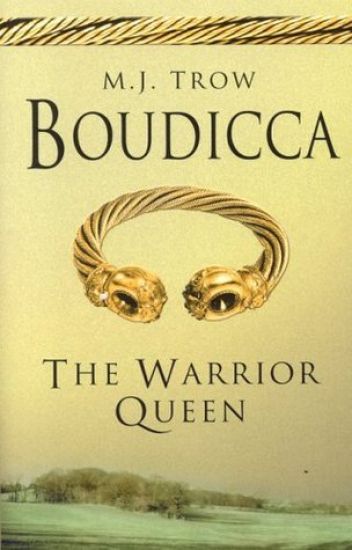
Boudicca

Boudicca

M J Trow; Taliesin Trow

LUME BOOKS
2023
pokkari
This is the story of a British icon: Boudicca - humiliated widow of Prasutagus - who led British tribes into rage-fuelled war with the Roman Empire.Boudicca is a legendary figure today, as the mother determined to avenge her ravaged children and the warrior who rose up to protect her land from the assault of a rampaging enemy. Many identify with her as an icon of womanly strength; she has even been described as a Margaret Thatcher without the handbag. Yet what of the true woman behind the legend? Did she really draw together a disparate tribal nation against a ruthless Roman occupier? And if so, how? In Boudicca: The Warrior Queen, MJ Trow strips away modern and ancient myths to reveal the flesh-and-blood woman who terrified Rome.In the summer of AD 60 Boudicca united several British tribes and led them in revenge attacks on the Roman towns of Colchester, London and St Albans, burning and destroying with a ferocity that has left a permanent scar on the archaeological landscape. Many people died in the flames of Roman settlements and, had the Iceni and their allies not been defeated, the entire course of British history would have been altered.This book takes us on a journey through the Roman archives, the archaeological record and Celtic mythology to a new understanding of Boudicca - the warrior queen who took on the might of the greatest power of the ancient world and very nearly won. it is required reading for all with an interest in British and/or ancient history.MJ Trow is a historian, biographer and crime novelist. His books include the well-known Lestrade and Maxwell series as well as non-fiction such as Who Killed Kit Marlowe? and Vlad the Impaler.His son, Taliesin Trow, who provided the archaeological focus for Boudicca: The Warrior Queen, is a graduate in history and archaeology whose other works include Sir Martin Frobisher: Seaman, Soldier, Explorer.
Lestrade and the Giant Rat of Sumatra

Lestrade and the Giant Rat of Sumatra

M J Trow

Trafalgar Square
2022
pokkari
Book seventeen in the Inspector Lestrade series. Everybody, they say, has a book in them. Retired Chief Inspector Walter Dew certainly did. And it took him back to the good old days, when coppers lived in station houses, that nice Mr Campbell-Bannerman was at Number Ten and Britain had the biggest empire in the world. But, under the streets of London, something stirred. More than that, there was a muttering that grew to a grumbling and the grumbling grew to a mighty rumbling. Then out of the houses, the bodies came tumbling Superintendent Sholto Lestrade, with Dew by his side and the rookies Bang and Olufsen in his wake, must go Below to face their demons, to find a murderer whose machinations will upset the infrastructure of the richest city on earth. Will any of them live to tell Dew's tale? The tale of a rat.
The World of Inspector Lestrade

The World of Inspector Lestrade

M J Trow

Blkdog Publishing
2022
pokkari
Book eighteen in the Inspector Lestrade series. Many readers of the Lestrade books wonder what is fact and what is fiction - and the author is delighted that they can't always tell So, for all the readers out there who have ever asked that question, here is the World of Inspector Lestrade. In this book, the lid is taken off the Victorian and Edwardian society in a way you've never seen before. Lestrade knew everybody, from Oscar Wilde in the Cadogan Hotel, to General Baden-Powell, cross-dressing on Brownsea Island, to the hero of Damascus, General Allenby - 'you can call me Al.' Have you ever wondered whether Howard Vincent, Director of the brand new CID really had a pet iguana? Find out inside. The Lestrade canon features the great and not so good of Britain when London stood at the heart of the Empire, the biggest in the world on which the sun never set. The novels on which this book is based are genuine whodunnits, with gallows humour and laugh-out-loud moments. Here you will find all the little peccadilloes that Lestrade took for granted. This is history as it really was - and I bet you wish you'd paid more attention at school now
In the Shadow of the Ripper

In the Shadow of the Ripper

M J Trow

PEN SWORD BOOKS LTD
2026
sidottu
For centuries, it was believed that a corpse would ‘bleed anew’ in the presence of its murderer. Chaucer wrote about it; so did Shakespeare. Only slowly, as the Renaissance and the Age of Reason drove away the shadows of superstition, did forensic science find its feet. From the Ratlciffe Highway murders of 1811 to the first murder trial with fingerprint technology (the Stratton brothers in 1905), In the Shadow of the Ripper charts the grisly history of crime and focuses on the technological developments that brought real justice just a little closer. General practitioners, police surgeons, anatomists, chemists and many others argued with each other in spectacular cases like the Ripper murders in 1888, the poisonings of William Palmer, Florence Maybrick and the axe frenzy of Lizzie Borden. And if the expert witnesses disagreed, how were juries, ‘twelve men and true’, with no scientific knowledge supposed to come to a verdict at a murder trial? Today, we take forensic science with all its brilliance for granted. In the Shadow of the Ripper looks at how it all began. The Ripper case is a shining example of the fact that it does not matter how many forensic advances are made, a killer in the shadows can sometimes outwit the police and science for over 135 years … and counting.
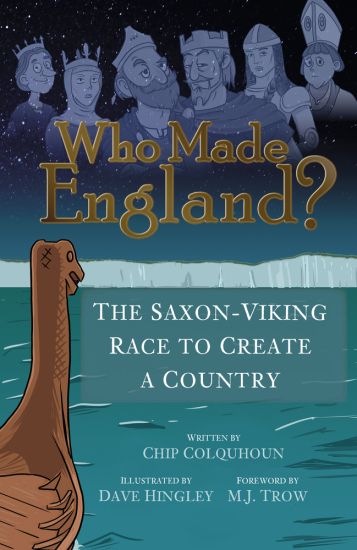
Who Made England?

Who Made England?

Chip Colquhoun; M J Trow

The History Press Ltd
2020
nidottu
Did you know English people were around before the country of England was invented? It’s true: just over 1,000 years ago, English people lived in several smaller countries all over the island of Britain. A Saxon king called Alfred is famous for starting to bring these countries together – but who finished the job? Another Saxon king? A monk? Or was it... a Viking? In this fantastically illustrated book, storyteller Chip Colquhoun explores fact and folklore to see what they tell us about the birth of a country. After enjoying these tales of deadly battles, singing kings and miraculous queens, can you work out Who Made England?
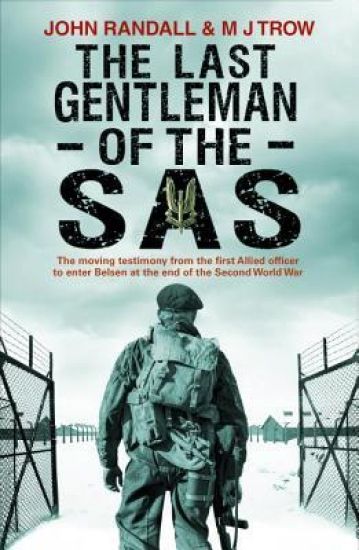
The Last Gentleman of the SAS

The Last Gentleman of the SAS

John Randall; M J Trow

Mainstream Publishing
2016
pokkari
In 1945, John Randall was the first Allied officer to enter Bergen-Belsen – the concentration camp that would reveal the horrors of the Holocaust to the world. Randall was one of that league of extraordinary gentlemen handpicked for suicidally dangerous missions behind enemy lines in North Africa, Italy, France and Germany throughout the Second World War. He was a man of his class and of his times. He hated the Germans, liked the French and was unimpressed by the Americans and the Arabs. He was an outrageous flirt, as might be expected of a man who served in Phantom alongside film stars David Niven and Hugh Williams. He played rugby with Paddy Mayne, the larger-than-life colonel of the SAS and winner of four DSOs. He pushed Randolph Churchill, son of the Prime Minister, out of an aeroplane. He wined and dined in nightclubs as part of the generation that lived for each day because they might not see another.This extraordinary true story, partly based on previously unpublished diaries, presents a different slant on that mighty war through the eyes of a restless young man eager for action and adventure.
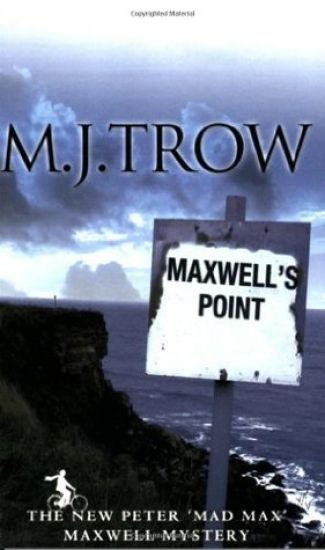
Maxwell's Point

Maxwell's Point

M. J. Trow

Allison Busby
2008
nidottu
With girlfriend DS Jacquie Carpenter back at work and little baby Nolan rapidly growing into a feisty toddler, Peter 'Mad Max' Maxwell, Head of Sixth Form at Leighford High, decides to hire an au pair. The exotic Juanita Reyes hails from the sun-drenched isle of Menorca, and whilst the good old British weather can't hold a candle to the Menorcan sun, Juanita doesn't appear to mind a bit. She seems perfectly happy in the sleepy little seaside town, doting on baby Nolan and working hard to improve her English. Then one afternoon Max returns home to find Nolan gurgling happily in his cot, but sees no sign of his au pair; the lovely Juanita has disappeared into thin air. Meanwhile, two ramblers are surprised and more than a little disturbed when Patches the border Collie digs up an arm, which presumably belongs to a body, on Dead Man's Point - the lonely cliff top rising high over the sea. Mad Max is no stranger to murder inquiries and, as always when violent death's in the vicinity, his nose starts a-twitching, just itching to be poked into all the places it shouldn't. And, much to DCI Henry Hall's annoyance, the past has proved more than once that Max has a talent for sniffing out killers. But with a missing au pair to search for, and a creepy gardener, troublesome teenagers and reports of a randy rambler to investigate - not to mention a young baby to look after - has Max taken on more than he can handle this time?
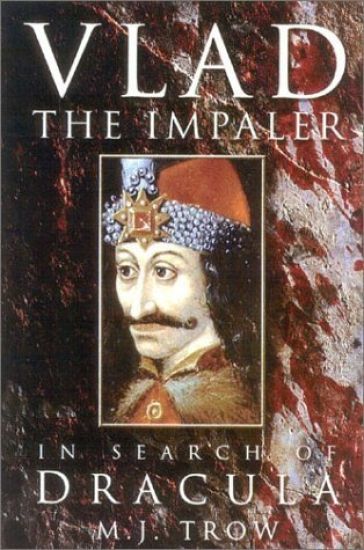
Vlad the Impaler

Vlad the Impaler

M. J. Trow

Sutton Publishing Ltd
2003
sidottu
For many, Vlad the Impaler is the bloodsucking torturer recreated in Hollywood's "Interview with the Vampire" and the real character so vitally realized in Bram Stoker's "Dracula", the man recreated on screen by screen legends Bela Lugosi, Christopher Lee or Gary Oldman, or the vampire stalking through the pages of Ann Rice's novels. Later interpretations see him as a potent symbol of Nazi aggression in World War II, fired partly by Murnau's "Nosferatu" of the 1920s and the blood rites of the Aryans. But who was the real man who inspired the Dracula legend? Was he as gruesome as legend depicts, or, as some Romanians, refuting the popular image, suggest, an heroic 15th-century warrior and freedom fighter? Or is his reputation as a bloodthirsty mass-murderer, who sadistically impaled his victims, justified? In this title, the author peels back the layers of myth and history to reveal the 15th-century figure who was the real Vlad the Impaler.
Canute

Canute

M. J. Trow

Sutton Publishing Ltd
2005
sidottu
Canute is famous today as the bad king arrogant enough to believe he could stem the tide. This book peals back the layers of legend and mythmaking to reveal the true history of King Canute and the kingdom he ruled. England in Canute's time was made up of seven Saxon kingdoms which had been ravaged by raids for decades. Already king of Denmark by 1014, Canute was one of three claimants for the English throne and on the face of it, the least likely to succeed. The others were the occupant, Ethelred and Edmund - known as Ironside - Ethelred's eldest son. Two years of in-fighting among the three combatants followed, with the timely and suspicious deaths of both his rivals ensuring Canute was the undisputed first Danish king of England. Canute had achieved power but he had yet to win the hearts and minds of Englishmen so he married their queen, Emma, widow of Ethelred and perhaps 20 years older than him. By this, Canute assured an Anglo-Danish succession, burying the hatchet after a century of war and violence. Safe in the knowledge that England was loyal, Canute embarked on an ambitious, bloody and successful foreign policy. When he died he was the most powerful king in Europe except the Holy Roman Emperor and England was a united nation.
Boudicca

Boudicca

M. J. Trow

Sutton Publishing Ltd
2005
nidottu
'She was tall and terrible, with a great mass of red hair to her hips. She wore a twisted torc and a tunic of many colours ...She carried a spear to instil terror in all who saw her.' Dio Cassius In AD 61 Roman governor Suetonius Paullinus, a veteran of mountain warfare in Africa, led a crushing defeat by the 14th and 20th legions of Boudicca's revolt. The defeat of Boudicca in effect made the Roman occupation of Britain possible - a victory would at the very least have seriously delayed it and possibly altered the whole course of the country's history. Among the British, women could inherit land, rule whole areas, lead armies. Boudicca did all three. And what made her revolt in AD 61 so terrifying was that she united other tribes under her and all but destroyed Rome's power base in the country. Boudicca herself left a twofold legacy. Surviving Paullinus' crushing defeat of her troops, she is traditionally alleged to have taken poison, along with her daughters. She had taken on the might of the greatest power of the ancient world and nearly driven it out of part of its empire; the Britons mourned her deeply and gave her a costly burial. Speeches attributed to her by the Romans on the eve of battle illustrate that they went in awe of her. Not for nothing does her bronze effigy, sculpted by Thomas Thorneycroft, stare out from its pedestal on Westminster Bridge, her back to the city she once burned to the ground.