Kirjojen hintavertailu. Mukana 11 509 108 kirjaa ja 12 kauppaa.

Kirjahaku

Etsi kirjoja tekijän nimen, kirjan nimen tai ISBN:n perusteella.

1000 tulosta hakusanalla Turing Sara

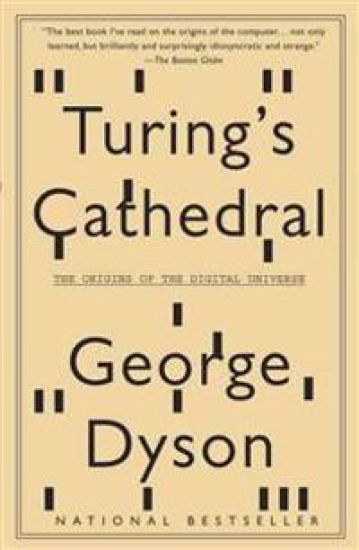
Turing's Cathedral

Turing's Cathedral

George Dyson

Penguin Books Ltd
2013
pokkari
George Dyson's fascinating account of the early years of computers: Turing's Cathedral is the story behind how the PC, ipod, smartphone and almost every aspect of modern life came into being.In 1945 a small group of brilliant engineers and mathematicians gathered at the Institute for Advanced Study in Princeton, determined to build a computer that would make Alan Turing's theory of a 'universal machine' reality. Led by the polymath émigré John von Neumann, they created the numerical framework that underpins almost all modern computing - and ensured that the world would never be the same again.George Dyson is a historian of technology whose interests include the development (and redevelopment) of the Aleut kayak. He is the author of Baidarka; Project Orion; and Darwin Among the Machines.'Unusual, wonderful, visionary' Francis Spufford, Guardian'Fascinating . . . the story Dyson tells is intensely human . . . a gripping account of ideas and inventionFascinating . . . the story Dyson tells is intensely human . . . a gripping account of ideas and invention' Jenny Uglow'Glorious . . . as much a story of the personalities involved as of the discoveries they made, and you do not need any knowledge of computers or mathematics to enjoy the ride . . . a ripping yarn' John Gribbin, Literary Review
Turing's Vision

Turing's Vision

Chris Bernhardt

MIT Press
2017
pokkari
Turing's fascinating and remarkable theory, which now forms the basis of computer science, explained for the general reader.In 1936, when he was just twenty-four years old, Alan Turing wrote a remarkable paper in which he outlined the theory of computation, laying out the ideas that underlie all modern computers. This groundbreaking and powerful theory now forms the basis of computer science. In Turing's Vision, Chris Bernhardt explains the theory, Turing's most important contribution, for the general reader. Bernhardt argues that the strength of Turing's theory is its simplicity, and that, explained in a straightforward manner, it is eminently understandable by the nonspecialist. As Marvin Minsky writes, "The sheer simplicity of the theory's foundation and extraordinary short path from this foundation to its logical and surprising conclusions give the theory a mathematical beauty that alone guarantees it a permanent place in computer theory." Bernhardt begins with the foundation and systematically builds to the surprising conclusions. He also views Turing's theory in the context of mathematical history, other views of computation (including those of Alonzo Church), Turing's later work, and the birth of the modern computer.In the paper, "On Computable Numbers, with an Application to the Entscheidungsproblem," Turing thinks carefully about how humans perform computation, breaking it down into a sequence of steps, and then constructs theoretical machines capable of performing each step. Turing wanted to show that there were problems that were beyond any computer's ability to solve; in particular, he wanted to find a decision problem that he could prove was undecidable. To explain Turing's ideas, Bernhardt examines three well-known decision problems to explore the concept of undecidability; investigates theoretical computing machines, including Turing machines; explains universal machines; and proves that certain problems are undecidable, including Turing's problem concerning computable numbers.
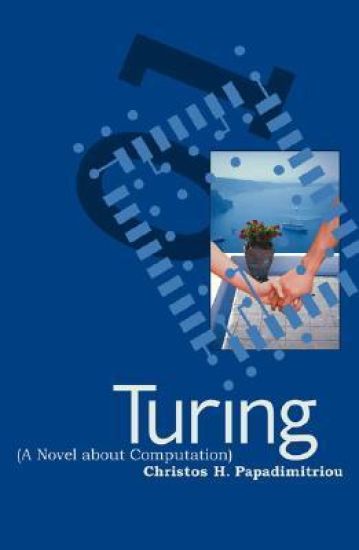
Turing (A Novel about Computation)

Turing (A Novel about Computation)

Christos H. Papadimitriou

MIT Press
2005
pokkari
The world of computation according to Turing, an interactive tutoring program, as told to star-crossed lovers: a novel.Our hero is Turing, an interactive tutoring program and namesake (or virtual emanation?) of Alan Turing, World War II code breaker and father of computer science. In this unusual novel, Turing's idiosyncratic version of intellectual history from a computational point of view unfolds in tandem with the story of a love affair involving Ethel, a successful computer executive, Alexandros, a melancholy archaeologist, and Ian, a charismatic hacker. After Ethel (who shares her first name with Alan Turing's mother) abandons Alexandros following a sundrenched idyll on Corfu, Turing appears on Alexandros's computer screen to unfurl a tutorial on the history of ideas. He begins with the philosopher-mathematicians of ancient Greece-"discourse, dialogue, argument, proof... can only thrive in an egalitarian society"-and the Arab scholar in ninth-century Baghdad who invented algorithms; he moves on to many other topics, including cryptography and artificial intelligence, even economics and developmental biology. (These lessons are later critiqued amusingly and developed further in postings by a fictional newsgroup in the book's afterword.) As Turing's lectures progress, the lives of Alexandros, Ethel, and Ian converge in dramatic fashion, and the story takes us from Corfu to Hong Kong, from Athens to San Francisco-and of course to the Internet, the disruptive technological and social force that emerges as the main locale and protagonist of the novel.Alternately pedagogical and romantic, Turing (A Novel about Computation) should appeal both to students and professionals who want a clear and entertaining account of the development of computation and to the general reader who enjoys novels of ideas.
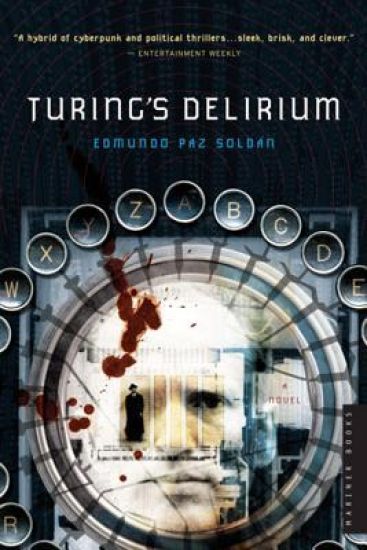
Turing's Delirium

Turing's Delirium

Edmundo Paz Soldan

HOUGHTON MIFFLIN
2007
pokkari
The setting: Bolivia in the near future. Miguel "Turing" Saenz, a veteran cryptanalyst, is the most famous code-breaker in the employment of a secret government organization known as the Black Chamber. He is leading the pursuit of the Chamber's latest target: Kandinsky, a "cyberhacktivist" leader who is staging a war against both the government and the country's transnational corporations as part of an antiglobalization revolution. As Turing finds himself drawn into a web of murder, intrigue, and deception, he begins to suspect that his work is not as innocent as he once believed.
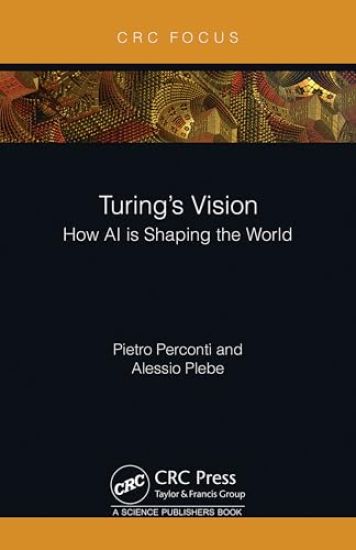
Turing's Vision

Turing's Vision

Pietro Perconti; Alessio Plebe

TAYLOR FRANCIS LTD
2025
sidottu
Chat-GPT, humanoid robotics, and self-driving cars are just a few of the things that are changing our everyday lives. The rapid advancement of AI is eroding one by one all the cornerstones considered unique of human nature: language, consciousness, creativity, and moral responsibility. The book argues that the revolution we are facing is driven by Alan Turing's "vision". This vision rests on the idea that intelligence is not an intrinsic property of human beings, but is a way in which matter is functionally organized and an attribute we are naturally inclined to ascribe to certain entities. For decades we have pretended that this idea does not have the corrosive power that it actually does, perhaps more so than the Copernican and Darwinian revolutions. But now, given the achievements of new forms of computing based on deep learning and predictive coding, the most common intuitions can no longer avoid the dangerous Turing idea.The book is intended for scholars, researchers, and readers intrigued by the intersections across disciplines interested in understanding the philosophical, ethical, and social implications of Artificial Intelligence and its impact on human nature.
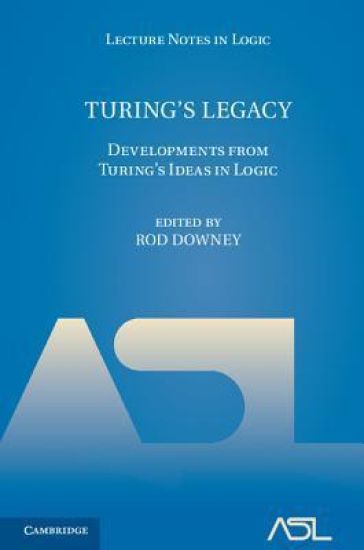
Turing's Legacy

Turing's Legacy

Cambridge University Press
2014
sidottu
Alan Turing was an inspirational figure who is now recognised as a genius of modern mathematics. In addition to leading the Allied forces' code-breaking effort at Bletchley Park in World War II, he proposed the theoretical foundations of modern computing and anticipated developments in areas from information theory to computer chess. His ideas have been extraordinarily influential in modern mathematics and this book traces such developments by bringing together essays by leading experts in logic, artificial intelligence, computability theory and related areas. Together, they give insight into this fascinating man, the development of modern logic, and the history of ideas. The articles within cover a diverse selection of topics, such as the development of formal proof, differing views on the Church–Turing thesis, the development of combinatorial group theory, and Turing's work on randomness which foresaw the ideas of algorithmic randomness that would emerge many years later.
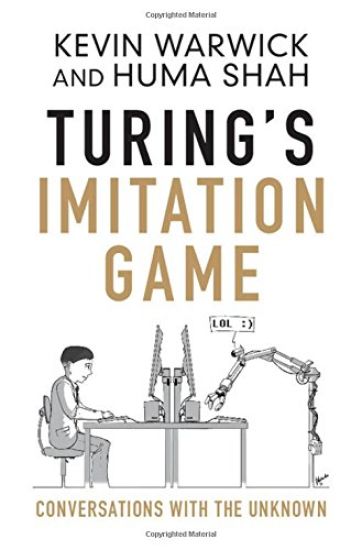
Turing's Imitation Game

Turing's Imitation Game

Kevin Warwick; Huma Shah

Cambridge University Press
2016
sidottu
Can you tell the difference between talking to a human and talking to a machine? Or, is it possible to create a machine which is able to converse like a human? In fact, what is it that even makes us human? Turing's Imitation Game, commonly known as the Turing Test, is fundamental to the science of artificial intelligence. Involving an interrogator conversing with hidden identities, both human and machine, the test strikes at the heart of any questions about the capacity of machines to behave as humans. While this subject area has shifted dramatically in the last few years, this book offers an up-to-date assessment of Turing's Imitation Game, its history, context and implications, all illustrated with practical Turing tests. The contemporary relevance of this topic and the strong emphasis on example transcripts makes this book an ideal companion for undergraduate courses in artificial intelligence, engineering or computer science.
Turing's Cathedral: The Origins of the Digital Universe
A Wall Street Journal Best Business Book of 2012A Kirkus Reviews Best Book of 2012In this revealing account of how the digital universe exploded in the aftermath of World War II, George Dyson illuminates the nature of digital computers, the lives of those who brought them into existence, and how code took over the world. In the 1940s and '50s, a small group of men and women--led by John von Neumann--gathered in Princeton, New Jersey, to begin building one of the first computers to realize Alan Turing's vision of a Universal Machine. The codes unleashed within this embryonic, 5-kilobyte universe--less memory than is allocated to displaying a single icon on a computer screen today--broke the distinction between numbers that mean things and numbers that do things, and our universe would never be the same. Turing's Cathedral is the story of how the most constructive and most destructive of twentieth-century inventions--the digital computer and the hydrogen bomb--emerged at the same time.
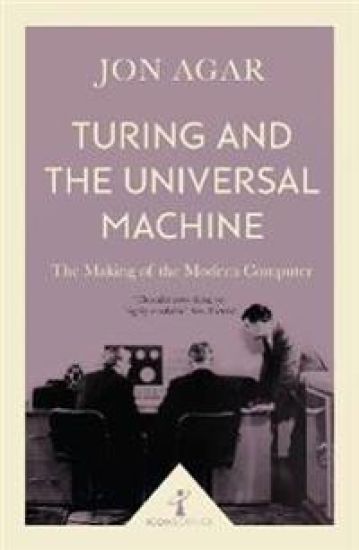
Turing and the Universal Machine (Icon Science)
The history of the computer is entwinedwith that of the modern world and with the life of one man, the brilliant buttroubled Alan Turing.How did the computer come to structureand dominate our lives so totally? In Jon Agar's enlightening story of the'universal machine', we discover how Turing's groundbreaking work not onlyhelped break German codes during the Second World War but also founded the beginningsof the modern computer.Persecuted by the authorities for hishomosexuality, and ultimately hounded to suicide, Turing's personaltribulations are as relevant to the modern world as his work on computing, asindicated by his posthumous royal pardon of 2013 and the recent film The Imitation Game, which focuses onTuring's turbulent life.
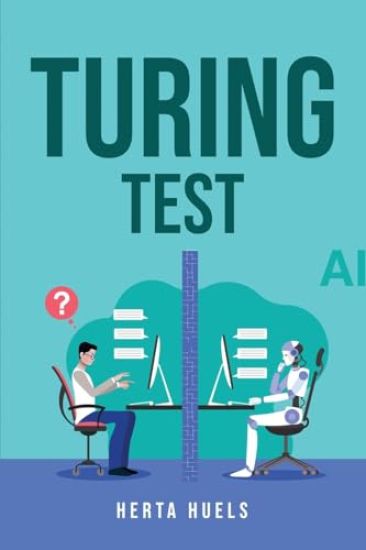
Turing Test

Turing Test

Herta Huels

Herta Huels
2023
nidottu
Darwin's last words ring in my ears. Get out. I raise my armagainst the blaze. I can feel its heat from inside our cell, andjust as I wonder how we're supposed to avoid burning up downhere, the overhead lights shut off. It's almost imperceptible, becausethe kre glows brighter than the dull bulbs, but I see the momentthe lighting turns completely to a red-orange flicker.
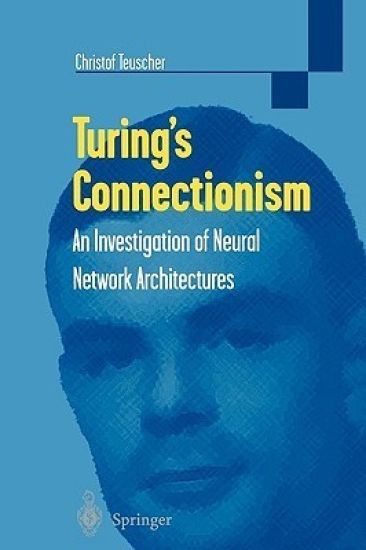
Turing’s Connectionism

Turing’s Connectionism

Christof Teuscher

Springer London Ltd
2001
nidottu
Alan Mathison Turing (1912-1954) was the first to carry out substantial re­ search in the field now known as Artificial Intelligence (AI). He was thinking about machine intelligence at least as early as 1941 and during the war cir­ culated a typewritten paper on machine intelligence among his colleagues at the Government Code and Cypher School (GC & CS), Bletchley Park. Now lost, this was undoubtedly the earliest paper in the field of AI. It probably concerned machine learning and heuristic problem-solving; both were topics that Turing discussed extensively during the war years at GC & CS, as was mechanical chess [121]. In 1945, the war in Europe over, Turing was recruited by the National Physical Laboratory (NPL)! in London, his brief to design and develop an electronic stored-program digital computer-a concrete form of the universal Turing machine of 1936 [185]. Turing's technical report "Proposed Electronic 2 Calculator" , dating from the end of 1945 and containing his design for the Automatic Computing Engine (ACE), was the first relatively complete spec­ ification of an electronic stored-program digital computer [193,197]. (The document "First Draft of a Report on the EDVAC", produced by John von Neumann and the Moore School group at the University of Pennsylvania in May 1945, contained little engineering detail, in particular concerning elec­ tronic hardware [202].
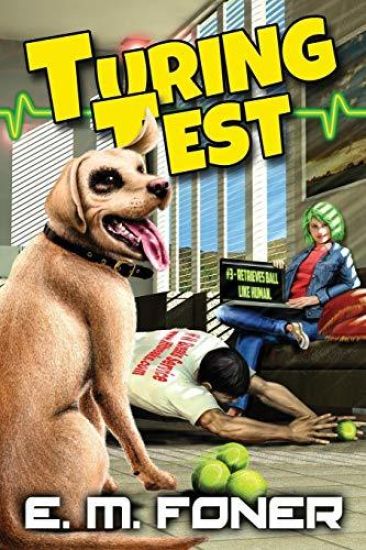
Turing Test

Turing Test

E M Foner

Foner Books
2018
pokkari
Imagine alien AI Observers have infiltrated Earth to evaluate humanity. Imagine the Observers are more human than we are. Mark Ai goes to work every day as a PC repairman, but fixing computers is just a cover job. Along with his mission managing the observation team, he's attempting to fill in as a parent for a teenage neighbor, provide a good home for a dog, and pick up a little money on the side. It's a juggling act that understandably leads to breaking a few rules, but things really start spinning out of control when competing aliens arrive.
Turing Machine Universality of the Game of Life

Turing Machine Universality of the Game of Life

Paul Rendell

Springer International Publishing AG
2015
sidottu
This book presents a proof of universal computation in the Game of Life cellular automaton by using a Turing machine construction. It provides an introduction including background information and an extended review of the literature for Turing Machines, Counter Machines and the relevant patterns in Conway's Game of Life so that the subject matter is accessibly to non specialists.The book contains a description of the author’s Turing machine in Conway’s Game of Life including an unlimited storage tape provided by growing stack structures and it also presents a fast universal Turing machine designed to allow the working to be demonstrated in a convenient period of time.
Turing’s Revolution

Turing’s Revolution

Birkhauser Verlag AG
2016
sidottu
This book provides an overview of the confluence of ideas in Turing’s era and work and examines the impact of his work on mathematical logic and theoretical computer science. It combines contributions by well-known scientists on the history and philosophy of computability theory as well as on generalised Turing computability. By looking at the roots and at the philosophical and technical influence of Turing’s work, it is possible to gather new perspectives and new research topics which might be considered as a continuation of Turing’s working ideas well into the 21st century.The Stored-Program Universal Computer: Did Zuse Anticipate Turing and von Neumann?” is available open access under a Creative Commons Attribution 4.0 International License via link.springer.com