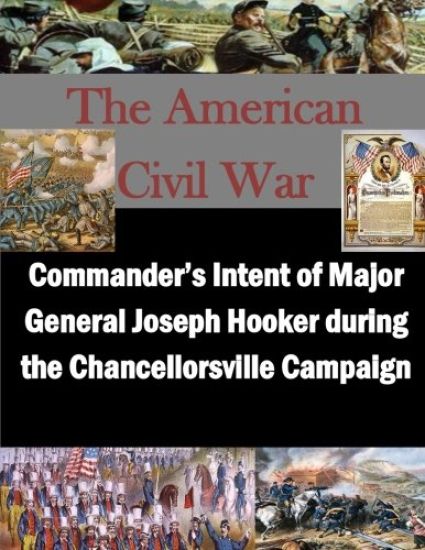
Did "Fighting Joe" Hooker of the army of the Potomac lose his nerve during the Chancellorsville Campaign of 1863? Perhaps history has failed to recognize Major General Joseph Hooker's true commander's intent for this campaign. Hooker's intent was simple: maneuver forces to Lee's flank and rear in order to force a withdrawal of Confederate troops from Fredericksburg. Hooker had no intention of engaging in a "risky confrontation" with General Robert E. Lee and the army of northern Virginia. Hooker's plan would fail due to his own steadfast belief in the ability of his plan to force Lee to withdraw. To say that Lee defeated the army of the Potomac is misleading because Lee did not defeat the army, he defeated Hooker as he fought a very effective defensive battle that removed the federal threat fromVirginia due to Hooker's failings as an army commander.
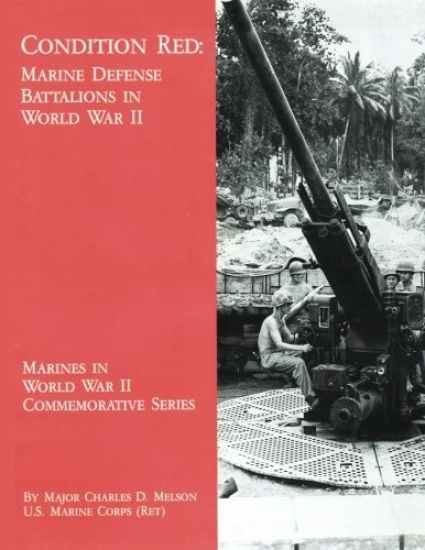
Japan, its military leaders confident they could stagger the United States and gain time to seize the oil and other natural resources necessary to dominate the western Pacific, attacked Pearl Harbor on 7 December 1941, sinking or badly damaging 18 ships, destroying some 200 aircraft, and killing more than 2,300 American servicemen. Though caught by surprise, Marines of the 1st, 3d, and 4th Defense Battalions standing guard in Hawaii fought back as best they could. Few heavy weapons were yet in place, and ammunition remained stored on shipboard, along with many of the guns. Nevertheless, these units had eight antiaircraft machine guns in action within six minutes after the first bombs exploded at 0755. By 0820, 13 machine guns were manned and ready, and they cut loose when a second wave of Japanese aircraft began its attack a few minutes later. Unfortunately, shells for the 3-inch antiaircraft guns did not reach the hurriedly deployed firing batteries until after the second and final wave of attacking aircraft had completed its deadly work. The Marines responded to the surprise raid with small arms and an eventual total of 25 machine guns, claiming the destruction of three aircraft during the morning's fighting. As the Japanese aircraft carriers withdrew after the raid on Pearl Harbor, a pair of enemy destroyers began shelling Midway Island shortly before midnight on 7 December to neutralize the aircraft based there. Condition Red: Marine Defense Battalions in World War II is a narrative of the activities of the defense battalions during the Pacific War.
Due to the specific nature of the Marine Corps' mission, the Marines has a acute need for amphibious vehicles. From the Vietnam War through today, the USMC has relied on four primary types of tracked amphibians: the T46E1/M76 Otter, M116 Husky, LVTP5, and LVTP7/AAV7A1. This new book provides a useful photographic overview of all these vehicles. More than 300 black-and-white and color photos make this a valuable resource for modelers, artists, and restoration experts.
USMC Honor Platoon is a Boot Camp Journal by David Swendiman featuring a detailed verbatim description of what it's like during three months of hell in Marine Corps Boot Camp.
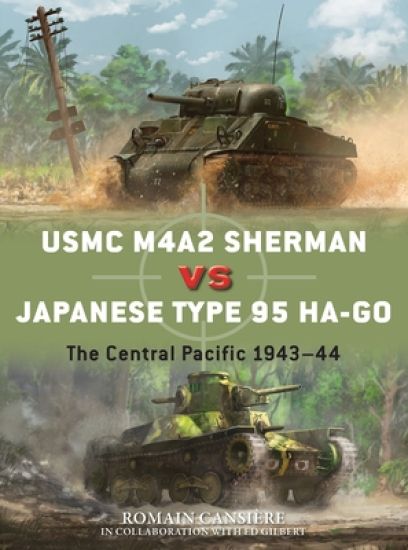
The different national tank doctrines of the United States and Imperial Japan resulted in a terrible mismatch of the predominant tank types in the crucial Central Pacific campaign. A flawed Japanese doctrine emphasized light infantry support tanks, often used in small numbers. Tactically, tanks were often frittered away in armored versions of the familiar banzai attacks. Meanwhile, the Americans saw the tank as an infantry support weapon, but developed a more systematic tactical doctrine. They settled upon a larger medium tank – in the case of most Marine Corps tank battalions, the diesel-powered M4A2 (unwanted by the US Army). This superbly detailed title reveals how both the two sides’ tactical and technical differences in the approach to armored warfare soon became apparent over a series of deadly engagements, from the first tank fight at the battle of Tarawa in November 1943, through to engagements on Parry Island, Saipan, and Guam, before ending with Peleliu in September 1944.
This book contains the cross stitch pattern for the United States Marines logo. This pattern is easy to follow and comes complete with basic cross stitch instructions, valuable money saving tips that can be used on all your projects, and a color table using the DMC color pallet on a separate sheet with room for notes, so it can easily be photo copied and taken with you to purchase your supplies. Also included is a copy of the image with a graphic overlay to quickly illustrate how each page of this pattern corresponds to the actual project.This pattern when finished will bring years of joy to you or whoever you give it to as a gift.
The 2006 U.S.-Japan Roadmap for Realignment Implementation which provides for the consolidation of Ill MEF on Okinawa and the subsequent relocation of approximately 8,000 Marines and Sailors from Okinawa to Guam has created a difficult political situation, a challenging operational scenario, and extreme logistical challenge that ill-postures the United States. Currently, internal politics within Japan has caused infighting that could threaten the entire FRF relocation and place the United States in an awkward position of pulling out of the international agreement. Placing HQ elements separate from the subordinate units is a key concern in respect to C2. The most controversial issue is the availabletraining space for appropriate MAGTF on Guam that satisfies pre-deployment training requirements that is in serious doubt. Complaints from a minor segment of Japanese society must be ignored and the entire Roadmap for Realignmentmust be scrapped and renewal of negotiations for a realignment agreement that puts common sense approaches to defense posture in the Pacific.
The markings on tanks of the United States Marine Corps during World War II are so varied that some have concluded they were meaningless, even anarchic. Official documents offer little insight, but a careful study of period photographs and film, crossreferenced with combat reports and veteran accounts, reveals the different systems of markings that combat units used to identify their vehicles. These markings varied between units, and from one campaign to the next, but were well thought out and designed to be practical and easy for tankers to interpret. In addition to tactical markings, most tankers were given names by their crews, and these were added to the tank’s marking. Personifying the tank often boosted crew morale and led to even more careful maintenance of the tank. Names were approved by tank commanders, and also followed systems that aided quick identification in combat. Illustrated with numerous period photographs and detailed color profiles, this book explains the markings used by USMC tank combat units during the Pacific War, from 1942 to 1945., each chapter details one unit, covering markings down to section level and showing how the markings and names changes through that unit’s campaigns.