Kirjojen hintavertailu. Mukana 11 342 296 kirjaa ja 12 kauppaa.

Kirjahaku

Etsi kirjoja tekijän nimen, kirjan nimen tai ISBN:n perusteella.

1000 tulosta hakusanalla V. Raymond Edman

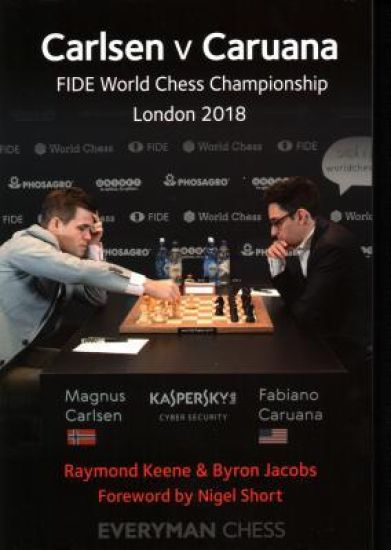
Carlsen v Caruana

Carlsen v Caruana

Raymond Keene; Byron Jacobs; Nigel Short

Everyman Chess
2018
nidottu
This match between the number one and number two ranked players in the world is one of the most eagerly-awaited World Championship clashes of recent years. Defending champion Magnus Carlsen first gained the title in 2013 when he beat Viswanathan Anand. He has already successfully defended his title twice, against Anand in 2014 and against Sergey Karjakin in 2016. Carlsen has been the highest ranked player in the world since July 2011. ***** His challenger, Fabiano Caruana, has been playing brilliantly in the run-up to the championship, registering numerous tournament victories against elite competition. He gained the right to challenge Carlsen thanks to a superb victory in the Berlin Candidates event early in 2018 where he scored 9/14, finishing a point clear of the best players in the world. Prior to the match he has drawn to within three points of the champion on the current ratings (Carlsen is 2835, Caruana 2832). Caruana is the first American since the legendary Bobby Fischer to play a match for the supreme title. ----- * All match games analysed in great detail. --- * Portraits of the protagonists with key games and moments from their careers. --- * History of the World Chess Championship.
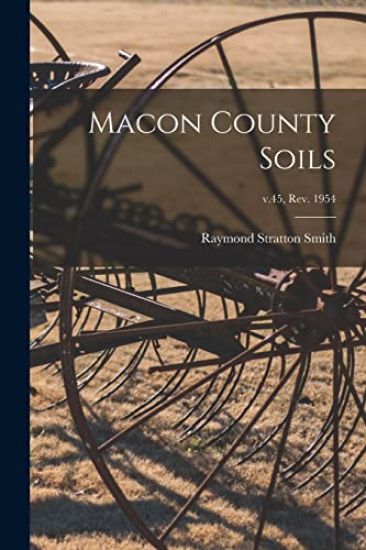
Macon County Soils; v.45, rev. 1954

Macon County Soils; v.45, rev. 1954

Raymond Stratton 1880- Smith

Hassell Street Press
2021
nidottu
This work has been selected by scholars as being culturally important and is part of the knowledge base of civilization as we know it.This work is in the public domain in the United States of America, and possibly other nations. Within the United States, you may freely copy and distribute this work, as no entity (individual or corporate) has a copyright on the body of the work.Scholars believe, and we concur, that this work is important enough to be preserved, reproduced, and made generally available to the public. To ensure a quality reading experience, this work has been proofread and republished using a format that seamlessly blends the original graphical elements with text in an easy-to-read typeface.We appreciate your support of the preservation process, and thank you for being an important part of keeping this knowledge alive and relevant.
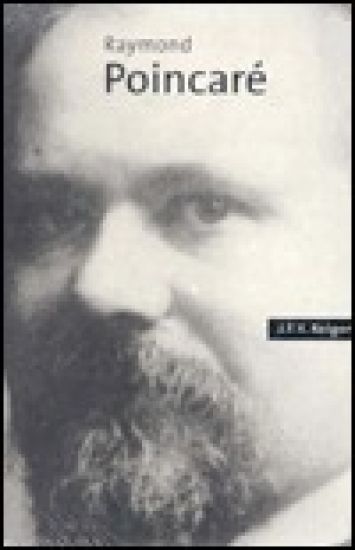
Raymond Poincaré

Raymond Poincaré

J. F. V. Keiger

Cambridge University Press
1997
sidottu
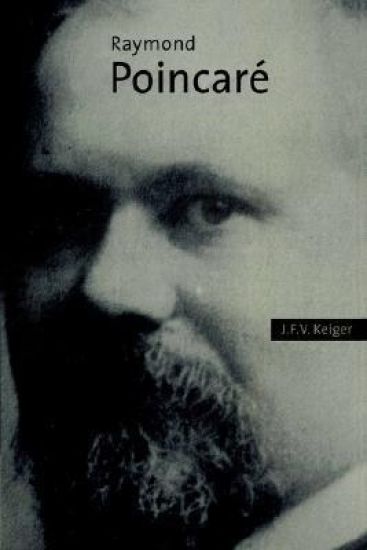
This study is a scholarly biography of one of France's foremost political leaders. In a career which ran from the 1880s to the 1930s, one of the most formative periods of modern French history, Poincaré held the principal offices of state. He played crucial roles in France's entry into the Great War, the organisation of the war effort, the peace settlement, the reparations question, the occupation of the Ruhr and the reorganisation of French finances in the 1920s. His life and work is surrounded by controversy and myth, from 'Poincaré-la-guerre' to 'Poincaré-le-franc', which this book dissects. Using a host of new archival material, Professor Keiger explores the historiography of the man and his times and reveals, somewhat surprisingly, how animal rights and feminism could be as important to him as party politics and public finance.
Raymond Poincaré

Raymond Poincaré

J. F. V. Keiger

Cambridge University Press
2002
pokkari
This study is a pioneering scholarly biography of one of France’s foremost political leaders. In a career which ran from the 1880s to the 1930s, one of the most formative periods of modern French history, Poincaré held the principal offices of state. He played crucial roles in France’s entry into the Great War, the organisation of the war effort, the peace settlement, the reparations question, the occupation of the Ruhr and the reorganisation of French finances in the 1920s. His life and work is surrounded by controversy and myth, from ‘Poincaré-la-guerre’ to ‘Poincaré-le-franc’, which this book dissects. Using a host of new archival material, Professor Keiger explores the historiography of the man and his times and reveals, somewhat surprisingly, how animal rights and feminism could be as important to him as party politics and public finance.