
Kirjahaku
Etsi kirjoja tekijän nimen, kirjan nimen tai ISBN:n perusteella.
1000 tulosta hakusanalla Van Morrison

Vince Morrison, known to most people as Van.Good with his hands, be it crafting a piece of wood, playing his guitar, or pleasing a lover-he excels at them all.Friendly, flirty, and talented, he's cool under pressure, and hot everywhere else.But he keeps his heart closed, even as his interest and emotions are tested.Olivia Rourke works alongside him at BAM.Talented, private, and intriguing, she touches something inside him he can't deny.He wants to know her. In every possible way. He wants her to know him.Her past tells her to stay clear.Van is everything that she wants, and exactly what she cannot have. She has someone else to think of who is more important.Can either of them risk their hearts?Author's note: This is standalone in the Vested Interest world. If you are looking for a blue-collar musician ready to sweep you off your feet, prepare to swoon for this man who will protect with a fierce heart.
Van Leeuwen Artisan Ice Cream
Laura O'Neill; Ben Van Leeuwen; Pete Van Leeuwen
HarperCollins
2015
sidottu
In the summer of 2008 the Van Leeuwen team rolled out their first two yellow ice cream trucks in New York City. Now, with over seven years of ice cream making under their belts, Laura, Ben, and Pete are delighted to share their recipes and stories with you.With an emphasis on traditional practices and artisanal ingredients, Van Leeuwen Artisan Ice Cream will teach you how to make these delicious scoops at home and give you the foundation to create any flavor your heart desires.
Van der Waals and Molecular Science
A. Ya Kipnis; B. E. Yavelov; J. S. Rowlinson
Oxford University Press
1996
sidottu
The development of molecular physics and physical chemistry cannot be understood without a knowledge of the work of the Dutch physicist, Johannes Diderik van der Waals. His work is the foundation of much modern work on the theory of fluids. His doctoral thesis of 1873 was the first theory of liquids and gases in which the essential differences and similarities of these two phases were interpreted in terms of the properties of the constituent molecules. In the years since the end of the Second World War, there has been a re-appraisal of the importance of van der Waals's work, which has put van der Waals into his historic place as one of the founders of molecular science.
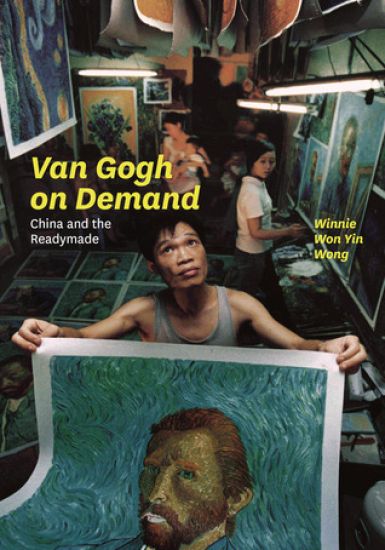
In the Guangdong province in southeastern China lies Dafen, a village that houses thousands of workers who paint Van Goghs, Da Vincis, Warhols, and other Western masterpieces, producing an astonishing five million paintings a year. To write about life and work in Dafen, Winnie Wong infiltrated this world, investigating the claims of conceptual artists who made projects there; working as a dealer; apprenticing as a painter; surveying merchants in Europe, Asia, and America; establishing relationships with local leaders; and organizing a conceptual art show for the Shanghai World Expo. The result is Van Gogh on Demand, a fascinating book about a little-known aspect of the global art world - one that sheds surprising light on our understandings of art, artists, and individual genius. Confronting difficult questions about the definition of art, the ownership of an image, and the meaning of imitation and appropriation, Wong shows how a plethora of artistic practices joins Chinese migrant workers, propaganda makers, and international artists together in a global supply chain of art and creativity. She examines how Berlin-based conceptual artist Christian Jankowski, who collaborated with Dafen's painters to reimagine the Dafen Art Museum, unwittingly appropriated a photojournalist's intellectual property. She explores how Zhang Huan, a radical performance artist from Beijing's East Village, prompted propaganda makers to heroize the female artists of Dafen village. Through these cases, Wong shows how Dafen's workers force us to reexamine our expectations about the cultural function of creativity and imitation, and the role of Chinese workers in redefining global art. Providing a valuable account of art practices in a period of profound global cultural shifts and an ascendant China, Van Gogh on Demand is a rich and detailed look at the implications of a world that can offer countless copies of everything that has ever been called "art."

Van Dyck
Susan J. Barnes; Nora De Poorter; Oliver Millar; Horst Vey
Yale University Press
2004
sidottu
Sir Anthony Van Dyck (1599–1641) is among the greatest portrait painters of all time. The 1990s opened and closed with major exhibitions devoted to his work, and now the long-awaited catalogue raisonné of his painted oeuvre is complete.A native of Antwerp, Van Dyck also lived and worked for long periods in Italy and England, where his brief, productive life ended. He is best known for his work at the court of Charles I. His full-length portraits of aristocrats in the Caroline court and in Genoa, Antwerp, Brussels, and The Hague influenced the history of Western portraiture into the twentieth century in the work of John Singer Sargent. Handsomely designed and illustrated, the volume includes a reproduction of every known authentic painting by the artist as well as the provenance and the significant facts and literature on each. This catalogue raisonné is, fittingly, the collaborative work of an international team devoted to the study of this major international artist. Published for the Paul Mellon Centre for Studies in British Art
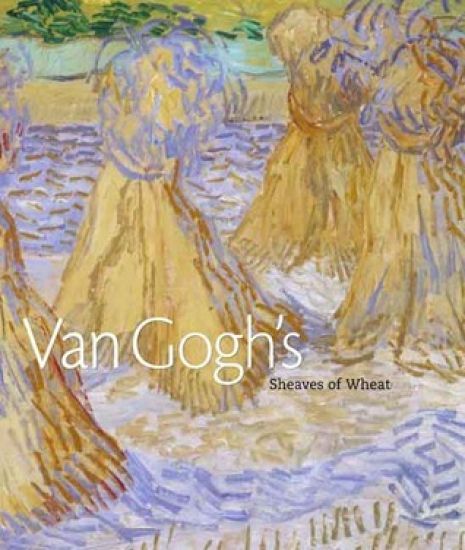
Vincent van Gogh (1853–1890) viewed wheat as a central metaphor of the cycle of life and the creative process. As such, it was a theme that he consistently explored throughout his career. This book examines the artist’s personal and visual fascination with wheat, analyzing the significance that the motif––and by extension, the peasant at work in nature––played within the social and cultural framework of 19th-century France and in the works of other artists of the time. Focusing on his Sheaves of Wheat at the Dallas Museum of Art––one of thirteen canvases completed in the last month of his life––this beautiful book features illustrations of Van Gogh’s works as well as personal correspondence and letters. Related images by such prominent contemporary artists as Emile Bernard, Jules Breton, Charles F. Daubigny, Paul Gauguin, Jean-François Millet, Claude Monet, and Camille Pissarro are also included. Together these works reveal the larger social and political trends of 19th-century France. Distributed for the Dallas Museum of Art Exhibition Schedule: Dallas Museum of Art (October 22, 2006 – January 7, 2007)

Van Gogh Repetitions
Eliza Rathbone; William H. Robinson; Marcia Steele
Yale University Press
2013
sidottu
Popular perceptions of Vincent van Gogh (1853–1890) frequently envision the painter working before nature in an intense frenzy, yet the artist’s method was often controlled and deliberate. Van Gogh Repetitions is the first book to focus on the artist’s “repetitions,” a term he used to describe his process of producing more than one version of a composition. Van Gogh ultimately developed a conceptual framework that distinguished his répétitions from copies, études, tableaux, and décorations, balancing modernist aspirations toward originality with the creation of copies of his existing compositions. The artist’s practice of producing repetitions was far more extensive and vital to his creative process than is commonly recognized. In this groundbreaking and beautifully illustrated book, a series of essays considers the many unresolved issues and controversies surrounding the repetitions, including their origins, development, and meaning in van Gogh’s art. Technical and analytical examinations provide new insights into the artist’s working methods and approach to the creative process. Published in association with The Phillips Collection and the Cleveland Museum of Art Exhibition Schedule: The Phillips Collection(10/12/13–01/26/14) Cleveland Museum of Art(03/02/14–05/26/14)

Van Gogh and Nature
Richard Kendall; Sjraar van Heugten; Chris Stolwijk
Yale University Press
2015
sidottu
A revelatory study of the importance of nature in Van Gogh’s art throughout his life in Holland and France The celebrated painter Vincent van Gogh (1853–1890) had a lifelong fascination with the natural world. He spent his youth in rural Holland, and the country’s flat landscapes, trees, flowers, and birds would feature in his early art. After he moved to Paris, he encountered new radical thinking about art and humanity’s changing relationship with nature. Later, in Provence and Auvers, he discovered unfamiliar terrain, flora, and fauna that further influenced his artistic ideas and subject matter. Van Gogh’s images of such diverse environments reflect not only his immediate surroundings but also the artist’s evolving engagement with nature and art. Van Gogh and Nature is an eye-opening and beautifully produced catalogue, which accompanied the best-attended special exhibition in the Clark Art Institute's history. It chronicles the artist’s ongoing relationship with nature throughout his entire career. Among the featured works are Van Gogh’s drawings and paintings, along with related materials that illuminate his reading, sources, and influences. Vivid color photography and explanatory texts based on new research by the authors clarify a central theme of Van Gogh’s oeuvre. Distributed for the Clark Art InstituteExhibition Schedule:Clark Art Institute (06/14/15–09/13/15)
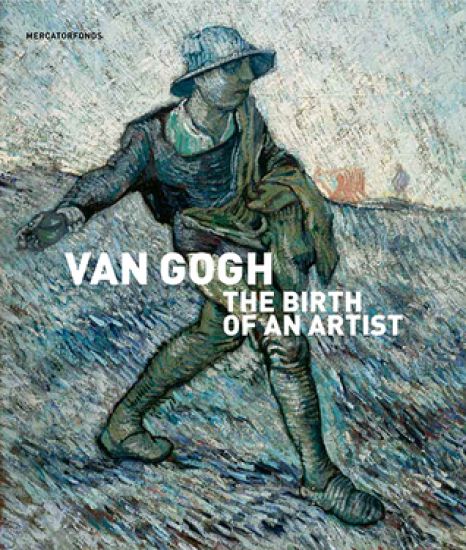
Van Gogh
Yale University Press
2015
sidottu
An unprecedented, in-depth exploration of the dawn of Van Gogh’s artistic career In 1878, at age 25, Vincent van Gogh (1853–1890) arrived in the area of Belgium known as the Borinage to work as a Protestant evangelist in rural coal mining communities. He failed in that vocation, and after months of soul-searching, in August 1880, he decided to become an artist. This fascinating publication is the first to examine in depth Van Gogh’s time in the Borinage and his artistic development in the following years, when he created his works that in many cases have direct ties with this early period. Vivid essays tell the story of Van Gogh’s life in the mining communities, and the effect this environment had on his way of thinking and seeing the world. Augmenting the text are letters Van Gogh wrote to his brother Theo from the Borinage, in which he describes his desire to sketch, and drawings that he modeled after prints of masterworks by artists such as Jean-François Millet. Other essays trace Van Gogh’s development as an artist in subsequent years, including his move to Brussels to fully pursue life as an artist. Thought-provoking examinations of works that Van Gogh completed after leaving the Borinage demonstrate how motifs that he developed there—rustic dwellings, laborers, agriculture, nature—became themes that spanned his entire oeuvre. Distributed for Mercatorfonds and the Musée des Beaux-Arts de Mons, BelgiumExhibition Schedule:Foundation Mons 2015, Belgium (01/23/15–05/17/15)
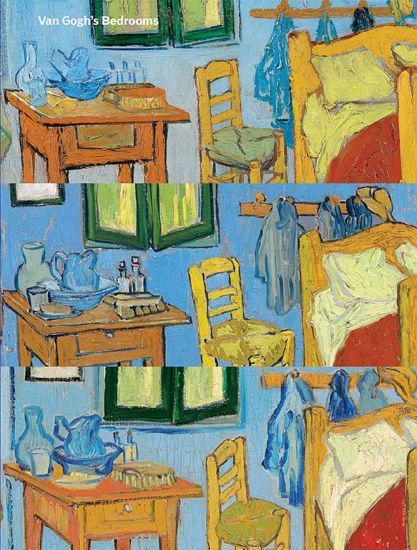
Van Gogh's Bedrooms
Gloria Groom; Louis van Tilborgh; David J. Getsy; Inge Fiedler
Yale University Press
2016
sidottu
A fascinating look at the genesis and meaning of Van Gogh’s famed paintings of his bedroom Vincent van Gogh’s The Bedroom, a painting of his room in Arles, is arguably the most famous depiction of a bedroom in the history of art. The artist made three versions of the work, now in the collections of the Van Gogh Museum, the Art Institute of Chicago, and the Musée d’Orsay. This book is the first in-depth study of their making and their meaning to the artist. In Van Gogh’s Bedrooms, an international team of art historians, scientists, and conservators investigates the psychological and emotional significance of the bedroom in Van Gogh’s oeuvre, surveying dwellings as a motif that appears throughout his work. Essays address the context in which the bedroom was first conceived, the uniqueness of the subject, and the similarities and differences among the three works both on and below the painted surface. The publication reproduces more than 50 paintings, drawings, and illustrated letters by the artist, along with other objects that evoke his peripatetic life and relentless quest for “home.”Distributed for the Art Institute of ChicagoExhibition Schedule:Art Institute of Chicago (02/14/16–05/10/16)
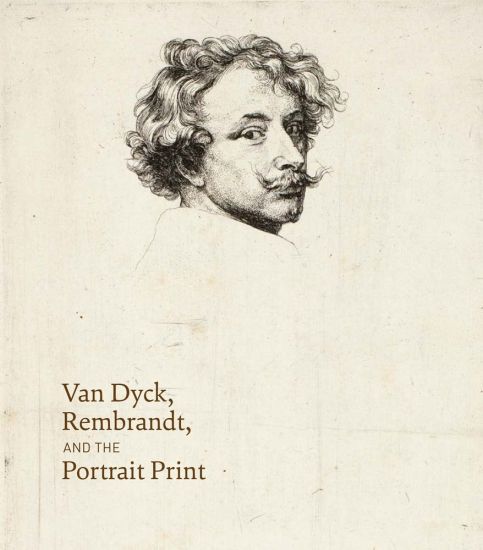
Van Dyck, Rembrandt, and the Portrait Print
Victoria Sancho Lobis
Yale University Press
2016
sidottu
In the last decade of his life, Anthony van Dyck (1599–1641) undertook a printmaking project that changed the conventions of portraiture. In a series later named the Iconography, he portrayed artists alongside kings, courtiers, and diplomats—a radical departure from preexisting conventions. He also depicted his subjects in novel ways, focusing on their facial features often to the exclusion of symbolic costumes or props. In addition to illustrating approximately 60 works by Van Dyck and other artists from his era—particularly Rembrandt—this catalogue traces the artist’s influence over hundreds of years. Showcasing both 17th century portraits in a variety of media and portrait prints by a wide range of artists spanning the 16th through the 20th centuries—including Albrecht Dürer, Hendrick Goltzius, Francisco de Goya, Edgar Degas, and Jim Dine—the book demonstrates the indelible mark that Van Dyck left on the genre.Distributed for the Art Institute of ChicagoExhibition Schedule:Art Institute of Chicago (03/05/16-08/07/16)
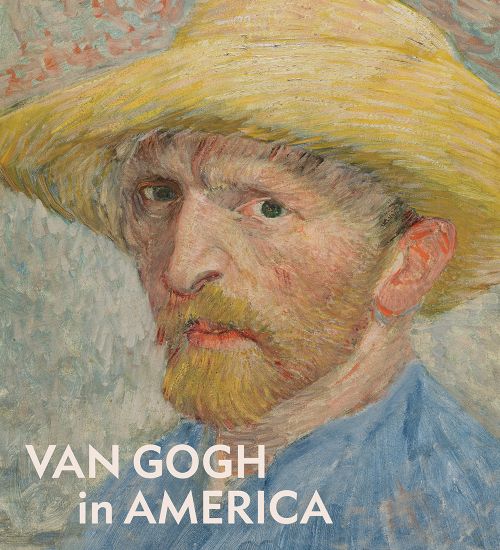
Van Gogh in America
Yale University Press
2022
sidottu
A fascinating exploration of the introduction of Vincent van Gogh’s work to the United States one hundred years later Vincent van Gogh (1853–1890) is one of the most iconic artists in the world, and how he became a household name in the United States is a fascinating, largely untold story. Van Gogh in America details the early reception of the artist’s work by American private collectors, civic institutions, and the general public from the time his work was first exhibited in the United States at the 1913 Armory Show up to his first retrospective in an American museum at the Museum of Modern Art, New York, in 1935, and beyond. The driving force behind this project, the Detroit Institute of Arts, was the very first American public museum to purchase a Van Gogh painting, his Self-Portrait, in 1922, and this publication marks the centenary of that event. Leading Van Gogh scholars chronicle the considerable efforts made by early promoters of modernism in the United States and Europe, including the Van Gogh family, Helene Kröller-Müller, numerous dealers, collectors, curators, and artists, private and public institutions, and even Hollywood, to frame the artist’s biography and introduce his art to America.Distributed for the Detroit Institute of ArtsExhibition Schedule:Detroit Institute of Arts (October 2, 2022–January 22, 2023)
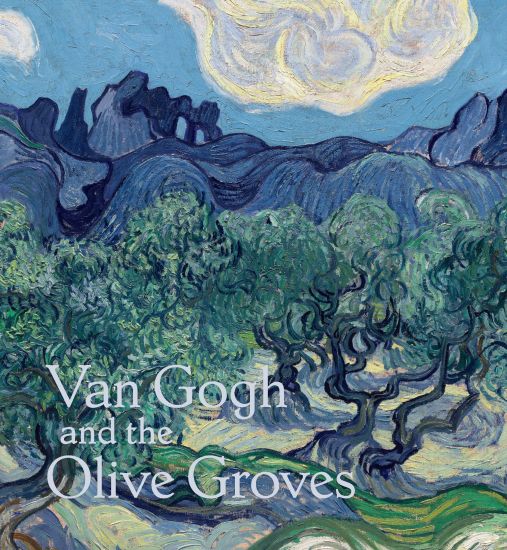
Van Gogh and the Olive Groves
Yale University Press
2021
sidottu
Combining deep focus with a multifaceted approach to reveal formal, technical, and spiritual aspects of the olive tree motif that dominated the painter’s production during his time in a Provençal asylum?Van Gogh and the Olive Groves reunites for the first time the important series of paintings that Vincent van Gogh (1853–90) dedicated to the motif of olive trees during his stay at the asylum of Saint-Rémy-de-Provence. The book contextualizes this work within Van Gogh’s artistic production and explores its deeply personal, often religious resonance. It also features in-depth findings on the artist’s technique, materials, and palette resulting from a three-year cross-disciplinary conservation science research project that rigorously examined all 15 paintings. Of particular interest are new discoveries concerning Van Gogh’s use of unstable pigments, his application of paint en plein air versus in the studio, and the chronology of the series. Produced between June and December 1889, this bold and highly experimental series employs the motif as a constant in the artist’s passionate investigation of the expressive powers of color, line, and subject. Painting the olive trees at different times of day and in different seasons was a quest to unlock their quintessential features, which to him represented the spirit of Provence.Distributed for the Dallas Museum of ArtExhibition Schedule:Dallas Museum of Art (October 17, 2021–February 6, 2022)Van Gogh Museum, Amsterdam (March 11–June 12, 2022)
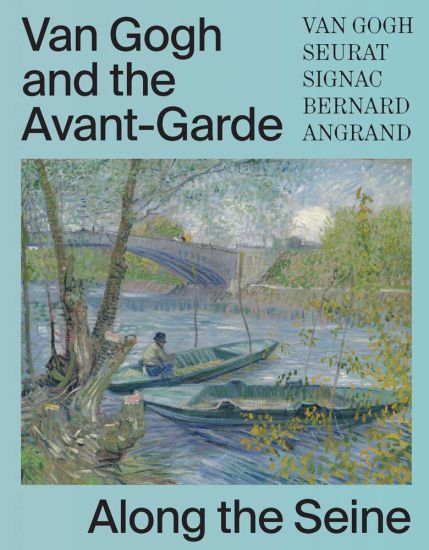
Van Gogh and the Avant-Garde
YALE UNIVERSITY PRESS
2023
sidottu
An examination of the innovative portrayals of industry and leisure created by five avant-garde artists working at Asnières in the late nineteenth century From 1881 to 1890, Vincent van Gogh, Georges Seurat, Paul Signac, Emile Bernard, and Charles Angrand chose Asnières, a suburb of Paris, as a site of artistic experimentation. Located on the Seine, Asnières became a popular destination for Parisians thanks to aquatic sports and festivals starting in the 1850s, facilitated by the arrival of new train stations and bridges earlier in the century. This convenient new transportation system had beckoned Parisians to more distant destinations like Argenteuil and Bougival, resulting in the river scenes depicted by Impressionists like Monet and Renoir. At the same time, the idyllic landscape of Asnières increasingly contrasted with the factories appearing on the opposite side of the river. Homing in on the tensions between leisure and work, the avant-garde artists at Asnières sought to capture the feeling of this starkly modern landscape by developing innovative motifs, styles, and techniques that pushed their work in new directions. Offering an unprecedented in-depth look at the work produced by the artists at Asnières, this handsomely illustrated volume includes scholarly essays on each of the artists as well as a map detailing the locations where the artists painted.Exhibition Schedule:Art Institute of Chicago (May 14–September 4, 2023) Van Gogh Museum, Amsterdam (October 13, 2023–January 14, 2024)
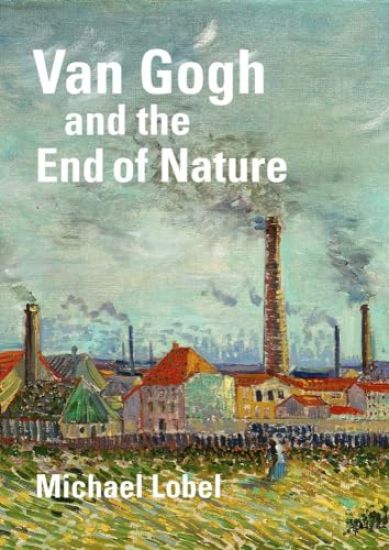
A groundbreaking reassessment that foregrounds Van Gogh’s profound engagement with the industrial age while making his work newly relevant for our world today “Van Gogh has never seemed more relevant. This stands as my favorite book of the year in any genre.”—John Vincler, Cultured Vincent van Gogh (1853–1890) is most often portrayed as the consummate painter of nature whose work gained its strength from his direct encounters with the unspoiled landscape. Michael Lobel upends this commonplace view by showing how Van Gogh’s pictures are inseparable from the modern industrial era in which the artist lived—from its factories and polluted skies to its coal mines and gasworks—and how his art drew upon waste and pollution for its subjects and even for the very materials out of which it was made. Lobel underscores how Van Gogh’s engagement with the environmental realities of his time provides repeated forewarnings of the threats of climate change and ecological destruction we face today. Van Gogh and the End of Nature offers a radical revisioning of nearly the full span of the artist’s career, considering Van Gogh’s artistic process, his choice of materials, and some of his most beloved and iconic pictures. Merging a timely sense of environmental urgency with bold new readings of the work of one of the world’s most acclaimed artists, this book weaves together detailed historical research and perceptive analysis into an illuminating portrait of an artist and his changing world.
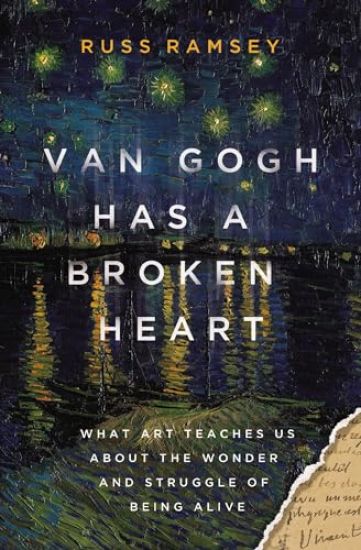
Beyond a mere introduction to great art, Van Gogh Has a Broken Heart is about loving to learn what art has to teach us about the wonder and struggle of being alive.Did you know that:Vincent van Gogh's attempt to start an artist's colony with Paul Gauguin lasted only nine weeks, ending in his infamous "ear episode"?Pablo Picasso was a prime suspect in the disappearance of the Mona Lisa?Artemisia Gentileschi was tortured with thumbscrews to verify her testimony at her own rapist's trial?Norman Rockwell's critics said his work would never be accepted as "high art"--and he agreed?These stories--and many more--shaped the work these artists left behind. In their art are lessons common to the human experience about the wonder and struggle of being alive: dreams lost, perspectives changed, and humility derived through suffering.In Van Gogh Has a Broken Heart, Russ Ramsey digs into these artists' stories for readers who may be new to art, as well as for lifelong students of art history, to mine the transcendent beauty and hard lessons we can take from their masterpieces and their lives. Each story from some of the history's most celebrated artists applies the beauty of the gospel in a way that speaks to the suffering and hope we all face.
Van Gogh 100
Praeger Publishers Inc
1996
sidottu
This volume commemorates the 100th anniversary of Vincent van Gogh's death. Major van Gogh scholars present essays that reexamine the painter's place in the art world of his time, the phenomenal growth in his reputation, and his influence on later art movements and individual artists. At the time of his death and for some years after, there was a question as to whether van Gogh's approach would gain recognition. Today, he is seen as one of the most popular and recognized of the world's artists, and his impact on 20th-century art is unquestioned. How and why this occurred is a major theme throughout this essay collection.Among the topics examined are iconography; van Gogh's poetry as well as the literature that influenced him and that he, in turn, influenced; psychological and religious aspects of van Gogh's painting and self-imaging; and how van Gogh has been interpreted. A section on his legacy in art concludes this major reassessment of van Gogh's place in art history. An important collection for art scholars and researchers as well as public library patrons.
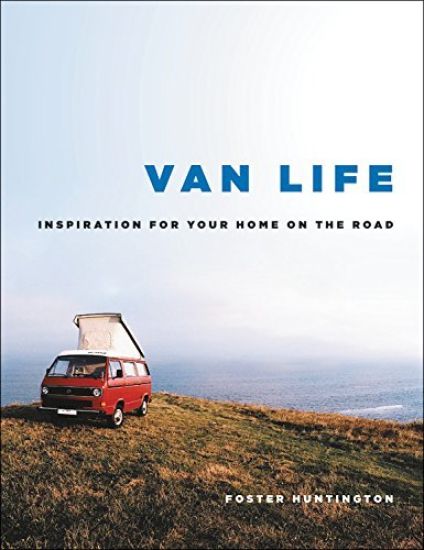
With hundreds of funky vehicles, awe-inspiring landscapes, and cleverly designed interiors in tiny spaces, Van Life is perfect for anyone who dreams about living on the open road. More and more, people of all generations--from millennials to baby boomers--are taking a break from conventional life for the freedom, tranquility, and adventure of being on the road and living in a converted vintage truck, camper, or van. One of these van-dwellers, Foster Huntington, created the #vanlife hashtag as he chronicled his adventures of living in a van and driving it across the country. He tapped into a community of like-minded individuals looking to explore nature at their own pace and live a debt-free lifestyle. Van Life showcases the best crowd-sources photographs from Foster's social media accounts--many of which have never been posted or seen before. Organized into sections like Volkswagen vans, American vans, converted vans, school buses, and more, the selection of photos includes shots of the unique vehicles and the beautiful locations they've been parked. From stunning beaches to dramatic mountains and picturesque forests, and with fully designed interiors with kitchens and sleeping quarters, this stunning array of life-on-the-road-possibilities might just be enough to get you to pack up your things and hit the highway. Also included are informative and topical interviews with solo travelers, couples, and families who are living this new American dream.
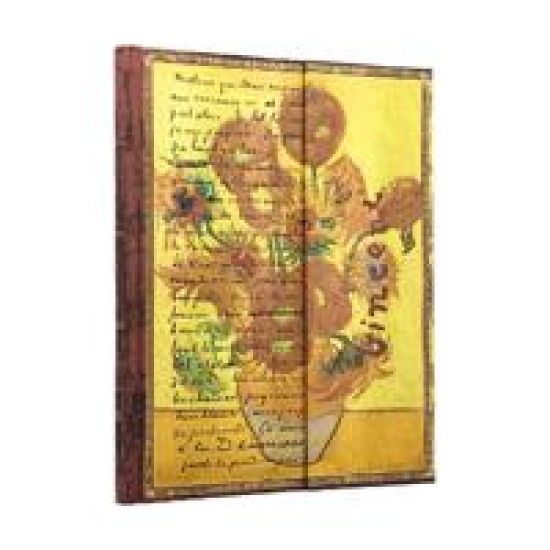
Van Gogh Sunflowers (Embellished Manuscripts Collection) Ultra Lined Hardcover Journal (Elastic Band Closure)
Little, Brown Book Group
2026
sidottu