Kirjojen hintavertailu. Mukana 11 627 491 kirjaa ja 12 kauppaa.

Kirjahaku

Etsi kirjoja tekijän nimen, kirjan nimen tai ISBN:n perusteella.

752 tulosta hakusanalla Vasyl Harik

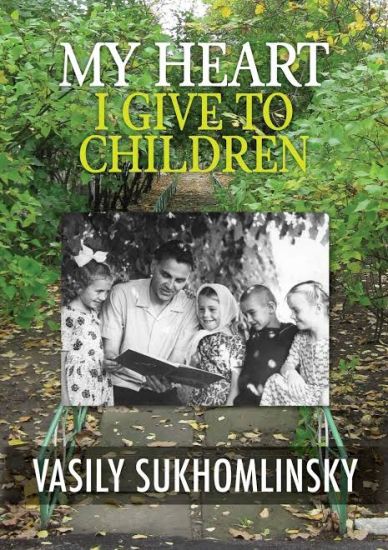
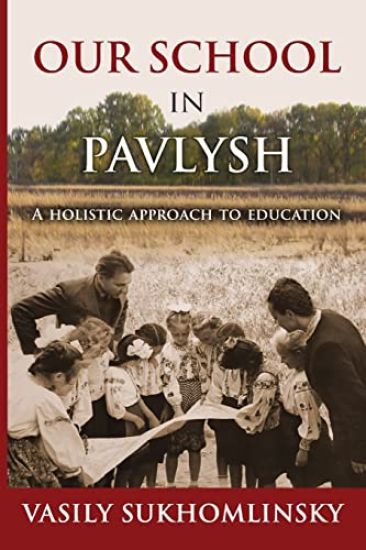
Our School in Pavlysh

Our School in Pavlysh

Vasyl Sukhomlynsky

EJR Language Service Pty. Limited
2021
pokkari
Our School in Pavlysh describes the inspirational work carried out at Pavlysh Secondary School in central Ukraine during the 1960s. For Sukhomlinsky's readership of teachers and school principals, the word 'Pavlysh' stood for creative thought, inspiration, and the hope of finding answers to troubling questions. Raising his school from the ashes of World War Two, Sukhomlinsky created a system of education that was deeply embedded in the natural environment and that fostered the qualities of curiosity, empathy and creativity. One of the thousands of visitors to Pavlysh, a school principal from Armenia, wrote: 'I have spent only one day in this remarkable school where so much is happening, but I have gained as much as I did in four years at the institute.' Another visiting principal wrote: 'Pavlysh Secondary School should be renamed a university We say this quite responsibly: here a feeling of wonder and admiration comes over anyone with the slightest love for children and schools.'Students enrolling in Sukhomlinsky's school became part of a vibrant learning community in which teachers, parents, community members, and the students themselves all played a role in educating each other. Dozens of clubs operated after school, most attended by children of varying ages, and the older children played a significant role in educating younger children. These informal, extracurricular activities were extremely important in developing children's talents, building their self-esteem, and providing an experiential background for formal studies. In this environment students became autonomous, lifelong learners.
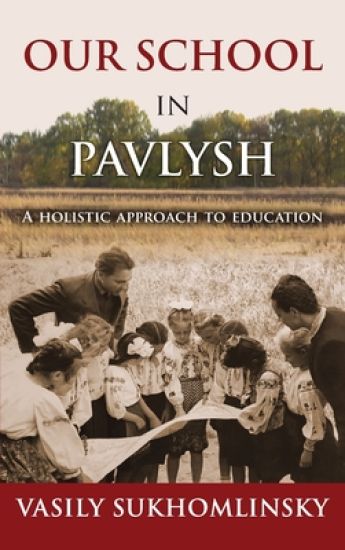
Our School in Pavlysh

Our School in Pavlysh

Vasyl Sukhomlynsky

EJR Language Service Pty. Limited
2021
sidottu
Our School in Pavlysh describes the inspirational work carried out at Pavlysh Secondary School in central Ukraine during the 1960s. For Sukhomlinsky's readership of teachers and school principals, the word 'Pavlysh' stood for creative thought, inspiration, and the hope of finding answers to troubling questions. Raising his school from the ashes of World War Two, Sukhomlinsky created a system of education that was deeply embedded in the natural environment and that fostered the qualities of curiosity, empathy and creativity. One of the thousands of visitors to Pavlysh, a school principal from Armenia, wrote: 'I have spent only one day in this remarkable school where so much is happening, but I have gained as much as I did in four years at the institute.' Another visiting principal wrote: 'Pavlysh Secondary School should be renamed a university We say this quite responsibly: here a feeling of wonder and admiration comes over anyone with the slightest love for children and schools.'Students enrolling in Sukhomlinsky's school became part of a vibrant learning community in which teachers, parents, community members, and the students themselves all played a role in educating each other. Dozens of clubs operated after school, most attended by children of varying ages, and the older children played a significant role in educating younger children. These informal, extracurricular activities were extremely important in developing children's talents, building their self-esteem, and providing an experiential background for formal studies. In this environment students became autonomous, lifelong learners.
Rose Petal Wine

Rose Petal Wine

Vasyl Symonenko

Thorpe-Bowker
2020
pokkari
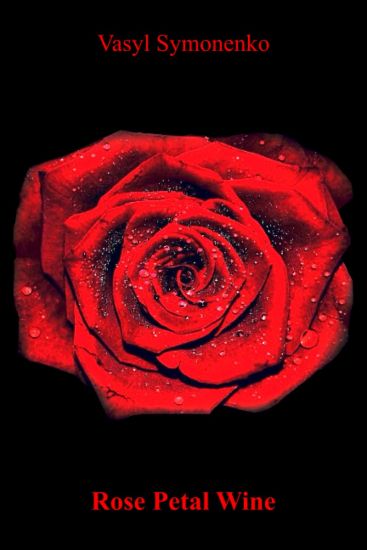
A well-known Ukrainian poet, Vasyl Symonenko was one of the most important figures in Ukrainian literature of the early 1960s. Rose Petal Wine is a collection of short stories about life in Ukraine in the 1960s during the times of the Soviet Union (USSR). "His voice is bold, and fearless... He stands for originality and creative experimentation... His images are immediate, as only a direct personal experience can be... An important device in Symonenko's short stories is his ability to involve the reader, to make him a part of the story... The fact that Symonenko was primarily a poet, allowed him to enrich his prose with devices borrowed from poetics..." Igor Shankovsky in Symonenko. A Study in Semantics
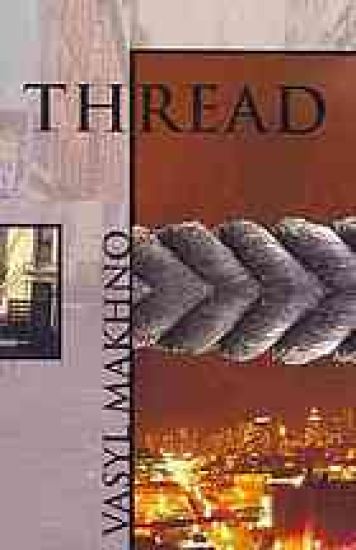
Thread: and Selected New York Poems

Thread: and Selected New York Poems

Vasyl Makhno

Meeting Eyes Bindery
2009
nidottu
Poetry. Bilingual Edition. Translated from the Ukrainian by Orest Popovych. "From Yehuda Amichai to the New York Group, from the state of the Union to the stables of Gertrude Stein, violins in their cases and pregnant foxes in their lairs: Makhno sweeps through the unreal city of immigrant dreams and resident nightmares and gathers it all into poems at once compassionate, witty, and saturated with life. As thoroughly versed in the antics of Ashbery as in the hijinks of Bukowski, Antonych, Du Fu, Makhno enters the American scene a Ukrainian original, enlarging our field of vision. Bracing, embracing, and utterly valuable. Gottfried Benn was wrong"--Askold Melnyczuk.
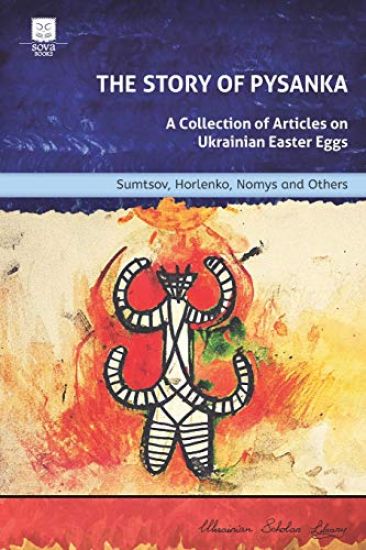
The Story of Pysanka

The Story of Pysanka

Vasyl Horlenko; Volodymyr Yastrebov

Sova Books Pty Ltd
2019
pokkari
"The Story of Pysanka. A Collection of Articles on Ukrainian Easter Eggs." What do Egyptian Kneph and Ptah, Māori Tangaroa and Finnish Ilmatar have in common? Why are cross, meander and swastika associated with some cultures' Easter egg? What is the difference between the two most popular types of Ukrainian Easter egg, pysanka and krashanka? What message could one pass with a pysanka? Can a pysanka protect your family and ward off evil powers? Answers to these and some other questions can be found in this book. "The Story of Pysanka" consists of articles written by Ukrainian ethnographers in the 19th century. This is their first translation into English. Contemporary pysanky expert, Pavlo Rybalko, wrote the foreword. An extensive bibliography, glossary and indexare included, as well as black and white illustrations. Who would have thought that Easter eggs could be a topic of one's Doctoral Dissertation? Well, indeed, it was, and not once. As they say, 'ab ovo' ☺. "The Story of Pysanka" is the first book in Sova Books' Ukrainian Scholar Library series. It will be followed by publications on Ukrainian Spells, Ukrainian Herbal Medicine, Ukrainian Mythology and others. About the Series: Sova Books' Ukrainian Scholar Library offers works written by Ukrainian intellectuals on various subjects. Let it be History, Folk Music and Lore, Literary Studies, Religion or Politics - these subjects and hopefully more with time will be covered by the series. The works span several centuries and most have Ukraine as their main or starting point of discussion. Whether you are a scholar or not, you may find the answers to what you are looking for in your quest of knowledge in these books.
Ternary Alloys Based on II-VI Semiconductor Compounds

Ternary Alloys Based on II-VI Semiconductor Compounds

Vasyl Tomashyk; Petro Feychuk; Larysa Shcherbak

CRC Press Inc
2013
sidottu
Doped by isovalent or heterovalent foreign impurities (F), II–VI semiconductor compounds enable control of optical and electronic properties, making them ideal in detectors, solar cells, and other precise device applications. For the reproducible manufacturing of the doped materials with predicted and desired properties, manufacturing technologists need knowledge of appropriate ternary system phase diagrams.A guide for technologists and researchers at industrial and national laboratories, Ternary Alloys Based on II-VI Semiconductor Compounds collects all available data on ternary II–VI–F semiconductor materials. It presents ternary phase diagrams for the systems and includes data about phase equilibriums on the cross sections. The book is also suitable for phase diagram researchers, inorganic chemists, and solid state physicists as well as students in materials science, engineering, physical chemistry, and physics. The authors classify all materials according to the periodic groups of their constituent atoms (i.e., possible combinations of Zn, Cd, and Hg with chalcogens S, Se, and Te) and additional components in the order of their group number. Each ternary system database description contains the diagram type, possible phase transformation and physical–chemical interaction of the components, equilibrium investigation methods, thermodynamic characteristics, and the sample preparation method. In some cases, the book illustrates the solid and liquid-phase equilibriums with vapor because of their importance to crystal growth using the vapor–liquid–solid technique. It also presents data on the homogeneity range as well as baric and temperature dependences of solubility impurities in the semiconductor lattice and the liquid phase.
Multinary Alloys Based on II-VI Semiconductors

Multinary Alloys Based on II-VI Semiconductors

Vasyl Tomashyk

Apple Academic Press Inc.
2015
sidottu
A companion volume to Ternary Alloys Based on II-VI Semiconductor Compounds (CRC Press, 2013) and Quaternary Alloys Based on II-VI Semiconductor Compounds (CRC Press, 2014), Multinary Alloys Based on II-VI Semiconductors provides up-to-date experimental and theoretical information on phase relations based on II-VI semiconductor systems with five or more components. Featuring detailed figures and extensive references, this book: Delivers a critical evaluation of many industrially important systems presented in the form of two-dimensional sections for the condensed phasesSummarizes the data from the last 15–20 years of literature on the study of organometallic compounds, which include zinc, cadmium, or mercury and sulfur, selenium, or telluriumClassifies all materials according to the periodic table groups of their constituent atoms, that is, possible combinations of Zn, Cd, and Hg with chalcogens S, Se, and Te and additional components in the order of their group numberSpecifies the diagram type, possible phase transformations and physical–chemical interaction of the components, methods of equilibrium investigation, thermodynamic characteristics, and methods for sample preparation in each multinary database descriptionMultinary Alloys Based on II-VI Semiconductors contains valuable material useful for obtaining nanoscale II-VI semiconductors and for preparing thin films of these semiconductor materials, as well as for exploring the biological and medicinal applications of organometallic compounds, and for identifying new compounds with necessary properties.
Quaternary Alloys Based on II - VI Semiconductors

Quaternary Alloys Based on II - VI Semiconductors

Vasyl Tomashyk

Apple Academic Press Inc.
2014
sidottu
Doped by isovalent or heterovalent foreign impurities, II–VI semiconductor compounds enable control of optical and electronic properties, making them ideal in detectors, solar cells, and other precise device applications. Quaternary alloys allow a simultaneous adjustment of band gap and lattice constant, increasing radiant efficiency at a wide range of wavelengths.Quaternary Alloys Based on II–VI Semiconductors consolidates data pertaining to diagrams of quaternary systems based on these semiconductor compounds. The book illustrates up-to-date experimental and theoretical information about phase relations based on II–VI semiconductor systems with four components. It critically evaluates many industrially significant systems presented in two-dimensional sections for the condensed phases.The author classifies all materials according to the periodic groups of their constituent atoms and additional components in the order of their group number. Each quaternary database description contains brief information on the diagram type, possible phase transformations and physical–chemical interactions of the components, thermodynamic characteristics, and methods for equilibrium investigation and sample preparation. Most of the phase diagrams are in their original form. For those with varying published data, the text includes several versions for comparison.This book provides invaluable data for technologists and researchers involved in developing and manufacturing II–VI semiconductors at industrial and national laboratories. It is also suitable for phase relations researchers, inorganic chemists, and semiconductor physicists as well as graduate students in materials science and engineering.Check out the companion books: Ternary Alloys Based on II–VI Semiconductor Compounds and
Multinary Alloys Based on III-V Semiconductors

Multinary Alloys Based on III-V Semiconductors

Vasyl Tomashyk

Productivity Press
2018
sidottu
III-V semiconductors have attracted considerable attention due to their applications in the fabrication of electronic and optoelectronic devices as light emitting diodes and solar cells. The electrical properties of these semiconductors can also be tuned by adding impurity atoms. Because of their wide application in various devices, the search for new semiconductor materials and the improvement of existing materials is an important field of study. This book covers all known information about phase relations in multinary systems based on III-V semiconductors, providing the first systematic account of phase equilibria in multinary systems based on III-V semiconductors and making research originally published in Russian accessible to the wider scientific community.This book will be of interest to undergraduate and graduate students studying materials science, solid state chemistry, and engineering. It will also be relevant for researchers at industrial and national laboratories, in addition to phase diagram researchers, inorganic chemists, and solid state physicists.Features:Provides up-to-date experimental and theoretical informationAllows readers to synthesize semiconducting materials with predetermined propertiesDelivers a critical evaluation of many industrially important systems presented in the form of two-dimensional sections for the condensed phases
Quaternary Alloys Based on III-V Semiconductors

Quaternary Alloys Based on III-V Semiconductors

Vasyl Tomashyk

Productivity Press
2018
sidottu
III-V semiconductors have attracted considerable attention due to their applications in the fabrication of electronic and optoelectronic devices as light emitting diodes and solar cells. The electrical properties of these semiconductors can also be tuned by adding impurity atoms. Because of their wide application in various devices, the search for new semiconductor materials and the improvement of existing materials is an important field of study. Doping with impurities is a common method of modifying and diversifying the properties of physical and chemical semiconductors. This book covers all known information about phase relations in quaternary systems based on III-V semiconductors, providing he first systematic account of phase equilibria in quaternary systems based on III-V semiconductors and making research originally published in Russian accessible to the wider scientific community.Features:Contains up-to-date experimental and theoretical information Allows readers to synthesize semiconducting materials with predetermined propertiesDelivers a critical evaluation of many industrially important systems presented in the form of two-dimensional sections for the condensed phases
Ternary Alloys Based on III-V Semiconductors

Ternary Alloys Based on III-V Semiconductors

Vasyl Tomashyk

Productivity Press
2017
sidottu
III-V semiconductors have attracted considerable attention due to their applications in the fabrication of electronic and optoelectronic devices as light-emitting diodes and solar cells. Because of their wide applications in a variety of devices, the search for new semiconductor materials and the improvement of existing materials is an important field of study. This new book covers all known information about phase relations in ternary systems based on III-V semiconductors.This book will be of interest to undergraduate and graduate students studying materials science, solid state chemistry, and engineering. It will also be relevant for researchers at industrial and national laboratories, in addition to phase diagram researchers, inorganic chemists, and solid state physicists.