Kirjojen hintavertailu. Mukana 11 627 616 kirjaa ja 12 kauppaa.

Kirjahaku

Etsi kirjoja tekijän nimen, kirjan nimen tai ISBN:n perusteella.

1000 tulosta hakusanalla Vernon Charles Allison

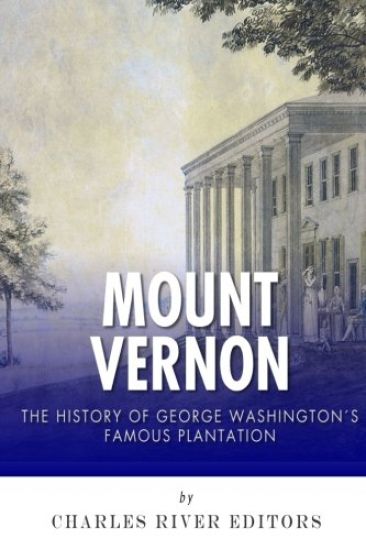
Mount Vernon: The History of George Washington's Famous Plantation

Mount Vernon: The History of George Washington's Famous Plantation

Charles River

Createspace Independent Publishing Platform
2015
nidottu
*Includes pictures *Includes accounts of Mount Vernon and its construction written by George Washington *Includes online resources and a bibliography for further reading *Includes a table of contents "I can truly say I had rather be at Mount Vernon with a friend or two about me, than to be attended at the Seat of Government by the Officers of State and the Representatives of every Power in Europe." - George Washington, letter to David Stuart, June 15, 1790 Every American is taught a pristine narrative of the life and legacy of George Washington and can easily recite the highlights of the "Father of Our Country". The remarkable Virginian led an under-resourced rag-tag army to ultimate victory in the American Revolution before becoming the nation's first president, setting it on its path toward superpower status. He may not have actually chopped down a cherry tree or tossed a silver dollar across the Potomac, but his contemporaries considered his character above reproach. When Washington voluntary resigned as commander of the armies, he stunned the world. Everyone in the colonies and the world realized that Washington, at the head of the last army standing in the colonies, could have made himself king of the new United States on the spot, and it would have been a move supported by his rank and file soldiers. Instead, Washington became the first Westerner to voluntarily demobilize his army, ensuring civilian control of the new nation. King George III called Washington "the greatest character of the age" for making that decision. As President from 1788-1796, Washington set every precedent for the executive branch of the new government, from forming a "Cabinet" to limiting himself to two terms. He even set precedents with his farewell address, which helped guide the policies of subsequent presidents. Put simply, Washington did more than any other man to ensure the success of the American Revolution and the safe passage of the new United States from fledgling nation to budding power, For about as long as Washington has been famous, so has his most famous residence, the spacious Virginian plantation known as Mount Vernon. Washington lived in a smaller structure on the land as a teen, and ironically, tradition and inheritance suggested that George would never be the one to own the land. Of course, fate would intervene, and Washington would not only come into possession of the 10,000 acres in 1761 but build and renovate the property to create one of the most famous private residences in the nation. Washington would live at Mount Vernon before the Revolution and retire there after the war and after his presidency. Indeed, he would die there and be buried there as well. By 1760, Washington was one of Virginia's wealthiest and most influential citizens, in large measure due to Mount Vernon's success as a tobacco plantation. However, to make that happen, Washington used hundreds of slaves, and though he mandated that his slaves be freed upon his death, the estate continued to employ slave labor until his widow's death years later. Thus, while Mount Vernon remains a hallowed tourist spot, it also underscores the most divisive and controversial issue of the post-Revolution era. Mount Vernon: The History of George Washington's Famous Plantation tells the story of the residence most associated with the first president, and the controversial nature of the slave labor used there. Along with pictures of important people, places, and events, you will learn about Mount Vernon like never before, in no time at all.
Dorothy Vernon of Haddon Hall

Dorothy Vernon of Haddon Hall

Charles Major

Createspace Independent Publishing Platform
2015
nidottu
Since I play no mean part in the events of this chronicle, a few words concerning my own history previous to the opening of the story I am about to tell you will surely not be amiss, and they may help you to a better understanding of my narrative. To begin with an unimportant fact-unimportant, that is, to you-my name is Malcolm Fran ois de Lorraine Vernon. My father was cousin-german to Sir George Vernon, at and near whose home, Haddon Hall in Derbyshire, occurred the events which will furnish my theme.
Mount Vernon: The History of George Washington's Famous Plantation

Mount Vernon: The History of George Washington's Famous Plantation

Charles River

Createspace Independent Publishing Platform
2017
nidottu
*Includes pictures *Includes accounts of Mount Vernon and its construction written by George Washington *Includes online resources and a bibliography for further reading *Includes a table of contents "I can truly say I had rather be at Mount Vernon with a friend or two about me, than to be attended at the Seat of Government by the Officers of State and the Representatives of every Power in Europe." - George Washington, letter to David Stuart, June 15, 1790 Every American is taught a pristine narrative of the life and legacy of George Washington and can easily recite the highlights of the "Father of Our Country". The remarkable Virginian led an under-resourced rag-tag army to ultimate victory in the American Revolution before becoming the nation's first president, setting it on its path toward superpower status. He may not have actually chopped down a cherry tree or tossed a silver dollar across the Potomac, but his contemporaries considered his character above reproach. When Washington voluntary resigned as commander of the armies, he stunned the world. Everyone in the colonies and the world realized that Washington, at the head of the last army standing in the colonies, could have made himself king of the new United States on the spot, and it would have been a move supported by his rank and file soldiers. Instead, Washington became the first Westerner to voluntarily demobilize his army, ensuring civilian control of the new nation. King George III called Washington "the greatest character of the age" for making that decision. As President from 1788-1796, Washington set every precedent for the executive branch of the new government, from forming a "Cabinet" to limiting himself to two terms. He even set precedents with his farewell address, which helped guide the policies of subsequent presidents. Put simply, Washington did more than any other man to ensure the success of the American Revolution and the safe passage of the new United States from fledgling nation to budding power, For about as long as Washington has been famous, so has his most famous residence, the spacious Virginian plantation known as Mount Vernon. Washington lived in a smaller structure on the land as a teen, and ironically, tradition and inheritance suggested that George would never be the one to own the land. Of course, fate would intervene, and Washington would not only come into possession of the 10,000 acres in 1761 but build and renovate the property to create one of the most famous private residences in the nation. Washington would live at Mount Vernon before the Revolution and retire there after the war and after his presidency. Indeed, he would die there and be buried there as well. By 1760, Washington was one of Virginia's wealthiest and most influential citizens, in large measure due to Mount Vernon's success as a tobacco plantation. However, to make that happen, Washington used hundreds of slaves, and though he mandated that his slaves be freed upon his death, the estate continued to employ slave labor until his widow's death years later. Thus, while Mount Vernon remains a hallowed tourist spot, it also underscores the most divisive and controversial issue of the post-Revolution era. Mount Vernon: The History of George Washington's Famous Plantation tells the story of the residence most associated with the first president, and the controversial nature of the slave labor used there. Along with pictures of important people, places, and events, you will learn about Mount Vernon like never before, in no time at all.
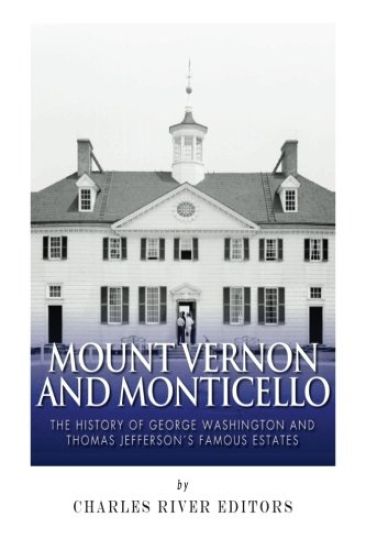
Mount Vernon and Monticello: The History of George Washington and Thomas Jefferson's Famous Estates
*Includes pictures *Includes accounts of the estates' histories and construction made by Washington and Jefferson *Includes online resources and bibliographies for further reading *Includes a table of contents For about as long as George Washington has been famous, so has his most famous residence, the spacious Virginian plantation known as Mount Vernon. Washington lived in a smaller structure on the land as a teen, and ironically, tradition and inheritance suggested that George would never be the one to own the land. Of course, fate would intervene, and Washington would not only come into possession of the 10,000 acres in 1761 but build and renovate the property to create one of the most famous private residences in the nation. Washington would live at Mount Vernon before the Revolution and retire there after the war and after his presidency. Indeed, he would die there and be buried there as well. By 1760, Washington was one of Virginia's wealthiest and most influential citizens, in large measure due to Mount Vernon's success as a tobacco plantation. However, to make that happen, Washington used hundreds of slaves, and though he mandated that his slaves be freed upon his death, the estate continued to employ slave labor until his widow's death years later. Thus, while Mount Vernon remains a hallowed tourist spot, it also underscores the most divisive and controversial issue of the post-Revolution era. Few Presidents are remembered for their homes, but Jefferson's Monticello is the greatest exception to that rule, and to this day it remains one of the nation's most instantly recognizable landmarks. When Jefferson's father died in 1757, his father's estate was split between Thomas and his brother, Randolph. Jefferson's share equated to about 5,000 acres of land and between 20-40 slaves. Because his father died when Thomas was only 14, he was not able to legally take hold of this estate until he was 21. Once Jefferson took formal control of the land, he began constructing his personal estate. Having received the schooling befitting of a gentleman during the late Enlightenment, Jefferson had a broad liberal arts education. This gave him some knowledge of architecture. Jefferson himself thus designed Monticello in a neoclassical mold. He avidly studied the Italian architect Andrea Palladio, and Jefferson's style can therefore be broadly characterized as Palladian. The construction of Monticello began in 1768, but it remained an ongoing project for many years. He formally moved into Monticello in 1770, and his wife Martha joined him there in 1772 after they were married. The time Jefferson subsequently spent in Europe also affected Monticello. He marveled at the architectural arts of the continent and studied them closely, which only strengthened his love for classical architecture and gave him ideas on how to expand his own estate. Ironically, although he had been wealthy all his life (or perhaps even because of it), Jefferson was a notorious spender who never learned how to operate a budget. During the twilight of his life, debt was a recurring issue, in large part due to expenses incurred by his work on Monticello and the University were enormous, and they ultimately depleted his considerable wealth. Mount Vernon and Monticello tells the story of the residence most associated with the first president, and the controversial nature of the slave labor used there. Along with pictures of important people, places, and events, you will learn about Mount Vernon like never before, in no time at all.
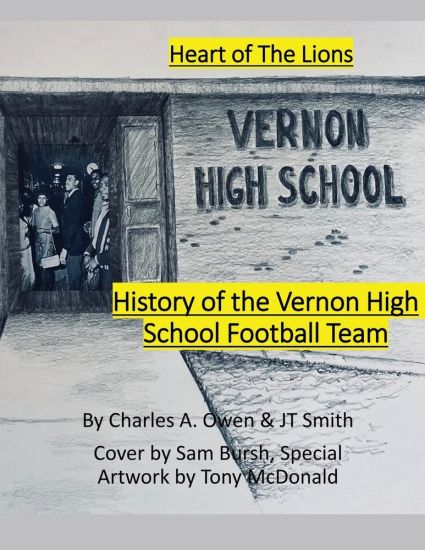
History of the Vernon High School Lions Football Team 1955-69
This book is published to tell the story of the Vernon High School (VHS) Lions football team. A full and best-effort was made to compile this document. The time to fully tell the story of the team has sadly passed, because many of the principal contributors, players and supporters of the program have departed the confines of this earth. Many were gone before pen was put to paper. I believe all archived information that could be discovered is here and will be reported in these pages.
History of the Vernon High School Lions Football Team 1955-69
This book is published to tell the story of the Vernon High School (VHS) Lions football team. A full and best-effort was made to compile this document. The time to fully tell the story of the team has sadly passed, because many of the principal contributors, players and supporters of the program have departed the confines of this earth. Many were gone before pen was put to paper. I believe all archived information that could be discovered is here and will be reported in these pages.
History of the town of Mont Vernon, New Hampshire

History of the town of Mont Vernon, New Hampshire

Charles James Smith

Alpha Edition
2020
pokkari
This book has been considered by academicians and scholars of great significance and value to literature. This forms a part of the knowledge base for future generations. So that the book is never forgotten we have represented this book in a print format as the same form as it was originally first published. Hence any marks or annotations seen are left intentionally to preserve its true nature.
A new History of Jamaica, From the Earliest Accounts, to the Taking of Porto Bello by Vice-Admiral Vernon. In Thirteen Letters From a Gentleman to his Friend. ... With two Maps,
The 18th century was a wealth of knowledge, exploration and rapidly growing technology and expanding record-keeping made possible by advances in the printing press. In its determination to preserve the century of revolution, Gale initiated a revolution of its own: digitization of epic proportions to preserve these invaluable works in the largest archive of its kind. Now for the first time these high-quality digital copies of original 18th century manuscripts are available in print, making them highly accessible to libraries, undergraduate students, and independent scholars.Rich in titles on English life and social history, this collection spans the world as it was known to eighteenth-century historians and explorers. Titles include a wealth of travel accounts and diaries, histories of nations from throughout the world, and maps and charts of a world that was still being discovered. Students of the War of American Independence will find fascinating accounts from the British side of conflict. ++++The below data was compiled from various identification fields in the bibliographic record of this title. This data is provided as an additional tool in helping to insure edition identification: ++++British LibraryT117285A gentleman = Charles Leslie.London: printed for J. Hodges, 1740. iv,340p., plates: maps; 8
A new History of Jamaica, From the Earliest Accounts, to the Taking of Porto Bello by Vice-Admiral Vernon. In Thirteen Letters From a Gentleman to his Friend. ... With two Maps, ... The Second Edition
The 18th century was a wealth of knowledge, exploration and rapidly growing technology and expanding record-keeping made possible by advances in the printing press. In its determination to preserve the century of revolution, Gale initiated a revolution of its own: digitization of epic proportions to preserve these invaluable works in the largest archive of its kind. Now for the first time these high-quality digital copies of original 18th century manuscripts are available in print, making them highly accessible to libraries, undergraduate students, and independent scholars.Western literary study flows out of eighteenth-century works by Alexander Pope, Daniel Defoe, Henry Fielding, Frances Burney, Denis Diderot, Johann Gottfried Herder, Johann Wolfgang von Goethe, and others. Experience the birth of the modern novel, or compare the development of language using dictionaries and grammar discourses. ++++The below data was compiled from various identification fields in the bibliographic record of this title. This data is provided as an additional tool in helping to insure edition identification: ++++British LibraryT120298A gentleman = Charles Leslie.London: printed for J. Hodges, 1740. iv,340p., plates: maps; 8