
Kirjahaku
Etsi kirjoja tekijän nimen, kirjan nimen tai ISBN:n perusteella.
434 tulosta hakusanalla Vesa Linna

Zarjad kletchatki. Revoljutsionnaja programma vosstanovlenija mikrobioma i snizhenija vesa za 4 nedeli (poket)
Uill Bulshevich
Bombora
2025
nidottu
Kniga eksperta po pitaniju i gastroenterologa Uilla Bulshevicha momentalno stala bestsellerom v Amerike. Bolee 4000 otzyvov na Amazone govorjat sami za sebja. My nedootsenivaem silu vlijanija rastitelnoj pischi na vosstanovitelnye protsessy nashego organizma. Burnyj rost issledovanij mikrobioma, kotoryj nabljudaetsja v poslednie neskolko let, nagljadno dokazyvaet, chto privychnye ogranichitelnye diety, takie kak keto i paleo, na samom dele vredny dlja nashego organizma. Avtorskaja metodika doktora Bulshevicha napravlena na ozdorovlenie kishechnika i uskorenie metabolizma, nalazhivanie gormonalnogo balansa i sderzhivanie vospalenija, kotoroe provotsiruet razvitie tjazhelykh zabolevanij.

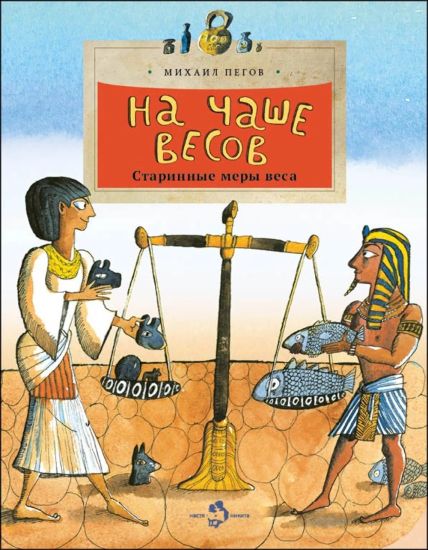
Eta poznavatelnaja knizhka rasskazyvaet o vesakh: ob ikh vazhnoj roli v zhizni cheloveka, o tom, kak oni pojavilis i sluzhili ljudjam na protjazhenii tysjacheletij. Junyj chitatel s interesom uznaet, chto ponachalu chelovek vsjo vzveshival s pomoschju sobstvennykh ruk, potom byli izobreteny drevnejshie rychazhnye vesy, vesy-bezmen, zatem pruzhinnye vesy. Segodnja povsjudu primenjajutsja vesy elektronnye, a chem udivjat nas vesy v buduschem? Dlja mladshego shkolnogo vozrasta. 3-e izdanie. Khudozhnik: Jakovlev Aleksandr

Bolshoj zhirnyj sjurpriz. Oshelomljajuschee otkrytie o tom, kak zaschitit organizm ot lishnego vesa
Nina Teicholz
Eksmo
2022
sidottu
Desjatiletijami nam govorili, chto nailuchshaja iz vozmozhnykh - kultura pitanija bez nasyschennykh zhirov. Menshe jaits, moloka, slivochnogo masla i stejkov - menshe kholesterinovykh bljashek, insultov i infarktov. 9-letnee issledovanie doktora Tejnkholts utverzhdaet - vse absoljutno inache. A tochnee - naoborot. Nasyschennye i polinenasyschennye zhiry ostro neobkhodimy nashemu telu kak stroitelnyj material i kletochnykh, i tkanevykh struktur. Iskljuchaja ikh iz ratsiona, my obrekaem sebja na razrushenie i degradatsiju. V knige vy najdete prakticheskie sovety po dejstvitelno zdorovomu pitaniju i tseluju sistemu vosstanovlenija organizma na mitokhondrialnom urovne, a takzhe pogruzites v udivitelnyj mir nauki i voochiju uvidite, pochemu na polkakh pojavilis transzhiry (kogda-to ikh iskrenne schitali luchshej alternativoj palmovomu maslu) i na chto v blizhajshee vremja ikh zamenit promyshlennost v pogone za "zdorovem" i ekonomicheskoj vygodoj.Perevodchik: Shustova A. P.

Superkishechnik. 4-nedelnyj plan pereprogrammirovanija mikrobioma, vosstanovlenija zdorovja i poteri vesa
Viljam Devis
Ast
2024
sidottu
Bestseller Amazon! Novaja kniga avtora "Pshenichnykh kilogrammov".Nash kishechnik - eto ne tolko vosmimetrovyj put, na protjazhenii kotorogo poleznye veschestva vsasyvajutsja v krov, no i ogromnyj mir vnutri nas. Milliardy milliardov razlichnykh bakterij ezhednevno vlijajut na nashe samochuvstvie i dazhe nastroenie.Za poslednie tysjachi let chelovecheskij mikrobiom preterpel ogromnye izmenenija, pojavilis produkty glubokoj pererabotki, pestitsidy, antibiotiki. Vse eti faktory sovremennoj zhizni priveli k tomu, chto rjad poleznykh i vazhnykh dlja nashego organizma mikrobov prosto ischez.V etoj knige doktor meditsinskikh nauk Viljam Devis rasskazhet, kak s pomoschju prostykh izmenenij v ratsione vosstanovit mikrobnyj sostav, ustranit izbytochnyj rost gribov i bakterij i vnov obresti kontrol nad svoim zdorovem, vesom i nastroeniem.Vsego za 4 nedeli vy smozhete znachitelno uluchshit zdorove kishechnika, a usovershenstvovannye retsepty privychnykh bljud pomogut vam nachat etot put.

Snjat stress i sbrosit ves. Strojnaja, potomu chto schastlivaja: avtorskaja metodika snizhenija vesa
A. Kondrashov
Ast
2024
sidottu
Chtoby pokhudet, nuzhno stat schastlivoj! Aleksandr Kondrashov, psikhoterapevt i avtor neskolkikh kursov po snizheniju vesa, rasskazhet, kak schaste privedet k strojnosti. Kursy pokhudenija ot doktora Kondrashova proshli tysjachi zhenschin i muzhchin, v rezultate metod obrel svoju sovershennuju formu, kotoruju avtor predstavil v etoj knige. Za kazhdoj lishnej kaloriej skryvajutsja slezy, bol, stradanija, stress i trevoga. I tolko izbavivshis ot nikh mozhno nastroit sebja na snizhenie vesa. Kniga rasskazyvaet o tom, kak postepenno podgotovit sebja i snizhat ves: ot prinjatija istinnoj prichiny lishnego vesa do tekhnik i priemov po normalizatsii zhizni. Stante strojnoj i schastlivoj!
The aim of Freudian Unconscious and Cognitive Neuroscience is to create a conception of the Freudian things around the unconscious that takes seriously both the clinical data gathered in the scope of psychoanalytic clinical practice during the past 110 years, and the empirical and theoretical achievements of cognitive science and evolution

The normal approach to the study of the foundations of psychoanalysis is to focus on Sigmund Freud's classical texts. In this book, however, the author approaches the issue from the perspective of the foundations of behavioural sciences in general. He studies the nature of psychological terms and explanations, and the relation between neuroscien

Critical Music Historiography: Probing Canons, Ideologies and Institutions
Vesa Kurkela; Markus Mantere
Routledge
2020
nidottu
During the past two decades, there has emerged a growing need to reconsider the objects, axioms and perspectives of writing music history. A certain suspicion towards Francois Lyotard’s grand narratives, as a sign of what he diagnosed as our ’postmodern condition’, has become more or less an established and unquestioned point of departure among historians. This suspicion, at its most extreme, has led to a radical conclusion of the ’end of history’ in the work of postmodern scholars such as Jean Baudrillard and Francis Fukuyama. The contributors to Critical Music Historiography take a step back and argue that the radical view of the ’impossibility of history’, as well as the unavoidable ideology of any history, are counter-productive points of departure for historical scholarship. It is argued that metanarratives in history are still possible and welcome, even if their limitations are acknowledged. Foucault, Lyotard and others should be taken into account but systematized viewpoints and methods for a more critical and multi-faceted re-evaluation of the past through research are needed. As to the metanarratives of music history, they must avoid the pitfalls of evolutionism, hagiography, and teleology, all hallmarks of traditional historiography. In this volume the contributors put these methods and principles into practice. The chapters tackle under-researched and non-conventional domains of music history as well as rethinking older historiographical concepts such as orientalism and nationalism, and consequently introduce new concepts such as occidentalism and transnationalism. The volume is a challenging collection of work that stakes out a unique territory for itself among the growing body of work on critical music history.

Information system science, defined broadly, is highly interdisciplinary because it can be seen as the effective analysis, design, delivery, use, and impact of infor mation technology in organizations and society. Many basic as well as advanced books on information systems and their development apply approaches and theo ries from such disciplines as technology, management science, economics, math ematics, psychology, sociology, and philosophy. Such new branches of information system science as mobile information systems, multimedia informa tion systems, telematic commerce, and cooperative work support systems have incorporated theories from such disciplines as organization science, education sciences, communication science, and musicology. Objectives and Uses of This Book This book focuses on various issues in information systems and their develop ment, as well as on the advanced utilization of new information technology. The fields and issues that are analyzed in this book have not been discussed in the same context in the current scientific literature, although they are becoming more important in information systems development. This book includes both theoreti cal foundations and practical approaches for each topic, and therefore it is of rel evance both to scientists of information systems and to practitioners in information systems development, introduction, and use. Large companies and software houses will also find this book useful in its discussion of methods for evaluating information technologies, systems, methodologies, and tools. Our col leagues have expressed a need for this kind of book. We offer new perspectives on key topics in information systems research.

Practical Course on Quantum Monte Carlo
Vesa (Department of Physics Apaja
INSTITUTE OF PHYSICS PUBLISHING
2025
sidottu


Management teams at all levels, and individual team members in particular, are often disengaged and disconnected from the management function itself. Statements such as, "we lack common goals or they are unclear", "I have no influence", "I am not listened to nor taken into account", and "I do not feel valued – actually, nobody does", are commonplace. The authors argue this is because we have been entrenched in an era of guru leadership but that it must come to an end if our management teams are to rise to the top. An individual is not capable of controlling the complicated system of an organization, with its countless variables, especially in conjunction with the rapid change in both the economy and market forces, which are unpredictable and uncontrollable. No matter how talented the individual, no one person is in a position to manage this complex system alone – not even a guru leader. The authors contend that what is needed now are resilient trendsetters who will bring about a new era of top-performing teams that together form a "collective guru", which they refer to as a Stellar Management Team. In this book, the reader undertakes a metaphorical journey to the stars, which symbolizes top-level interaction and collaboration. The journey is the development from an ordinary management team into a Stellar Management Team, which elevates its operation up to a new level of performance and success.

Management teams at all levels, and individual team members in particular, are often disengaged and disconnected from the management function itself. Statements such as, "we lack common goals or they are unclear", "I have no influence", "I am not listened to nor taken into account", and "I do not feel valued – actually, nobody does", are commonplace. The authors argue this is because we have been entrenched in an era of guru leadership but that it must come to an end if our management teams are to rise to the top. An individual is not capable of controlling the complicated system of an organization, with its countless variables, especially in conjunction with the rapid change in both the economy and market forces, which are unpredictable and uncontrollable. No matter how talented the individual, no one person is in a position to manage this complex system alone – not even a guru leader. The authors contend that what is needed now are resilient trendsetters who will bring about a new era of top-performing teams that together form a "collective guru", which they refer to as a Stellar Management Team. In this book, the reader undertakes a metaphorical journey to the stars, which symbolizes top-level interaction and collaboration. The journey is the development from an ordinary management team into a Stellar Management Team, which elevates its operation up to a new level of performance and success.

Advancing Future-Orientation in Policymaking
Vesa Koskimaa; Lauri Rapeli
TAYLOR FRANCIS LTD
2024
sidottu
This book argues that, under certain societal and institutional conditions, party-, interest group- and bureaucracy-based elites can interact positively to extend political timeframes beyond short electoral terms and foster reasoned long-term planning for democratic decision-making.Focusing on Finland within a broader analytic framework and comparative context, it unearths institutions and practices that give the elites capacity to curtail democratic short-sightedness and offer long-term solutions for contemporary threats such as economic globalization, climate change and geopolitical competition. The study also reveals factors that condition the operative capacity of futureregarding institutions.This book will be of key interest to scholars, students and practitioners of political science, public policy and administration, elites and management and futures studies.The Open Access version of this book, available at www.taylorfrancis.com, has been made available under a Creative Commons Attribution-Non- Commercial (CC-BY-NC) 4.0 license.

Weirding Civilization examines the irrational foundations of civilization, from the Bronze Age to the Anthropocene. Inspired by Twin Peaks and Lovecraftian horror, it reveals how weirdness – disorienting, monstrous, and ambivalent – has shaped human society since the rise of the first complex civilizations.Taking ‘weirding’ as its conceptual lens, the book examines hallmarks of civilization such as urbanism, money, and writing, uncovering their layered and often non-rational nature. While the concept of weirding has gained traction across disciplines, from literature studies to climate science, this book applies it systematically to early civilizations for the first time. Weirdness emerges as ruptures in experienced reality, arising from the complex interplay between humans and non-humans. The book explores how civilization has unfolded in relation to hidden, invisible, and unknown dimensions of reality. Accessible and thought-provoking, it broadens conceptual horizons, offering fresh insights into the past and present while inviting readers to embrace that which resists categorization. With a primary focus on Europe and the Near East, it also addresses global questions of modernity, technology, and cultural imagination.This book is essential for archaeologists, anthropologists, and historians studying complex societies as well as for readers fascinated by unconventional approaches to history and civilization. It appeals to anyone seeking to disrupt conventional understandings of humanity’s development.

Weirding Civilization examines the irrational foundations of civilization, from the Bronze Age to the Anthropocene. Inspired by Twin Peaks and Lovecraftian horror, it reveals how weirdness – disorienting, monstrous, and ambivalent – has shaped human society since the rise of the first complex civilizations.Taking ‘weirding’ as its conceptual lens, the book examines hallmarks of civilization such as urbanism, money, and writing, uncovering their layered and often non-rational nature. While the concept of weirding has gained traction across disciplines, from literature studies to climate science, this book applies it systematically to early civilizations for the first time. Weirdness emerges as ruptures in experienced reality, arising from the complex interplay between humans and non-humans. The book explores how civilization has unfolded in relation to hidden, invisible, and unknown dimensions of reality. Accessible and thought-provoking, it broadens conceptual horizons, offering fresh insights into the past and present while inviting readers to embrace that which resists categorization. With a primary focus on Europe and the Near East, it also addresses global questions of modernity, technology, and cultural imagination.This book is essential for archaeologists, anthropologists, and historians studying complex societies as well as for readers fascinated by unconventional approaches to history and civilization. It appeals to anyone seeking to disrupt conventional understandings of humanity’s development.

In its analysis of the archaeologies and histories of the northern fringe of Europe, this book provides a focus on animistic–shamanistic cosmologies and the associated human–environment relations from the Neolithic to modern times. The North has fascinated Europeans throughout history, as an enchanted world of natural and supernatural marvels: a land of light and dark, of northern lights and the midnight sun, of witches and magic and of riches ranging from amber to oil. Northern lands conflate fantasies and realities.Rich archaeological, historical, ethnographic and folkloric materials combine in this book with cutting-edge theoretical perspectives drawn from relational ontologies and epistemologies, producing a fresh approach to the prehistory and history of a region that is pivotal to understanding Europe-wide processes, such as Neolithization and modernization. This book examines the mythical and actual northern worlds, with northern relational modes of perceiving and engaging with the world on the one hand and the ‘place’ of the North in European culture on the other.This book is an indispensable read for scholars of archaeology, anthropology, cultural studies and folklore in northern Europe, as well as researchers interested in how the North is intertwined with developments in the broader European and Eurasian world. It provides a deep-time understanding of globally topical issues and conflicting interests, as expressed by debates and controversies around Arctic resources, nature preservation and indigenous rights.

In its analysis of the archaeologies and histories of the northern fringe of Europe, this book provides a focus on animistic–shamanistic cosmologies and the associated human–environment relations from the Neolithic to modern times. The North has fascinated Europeans throughout history, as an enchanted world of natural and supernatural marvels: a land of light and dark, of northern lights and the midnight sun, of witches and magic and of riches ranging from amber to oil. Northern lands conflate fantasies and realities.Rich archaeological, historical, ethnographic and folkloric materials combine in this book with cutting-edge theoretical perspectives drawn from relational ontologies and epistemologies, producing a fresh approach to the prehistory and history of a region that is pivotal to understanding Europe-wide processes, such as Neolithization and modernization. This book examines the mythical and actual northern worlds, with northern relational modes of perceiving and engaging with the world on the one hand and the ‘place’ of the North in European culture on the other.This book is an indispensable read for scholars of archaeology, anthropology, cultural studies and folklore in northern Europe, as well as researchers interested in how the North is intertwined with developments in the broader European and Eurasian world. It provides a deep-time understanding of globally topical issues and conflicting interests, as expressed by debates and controversies around Arctic resources, nature preservation and indigenous rights.

This title was first published in 2000: The book is aimed at uncovering certain features of the future of Karelia, which is partly situated in Russia and Finland. The authors believe that this can be done by studying in depth the opinions, values, norms, beliefs, fears and hopes of young people living in two neighbouring but profoundly different societies: Russia and Finland. Young people are constructing these societies in the 20th century. The book is based on a comparative research project, financed by the Academy of Finland, which was carried out during 1995-1997 by an international, inter-disciplinary research group. The novelty of the book is based on the use of different research methods and theoretical starting points. One of the crucial questions raised by the book concerns the applicability of Western theories in research into Russian society and people. The analysis shows that many of the concepts applied frequently in Western social sciences do not apply in research relating to Russian specific culture. The book proposes that more attention should be paid to the challenges of comparative research.