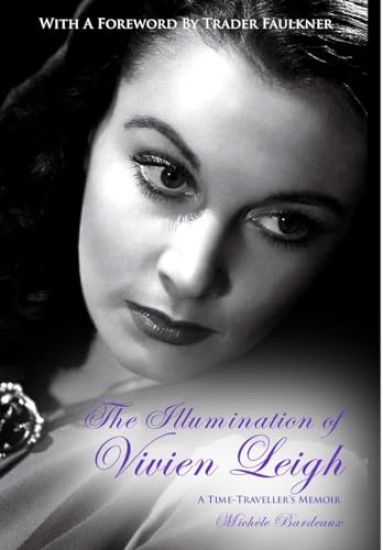
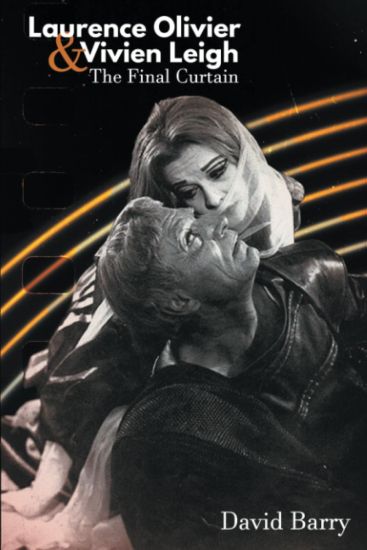
Even as a child, Mich le Bardeaux remembered another incarnation, yet kept this almost exclusively to herself for most of her life. Until a series of inspirations impelled her to share her experience and tell her story first-hand, from the perspective of Spiritual Illumination. In this stunning memoir, she explores the spiritual purpose behind her lives, and her reasons for reincarnating so quickly. She writes of her longing for her old family, her poignant return to both India and England, the numinous source of her performances, as well as her past-life relationships and how those relationships have carried on. She also sheds light on the so-called "bipolar disorder", one of the pervasive mysteries of the actress's life. On November 5th, 2013, the occasion of the centennial commemoration, the very private Ms. Bardeaux offered her story. Now, on her past-life persona's 105th birthday, she offers this Fifth-Anniversary Edition; with a new Author's Note and a Foreword by Trader Faulkner, her beloved friend in both lifetimes.
Merry Christmas Vivien is a personalized kids activity book, it includes personalized crosswords, word searches, number puzzles, jokes, drawing and coloring >It is suitable for children between 6-11 years old It is a unique Christmas present for Vivien, and is the perfect gift this Xmas This personalized book is also available for other names This is a great gift for children and an amazing keepsake for parents
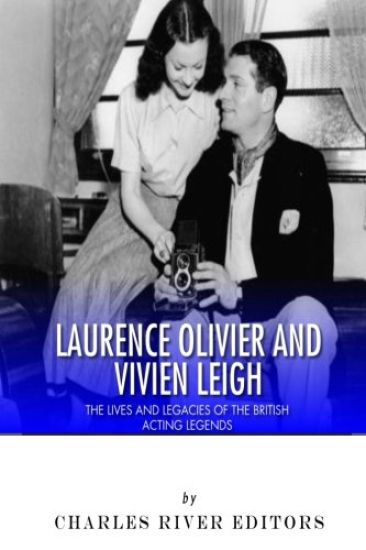
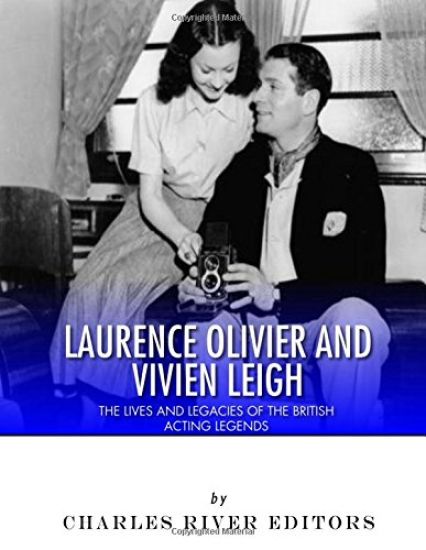
*Includes pictures. *Includes their quotes about their lives and careers. *Includes a bibliography for further reading. Of all the great actors of the 20th century, none personifies acting royalty more than Laurence Olivier, and some of this is simply due to the fact that he was actually knighted in 1947, along with a lengthy list of other honors that include being named a life peer in 1970 and admission to the Order of Merit in 1984. To speak of The Right Honourable Lord Laurence Olivier is not a figure of speech but rather a fact. Of course, in addition to the literal sense of the term, there is undeniably a manner in which Laurence Olivier qualifies as acting royalty, as it is not for nothing that Spencer Tracy once referred to Olivier as "the greatest actor in the English-speaking world" (Bacall). It is also important to note that Tracy refers to Olivier not as a film or theater actor specifically, because much of Olivier's lofty standing derives from his ability to successfully navigate different mediums like stage, film, and television. The breadth of mediums in which he worked, the various roles he inhabited within them (actor, producer, director), and the formidable time span of his career lend Olivier's career a scope of perhaps unmatched magnitude. Indeed, Laurence Olivier worked for so long and was so successful that few actors receive the level of visibility that he still enjoys, even more than two decades after his death. While his theatrical performances exist only as memories, his cinematic adaptations of several of Shakespeare's most famous plays remain the most canonical even to this day. Hamlet, for example, has been produced for the screen by several famous directors, but his version, released in 1948, is the most well-known and best-received. It is through his films that viewers also gain a full appreciation of his creative style, as Olivier assumed full authorial control (from actor to director to producer) over many of his films, particularly the Shakespearean ones. In this sense, it is appropriate to claim that Laurence Olivier was not only a storied actor but also an artist who worked best when enjoying full authority over his productions. The 1930s were the height of the classical Hollywood era, and it is no accident that 1939 has historically been designated as the pinnacle of Hollywood film history. The era was known for its lavish studio productions, with MGM, RKO, Warner Brothers, Paramount, and 20th Century Fox all operating at the height of their powers. Every major studio possessed a long roster of contract players, with films released at such a rapid pace that it made for an especially competitive environment within the industry. Even while America remained in the throes of the Great Depression, the film industry continued to flourish, and movies easily supplanted the theater as the main attraction for American entertainment. Of course, what made 1939 the watershed year was the release of several critically acclaimed movies, including The Wizard of Oz and Mr. Smith Goes to Washington. But the most famous of the bunch, and perhaps the most famous movie of all, is Gone With the Wind, and one of the most remarkable aspects of the film is that the quintessential Southern belle was played by Vivien Leigh, a British actress still relatively unknown in Hollywood. Vivien was an accomplished stage actress and had already appeared in foreign films during the 1930s, but she was a complete dark horse to get the iconic role she's still associated with, and it only came about because of her persistence in getting cast for the role. 30 years after Gone With the Wind was released, one film critic credited Selznick's "inspired casting" of Vivien Leigh as Scarlett with the film's success. Another 30 years later, the same critic wrote that Leigh "still lives in our minds and memories as a dynamic force rather than as a static presence."
Happy Birthday Vivien is a personalized kids activity book, it includes personalized crosswords, word searches, number puzzles, jokes, drawing and coloring >It is suitable for children between 6-11 years old It is the perfect birthday present for Vivien, and is a great keepsake for parents to remember their child's early years and birthdays This personalized book is available for other names also This is a great gift for children and an amazing keepsake for parents Happy Birthday Vivien
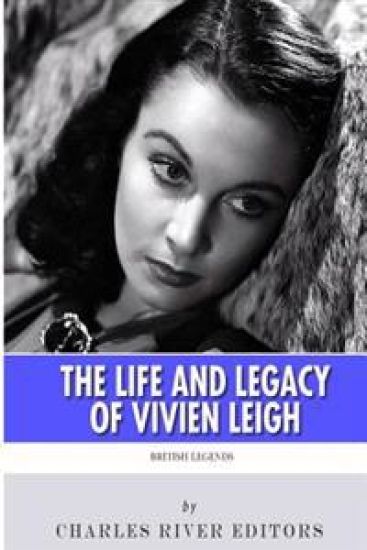
*Includes pictures. *Includes quotes about Vivien's life and career, including her own quotes. *Includes a bibliography for further reading. "I'm not a film star, I am an actress. Being a film star is such a false life, lived for fake values and for publicity." - Vivien Leigh A lot of ink has been spilled covering the lives of history's most influential figures, but how much of the forest is lost for the trees? In Charles River Editors' British Legends series, readers can get caught up to speed on the lives of Britain's most important men and women in the time it takes to finish a commute, while learning interesting facts long forgotten or never known. The 1930s were the height of the classical Hollywood era, and it is no accident that 1939 has historically been designated as the pinnacle of Hollywood film history. The era was known for its lavish studio productions, with MGM, RKO, Warner Brothers, Paramount, and 20th Century Fox all operating at the height of their powers. Every major studio possessed a long roster of contract players, with films released at such a rapid pace that it made for an especially competitive environment within the industry. Even while America remained in the throes of the Great Depression, the film industry continued to flourish, and movies easily supplanted the theater as the main attraction for American entertainment. Of course, what made 1939 the watershed year was the release of several critically acclaimed movies, including The Wizard of Oz and Mr. Smith Goes to Washington. But the most famous of the bunch, and perhaps the most famous movie of all, is Gone With the Wind, and one of the most remarkable aspects of the film is that the quintessential Southern belle was played by Vivien Leigh, a British actress still relatively unknown in Hollywood. Vivien was an accomplished stage actress and had already appeared in foreign films during the 1930s, but she was a complete dark horse to get the iconic role she's still associated with, and it only came about because of her persistence in getting cast for the role. 30 years after Gone With the Wind was released, one film critic credited Selznick's "inspired casting" of Vivien Leigh as Scarlett with the film's success. Another 30 years later, the same critic wrote that Leigh "still lives in our minds and memories as a dynamic force rather than as a static presence." While Gone With the Wind made Leigh a big name practically overnight, she continued to buck the usual trend by doing Broadway and even appearing on stage in London during the 1940s, instead of focusing on movies. A lot of this was no doubt due to her famous marriage to Laurence Olivier, himself an accomplished stage and film actor. At the same time, Vivien became notorious for being difficult to work with and unusually temperamental, a byproduct of bipolar disorder that frequently affected her mood and occasionally left her incoherently hysterical. Nevertheless, Vivien was able to recapture the magic in 1951's A Streetcar Named Desire, which cast her in the role of Southern belle yet again. Phyllis Harnoll praised Leigh's Blanche DuBois by saying that, in the London stage production of the play, she showed, "proof of greater powers as an actress than she had hitherto shown". In fact, it was actually during her time as DuBois that she reached the pinnacle of her stage career. Likewise, her role in the movie was described as one "of the greatest performances ever put on film" and "one of those rare performances that can truly be said to evoke both fear and pity." Unfortunately, her life and career faced constant upheaval by both her mental and physical maladies, including tuberculosis, which led to a premature death in 1967. British Legends: The Life and Legacy of Vivien Leigh examines the life and career of one of Hollywood's most famous actresses.
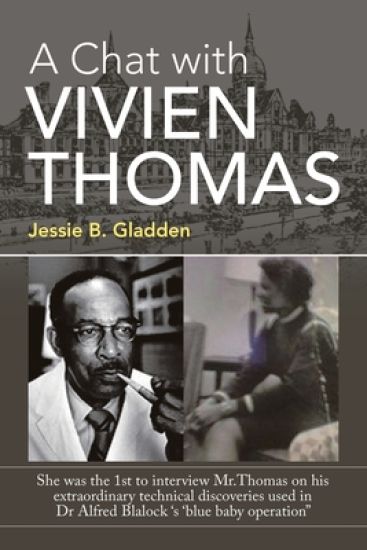
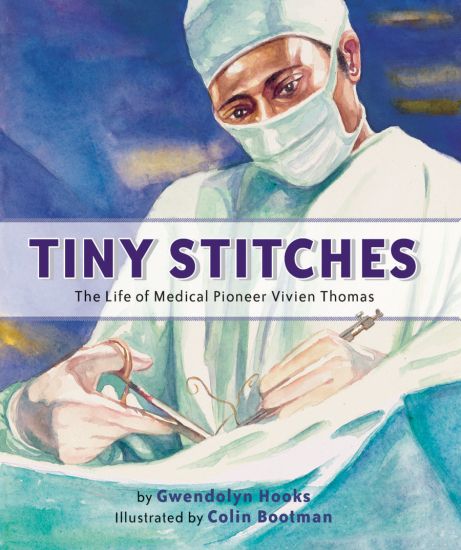
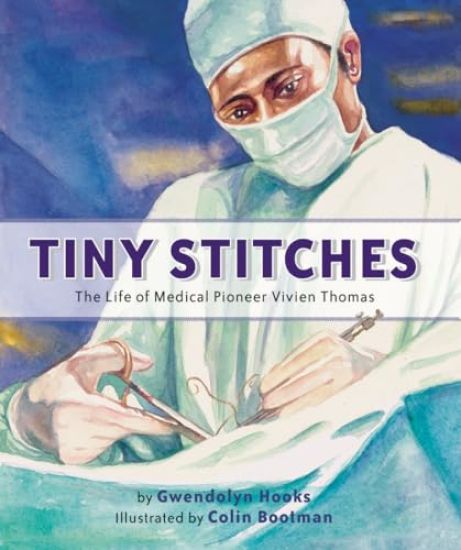
NAACP Image Awards Winner - National Association for the Advancement of Colored People (NAACP)The life story of Vivien Thomas, an African American surgical technician who developed the first procedure used to perform open-heart surgery on children.Vivien Thomas's greatest dream was to attend college to study medicine. But after the stock market crashed in 1929, Vivien lost all his savings. Then he heard about a job opening at the Vanderbilt University medical school under the supervision of Dr. Alfred Blalock. Vivien knew that the all-white school would never admit him as a student, but he hoped working there meant he was getting closer to his dream.As Dr. Blalock's research assistant, Vivien learned surgical techniques. In 1943, Vivien was asked to help Dr. Helen Taussig find a cure for children with a specific heart defect. After months of experimenting, Vivien developed a procedure that was used for the first successful open-heart surgery on a child. Afterward, Dr. Blalock and Dr. Taussig announced their innovative new surgical technique, the Blalock-Taussig shunt. Vivien's name did not appear in the report.Overcoming racism and resistance from his colleagues, Vivien ushered in a new era of medicine--children's heart surgery. Tiny Stitches is the compelling story of this incredible pioneer in medicine.
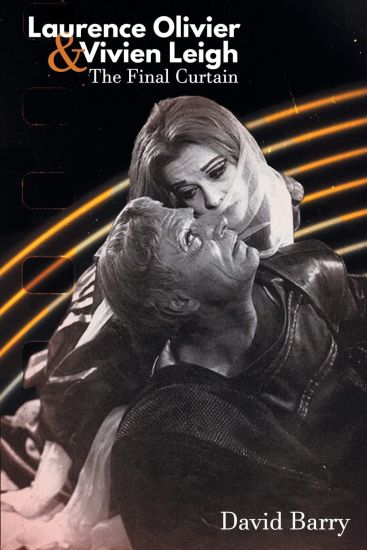
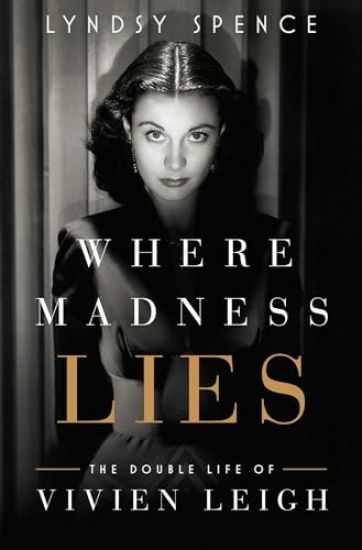
Beginning in 1953, when Leigh suffers a nervous breakdown, Where Madness Lies tells the moving story of the actress as she attempts to rebuild her life, salvage her career, and save her marriage. Vivien Leigh was one of the greatest film and theatrical stars of the 1930s, '40s, and '50s. Her Oscar-winning performances in Gone With the Wind and A Streetcar Named Desire have cemented her status as an icon of Hollywood. From 1940 to 1960, Leigh was married to Sir Laurence Olivier, and together they were considered the royal couple of British theatre. Indeed, their romance and acting partnerships captured the imagination of the public around the world. Behind the scenes, however, Leigh's personal life was marred by manic depression that remained undiagnosed until 1953. Largely misunderstood and subjected to barbaric mistreatment at the hands of her doctors, she would also suffer the heartbreak of Olivier's infidelity. Contributing to her image as a tragic heroine, she would die at the age of fifty-three. Unlike previous biographies, Where Madness Lies begins in 1953 when Leigh suffered a nervous breakdown and was institutionalized. The tragic story unfolds as she tries to rebuild her life, salvage her career, and save her marriage. Featuring a wealth of unpublished material--including private correspondence--Lyndsy Spence reveals how this Hollywood luminary tragically fell victim to the draconian medical practices of the era.
*Includes pictures. *Includes quotes about Vivien's life and career, including her own quotes. *Includes a bibliography for further reading. "I'm not a film star, I am an actress. Being a film star is such a false life, lived for fake values and for publicity." - Vivien Leigh A lot of ink has been spilled covering the lives of history's most influential figures, but how much of the forest is lost for the trees? In Charles River Editors' British Legends series, readers can get caught up to speed on the lives of Britain's most important men and women in the time it takes to finish a commute, while learning interesting facts long forgotten or never known. The 1930s were the height of the classical Hollywood era, and it is no accident that 1939 has historically been designated as the pinnacle of Hollywood film history. The era was known for its lavish studio productions, with MGM, RKO, Warner Brothers, Paramount, and 20th Century Fox all operating at the height of their powers. Every major studio possessed a long roster of contract players, with films released at such a rapid pace that it made for an especially competitive environment within the industry. Even while America remained in the throes of the Great Depression, the film industry continued to flourish, and movies easily supplanted the theater as the main attraction for American entertainment. Of course, what made 1939 the watershed year was the release of several critically acclaimed movies, including The Wizard of Oz and Mr. Smith Goes to Washington. But the most famous of the bunch, and perhaps the most famous movie of all, is Gone With the Wind, and one of the most remarkable aspects of the film is that the quintessential Southern belle was played by Vivien Leigh, a British actress still relatively unknown in Hollywood. Vivien was an accomplished stage actress and had already appeared in foreign films during the 1930s, but she was a complete dark horse to get the iconic role she's still associated with, and it only came about because of her persistence in getting cast for the role. 30 years after Gone With the Wind was released, one film critic credited Selznick's "inspired casting" of Vivien Leigh as Scarlett with the film's success. Another 30 years later, the same critic wrote that Leigh "still lives in our minds and memories as a dynamic force rather than as a static presence." While Gone With the Wind made Leigh a big name practically overnight, she continued to buck the usual trend by doing Broadway and even appearing on stage in London during the 1940s, instead of focusing on movies. A lot of this was no doubt due to her famous marriage to Laurence Olivier, himself an accomplished stage and film actor. At the same time, Vivien became notorious for being difficult to work with and unusually temperamental, a byproduct of bipolar disorder that frequently affected her mood and occasionally left her incoherently hysterical. Nevertheless, Vivien was able to recapture the magic in 1951's A Streetcar Named Desire, which cast her in the role of Southern belle yet again. Phyllis Harnoll praised Leigh's Blanche DuBois by saying that, in the London stage production of the play, she showed, "proof of greater powers as an actress than she had hitherto shown." In fact, it was actually during her time as DuBois that she reached the pinnacle of her stage career. Likewise, her role in the movie was described as one "of the greatest performances ever put on film" and "one of those rare performances that can truly be said to evoke both fear and pity." Unfortunately, her life and career faced constant upheaval by both her mental and physical maladies, including tuberculosis, which led to a premature death in 1967. British Legends: The Life and Legacy of Vivien Leigh examines the life and career of one of Hollywood's most famous actresses.
Prouesses et gentillesses des illustres Perrier et Vivien. (Par le Mis J.-F. de Chabannes.)Date de l'edition originale: 1831Ce livre est la reproduction fidele d une uvre publiee avant 1920 et fait partie d une collection de livres reimprimes a la demande editee par Hachette Livre, dans le cadre d un partenariat avec la Bibliotheque nationale de France, offrant l opportunite d acceder a des ouvrages anciens et souvent rares issus des fonds patrimoniaux de la BnF.Les uvres faisant partie de cette collection ont ete numerisees par la BnF et sont presentes sur Gallica, sa bibliotheque numerique.En entreprenant de redonner vie a ces ouvrages au travers d une collection de livres reimprimes a la demande, nous leur donnons la possibilite de rencontrer un public elargi et participons a la transmission de connaissances et de savoirs parfois difficilement accessibles.Nous avons cherche a concilier la reproduction fidele d un livre ancien a partir de sa version numerisee avec le souci d un confort de lecture optimal. Nous esperons que les ouvrages de cette nouvelle collection vous apporteront entiere satisfaction.Pour plus d informations, rendez-vous sur www.hachettebnf.fr
NAACP Image Awards Winner - National Association for the Advancement of Colored People (NAACP) Recipient of the NAACP Image Award for Outstanding Literary Work for Children, this is the life story of Vivien Thomas, a Black surgical technician who developed the first procedure used to perform open-heart surgery on children. Vivien Thomas's greatest dream was to attend college to study medicine. But after the stock market crashed in 1929, Vivien lost all his savings. Then he heard about a job opening at the Vanderbilt University medical school under the supervision of Dr. Alfred Blalock. Vivien knew that the all-white school would never admit him as a student, but he hoped working there meant he was getting closer to his dream. As Dr. Blalock's research assistant, Vivien learned surgical techniques. In 1943, Vivien was asked to help Dr. Helen Taussig find a cure for children with a specific heart defect. After months of experimenting, Vivien developed a procedure that was used for the first successful open-heart surgery on a child. Afterward, Dr. Blalock and Dr. Taussig announced their innovative new surgical technique, the Blalock-Taussig shunt. Vivien's name did not appear in the report. Overcoming racism and resistance from his colleagues, Vivien ushered in a new era of medicine--children's heart surgery. Tiny Stitches is the compelling story of this incredible pioneer in medicine.