Kirjojen hintavertailu. Mukana 11 376 878 kirjaa ja 12 kauppaa.

Kirjahaku

Etsi kirjoja tekijän nimen, kirjan nimen tai ISBN:n perusteella.

1000 tulosta hakusanalla Vladimir Simosko

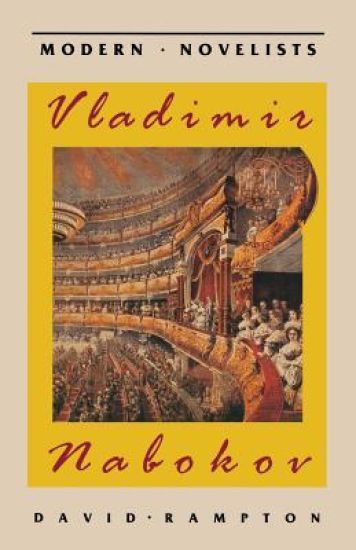
Vladimir Nabokov

Vladimir Nabokov

David Rampton

Red Globe Press
1993
nidottu
Vladimir Nabakov considers the novelist's aesthetic precepts and practice and the distinctive character of his work and the book also gives consideration of his fiction in the larger context of the modernist and postmodernist enterprise. It analyses the importance of the novels' challenges to all sorts of aesthetic and moral presumptions (including some of Nabakov's own). Readers are thus encouraged to draw their own conclusions about the issues raised in Nabakov's work.
Vladimir Putin A Geostrategic Russian Icon
The mass media in the West do not hold fire in criticizing him. Russian opposition denounces him hysterically. But the Russian people give Vladimir Putin his mandate over and over again. What are the expectations of Russia of Putin? Where will he take the country? This book deals with these issues and more. This book was already published 2012 and is the first part in the trilogy " A Slavic People A Russian Superpower A Charismatic World Leader The Global Upheaval Trilogy" that is also published in LULU .
Vladimir Putin A Geostrategic Russian Icon In the Shadow of Ukraine
The year is 2014, and Vladimir Putin enjoys great popularity among the Russian population. As great that two thirds of the population want to see him as the President of Russia beyond the year of 2018th. But it remains to be seen whether Putin managed to hold its own internationally in his effort to seek a peaceful solution to the conflict in Ukraine. Simultaneously behind the events in Ukraine is intensified a process that will lead to a paradigm shift in the world order where the US loses its dominant power in world politics.This book was already published 2014 and is the second part in the trilogy " A Slavic People A Russian Superpower A Charismatic World Leader The Global Upheaval Trilogy" that is also published in LULU.
Vladimir Putin  A Geostrategic Russian Icon A Eurasian Continent A Russian Superpower A Charismatic World Leader
This is the third book in the series about Vladimir Putin which describes in detail the last two years in Russia's ongoing strategy to work with China within the BRICS and the SCO, to deprive the United States its global leading role in the ongoing process of creating a multipolar world with multiple centers of power. The text is based on various international sources, with touches of the author's own analysis and the reader gets an entirely different and more nuanced picture of the dramatic situation in the world than the established media conveys. We get to follow all the way from the drama with Boeing MH17 over Ukraine in 2014, the Islamic State, Russian, Chinese and American military development, and the crisis in the South China Sea, Sweden and finally the dramatic developments in the United States in connection with presidential elections. This part is also included in the trilogy published in Lulu.
Vladimir Markov and Russian Primitivism

Vladimir Markov and Russian Primitivism

Jeremy Howard; Irena Bužinska; Z.S. Strother

Routledge
2020
nidottu
Hailed as a brilliant theoretician, Voldemars Matvejs (best known by his pen name Vladimir Markov) was a Latvian artist who spearheaded the Union of Youth, a dynamic group championing artistic change in Russia, 1910-14. His work had a formative impact on Malevich, Tatlin, and the Constructivists before it was censored during the era of Soviet realism. This volume introduces Markov as an innovative and pioneering art photographer and assembles, for the first time, five of his most important essays. The translations of these hard-to-find texts are fresh, unabridged, and authentically poetic. Critical essays by Jeremy Howard and Irena Buzinska situate his work in the larger phenomenon of Russian ’primitivism’, i.e. the search for the primal. This book challenges hardening narratives of primitivism by reexamining the enthusiasm for world art in the early modern period from the perspective of Russia rather than Western Europe. Markov composed what may be the first book on African art and Z.S. Strother analyzes both the text and its photographs for their unique interpretation of West African sculpture as a Kantian ’play of masses and weights’. The book will appeal to students of modernism, orientalism, ’primitivism’, historiography, African art, and the history of the photography of sculpture.
Vladimir Nabokov
This set comprises of 40 volumes covering nineteenth and twentieth century European and American authors. These volumes will be available as a complete set, mini boxed sets (by theme) or as individual volumes. This second set compliments the first 68 volume set of Critical Heritage published by Routledge in October 1995.
Vladimir Nabokov
This set comprises of 40 volumes covering nineteenth and twentieth century European and American authors. These volumes will be available as a complete set, mini boxed sets (by theme) or as individual volumes. This second set compliments the first 68 volume set of Critical Heritage published by Routledge in October 1995.
The War Diaries of Vladimir Dedijer

The War Diaries of Vladimir Dedijer

Vladimir Dedijer

The University of Michigan Press
1990
nidottu
After fleeing from occupied Beograd to the liberated territory in the Sumadija, Vladimir Dedijer began his life as a Yugoslavian Partisan. Commissioned at the request of then Commander Tito, Vladimir Dedijer began writing his diaries in April of 1941 to record the daily lives, battles, and casualties of the Yugoslavian Partisan Army. The War Diaries of Vladimir Dedijer represents a wealth of primary information about the lives and struggles of the Partisan brigades. There can be no complete understanding of Tito's Yugoslavia without knowing the Diaries' account of the extent of the Second World War's impact on Yugoslavia's people. Tito, who was a frequent reader of the Diaries as the Partisan Army fought across Yugoslavia, called this work "Our Great Obituary." To maintain a diary under the hardships of war was difficult. Among the hazards were river crossings, rain, self-censorship should the Germans find the diaries, and in many instances a shortage of ink. In fact, ink was in such demand that German supplies were targeted by Partisans during raids. Despite these difficulties, Dedijer continually recorded day-to-day life throughout the war. These three volumes contain his writings up to the liberation of Prague in November of 1944. The Diaries were originally published in Yugoslavia more than forty years ago, and have since gone through four editions. The original publication in 1945 caused great debate because of Dedijer's fierce commitment to speaking his views and his uncompromising dedication to recording what he lived. Many felt that Dedijer should not make public the names of Partisan heroes who supported Stalin during the bitter Stalin-Tito split, but in keeping with his values, Dedijer refused, with Tito supporting his decision.
The War Diaries of Vladimir Dedijer

The War Diaries of Vladimir Dedijer

Vladimir Dedijer

The University of Michigan Press
1990
nidottu
After fleeing from occupied Beograd to the liberated territory in the Sumadija, Vladimir Dedijer began his life as a Yugoslavian Partisan. Commissioned at the request of then Commander Tito, Vladimir Dedijer began writing his diaries in April of 1941 to record the daily lives, battles, and casualties of the Yugoslavian Partisan Army. The War Diaries of Vladimir Dedijer represents a wealth of primary information about the lives and struggles of the Partisan brigades. There can be no complete understanding of Tito's Yugoslavia without knowing the Diaries' account of the extent of the Second World War's impact on Yugoslavia's people. Tito, who was a frequent reader of the Diaries as the Partisan Army fought across Yugoslavia, called this work "Our Great Obituary." To maintain a diary under the hardships of war was difficult. Among the hazards were river crossings, rain, self-censorship should the Germans find the diaries, and in many instances a shortage of ink. In fact, ink was in such demand that German supplies were targeted by Partisans during raids. Despite these difficulties, Dedijer continually recorded day-to-day life throughout the war. These three volumes contain his writings up to the liberation of Prague in November of 1944. The Diaries were originally published in Yugoslavia more than forty years ago, and have since gone through four editions. The original publication in 1945 caused great debate because of Dedijer's fierce commitment to speaking his views and his uncompromising dedication to recording what he lived. Many felt that Dedijer should not make public the names of Partisan heroes who supported Stalin during the bitter Stalin-Tito split, but in keeping with his values, Dedijer refused, with Tito supporting his decision.
The War Diaries of Vladimir Dedijer

The War Diaries of Vladimir Dedijer

Vladimir Dedijer

The University of Michigan Press
1990
nidottu
After fleeing from occupied Beograd to the liberated territory in the Sumadija, Vladimir Dedijer began his life as a Yugoslavian Partisan. Commissioned at the request of then Commander Tito, Vladimir Dedijer began writing his diaries in April of 1941 to record the daily lives, battles, and casualties of the Yugoslavian Partisan Army. The War Diaries of Vladimir Dedijer represents a wealth of primary information about the lives and struggles of the Partisan brigades. There can be no complete understanding of Tito's Yugoslavia without knowing the Diaries' account of the extent of the Second World War's impact on Yugoslavia's people. Tito, who was a frequent reader of the Diaries as the Partisan Army fought across Yugoslavia, called this work "Our Great Obituary." To maintain a diary under the hardships of war was difficult. Among the hazards were river crossings, rain, self-censorship should the Germans find the diaries, and in many instances a shortage of ink. In fact, ink was in such demand that German supplies were targeted by Partisans during raids. Despite these difficulties, Dedijer continually recorded day-to-day life throughout the war. These three volumes contain his writings up to the liberation of Prague in November of 1944. The Diaries were originally published in Yugoslavia more than forty years ago, and have since gone through four editions. The original publication in 1945 caused great debate because of Dedijer's fierce commitment to speaking his views and his uncompromising dedication to recording what he lived. Many felt that Dedijer should not make public the names of Partisan heroes who supported Stalin during the bitter Stalin-Tito split, but in keeping with his values, Dedijer refused, with Tito supporting his decision.
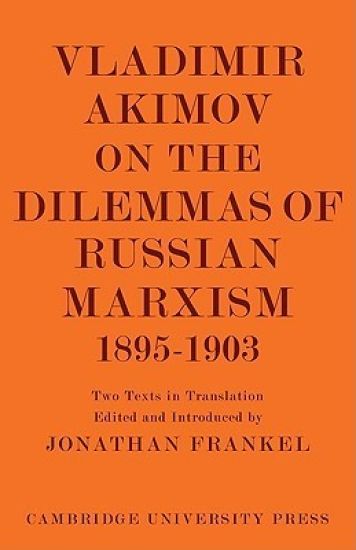
Vladimir Akimov on the Dilemmas of Russian Marxism 1895–1903
Vladimir Akimov was the leading spokesman for the 'Economists' in Russia in the early twentieth century. This group of Marxists rebelled in 1898 against Plekkanov, causing within the Russian Social Democratic Labour Party a schism which preceded the major split between the Bolsheviks and the Mensheviks in 1903. The two major works of Akimov included in this edition have not been republished since 1969. The first is an analysis of the Party Programme inspired by Plekkanov and Lenin as editors of Iskra. The second is a history of the Russian Marxist movement from the early 1890s to Akimov's day. This was the first history of the movement ever published. Dr Frankel has annotated the texts and provided an important introduction, tracing in general terms the development of Russian Marxism up to 1898 and describing in greater detail the forces which caused the dispute between Plakkanov and Lenin and the 'Economists'.
Vladimir Nabokov

Vladimir Nabokov

David Rampton

Cambridge University Press
1984
pokkari
Vladimir Nabokov was always a controversial writer. Long before the furore that attended the publication of Lolita, controversy raged over the virtues of his work. His detractors insisted that, although he wrote nine Russian novels, he had forsaken the humanistic concerns of the Russian literary tradition, while his supporters claimed that his work actually extended and enriched that tradition. David Rampton faces these apparent contradictions head on and, adopting a more detached, critical perspective than is usually found in writing on Nabokov, he tries to reach a more balanced, integrated view of the novelist's achievement. Rampton assembles evidence from Nabokov's own critical writings to show that the relationship of art to human life is central to Nabokov's work. He pursues this argument through a close reading of novels from different stages of Nabokov's career. What emerges is a provocative and stimulating revaluation of Nabokov that will interest any serious student of twentieth-century literature.
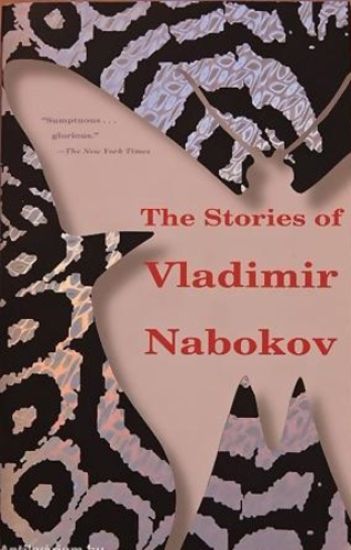
The Stories of Vladimir Nabokov

The Stories of Vladimir Nabokov

Vladimir Nabokov

VINTAGE
1996
nidottu
From the writer who shocked and delighted the world with his novels Lolita, Pale Fire, and Ada, or Ardor, and so many others, comes a magnificent collection of stories. Written between the 1920s and 1950s, these sixty-five tales--eleven of which have been translated into English for the first time--display all the shades of Nabokov's imagination. They range from sprightly fables to bittersweet tales of loss, from claustrophobic exercises in horror to a connoisseur's samplings of the table of human folly. Read as a whole, The Stories of Vladimir Nabokov offers and intoxicating draft of the master's genius, his devious wit, and his ability to turn language into an instrument of ecstasy.
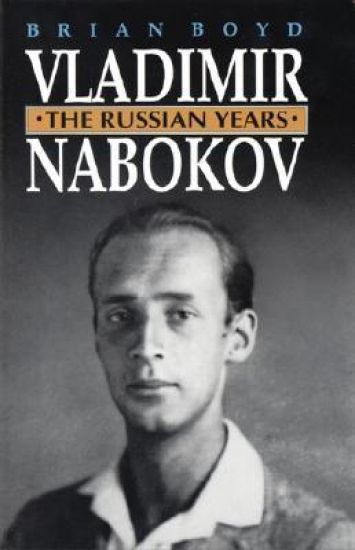
Vladimir Nabokov

Vladimir Nabokov

Brian Boyd

Princeton University Press
1993
pokkari
This first major critical biography of Vladimir Nabokov, one of the greatest of twentieth-century writers, finally allows us full access to the dramatic details of his life and the depths of his art. An intensely private man, Nabokov was uprooted first by the Russian Revolution and then by World War II. Transformed into a permanent wanderer, he did not achieve fame until late in life, with the success of Lolita. In this first of two volumes, Brian Boyd vividly describes the liberal milieu of the aristocratic Nabokovs, their escape from Russia, Nabokov's education at Cambridge, and the murder of his father in Berlin. Boyd then turns to the years that Nabokov spent, impoverished, in Germany and France, until the coming of Hitler forced him to flee, with wife and son, to the United States. This volume stands on its own as a fascinating exploration of Nabokov's Russian years and Russian worlds, prerevolutionary and emigre. In the course of his ten years' work on the biography, Boyd traveled along Nabokov's trail everywhere from Yalta to Palo Alto. The only scholar to have had free access to the Nabokov archives in Montreux and the Library of Congress, he also interviewed at length Nabokov's family and scores of his friends and associates. For the general reader, Boyd offers an introduction to Nabokov the man, his works, and his world. For the specialist, he provides a basis for all future research on Nabokov's life and art, as he dates and describes the composition of all Nabokov's works, published and unpublished. Boyd investigates Nabokov's relation to and his independence from his time, examines the special structures of his mind and thought, and explains the relations between his philosophy and his innovations of literary strategy and style. At the same time he provides succinct introductions to all the fiction, dramas, memoirs, and major verse; presents detailed analyses of the major books that break new ground for the scholar, while providing easy paths into the works for other readers; and shows the relationship between Nabokov's life and the themes and subjects of his art.
Vladimir Nabokov

Vladimir Nabokov

Brian Boyd

Princeton University Press
1993
pokkari
The story of Nabokov's life continues with his arrival in the United States in 1940. He found that supporting himself and his family was not easy--until the astonishing success of Lolita catapulted him to world fame and financial security.
Vladimir Jankélévitch and the Question of Forgiveness
The essays focus on the work of Vladimir Jankélévitch as a moral philosopher, particularly that aspect of his work dealing with the question of forgiveness. They treat topics such as the place of moral philosophy in relation to his work as a whole, his relationship to contemporary French thought, and the backgrounds of classical Judaic tradition and world literature. The centerpiece of this tableau is Jankélévitch’s book Le Pardon (Forgiveness). Chief among the distinguishing characteristics is its rigorous defense of what might be termed a forgiveness free of the entanglements that taint the common understanding of forgiveness—what Jankélévitch refers to as pseudo-forgiveness. The advocacy of forgiveness in the name of political or social expediency, as well as the psychological benefit for the victim, are similarly repudiated. In their place, Jankélévitch substitutes a radical forgiveness that is “initial, sudden, spontaneous”—not able to erase the past, but able to create a new future and, thereby, a new relationship to the past. He does not permit even this future, however, to serve as forgiveness’s justification. For him, beyond all justifications, beyond justice itself, forgiveness is a gift akin to love.
Vladimir Putin and the New World Order

Vladimir Putin and the New World Order

J. L. Black

Rowman Littlefield Publishers
2004
sidottu
J. L. Black's latest work is a rich and carefully crafted attempt to expose the textures of Russia's perceptions of itself and its place in the world. Based almost entirely on Russian sources, J. L. Black found himself returning to the old practice of citing and decoding feature items from the Russian press. The difference between then and now, of course, is that at that time there was the struggle to read between the lines while now he reads and tries to digest the lines themselves-the Russian press still provides a very good indication of prevailing moods within the political and military elite establishments of Moscow. It is also still evident that if we are to understand Russian foreign policy-making, we must attempt to view international situations through the prism of Russian analysts and officials. Only then can we draw conclusions based on both our and their perceptions of current events and visions for the future. Vladimir Putin and the New World Order is divided into two parts. The first is a chronologically organized story of Putin's efforts to find a niche for Russia in the world since his sudden appointment as acting president at the end of December 1999. Throughout, Black places great emphasis on the sequence of events to illustrate important patterns; for example, Putin's tendency to make dramatic overtures to the East as preparation for negotiations with the West. The book's second part focuses on Russia's attention to specific regions of the world and types of international activity. These include individual countries, such as China and Ukraine; regions like Central Asia and the Caucasus; integrative agencies, including the CIS; concepts and practices, among them matters of security and military reform; and the ambivalent Russian associations with so-called "rogue" states.
Vladimir Putin and the New World Order

Vladimir Putin and the New World Order

J. L. Black

Rowman Littlefield Publishers
2003
nidottu
J. L. Black's latest work is a rich and carefully crafted attempt to expose the textures of Russia's perceptions of itself and its place in the world. Based almost entirely on Russian sources, J. L. Black found himself returning to the old practice of citing and decoding feature items from the Russian press. The difference between then and now, of course, is that at that time there was the struggle to read between the lines while now he reads and tries to digest the lines themselves-the Russian press still provides a very good indication of prevailing moods within the political and military elite establishments of Moscow. It is also still evident that if we are to understand Russian foreign policy-making, we must attempt to view international situations through the prism of Russian analysts and officials. Only then can we draw conclusions based on both our and their perceptions of current events and visions for the future. Vladimir Putin and the New World Order is divided into two parts. The first is a chronologically organized story of Putin's efforts to find a niche for Russia in the world since his sudden appointment as acting president at the end of December 1999. Throughout, Black places great emphasis on the sequence of events to illustrate important patterns; for example, Putin's tendency to make dramatic overtures to the East as preparation for negotiations with the West. The book's second part focuses on Russia's attention to specific regions of the world and types of international activity. These include individual countries, such as China and Ukraine; regions like Central Asia and the Caucasus; integrative agencies, including the CIS; concepts and practices, among them matters of security and military reform; and the ambivalent Russian associations with so-called 'rogue' states.
Vladimir Nabokov

Vladimir Nabokov

Neil Cornwell

Liverpool University Press
1999
pokkari
Vladimir Nabokov’s extraordinary literary career, as a master of Russian and English prose, is unique. Acclaimed in the limited Russian émigré world, under the name of Sirin, Nabokov switched to writing in English and settled in America, a refugee from Hitler’s Europe. Exile, memory, lost love and the magic of childhood are among his themes; stylistic and structural dexterity are his hallmarks; Lolita (ranked number 4 in the 1998 New York Modern Library list of 100 best novels of the century published in English) enabled him to retire to a final and productive period of European residence. Film versions of his most controversial novel keep Nabokov’s name before the public, while almost his entire oeuvre remains currently available in paperback. Neil Cornwell’s study, published for the Nabokov centenary, examines five of Nabokov’s major novels, plus his short stories and critical writings, situating his work against the ever-expanding mass of VN scholarship, and noting his cultural debt to Russia, Europe, America and the British Isles.