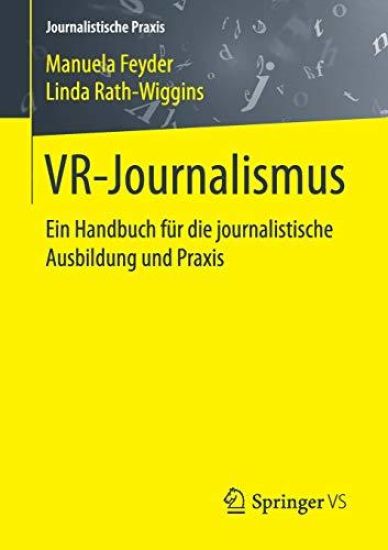
Virtuelle Realität (VR) ermöglicht das immersive Erleben einer Geschichte. Journalisten können ihre Nutzer mit diesem neuen Medium an Orte bringen, zu denen sie keinen Zugang haben. Sie können sie in das Leben anderer Menschen hineinversetzen, in andere Zeiten und Rollen schlüpfen lassen. „Erleben und Präsenz” intensivieren die Aufnahme und Verarbeitung des journalistischen Inhalts für die Nutzer. Für Journalisten verändert es Erzählweisen und Produktionsabläufe. Es eröffnet ihnen ein neues Verhältnis zu dem Nutzer. Wie VR-Journalismus funktionieren kann, über welches technische und fachliche Handwerk Journalisten verfügen sollten, erläutert dieses Praxisbuch. VR-Journalisten geben Einblick in ihre Arbeit, Checklisten und Beispiele veranschaulichen die Umsetzung von VR-Stories.
Roman-trilogija Ivana Sergeevicha Rukavishnikova (1877-1930) - eto istorija trekh pokolenij nizhegorodskogo kupecheskogo roda, iz kotorogo vyshel i sam avtor.Na rubezhe XIX-XX vekov krupnyj torgovo-promyshlennyj kapital Rossii zajavil o sebe vo ves golos, i kazalos, chto emu prinadlezhit buduschee. Poetomu izobrazhennye v romane "denezhnye tuzy" so vsemi ikh stremlenijami, strastjami, slabostjami, traditsijami, mechtami i po sej den vyzyvajut nemalyj interes.Roman prakticheski ne izdavalsja v sovetskoe vremja. V svjazi s gonenijami na literaturu, vykhodjaschuju za ramki sotsrealizma, ego izjali iz bibliotek, no interes k nemu ne oslabeval. Pri znachitelnoj istoricheskoj i sotsialnoj tsennosti, svoeobrazii jazyka i stilja on do sikh por javljaetsja bibliograficheskoj redkostju.
Denne boken viser på en oversiktlig måte hvordan virtual reality (VR), augmented reality (AR) og andre omsluttende teknologier er i ferd med å skape spektakulære muligheter innenfor utdanning, industri, helse og media.Med et spesielt blikk på norske miljøer og løsninger tar boken for seg de såkalte XR-teknologienes oppturer, nedturer og enorme potensial. Hvordan kan vi dra nytte av disse teknologiene i dag, og hvilke muligheter ligger foran oss de neste årene?Boken egner seg for studenter, yrkesutøvere og entusiaster som ønsker en enkel og forståelig introduksjon til disse temaene. Den er et godt utgangspunkt for både praktisk anvendelse og videre fordypning innenfor VR og AR.
This book introduces state-of-the-art research on simulation and serious games for education. Based partially on work presented at the 3rd Asia-Europe Symposium on Simulation and Serious Games (3rd AESSSG) held in Zhuhai, China as part of the 2016 ACM SIGGRAPH International Conference on Virtual-Reality Consortium and Applications in Industry (VRACI 2016), it includes a selection of the best papers from both. The book is divided into three major domains of education applications that use simulation and serious games: science, technology, engineering and mathematics (STEM) education; special needs education; and humanity and social science education. A valuable resource for researchers and developers in simulation and serious games for education benefit from this book, it also offers educators and professionals involved in training insights into the possible applications of simulation and serious games in various areas.
This book introduces state-of-the-art research on simulation and serious games for education. Based partially on work presented at the 3rd Asia-Europe Symposium on Simulation and Serious Games (3rd AESSSG) held in Zhuhai, China as part of the 2016 ACM SIGGRAPH International Conference on Virtual-Reality Consortium and Applications in Industry (VRACI 2016), it includes a selection of the best papers from both. The book is divided into three major domains of education applications that use simulation and serious games: science, technology, engineering and mathematics (STEM) education; special needs education; and humanity and social science education. A valuable resource for researchers and developers in simulation and serious games for education benefit from this book, it also offers educators and professionals involved in training insights into the possible applications of simulation and serious games in various areas.
This book constitutes selected and revised papers from the First International Conference on VR/AR and 3D Displays, ICVRD 2020, held in Hangzhou, China, in December 2020.The 12 full papers presented were thoroughly reviewed and selected from 29 submissions. The papers present recent serearch on virtual reality, augmented reality, 3D displays and related topics, including but not limited to human-computer interaction, near-eye displays, naked eye 3D displays, modeling, simulation, animation, and applications.
Based on the technical accumulation and practice of Huawei iLab in the Cloud VR field, this book systematically describes the advantages of Cloud VR technologies; technical requirements on clouds, networks, and terminals as well as solution implementation; Cloud VR experience evaluation baselines and methods; and current business practices. Cloud VR introduces cloud computing and cloud rendering to VR services. With fast and stable networks, cloud-based display output and audio output are coded, compressed, and transmitted to user terminals, implementing cloud-based VR service content and content rendering. Cloud VR has stringent requirements on bandwidth and latency, making it a proficient application for 5G and gigabit home broadband networks in the era of "dual G". As the first advocate of Cloud VR, Huawei iLab developed the first prototype of the Cloud VR technical solution, initiated the industry’s first Cloud VR industry cooperation plan – VR OpenLab with partners – and incubated the world’s first Cloud VR commercial project with China Mobile Fujian. Cloud VR: Technology and Application is the first official publication of Huawei iLab’s research and practice achievements. It systematically and thoroughly introduces the Cloud VR concept, solution architecture, key technologies, and business practices and is of great value in academic and social applications.This book is easy to understand, practical, and suitable for VR vendors, VR technology enthusiasts, carriers, network vendors, cloud service providers, universities, and other enterprises and scientific research institutes.
Based on the technical accumulation and practice of Huawei iLab in the Cloud VR field, this book systematically describes the advantages of Cloud VR technologies; technical requirements on clouds, networks, and terminals as well as solution implementation; Cloud VR experience evaluation baselines and methods; and current business practices. Cloud VR introduces cloud computing and cloud rendering to VR services. With fast and stable networks, cloud-based display output and audio output are coded, compressed, and transmitted to user terminals, implementing cloud-based VR service content and content rendering. Cloud VR has stringent requirements on bandwidth and latency, making it a proficient application for 5G and gigabit home broadband networks in the era of "dual G". As the first advocate of Cloud VR, Huawei iLab developed the first prototype of the Cloud VR technical solution, initiated the industry’s first Cloud VR industry cooperation plan – VR OpenLab with partners – and incubated the world’s first Cloud VR commercial project with China Mobile Fujian. Cloud VR: Technology and Application is the first official publication of Huawei iLab’s research and practice achievements. It systematically and thoroughly introduces the Cloud VR concept, solution architecture, key technologies, and business practices and is of great value in academic and social applications.This book is easy to understand, practical, and suitable for VR vendors, VR technology enthusiasts, carriers, network vendors, cloud service providers, universities, and other enterprises and scientific research institutes.
Smart VR/AR/MR Systems for Professionals is a comprehensive guide that explores the ground-breaking applications of virtual reality (VR), augmented reality (AR), and mixed reality (MR) in various industries. This book aims to equip practicing professionals with the knowledge and insights they need to harness the full potential of these immersive technologies in their respective fields.Through this book, the authors aim to explore the experimental breakthroughs and cutting-edge methodologies that have emerged in the realm of VR/AR/MR. The book delves deeper into the profound impact these technologies have had on the design process, computer-aided design, healthcare product development, manufacturing, human-robot collaboration, medical imaging, rehabilitation, and even phobia therapy.In each chapter of this book, we delve into specific topics, uncovering the principles, methodologies, and best practices that professionals can adopt. Examples of these topics range from empowering design processes with virtual reality to revolutionizing computer-aided design, and from exploring AR/VR/MR technologies in healthcare to transforming manufacturing with digital twins and metrology in VR.The book aims to provide practitioners with valuable insights, real-world examples, and practical guidance to navigate the ever-evolving landscape of VR/AR/MR systems.
Smart VR/AR/MR Systems for Professionals is a comprehensive guide that explores the ground-breaking applications of virtual reality (VR), augmented reality (AR), and mixed reality (MR) in various industries. This book aims to equip practicing professionals with the knowledge and insights they need to harness the full potential of these immersive technologies in their respective fields.Through this book, the authors aim to explore the experimental breakthroughs and cutting-edge methodologies that have emerged in the realm of VR/AR/MR. The book delves deeper into the profound impact these technologies have had on the design process, computer-aided design, healthcare product development, manufacturing, human-robot collaboration, medical imaging, rehabilitation, and even phobia therapy.In each chapter of this book, we delve into specific topics, uncovering the principles, methodologies, and best practices that professionals can adopt. Examples of these topics range from empowering design processes with virtual reality to revolutionizing computer-aided design, and from exploring AR/VR/MR technologies in healthcare to transforming manufacturing with digital twins and metrology in VR.The book aims to provide practitioners with valuable insights, real-world examples, and practical guidance to navigate the ever-evolving landscape of VR/AR/MR systems.
Relato corto que no te dejar indiferente. El futuro est muy cerca y la realidad puede ser muy diferente a lo que est s acostumbrado. Acompa a a nuestro personaje en sus negruras.
Bible VR is a book covering the use of the latest Virtual Reality technology for faith based education and entertainment. Utilizing Bible VR (an app), this book explores the psychological and social effects of Virtual Reality in Christianity. As modern technology grows to be a part of our everyday lives. They are increasingly influential in both how we learn and communicate. Bible VR covers the growing trend of VR and how we can utilize one of the powerful and immersive tool in today's technology to help us learn more about God, The Bible, and The Promised Land. This book has been freely distributed but hard copy edition also includes devotionals for use with your VR content.
Develop mobile virtual reality apps using the native Google Cardboard SDK for Android About This Book • Learn how to build practical applications for Google's popular DIY VR headset • Build a reusable VR graphics engine on top of the Cardboard Java SDK and OpenGL ES graphics libraries • The projects in this book will showcase a different aspect of Cardboard development—from 3D rendering to handling user input Who This Book Is For The book is for established Android developers with a good knowledge level of Java. No prior OpenGL or graphics knowledge is required. No prior experience with Google Cardboard is expected, but those who are familiar with Cardboard and are looking for projects to expand their knowledge can also benefit from this book. What You Will Learn • Build Google Cardboard virtual reality applications • Explore the ins and outs of the Cardboard SDK Java classes and interfaces, and apply them to practical VR projects • Employ Android Studio, Android SDK, and the Java language in a straightforward manner • Discover and use software development and Android best practices for mobile and Cardboard applications, including considerations for memory management and battery life • Implement user interface techniques for menus and gaze-based selection within VR • Utilize the science, psychology, mathematics, and technology behind virtual reality, especially those pertinent to mobile Cardboard VR experiences • Understand Cardboard VR best practices including those promoted by Google Design Lab. In Detail Google Cardboard is a low-cost, entry-level media platform through which you can experience virtual reality and virtual 3D environments. Its applications are as broad and varied as mobile smartphone applications themselves. This book will educate you on the best practices and methodology needed to build effective, stable, and performant mobile VR applications. In this book, we begin by defining virtual reality (VR) and how Google Cardboard fits into the larger VR and Android ecosystem. We introduce the underlying scientific and technical principles behind VR, including geometry, optics, rendering, and mobile software architecture. We start with a simple example app that ensures your environment is properly set up to write, build, and run the app. Then we develop a reusable VR graphics engine that you can build upon. And from then on, each chapter is a self-contained project where you will build an example from a different genre of application, including a 360 degree photo viewer, an educational simulation of our solar system, a 3D model viewer, and a music visualizer. Given the recent updates that were rolled out at Google I/O 2016, the authors of Cardboard VR Projects for Android have collated some technical notes to help you execute the projects in this book with Google VR Cardboard Java SDK 0.8, released in May 2016. Refer to the article at https://www.packtpub.com/sites/default/files/downloads/GoogleVRUpdateGuideforCardbook.pdf which explains the updates to the source code of the projects. Style and approach This project based guide is written in a tutorial-style project format, where you will learn by doing. It is accompanied by in-depth explanations and discussions of various technologies, and provides best practices and techniques.
This is a strong foundation of human-centric virtual reality design for anyone and everyone involved in creating VR experiences. Without a clear understanding of the human side of virtual reality (VR), the experience will always fail. The VR Book bridges this gap by focusing on human-centered design. Creating compelling VR applications is an incredibly complex challenge. When done well, these experiences can be brilliant and pleasurable, but when done badly, they can result in frustration and sickness. Whereas limitations of technology can cause bad VR execution, problems are oftentimes caused by a lack of understanding human perception, interaction, design principles, and real users. This book focuses on the human elements of VR, such as how users perceive and intuitively interact with various forms of reality, causes of VR sickness, creating useful and pleasing content, and how to design and iterate upon effective VR applications. This book is not just for VR designers, it is for managers, programmers, artists, psychologists, engineers, students, educators, and user experience professionals. It is for the entire VR team, as everyone contributing should understand at least the basics of the many aspects of VR design. The industry is rapidly evolving, and The VR Book stresses the importance of building prototypes, gathering feedback, and using adjustable processes to efficiently iterate towards success. It contains extensive details on the most important aspects of VR, more than 600 applicable guidelines, and over 300 additional references.