Kirjojen hintavertailu. Mukana 11 348 070 kirjaa ja 12 kauppaa.

Kirjahaku

Etsi kirjoja tekijän nimen, kirjan nimen tai ISBN:n perusteella.

118 tulosta hakusanalla Vrin

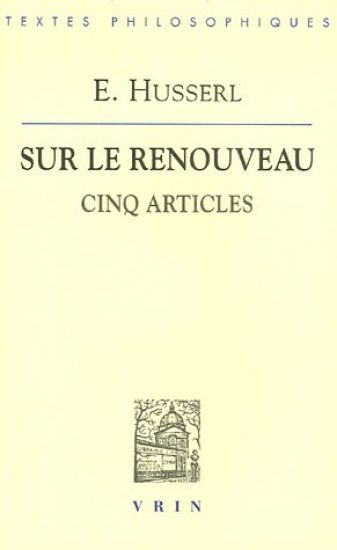
Edmund Husserl: Sur Le Renouveau: Cinq Articles

Edmund Husserl: Sur Le Renouveau: Cinq Articles

Vrin

Librarie Philosophique J. Vrin
2005
nidottu
A l'invitation de la revue japonaise Kaizo, Husserl redige, entre 1922 et 1924, une serie de cinq articles consacres a l'ethique et centres sur le theme du renouveau (Erneuerung). Il cherche a y definir les conditions d'un renouveau ethique de l'homme europeen grace auquel pourra etre surmontee la crise culturelle qui le touche et que lui a brutalement revelee la Premiere Guerre mondiale. La recherche que developpe ici Husserl permet d'apprehender les differents champs et articulations de son ethique: ethique a la fois materiellement determinee et regie par des lois purement formelles, ethique individuelle s'inscrivant necessairement dans une ethique sociale, ethique eidetique et apriorique mais rapportee a une interpretation de l'histoire et de la culture europeennes. Elle montre aussi que la question ethique n'est pas pour Husserl une problematique a part, mais qu'elle met en oeuvre la totalite de la recherche philosophique, y compris dans sa dimension logique, en lui assignant la tache generale de redonner son sens a l'ideal d'une vie et d'une culture rationnelles.
Alain de Lille: Anticlaudianus

Alain de Lille: Anticlaudianus

Vrin

Librarie Philosophique J. Vrin
2012
nidottu
Bien avant l'organisation de l'Universite, Alain de Lille (c.1120-1202) proposait sous forme allegorique, dans son poeme Anticlaudianus, le parcours intellectuel ideal du theologien. L'esprit reflechi de celui-ci, Phronesis, monte sur le char des Arts liberaux et des sciences de l'Antiquite, traverse l'espace de la Nature jusqu'a la demeure de Dieu. La; il doit avancer seul, soutenu par la foi, vers Dieu lui-meme. Celui-ci fait donner par l'Esprit (Noys) une ame nouvelle, qu'il ramene vers la terre, ou il retrouve en homme nouveau la Nature, les vertus, la Raison et les sciences, mais ou il doit affronter le combat des vices et des vertus, dont il sortira vainqueur. Dans cette vision platonisante, l'auteur pare le sens intellectuel du poeme de mises en scene et de descriptions fort diverses, vives, colorees et souvent delicates, avec une joie et une facilite d'expression en complet contraste avec l'apre amertume du De planctu Naturae, son precedent poeme. Ce n'est pas une des moindres raisons du succes de l'Anticlaudianus jusqu'a la Renaissance.
Emmanuel Levinas: de Dieu Qui Vient a l'Idee

Emmanuel Levinas: de Dieu Qui Vient a l'Idee

Vrin

Librarie Philosophique J. Vrin
1998
nidottu
Qu'est-ce qui peut venir a l'idee qui n'y soit pas deja, en quelque facon, contenu, ou qui ne soit pas deja a la mesure de l'idee? Ne faudrait-il pas, pour rendre pensable l'absolu - pour trouver un sens a Dieu - contester que la pensee soit coextensive a la conscience en guise d'un savoir toujours correlatif de l'etre et, des lors, que la philosophie coincide avec l'ontologie? Ce livre essaie de suggerer que le sens signifie non pas exclusivement sous la figure de signifiants - choses, signes, mots - renvoyant a des signifies; qu'il signifie, plus anciennement, a partir du visage humain, comme quand on dit signifier un ordre ou ordonner. Signifiance originelle du visage percant sans cesse ses formes plastiques et representees qui sans cesse se referme sur la voix silencieuse ou inouie du commandement signifie Eveil et devotion suscites en guise d'un moi libere de soi, libere pour le prochain, meme si l'on s'obstine a n'y trouver que representation et conscience de soi.
Etienne Gilson: Introduction a la Philosophie Chretienne
Ce livre de 1960 n'avait pas ete reimprime. On decouvre un essai etincelant du Gilson de la maturite, une dissertation automnale sur les idees cheres du grand medieviste. Celles-ci se presentent sur trois niveaux: la philosophie chretienne en general, la metaphysique de Thomas d'Aquin et la facon dont Gilson interprete celle-ci. Gilson qui n'hesite plus a se dire thomiste expose les raisons philosophiques qu'il a de trouver en saint Thomas un maitre. Derangeant autant que lumineux, son texte pose une nouvelle fois les questions de l'etre et de l'essence, des fins et des causes, du rapport du Dieu de la philosophie au Dieu de la revelation, de ce Dieu qui s'est nomme lui-meme Celui qui Est , et de la facon novatrice que Thomas a eue d'assumer un dossier traditionnel. C'est assez dire a quel point cette Introduction est une porte d'entree a Thomas d'Aquin, a Gilson presentant Thomas et a Gilson lui-meme.
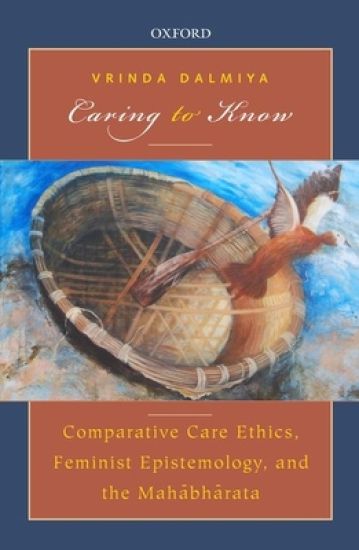
Caring to Know

Caring to Know

Vrinda Dalmiya

OUP India
2016
sidottu
As a venture in the emerging field of comparative feminist philosophy, this work goes against the current trend of considering caring and knowing as independent of each other. It argues for what can be called a care-based epistemology modelled on the now-familiar care ethics. Using critical insights from the Mahabharata, the book proposes that knowing and caring can be fruitfully theorized together, while keeping the argument firmly rooted in mainstream Anglo-Western virtue epistemology. What emerges is a feminist epistemology that uses the methods of creative comparative philosophy to come up with a concept of relational humility as the fulcrum of a new theory of knowing. On the one hand, the epistemic and ethical paradigms given in the Mahabharata are interrogated though the political lens of contemporary feminist theory. On the other, the scope of traditional care ethics and virtue epistemology is broadened through a dialogue with an epics narrative meditations on living well and knowing well in a very different context. Such a cross-cultural exploration gives us a robust conception of a good knower who is both an ethical agent as well as ready to make interventions in various forms of epistemic injustices.
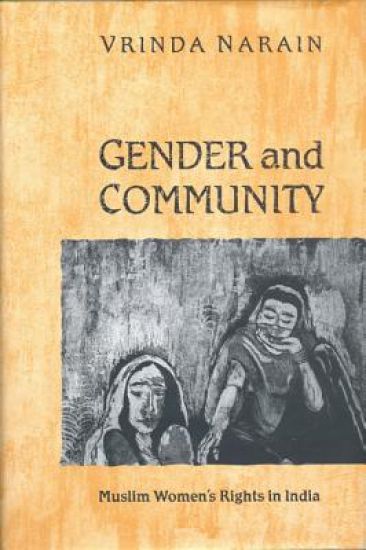
Gender and Community

Gender and Community

Vrinda Narain

University of Toronto Press
2001
sidottu
In India, the legal status of Muslim women within the family is a topic of considerable controversy and debate. It is a complex issue that has implications for matters of not only gender justice, but also religious freedom, minority rights, and state policy regarding the accommodation of difference. Whereas the Constitution of India guarantees equality rights to all women, irrespective of religious affiliation, Muslim personal law, argues Vrinda Narain, explicitly discriminates on the basis of an individual's sex and religion. Narain begins with an analysis of the historical development and contemporary expression of Muslim personal law within a constitutional framework and examines the assertion that women's rights are a divisive force preventing the evolution of larger collective rights. She contends that an interrogation of the dominant religious ideology is necessary to prevent legislation from binding Muslim women to an essentialist notion of identity, thereby denying them the possibility of challenging Muslim tradition. Eloquently written and substantially researched, Gender and Community combines feminist analysis, post-colonial and critical race theory with legal analysis to critically assess issues of gender equality, minority rights and the accommodation of difference. It offers a fresh look at the conceptualization of women as the markers of cultural community in Muslim India and advocates a perspective that seeks to unite the recognition of women's rights with respect for group integrity. These issues are significant not only for Muslim women in India, but also in the broader context of cultural diversity in pluralist democracies and the choices to be made by states in accommodating difference.
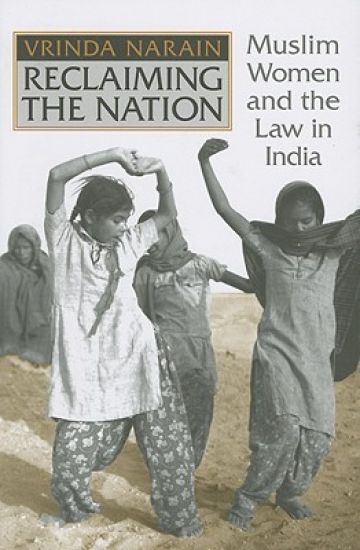
Reclaiming the Nation

Reclaiming the Nation

Vrinda Narain

University of Toronto Press
2008
sidottu
Living in pluralist India has had critical consequences for Muslim women who are expected to follow a determined and strict code of conduct. The impact of this contradiction is most evident in the continuing denial of gender equality within the family, as state regulation of gender roles in the private sphere ultimately affects the status of women in the public sphere. Reclaiming the Nation examines the relationship between gender and nation in post-colonial India through the lens of marginalized Muslim women. Drawing on feminist legal theory, postcolonial feminist theory, and critical race theory, Vrinda Narain explores the idea of citizenship as a potential vehicle for the emancipation of Muslim women. Citizenship, Narain argues, opens the possibility for Indian women to reclaim a sense of selfhood free from imposed identities. In promoting the hybridity of culture and the modernity of tradition, Narain shows how oppositional categories such as public versus private, Muslim versus feminist, and Western versus Indian have been used to deny women equal rights. A timely account of the struggle for liberation within a restrictive religious framework, Reclaiming the Nation is an insightful look at gender, nationhood, and the power of self-determination.
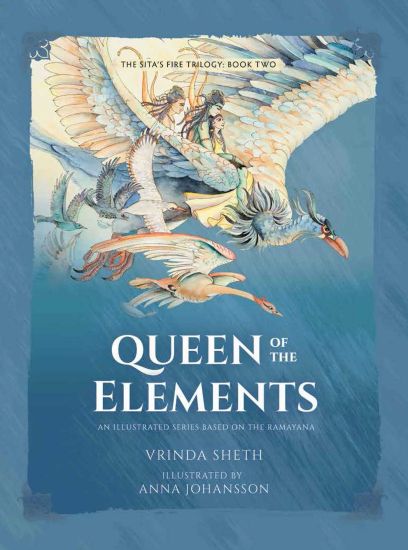
Queen of the Elements

Queen of the Elements

Vrinda Sheth; Robert P. Goldman

Mandala Publishing Group
2017
sidottu
Set in a world of kings and queens, celestial battles, invisible foes, and family rivalries, this epic tale forges legends in the fires of betrayal and prophecy. In this one-of-a-kind trilogy based on the Ramayana, the darkness in the kingdom of Ayodhya continues to spread as Rama, rightful heir and favored son of King Dasharatha, is cast out of the city after an unthinkable betrayal. Facing a fourteen-year exile, Rama--accompanied by wife Sita and brother Lakshmana--embarks upon a journey that will spark a legend. While struggling to survive in the mythical forests of ancient India, the trio encounters divine sages, unexpected allies, and an array of blood-drinking demons hell-bent on revenge. Throughout these ordeals, Sita discovers the true extent of her unique powers, Lakshmana battles with his own internal demons, and Rama struggles to make peace with his destiny in a kingdom on the verge of collapse. Alternately told through the perspectives of Sita, Rama, and Lakshmana, Queen of the Elements reveals an entirely new side to this classic saga.
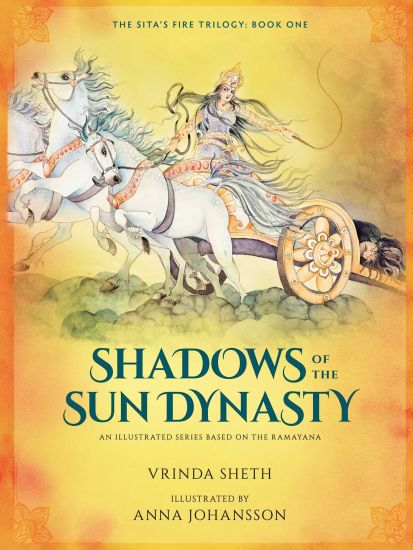
Shadows of the Sun Dynasty

Shadows of the Sun Dynasty

Vrinda Sheth

Mandala Publishing Group
2016
sidottu
Welcome to the royal city of Ayodhya, a realm ruled by the Sun dynasty, where peace reigns among the citizens while discord simmers behind the palace walls. A prophecy predicts that a son of the Sun dynasty will slay the immortal Ravana and defeat his demon army—but how will a mere human succeed where all the gods have failed? Meanwhile, Ayodhya’s emperor is torn between his own needs and the needs of the empire. His rebellious third wife, raised as a warrior, is haunted by her past. A defiant servant, stigmatized by her deformity, is willing to destroy the empire to achieve her own aims. A prince, unaware of his own divine origin, falls in love with a princess so extraordinary even the all-seeing sages cannot fathom her destiny. Shape-shifting blood-drinkers from the celestial realm fill the forests around the city, and the time of prophecy is drawing near—but will the blessings of the gods be enough to fend off the darkness growing in the heart of Ayodhya? A truly original reimagining of the classic Indian epic, the Ramayana, as told primarily through the eyes of the women behind the throne, Shadows of the Sun Dynasty reveals an entirely new perspective on an ancient story. Set in a world of kings and queens, celestial battles, invisible foes, and family rivalries, this epic tale forges legends in the fires of betrayal and prophecy.
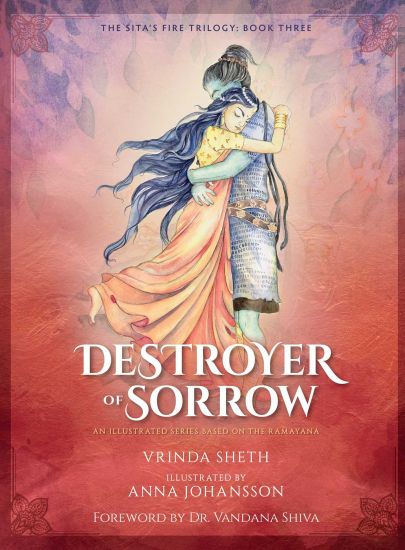
Destroyer of Sorrow

Destroyer of Sorrow

Vrinda Sheth

Insight Editions
2020
sidottu
Delve into the world of Hindu mythology in this beautifully illustrated modern retelling of the classic epic Ramayana. In the majestic conclusion to this one-of-a-kind trilogy, the saga of the Ramayana finally comes to an end. The Ramayana, one of the longest ancient epics in the world, is rendered into modern form in Destroyer of Sorrow, which finishes off the sacred story, as Rama finally returns to Ayodhya, after fourteen long years of exile, to assume his rightful place as king.
Old Chimes, New Me

Old Chimes, New Me

Vrinda Anand

Notion Press, Inc.
2020
pokkari
The book is a dreamworks production of the mind of a believer. A compendium of proses related to the ordinary world with extraordinary features. Come, look at your world from my perspective.