The story of James W.C. Pennington who was a former slave, then a Yale scholar, minister, and international leader of the Antebellum abolitionist movement. He escaped from slavery aged 19 in 1827 and soon became one of the leading voices against slavery before the Civil War. In 1837 he was ordained as a priest after studying at Yale and was soon traveling all over the world as an anti-slavery advocate.
Title: A Texas Scrap-Book. Made up of the history, biography, and miscellany of Texas and its people. Compiled by D. W. C. Baker. With plates, including portraits.]Publisher: British Library, Historical Print EditionsThe British Library is the national library of the United Kingdom. It is one of the world's largest research libraries holding over 150 million items in all known languages and formats: books, journals, newspapers, sound recordings, patents, maps, stamps, prints and much more. Its collections include around 14 million books, along with substantial additional collections of manuscripts and historical items dating back as far as 300 BC.The GENERAL HISTORICAL collection includes books from the British Library digitised by Microsoft. This varied collection includes material that gives readers a 19th century view of the world. Topics include health, education, economics, agriculture, environment, technology, culture, politics, labour and industry, mining, penal policy, and social order. ++++The below data was compiled from various identification fields in the bibliographic record of this title. This data is provided as an additional tool in helping to insure edition identification: ++++ British Library Baker, D W. C.; 1875 xii. 657 p.; 8 . 10412.ee.8.
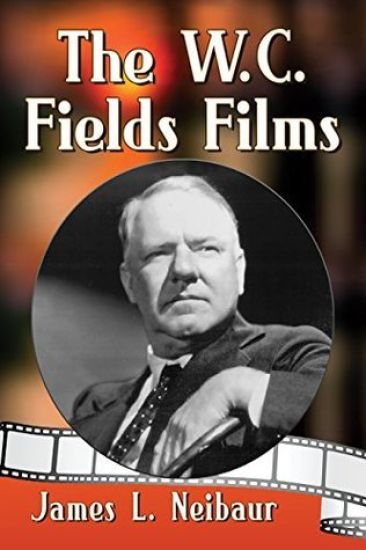
W.C. Fields was at the top among comedians during Hollywood's Golden Era of the 1930s and 1940s and has since remained a comic icon. Despite his character's misanthropic, child-hating, alcoholic tendencies, his performances were enduringly popular and Fields became personally defined by them. This critical study of his work provides commentary and background on each of his films, from the early silents through the cameos near the end of his life, with fresh appraisals of his well known classics. Pictures once believed to be lost that have been discovered and restored are discussed, and new information is given on some that remain lost.
My Walnut Creek Fields consists of a series of short stories about the shenanigans of our Southside Gang in and around Walnut Creek near Malakoff, Texas. We were a Gang more like "Spanky and Our Gang" and we never were destructive, only to ourselves. Our leader and organizer of our games we played was always Royce. We played games with Rubber Guns, Corn Cobs, Sling Shots, BB Guns, Mud Balls, Footballs, Baseballs, Shot Guns and many others.
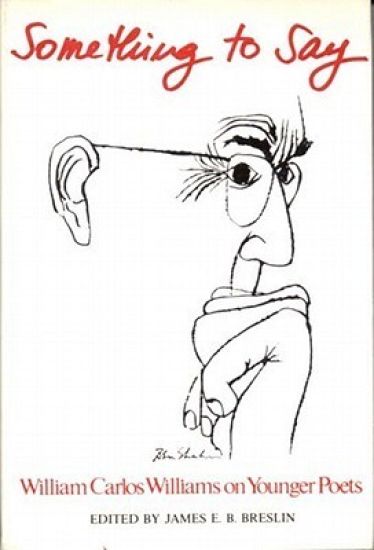
Something to Say: William Carlos Williams on Younger Poets collects all of Williams’ known writings—reviews, essays, introductions, and letters to the editor—on the two generations of poets that followed him, from Kenneth Rexroth and Louis Zukofsky to Robert Lowell and Allen Ginsberg. What might have been a random collection of occasional pieces achieves remarkable coherence from the singleness of Williams’ poetic vision: his belief that the secret spirit of ritual, of poetry, was trapped in restrictive molds, and, if these could be broken, the spirit would be able to live again in a new, contemporary form. Only a revived clarity and accuracy in sight and expression would enable the modern world to reform social order which Williams saw in complete disarray. To resuscitate American Poetry, Williams concentrated his efforts on the purification of poetic speech—his American idiom—and on remaking the poetic line in a new measure—his variable foot. And while his battles with his contemporaries on these issues could be heated, he was always a nurturing father to the young, “a useful presence,” “a model and a liberator.” He told Ginsberg to pare down and economize, Roethke to open up, and encouraged Lowell and Levertov to shake off poetic conventions. But in all his emphasis on the poem as a made object of concrete physicality or as a field of action, he would return again and again to this basic advice to young writers: “The only thing necessary is to have something to say when at last the opportunity comes to say it.”
This book explores the ways to teach the literary works of William Clark Falkner and William Faulkner to ESL (English as a Second Language) students in today’s digital environment. William Faulkner’s great-grandfather, William Clark Falkner, wrote romantic literary works, and William Faulkner critically uses the motifs of his great-grandfather’s works to establish his literary world. Applying Mikhail Bakhtin’s dialogical theory, this book theoretically explains how these two authors imagine the social formations of the American South differently in their literary works. The coined term, social combination—which is defined as the individuals’ mutual effort to have equal relationships for a certain time—is used as a key term to examine how these two authors depict the characters’ personal relationships. William Faulkner employs his characters’ social combination as a resistance against the American South’s romantic illusions that are represented by William Clark Falkner’s literary works. William Faulkner’s historical perspective is beneficial for today’s ESL students, who explore their new egalitarian formations in their digitally expanded world. The last part of this study outlines how an American literary teacher can connect the works of William Clark Falkner and William Faulkner when teaching ESL students by using today’s digital environment. Using three digital platforms—Moodle, WordPress, and Google Drive—a teacher composes egalitarian relationships among class members and inspires students’ autonomous discussion on these two authors’ works. Through these activities, ESL students are expected to comprehend that the literature of the American South is not only the historical development of the foreign region, but the phenomenon that is connected to their own social formations.
This book explores the ways to teach the literary works of William Clark Falkner and William Faulkner to ESL (English as a Second Language) students in today’s digital environment. William Faulkner’s great-grandfather, William Clark Falkner, wrote romantic literary works, and William Faulkner critically uses the motifs of his great-grandfather’s works to establish his literary world. Applying Mikhail Bakhtin’s dialogical theory, this book theoretically explains how these two authors imagine the social formations of the American South differently in their literary works. The coined term, social combination—which is defined as the individuals’ mutual effort to have equal relationships for a certain time—is used as a key term to examine how these two authors depict the characters’ personal relationships. William Faulkner employs his characters’ social combination as a resistance against the American South’s romantic illusions that are represented by William Clark Falkner’s literary works. William Faulkner’s historical perspective is beneficial for today’s ESL students, who explore their new egalitarian formations in their digitally expanded world. The last part of this study outlines how an American literary teacher can connect the works of William Clark Falkner and William Faulkner when teaching ESL students by using today’s digital environment. Using three digital platforms—Moodle, WordPress, and Google Drive—a teacher composes egalitarian relationships among class members and inspires students’ autonomous discussion on these two authors’ works. Through these activities, ESL students are expected to comprehend that the literature of the American South is not only the historical development of the foreign region, but the phenomenon that is connected to their own social formations.
Livre d'or des W.C. pour que chacune de tes incroyables pens es ne restent pas oubli es jamais dans les toilettes. Cahier noir, 90 pages blanches lign es.


![A Texas Scrap-Book. Made up of the history, biography, and miscellany of Texas and its people. Compiled by D. W. C. Baker. [With plates, including portraits.]](/covers/9781241419769.jpg)