Kirjahaku
Etsi kirjoja tekijän nimen, kirjan nimen tai ISBN:n perusteella.
1000 tulosta hakusanalla W. B. Patterson
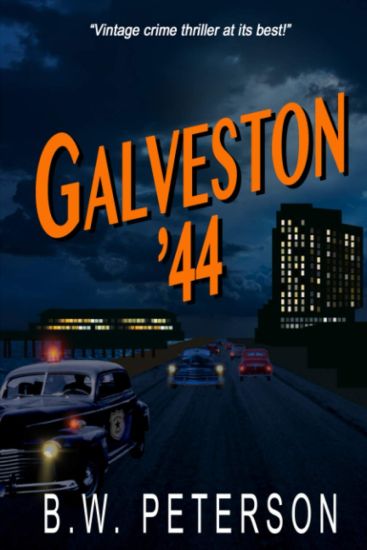
When Justice Dies, Revenge is Born.It's 1944, and Sheriff Sam Baker has his hands full enforcing the laws of the wide-open town of Galveston, TX, a.k.a. the Free State of Galveston. Tourists are drawn to the island not only by its white-sand beaches but its quasi legal casinos and cathouses.It's been a crushing year for Baker. His son was killed in Italy by artillery fire while fighting the Nazis. Because his remains have yet to be identified, Baker can't come to grips with his death. He drinks. He has become reckless. His wife of twenty-three years fears for his life, and has begun to distance herself from him.Early one morning a call from headquarters awakens him from a dead drunk...someone close to him has been brutally murdered. At the scene, Baker discovers a menacing skull-and-crossbones medallion in the victim's bloody hands. Beyond that, there is no evidence. No witnesses. No nothing.Baker snaps out of his fog of grief and hunts the killer with the intensity he had as a former heavyweight boxer stalking his opponent in the ring. But every promising lead turns into a dead end. The case grows cold, but not Baker's rage. After narrowly escaping an attempt on his life, he realizes that powerful forces are protecting the man he hunts. But why? Is he more than just a stone-cold killer? Those questions propel Baker into a trip wire world of treachery and barbarity beyond the brutal murder of a cherished friend.Hitch a ride now with Sam Baker into that razor's edge underground on his pulse-pounding quest for justice. "I hope that this is the beginning of many more novels by Bruce Peterson because Galveston '44 is such a great read, fast-paced and well-written." - Carolyn V. Hamilton, author of Magicide and Implosion.
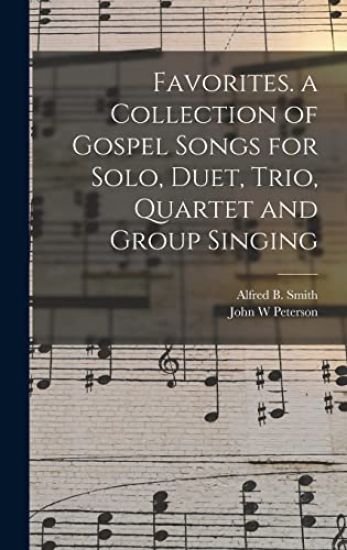
Favorites. a Collection of Gospel Songs for Solo, Duet, Trio, Quartet and Group Singing
Alfred B. (Alfred Barnerd) 19 Smith; John W. Peterson
Hassell Street Press
2021
sidottu
This work has been selected by scholars as being culturally important and is part of the knowledge base of civilization as we know it.This work is in the public domain in the United States of America, and possibly other nations. Within the United States, you may freely copy and distribute this work, as no entity (individual or corporate) has a copyright on the body of the work.Scholars believe, and we concur, that this work is important enough to be preserved, reproduced, and made generally available to the public. To ensure a quality reading experience, this work has been proofread and republished using a format that seamlessly blends the original graphical elements with text in an easy-to-read typeface.We appreciate your support of the preservation process, and thank you for being an important part of keeping this knowledge alive and relevant.
Favorites. a Collection of Gospel Songs for Solo, Duet, Trio, Quartet and Group Singing
Alfred B. (Alfred Barnerd) 19 Smith; John W. Peterson
Hassell Street Press
2021
nidottu
This work has been selected by scholars as being culturally important and is part of the knowledge base of civilization as we know it.This work is in the public domain in the United States of America, and possibly other nations. Within the United States, you may freely copy and distribute this work, as no entity (individual or corporate) has a copyright on the body of the work.Scholars believe, and we concur, that this work is important enough to be preserved, reproduced, and made generally available to the public. To ensure a quality reading experience, this work has been proofread and republished using a format that seamlessly blends the original graphical elements with text in an easy-to-read typeface.We appreciate your support of the preservation process, and thank you for being an important part of keeping this knowledge alive and relevant.
This book comprehensively examines the relationship between literature and sculpture in the work of W. B. Yeats, drawing on extensive archival research to offer revelatory new readings of the poet. The book traces Yeats's literary and critical engagement with Celtic Revival statuary, public monuments in Dublin, the coin designs of the Irish Free State, abstract sculpture by the Vorticists and modernists, and a variety of carvings, decorative sculptures, and objets d'art. By charting Yeats's early art school education in Dublin, his attempts to raise funds for public monuments in the city, and to secure commissions for his favourite sculptors, the book documents a lifelong interest in the plastic arts. New and original readings of Yeats's poetry, drama, and prose criticism emerge from this concertedly inter-arts and interdisciplinary study.
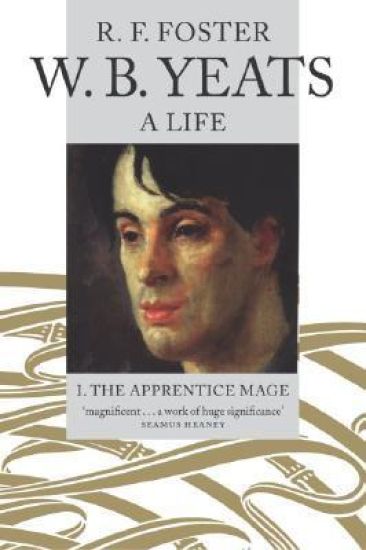
In the first authorized biography of W. B. Yeats for over 50 years, Roy Foster brings new light to one of the most complex and fascinating lives of the late nineteenth and early twentieth century. Working from a great archive of personal and contemporary material, he dramatically alters traditional perceptions to illuminate the poet's family history, relationships, politics, and art. From a childhood inheritance of déclassé Irish Protestantism with strong nationalist sympathies, and an exceptional and talented family background, the narrative charts his development into a great poet. It ends in his 50th year with the controversies and disillusionment affecting his personal and public life at the time of the First World War. A bohemian life of uncertain finances, love-affairs, avant-garde friends and experiments with drugs and occultism prefaces his attempt to unite politics with high culture and his creation of an Irish national theatre. Constantly shifting between Dublin, Coole Park and London, with forays to America and Paris, ruthlessly constructing a public life as well as a creative reputation, Yeats's genius attracted admirers and enemies with equal passion. His story intersects with those of an engrossing cast of characters including Lady Gregory, J. M. Synge, George Moore, 'AE', Ezra Pound and above all Maud Gonne - an influence eternally re-created 'like the phoenix', affecting everything he did. The search for supernatural wisdom forms a constant thread, traced through Yeats's occult notebooks and closely related to the insecurities of his personal life. The Apprentice Mage charts the growth of a poet's mind and of an astonishing personality, both of which were instrumental in the formation of a new and radicalised Irish nationalist identity.
rich and distinguished work of scholarship Conor Cruise O'Brien, The Listener wonderfully edited by John Kelly ... nothing goes unexplained. The notes provide, often wittily, historical details about the 1880's and 1890's that no one has previously compiled. Kelly has performed many extraordinary feats of research. The biographical notes at the end are well written and helpful, and the analytical index on Yeats is just what is needed. Richard Ellman, The New Republic it is no exaggeration to claim that it marks a milestone in Yeats scholarship. The significance of this first volume lies not only in the content of the letters alone, but also in the sheer mass of beckground erudition assembled in this volume ... for a long, long time this monumental edition of Yeat's letters will be enlightening and delighting us. John P. Frayne, Journal of English and Germanic Philology This first volume sets a superlative standard for the books to come. Virtually every editorial and typographical decision taken here contributes to the usefulness, legibility, and attractiveness of the work. The Modern Language Review
The letters in this volume, the majority never before published, vividly document the period in which Yeats, having left the family house in Bedford Park, began a new life in Bloomsbury; as he later recalled, `a new scene was set, new actors appeared'. With his association with the Savoy magazine and its circle of decadents, he achieved the financial emancipation that enabled him to begin his first affair with Olivia Shakespear. 1896 also saw the beginning of the most important and creative friendship of his life, that with Lady Gregory; other influential friendships, such as those with Synge and W. T. Horton, were forged. In 1898, Yeats's friendship with George Moore expanded, only to contract with the disastrous collaboration on Diarmuid and Grania. It was a period of considerable unhappiness for Yeats. His love for Maud Gonne was hopeless; in December 1898, she was to tell him of her long-standing affair with Lucian Millevoye (by whom she had two children). The crisis produced a run of confused and incoherent letters to Lady Gregory. The letters also document Yeats's greatest early period of political activity. He organized the centenary celebrations of the 1798 uprising, while combating double agents within the Irish Revolutionary Brotherhood. In 1897, he began planning a National Theatre and letters chart a massive expansion of theatrical activity. Letter by letter, we see how private concerns, artistic quarrels and exhausting political life forced him to develop a public persona. Rich and readable notes provide a narrative of these years, explaining allusions and setting the correspondence in its cultural and political contexts, as well as relating it to the emergence of Yeats's canon. The Collected Letters of W. B. Yeats is redefining the territory of modern literary history and this volume, with its valuable biographical and thematic appendices, is indispensable to anyone interested in the development of modern poetry, Irish drama and cultural history.
The Collected Letters of W. B. Yeats: Volume III: 1901-1904
W. B. Yeats
Clarendon Press
1994
sidottu
The letters in this volume, the majority never before published, vividly document a tunultuous period in Yeats's life. They chart his transformation from a late Romantic, `Celtic' poet into a powerful and astringent modernist, the foundation of the Abbey Theatre and development of his own palywriting career, the emotional devastation of his beloved Maud Gonne's marriage to a man he despised, the encouragement of promising young writers including Joyce and Synge, and the impact of his first exposure to the United States. Letter by letter we see how private concerns and public controversies forced him to redefine his views on artistic freedom and responsibility, and to reshape his style. Rich and readable notes provide a narrative of these years, explaining allusions, and setting the correspondence in its cultural and political contexts as well as relating it to Yeats's canon as a whole. This book will be indispenable to anyone interested in the development of modern poetry, drama, and cultural history.
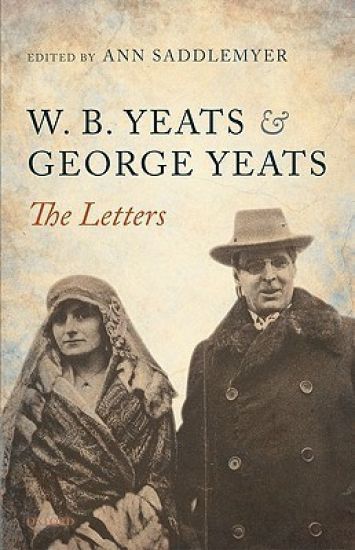
W. B. Yeats and George Yeats
Oxford University Press
2011
sidottu
During the twenty-two years of their married life, W. B. and George Yeats corresponded regularly and fully whenever they were apart. They discussed his writing and other projects, their family and friends, and the social, artistic, and political scene in Ireland and the United Kingdom in far more detail than with anyone else. Both were splendid and enchanting storytellers. This edition includes 149 letters from George, 436 from W. B., and 29 written to their children. Anne, who lived at home, preserved 22 from her father and several important ones from her mother; when both her parents were away. The letters include fascinating drafts of poems, statements of belief, candid descriptions of people and events, and in some cases offer biographical and historical corrections to the popular narrative of Yeats's life. Like Oscar Wilde, Yeats frequently practised a phrase or an anecdote to provide the best effect in his correspondence. And not for nothing would he write to his wife, 'you are much the best letter writer I know, or have known'. The letters between them not only tell the story of the marriage of two minds and the world they created, but also illuminate how Yeats worked on his writing and reveal a refreshing image of the poet as a family man.
The second and final volume in Roy Foster's biography of W. B. Yeats covers the second half of Yeats's life, taking in his controversial political involvements, continued supernatural experiments, his extraordinary marriage, a series of love affairs, and the writing of his greatest poetry.
This is a biographical account of Yeats' life detailing his early family life, his schooldays, his London years, his rise to literary fame, his relationships and marriage, his Oxford period and his career in public life.
W. B. Yeats
Stan Smith
Barnes Noble Books-Imports, Div of Rowman Littlefield Pubs., Inc
1990
nidottu
An original, yet lucid and accessible introduction to the often difficult poetry of W.B. Yeats. No poet in this century has shaped his work so directly out of reaction to the history of his times. Yeats's antithetical vision, his fascination with conflict, energy, turbulence and the bodiliness of being, his sense of poetry as a dramatic process, indicate how closely bound up are the stylistic and the thematic dimensions of his art. As a poet of carnality as much as of politics, Yeats is unexcelled. The aim of this book is to show what an exciting writer he is, to reveal the relevance and contemporaneity of his work, even in its more esoteric aspects, and to make its study less intimidating than it can sometimes seem.
This title is part of UC Press's Voices Revived program, which commemorates University of California Press’s mission to seek out and cultivate the brightest minds and give them voice, reach, and impact. Drawing on a backlist dating to 1893, Voices Revived makes high-quality, peer-reviewed scholarship accessible once again using print-on-demand technology. This title was originally published in 1964.
Professor Stock has written a critical interpretation of Yeats's poems for the reader who is interested enough to study the poetry attentively but is not familiar with either Yeats's prose or his scholarship. The underlying idea of this book is that, although the poet's beliefs and the power of his poetry are different things, great poetry does not grow out of insincere or flabby thinking. Because Yeats's thought is often disconcerting, readers tend to treat it as an aberration rather than an essential part of his poetry. Thus, in relation to the poems, Professor Stock considers three elements of his thought at some length - his preoccupation with Irish tradition, his social and political outlook, and the ideas formulated in A Vision. In particular Professor Stock (herself Irish) has dwelt considerably on Yeats's lifelong preoccupation with his Irish inheritance, and with the distinctive tradition and temperament behind his writing. Finally, Professor Stock has paid considerable attention to Yeats's borrowings from eastern thought.
W. B. Yeats in Context
Cambridge University Press
2009
sidottu
W. B. Yeats is a writer who requires, and at the same time tests the limits of, contextual study. More than perhaps any other Irish writer, he produced his own context as much as it produced him. His cultural and political activities, combined with his prolific literary output, made an impact that can only be understood by close attention to his words in relation to the times in which he lived. W. B. Yeats in Context maps Yeats' world in concise, lively essays by distinguished critics and historians. The places, people, themes and intellectual frameworks most important to his development receive close attention, as do his artistic influences, and the production and reception of his work. As a gateway into the study of Yeats, this volume offers much new information for both students, scholars and anyone interested in the life and times of this enigmatic and influential poet.