Kirjojen hintavertailu. Mukana 11 213 693 kirjaa ja 12 kauppaa.

Kirjahaku

Etsi kirjoja tekijän nimen, kirjan nimen tai ISBN:n perusteella.

1000 tulosta hakusanalla W. D. Howells

The Children's Plutarch: Tales of the Greeks (1910). By: Frederick James Gould, introduction By: W. D. Howells: Frederick James Gould (19 Decem
Frederick James Gould (19 December 1855 - 6 April 1938) was an English teacher, writer, and pioneer secular humanist. Early life and career: He was born in Brighton, the son of William James Gould and his wife Julia, who were evangelicalist Anglicans.He grew up in London, and at the age of seven was sent to study and sing in the choir at St George's Chapel, Windsor Castle. He then went to school at Chenies, Buckinghamshire, where he became a day and Sunday school teacher. At the age of fifteen, he thought he heard voices in his head exclaiming "How wonderful is the love of God ", following which he studied theology "in a kind of devout fury". However, after he was appointed head teacher at Great Missenden church school in 1877, he began to develop doubts about his own religious faith.In 1879 he moved to London, married, and began working as a teacher in publicly funded board schools in poorer parts of the East End. By the early 1880s he had become actively involved in the Secularist movement.He was transferred from the school in Bethnal Green to Limehouse in 1887, after his published notes in the Secular Review were seen by his employers, the London School Board, and he was exempted from teaching the Bible. He later asked to be allowed to resume Bible teaching, to stress its ethical rather than supernatural elements, but this was refused. William Dean Howells ( March 1, 1837 - May 11, 1920) was an American realist novelist, literary critic, and playwright, nicknamed "The Dean of American Letters". He was particularly known for his tenure as editor of The Atlantic Monthly, as well as for his own prolific writings, including the Christmas story "Christmas Every Day" and the novels The Rise of Silas Lapham and A Traveler from Altruria. Early life and family: William Dean Howells was born on March 1, 1837 in Martinsville, Ohio (now known as Martins Ferry, Ohio) to William Cooper Howells and Mary Dean Howells, the second of eight children. His father was a newspaper editor and printer who moved frequently around Ohio. In 1840, the family settled in Hamilton, Ohio, where his father oversaw a Whig newspaper and followed Swedenborgianism.Their nine years there were the longest period that they stayed in one place. The family had to live frugally, although the young Howells was encouraged by his parents in his literary interests. He began at an early age to help his father with typesetting and printing work, a job known at the time as a printer's devil. In 1852, his father arranged to have one of his poems published in the Ohio State Journal without telling him. Early career: In 1856, Howells was elected as a clerk in the State House of Representatives. In 1858, he began to work at the Ohio State Journal where he wrote poetry and short stories, and also translated pieces from French, Spanish, and German. He avidly studied German and other languages and was greatly interested in Heinrich Heine. In 1860, he visited Boston and met with writers James Thomas Fields, James Russell Lowell, Oliver Wendell Holmes, Sr., Nathaniel Hawthorne, Henry David Thoreau, and Ralph Waldo Emerson. He became a personal friend to many of them, including Henry Adams, William James, Henry James, and Oliver Wendell Holmes, Jr. In 1860 Howells wrote Abraham Lincoln's campaign biography Life Of Abraham Lincoln and subsequently gained a consulship in Venice. He married Elinor Mead on Christmas Eve 1862 at the American embassy in Paris. She was a sister of sculptor Larkin Goldsmith Mead and architect William Rutherford Mead of the firm McKim, Mead, and White. Among their children was architect John Mead Howells..........
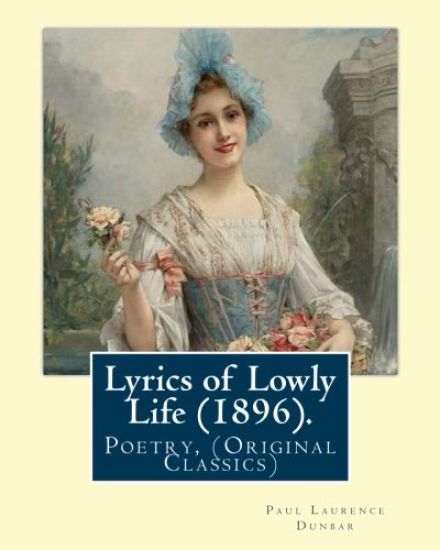
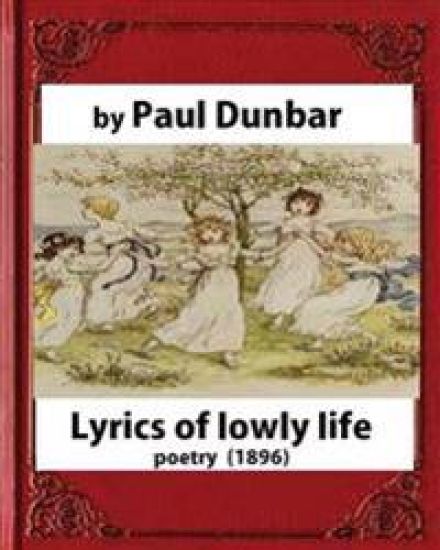
Lyrics of Lowly Life (1896). By: Paul Laurence Dunbar, introduction By: W. D. Howells: William Dean Howells ( March 1, 1837 - May 11, 1920) was an Ame
William Dean Howells (March 1, 1837 - May 11, 1920) was an American realist novelist, literary critic, and playwright, nicknamed "The Dean of American Letters". He was particularly known for his tenure as editor of The Atlantic Monthly, as well as for his own prolific writings, including the Christmas story "Christmas Every Day" and the novels The Rise of Silas Lapham and A Traveler from Altruria..... Paul Laurence Dunbar (June 27, 1872 - February 9, 1906) was an American poet, novelist, and playwright of the late 19th and early 20th centuries. Born in Dayton, Ohio, to parents who had been enslaved in Kentucky before the American Civil War, Dunbar began to write stories and verse when still a child; he was president of his high school's literary society. He published his first poems at the age of 16 in a Dayton newspaper. Much of Dunbar's more popular work in his lifetime was written in the Negro dialect associated with the antebellum South, though he also used the Midwestern regional dialect of James Whitcomb Riley. Dunbar's work was praised by William Dean Howells, a leading editor associated with the Harper's Weekly, and Dunbar was one of the first African-American writers to establish an international reputation. He wrote the lyrics for the musical comedy In Dahomey (1903), the first all-African-American musical produced on Broadway in New York. The musical later toured in the United States and the United Kingdom. Dunbar also wrote in conventional English in other poetry and novels. Since the late 20th century, scholars have become more interested in these other works. Suffering from tuberculosis, which then had no cure, Dunbar died in Dayton at the age of 33. Early life: Paul Laurence Dunbar was born at 311 Howard Street in Dayton, Ohio, on June 27, 1872, to parents who had been enslaved in Kentucky before the American Civil War. After being emancipated, his mother Matilda had moved to Dayton with other family members, including her two sons Robert and William from her first marriage. Dunbar's father Joshua had escaped from slavery in Kentucky before the war ended. He traveled to Massachusetts and volunteered for the 55th Massachusetts Infantry Regiment, one of the first two black units to serve in the war. The senior Dunbar also served in the 5th Massachusetts Cavalry Regiment. Paul Dunbar was born six months after Joshua and Matilda married on Christmas Eve, 1871. The marriage of Dunbar's parents was troubled and Dunbar's mother left Joshua soon after having their second child, a daughter.Joshua died on August 16, 1885; Paul was then 12 years old. Dunbar wrote his first poem at the age of six and gave his first public recital at the age of nine. His mother assisted him in his schooling, having learned to read expressly for that purpose. She often read the Bible with him, and thought he might become a minister in the African Methodist Episcopal Church. It was the first independent black denomination in America, founded in Philadelphia in the early 19th century. Dunbar was the only African-American student during his years at Central High School in Dayton; Orville Wright was a classmate and friend. Well-accepted, he was elected as president of the school's literary society, and became the editor of the school newspaper and a member of the debate club..........
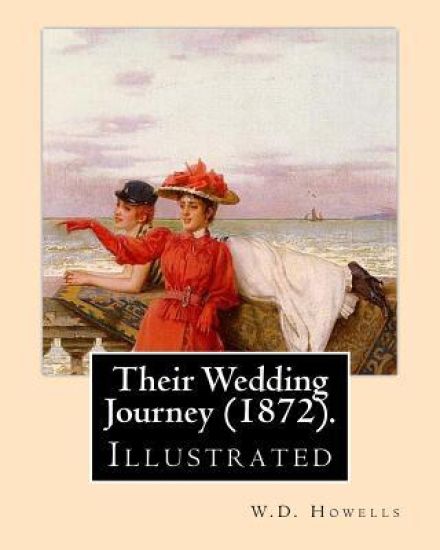
Their Wedding Journey (1872). By: W.D.Howells, illustrated By: Augustus Hoppin: Augustus Hoppin (1828-1896) was an American book illustrator, born in
William Dean Howells ( March 1, 1837 - May 11, 1920) was an American realist novelist, literary critic, and playwright, nicknamed "The Dean of American Letters". He was particularly known for his tenure as editor of The Atlantic Monthly, as well as for his own prolific writings, including the Christmas story "Christmas Every Day" and the novels The Rise of Silas Lapham and A Traveler from Altruria. Early life and family: William Dean Howells was born on March 1, 1837 in Martinsville, Ohio (now known as Martins Ferry, Ohio) to William Cooper Howells and Mary Dean Howells, the second of eight children. His father was a newspaper editor and printer who moved frequently around Ohio. In 1840, the family settled in Hamilton, Ohio, where his father oversaw a Whig newspaper and followed Swedenborgianism.Their nine years there were the longest period that they stayed in one place. The family had to live frugally, although the young Howells was encouraged by his parents in his literary interests. He began at an early age to help his father with typesetting and printing work, a job known at the time as a printer's devil. In 1852, his father arranged to have one of his poems published in the Ohio State Journal without telling him. Early career: In 1856, Howells was elected as a clerk in the State House of Representatives. In 1858, he began to work at the Ohio State Journal where he wrote poetry and short stories, and also translated pieces from French, Spanish, and German. He avidly studied German and other languages and was greatly interested in Heinrich Heine. In 1860, he visited Boston and met with writers James Thomas Fields, James Russell Lowell, Oliver Wendell Holmes, Sr., Nathaniel Hawthorne, Henry David Thoreau, and Ralph Waldo Emerson. He became a personal friend to many of them, including Henry Adams, William James, Henry James, and Oliver Wendell Holmes, Jr. In 1860 Howells wrote Abraham Lincoln's campaign biography Life Of Abraham Lincoln and subsequently gained a consulship in Venice. He married Elinor Mead on Christmas Eve 1862 at the American embassy in Paris. She was a sister of sculptor Larkin Goldsmith Mead and architect William Rutherford Mead of the firm McKim, Mead, and White. Among their children was architect John Mead Howells.............. Augustus Hoppin (1828-1896) was an American book illustrator, born in Providence, R. I.. He graduated at Brown University in 1848 and was admitted to the bar, but soon gave up the law and went abroad to study art. Upon his return he devoted himself to drawing on wood and to the illustration of books, in which he was successful. His pictures in Nothing to Wear (1857), Poliphar Papers (1853), and The Autocrat of the Breakfast Table (1858) are widely known. He published several volumes of sketches and novels, among the latter Recollections of Auton House (1881) and Married for Fun (1885).
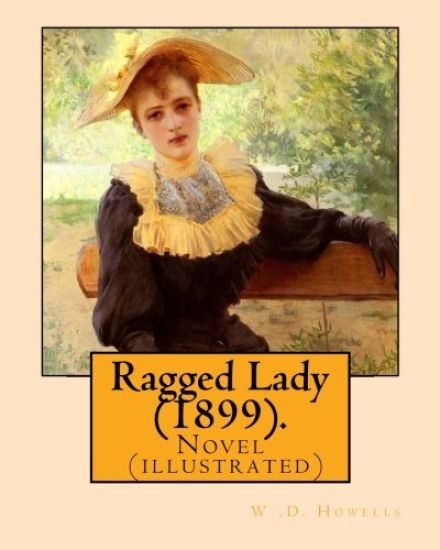
Ragged Lady (1899). By: W .D. Howells, illustrated By: A. I. Keller: Novel (illustrated) By: Arthur Ignatius Keller (1866 - 1924)
Arthur Ignatius Keller (1866 - 1924). The Artist A. I. Keller was born July 4th, 1866. He was the son of Matilda and Adam Keller, a designer and engraver who recognized and encouraged his son's artistic talent. Arthur's father was his first teacher. By the age of seventeen, he began his formal training at the National Academy of Design in New York, studying under Professor Lemuel Wilmarth. In 1890 Keller traveled to Munich, Germany to study under Ludwig von Loeffiz. After two years of study he returned to the United States. His father had tried to persuade Arthur to remain in Europe to study in France, as the influence of impressionism was gaining in popularity. But Arthur did not wish to experiment with a genre that was so different from the classical styles that he was developing. In a letter dated 1891 Arthur replied to his father, "This I positively know, namely, I hardly would ever think of entering the Art School in Paris. In fact, I'm already thinking of leaving for good to develop that grain of art which I have sowed here." Before leaving Munich, Keller received the Hallgarten Prize, and his painting "At Mass" was purchased by the Academy. Unfortunately, this painting was destroyed during an Allied bombing raid in WW II. Regarding Keller the artist, critic Walter Jack Duncan writes: "Keller, was a born artist. By instinct we recognize this at once. His simplest sketch, every stroke of his brush or pencil, is nervous with artistic energy. One feels it pulsating sturdily through all his multifarious work, through his graceful and sinuous drawings, his exquisite watercolors, his crowded and animated oils. His preliminary sketches especially, so fluent, natural, unaffected, flowing straight out of his facile pencil and confessing all it is possible to know of an artist's talent, prove beyond question that here was a man who was an artist in the full meaning of the word; as the actors used to say, an artist to the fingertips."............. William Dean Howells ( March 1, 1837 - May 11, 1920) was an American realist novelist, literary critic, and playwright, nicknamed "The Dean of American Letters". He was particularly known for his tenure as editor of The Atlantic Monthly, as well as for his own prolific writings, including the Christmas story "Christmas Every Day" and the novels The Rise of Silas Lapham and A Traveler from Altruria. Early life and family: William Dean Howells was born on March 1, 1837 in Martinsville, Ohio (now known as Martins Ferry, Ohio) to William Cooper Howells and Mary Dean Howells, the second of eight children. His father was a newspaper editor and printer who moved frequently around Ohio. In 1840, the family settled in Hamilton, Ohio, where his father oversaw a Whig newspaper and followed Swedenborgianism.Their nine years there were the longest period that they stayed in one place. The family had to live frugally, although the young Howells was encouraged by his parents in his literary interests. He began at an early age to help his father with typesetting and printing work, a job known at the time as a printer's devil. In 1852, his father arranged to have one of his poems published in the Ohio State Journal without telling him...............
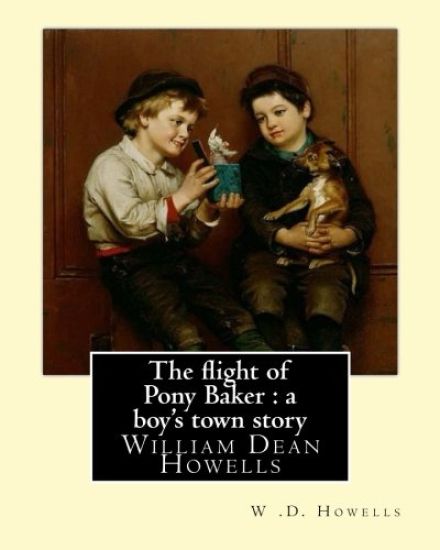
The flight of Pony Baker: a boy's town story By: W .D. Howells Illustrated By: Florence Scovel Shinn (September 24, 1871, Camden, New Jersey - O
The Flight of Pony Baker is a novel for children, one of the many stories written by William Dean Howells. It was published by Harper and Brothers in 1902 in New York, New York. It tells the story of a young boy named Pony Baker who, throughout the book, attempts to run away from his home where he lives with his mother, father, and five sisters. The setting of the story is "fifty years ago" in the Boy's Town of Ohio, the state where Howells was born and raised. Plot summary: The story begins with Frank Baker, who is known as "Pony" after one of the boys in Boy's Town calls him by that name, so that he could be distinguished from his cousin Frank Baker. Pony lives in the Boy's Town with his mother, father, and five sisters, whom his mother always wants him to play with. Pony's mother is very overprotective of Pony, which makes her a bad mother when it comes to having fun. Pony's father has done some things that have given Pony the right to run away as well, but it seems to Pony that they were mostly things that his mother had put his father up to, and that his father would not have been half as bad if his mother had not influenced him. One day however, Pony almost loses all his patience after the way his father reacts to Pony being pushed down from third reader to second reader at school. That morning, Pony is asked by his teacher to read to the class, but because it is hot and because Pony was being lazy, he read very poorly despite the fact that Pony is actually a very good reader. His performance causes the teacher to push him down to the second reader. Before class is dismissed, Pony gathers his books and walks out of school towards home. His father advises him to go back to school that afternoon, which continues to upset Pony. Pony heads back to school that afternoon with a plan to run off as soon as school is over. At recess the boys hear word of Pony's plan to run away that very night. After school, the boys tell Pony how he must run away and how they will help him. An older boy named Jim Leonard suggests that Pony go with the Indians and that the Indians would like him and then adopt him into their tribe. Jim offers to find out if there are any Indians living nearer that the reservation that is about 100 miles away from the Boy's Town.... Florence Scovel Shinn (September 24, 1871, Camden, New Jersey - October 17, 1940) was an American artist and book illustrator who became a New Thought spiritual teacher and metaphysical writer in her middle years. 1] 2] In New Thought circles, she is best known for her first book, The Game of Life and How to Play It (1925). Shinn expressed her philosophy as: The invisible forces are ever working for man who is always 'pulling the strings' himself, though he does not know it. Owing to the vibratory power of words, whatever man voices, he begins to attract. The Game of Life, Florence Scovel Shinn....... William Dean Howells ( March 1, 1837 - May 11, 1920) was an American realist novelist, literary critic, and playwright, nicknamed "The Dean of American Letters".
Their Wedding Journey (1872), BY W. D. Howells, Augustus Hoppin illustrated: With an additional chapter on Niagara revisited, Augustus Hoppin (1828-18
William Dean Howells (March 1, 1837 - May 11, 1920) was an American realist novelist, literary critic, and playwright. Nicknamed "The Dean of American Letters", he was particularly known for his tenure as editor of the Atlantic Monthly as well as his own prolific writings, including the Christmas story "Christmas Every Day", and the novels The Rise of Silas Lapham and A Traveler from Altruria. Augustus Hoppin (1828-1896) was an American book illustrator, born in Providence, R. I.. He graduated at Brown University in 1848 and was admitted to the bar, but soon gave up the law and went abroad to study art. Upon his return he devoted himself to drawing on wood and to the illustration of books, in which he was successful. His pictures in Nothing to Wear (1857), Poliphar Papers (1853), and The Autocrat of the Breakfast Table (1858) are widely known. He published several volumes of sketches and novels, among the latter Recollections of Auton House (1881) and Married for Fun (1885).
Italian Journeys, By: W. D. Howells, illustrated By: Joseph Pennell (July 4, 1857 - April 23, 1926) was an American artist and author.: Will
William Dean Howells ( March 1, 1837 - May 11, 1920) was an American realist novelist, literary critic, and playwright, nicknamed "The Dean of American Letters". He was particularly known for his tenure as editor of The Atlantic Monthly, as well as for his own prolific writings, including the Christmas story "Christmas Every Day" and the novels The Rise of Silas Lapham and A Traveler from Altruria. Early life and family: William Dean Howells was born on March 1, 1837 in Martinsville, Ohio (now known as Martins Ferry, Ohio) to William Cooper Howells and Mary Dean Howells, the second of eight children. His father was a newspaper editor and printer who moved frequently around Ohio. In 1840, the family settled in Hamilton, Ohio, where his father oversaw a Whig newspaper and followed Swedenborgianism.Their nine years there were the longest period that they stayed in one place. The family had to live frugally, although the young Howells was encouraged by his parents in his literary interests. He began at an early age to help his father with typesetting and printing work, a job known at the time as a printer's devil. In 1852, his father arranged to have one of his poems published in the Ohio State Journal without telling him. Early career: In 1856, Howells was elected as a clerk in the State House of Representatives. In 1858, he began to work at the Ohio State Journal where he wrote poetry and short stories, and also translated pieces from French, Spanish, and German. He avidly studied German and other languages and was greatly interested in Heinrich Heine. In 1860, he visited Boston and met with writers James Thomas Fields, James Russell Lowell, Oliver Wendell Holmes, Sr., Nathaniel Hawthorne, Henry David Thoreau, and Ralph Waldo Emerson. He became a personal friend to many of them, including Henry Adams, William James, Henry James, and Oliver Wendell Holmes, Jr. In 1860 Howells wrote Abraham Lincoln's campaign biography Life Of Abraham Lincoln and subsequently gained a consulship in Venice. He married Elinor Mead on Christmas Eve 1862 at the American embassy in Paris. She was a sister of sculptor Larkin Goldsmith Mead and architect William Rutherford Mead of the firm McKim, Mead, and White. Among their children was architect John Mead Howells............ Joseph Pennell (July 4, 1857 - April 23, 1926) was an American artist and author.Born in Philadelphia, and first studied there, but like his compatriot and friend, James McNeill Whistler, he afterwards went to Europe and made his home in London. Joseph Pennell had many etchings that depicted historic landmarks in the city of Philadelphia. His etching of Wakefield- Fisher's Lane was created in 1882. This was the mansion of William Logan Fisher which was standing until 1985. It would have been located on the corner of Ogontz and Lindley Avenues near La Salle University's St. Basil Court. 1] He produced numerous books (many of them in collaboration with his wife, Elizabeth Robins Pennell), but his chief distinction is as an original etcher and lithographer, and notably as an illustrator. Their close acquaintance with Whistler led the Pennells to undertake a biography of that artist in 1906, and, after some litigation with his executrix on the right to use his letters, the book was published in 1908...........
Lyrics of lowly life(1896), by Paul Laurence Dunbar and W.D.Howells(poetry)

Lyrics of lowly life(1896), by Paul Laurence Dunbar and W.D.Howells(poetry)

William Dean Howells; Paul Laurence Dunbar

Createspace Independent Publishing Platform
2016
nidottu
One of the best-known volumes by a fascinating and complex writer, the first important black poet in the American canon. Popular in the early twentieth century Dunbar is today the subject of revived interest. Paul Laurence Dunbar (June 27, 1872 - February 9, 1906) was an American poet, novelist, and playwright of the late 19th and early 20th centuries. Born in Dayton, Ohio, to parents who had been enslaved in Kentucky before the American Civil War, Dunbar began to write stories and verse when still a child and was president of his high school's literary society. He published his first poems at the age of 16 in a Dayton newspaper. William Dean Howells ( March 1, 1837 - May 11, 1920) was an American realist novelist, literary critic, and playwright. Nicknamed "The Dean of American Letters",
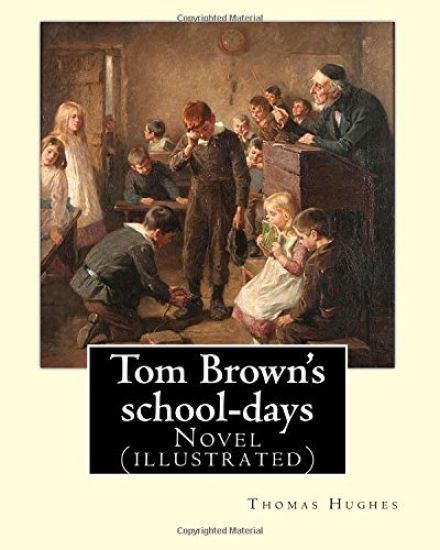
Tom Brown's school-days. By: Thomas Hughes, illustrated By: Louis (John) Rhead and By: E. J. Sullivan, introduction By: W. D. Howells (NOVEL): The
The story is set in the 1830s at Rugby School, a public school for boys. Hughes attended Rugby School from 1834 to 1842. The novel was originally published as being "by an Old Boy of Rugby", and much of it is based on the author's experiences. Tom Brown is largely based on the author's brother George Hughes. George Arthur, another of the book's main characters, is generally believed to be based on Arthur Penrhyn Stanley. The fictional Tom's life also resembles the author's, in that the culminating event of his school career was a cricket match. 3] The novel also features Dr Thomas Arnold (1795-1842), who was the actual headmaster of Rugby School from 1828 to 1841. Tom Brown's School Days has been the source for several film and television adaptations. It also influenced the genre of British school novels, which began in the nineteenth century, and led to fictional depictions of schools such as Billy Bunter's Greyfriars School, Mr Chips' Brookfield, St. Trinian's, and Harry Potter's Hogwarts. A sequel, Tom Brown at Oxford, was published in 1861.Tom Brown is energetic, stubborn, kind-hearted and athletic, rather than intellectual. He follows his feelings and the unwritten rules of the boys. The early chapters of the novel deal with his childhood at his home in the Vale of White Horse. Much of the scene setting in the first chapter is deeply revealing of Victorian England's attitudes towards society and class, and contains a comparison of so-called Saxon and Norman influences on England. This part of the book, when young Tom wanders the valleys freely on his pony, serves as a contrast with the hellish experiences in his first years at school. His first school year is at a local school. His second year starts at a private school, but due to an epidemic of fever in the area, all the school's boys are sent home, and Tom is transferred mid-term to Rugby School. On his arrival, the eleven-year-old Tom Brown is looked after by a more experienced classmate, Harry "Scud" East. Tom's nemesis at Rugby is the bully Flashman. The intensity of the bullying increases, and, after refusing to hand over a sweepstake ticket for the favourite in a horse race, Tom is deliberately burned in front of a fire. Tom and East defeat Flashman with the help of Diggs, a kind, comical, older boy. In their triumph they become unruly........ Edmund Joseph Sullivan (1869-1933), usually known as E. J. Sullivan, was a British book illustrator who worked in a style which merged the British tradition of illustration from the 1860s with aspects of Art Nouveau. Louis John Rhead (November 6, 1857 - July 29, 1926) was an English-born American artist, illustrator, author and angler who was born in Etruria, Staffordshire, England. He emigrated to the United States at the age of twenty-four. William Dean Howells ( March 1, 1837 - May 11, 1920) was an American realist novelist, literary critic, and playwright, nicknamed "The Dean of American Letters". He was particularly known for his tenure as editor of The Atlantic Monthly, as well as for his own prolific writings, including the Christmas story "Christmas Every Day" and the novels The Rise of Silas Lapham and A Traveler from Altruria.... Thomas Hughes QC (20 October 1822 - 22 March 1896) was an English lawyer, judge, politician and author. He is most famous for his novel Tom Brown's School Days (1857), a semi-autobiographical work set at Rugby School, which Hughes had attended. It had a lesser-known sequel, Tom Brown at Oxford (1861). Hughes had numerous other interests, in particular as a Member of Parliament, in the British co-operative movement, and in a settlement in Tennessee reflecting his values.....
Early Prose Writings of William Dean Howells, 1852–1861
While William Dean Howells is today best remembered as Mark Twain's staunchest defender, Howells was, at his peak, the unrivaled man of letters in America: he had no contemporary equal. The achievements of both Twain and Henry James have since surpassed those of Howells in the literary hierarchy, but the work of Howells still remains an important part of American letters. In The Early Prose Writings of William Dean Howells, 1852–1861, Thomas Wortham provides a chronological assortment of Howells' first prose compositions, beginning with apprentice pieces published before the writer's eighteenth birthday. Born in Martin's Ferry, Ohio, Howells also lived in Hamilton, Dayton, Cincinnati, and Columbus, where Howells' father, a printer and newspaper publisher, would move the family and set up shop. Howells started writing as a newspaperman, and this volume assembles pieces by Howells which appeared in the Ashtabula Sentinel, the Kingsville Academy Casket, and the Ohio Farmer, as well as the complete text of "The Independent Candidate"—his first attempt in print of an extended work of fiction—serialized in the Ashtabula Sentinel in 1854–55. Also included here is Howels' novela, Geoffrey: A Study of American Life, a thoughtful psychological study, which was never published, as well as Howells' letters to the New York World, in which he recorded his impressions and experiences relating to Ohio's early response to the declaration of the War Between the States. Dr. Wortham furnishes extensive source annotations to document quotations and references as well as framing each selection by Howells with background and explanatory glosses. As he points out, "Howells' literary life is not wanting in sufficient documentation," but his apprentice work—"that long foreground which has in his instance been too largely represented by a handful of mediocre poems, has been lost in old files of newspapers, journals, and manuscripts." Thanks to Dr. Wortham's careful scholarship, American literature now has a much more detailed and accurate picture of the young Howells and his early works.
Selected Short Stories of William Dean Howells

Selected Short Stories of William Dean Howells

W. D. Howells

Ohio University Press
1992
sidottu
The short stories of Ohio-born William Dean Howells (1837-1920), the leading figure in American realism, have been largely unknown to the reading public, at least partly because of their general unavailability and because of the difficulties of identifying, among Howells's voluminous short writings, those that are clearly short stories. Selected Short Stories of William Dean Howells includes the full texts of thirteen of Howells's short stories, each preceded by a thorough critical analysis, and an annotated short story list, identifying and discussing all of Howells's short stories. His stories, often in surprisingly comic and fresh ways, explore the slippery nature of perception, the variance between the ethical and the aesthetic points of view, the benefits and hazards of the creative imagination, and the requirements and responsibilities of personal morality. More than his novels or other writings, Howells's late stories reveal his fascination with psychology and his interest in psychic phenomena. These forgotten stories expose a side of Howells unknown even to many Americanists. Conversely, the early stories are invaluable in revealing his development as a writer and his concern, even at an early age, with themes that permeate the entire Howells canon. Taken as a group, this carefully edited selection of short stories provides a complete and manageable overview of the artistic and moral concerns of William Dean Howells and the span and evolution of his contribution to this genre.
Selected Short Stories of William Dean Howells

Selected Short Stories of William Dean Howells

W. D. Howells

Ohio University Press
1992
pokkari
The short stories of Ohio-born William Dean Howells (1837-1920), the leading figure in American realism, have been largely unknown to the reading public, at least partly because of their general unavailability and because of the difficulties of identifying, among Howells's voluminous short writings, those that are clearly short stories. Selected Short Stories of William Dean Howells includes the full texts of thirteen of Howells's short stories, each preceded by a thorough critical analysis, and an annotated short story list, identifying and discussing all of Howells's short stories. His stories, often in surprisingly comic and fresh ways, explore the slippery nature of perception, the variance between the ethical and the aesthetic points of view, the benefits and hazards of the creative imagination, and the requirements and responsibilities of personal morality. More than his novels or other writings, Howells's late stories reveal his fascination with psychology and his interest in psychic phenomena. These forgotten stories expose a side of Howells unknown even to many Americanists. Conversely, the early stories are invaluable in revealing his development as a writer and his concern, even at an early age, with themes that permeate the entire Howells canon. Taken as a group, this carefully edited selection of short stories provides a complete and manageable overview of the artistic and moral concerns of William Dean Howells and the span and evolution of his contribution to this genre.
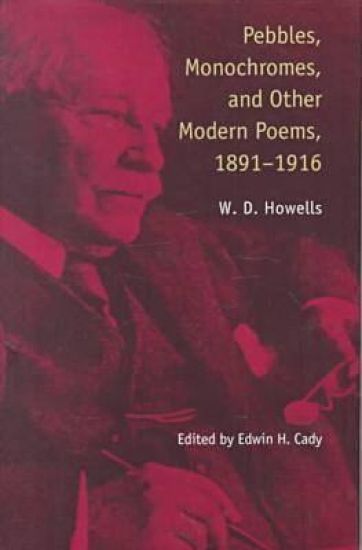
Pebbles, Monochromes and Other Modern Poems, 1891–1916
For William Dean Howells, the 1880s throbbed with literary warfare over theory and criticism (realism), and social justice. But the terrible climax was more personal and came in the death of his daughter in 1889. The blow altered him radically. Among other changes, a poetry new to him emerged, a poetry in the modern tradition. This “new” poetry is available now as never before in Pebbles, Monochromes, and Other Modern Poems, 1891-1916. It is metaphysical, agnostic, and ironic with a modernist voice. Praised at the century’s start by figures as notable as Stephen Crane, Henry and William James, W. E. B. DuBois, and Hamlin Garland, Howells arises again at the turn of the next century, hailed by the likes of John Updike and Gore Vidal. This rich cache of modern poems by W. D. Howells, lost for so long, is now made accessible under the editorial eye of Edwin Cady. Its significance is central to the understanding of the literary history and culture that defined the modern era and to the progeny that grew from that fertile soil.
Pebbles, Monochromes and Other Modern Poems, 1891–1916
For William Dean Howells, the 1880s throbbed with literary warfare over theory and criticism (realism), and social justice. But the terrible climax was more personal and came in the death of his daughter in 1889. The blow altered him radically. Among other changes, a poetry new to him emerged, a poetry in the modern tradition. This "new" poetry is available now as never before in Pebbles, Monochromes, and Other Modern Poems, 1891-1916. It is metaphysical, agnostic, and ironic with a modernist voice. Praised at the century's start by figures as notable as Stephen Crane, Henry and William James, W. E. B. DuBois, and Hamlin Garland, Howells arises again at the turn of the next century, hailed by the likes of John Updike and Gore Vidal. This rich cache of modern poems by W. D. Howells, lost for so long, is now made accessible under the editorial eye of Edwin Cady. Its significance is central to the understanding of the literary history and culture that defined the modern era and to the progeny that grew from that fertile soil.