
Kirjahaku
Etsi kirjoja tekijän nimen, kirjan nimen tai ISBN:n perusteella.
1000 tulosta hakusanalla W. E. Vine

Souvenirs de la duchesse de Dino; publiés par sa petite fille, la Comtesse Jean de Castellane. (Edition1)
W E Vine
Alpha Editions
2023
nidottu
The Roman Empire in the Light of Prophecy; The Rise, Progress, and End of the Fourth World-empire, a classical and rare book that has been considered essential throughout human history, so that this work is never forgotten, we at Alpha Editions have made efforts in its preservation by republishing this book in a modern format for present and future generations. This whole book has been reformatted, retyped and designed. These books are not made of scanned copies of their original work and hence the text is clear and readable.

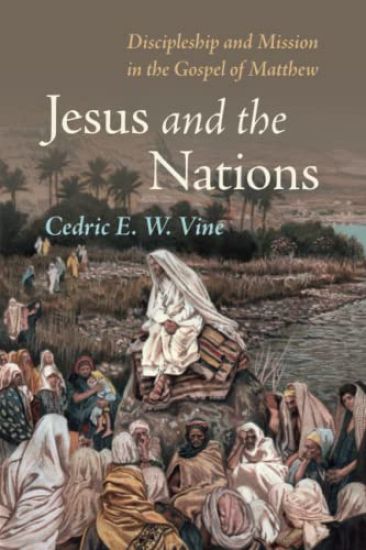
Jesus's command to disciple all the nations in Matt 28:19 has provided a powerful catalyst for cross-cultural mission for the past two thousand years. But what does this command mean in the context of Matthew's narrative? Cedric E. W. Vine proposes an understanding of Matthean discipleship and mission that builds on Richard Bauckham's open-audience thesis in The Gospels for All Christians (1998) and his own The Audience of Matthew (2014). Vine argues from a biblical theology perspective that Matthew's pervasive and consistent application of the nation-directed identities of prophet, righteous person, student-teacher, wise man, and scribe to the followers of Jesus reveals a concern less with defining community boundaries or promoting church growth and more with casting a powerful vision of nations transformed through the acceptance of the sovereignty of the risen king. Matthew's missiological horizon stretches well beyond defending, as suggested by some commentators, an inferred first-century Matthean community in an acrimonious intramural dispute with other Jewish groups. Rather, Matthew prepares his readers, first century and later, through a multifaceted and nuanced theology of discipleship, for participation in a missiological movement that is national in its focus, breathtaking in its scope, eschatological in its significance, and open in its appeal.
Jesus's command to disciple all the nations in Matt 28:19 has provided a powerful catalyst for cross-cultural mission for the past two thousand years. But what does this command mean in the context of Matthew's narrative? Cedric E. W. Vine proposes an understanding of Matthean discipleship and mission that builds on Richard Bauckham's open-audience thesis in The Gospels for All Christians (1998) and his own The Audience of Matthew (2014). Vine argues from a biblical theology perspective that Matthew's pervasive and consistent application of the nation-directed identities of prophet, righteous person, student-teacher, wise man, and scribe to the followers of Jesus reveals a concern less with defining community boundaries or promoting church growth and more with casting a powerful vision of nations transformed through the acceptance of the sovereignty of the risen king. Matthew's missiological horizon stretches well beyond defending, as suggested by some commentators, an inferred first-century Matthean community in an acrimonious intramural dispute with other Jewish groups. Rather, Matthew prepares his readers, first century and later, through a multifaceted and nuanced theology of discipleship, for participation in a missiological movement that is national in its focus, breathtaking in its scope, eschatological in its significance, and open in its appeal.
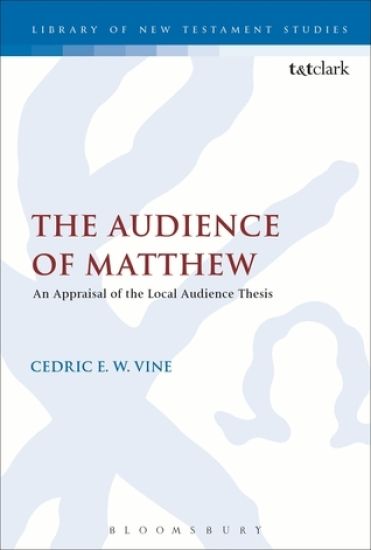
This book seeks to establish the inadequacy of readings of the Gospel of Matthew as intended for, and a reflection of, a local audience or community. Despite repeated challenges, the local audience thesis continues to dominate a large proportion of Matthean scholarship, and, as such, the issue ofdetermining the Gospel’s audience remains an open question. In this book, Cedric E. W. Vine posits four main critiques. The first suggests the assumptions which underpin the text-focused process of identifying the Gospel’s audience, whether deemed to be local, Jewish, or universal, lack clarity. Second, local audience readings necessarily exclude plot-related developments and are both selective and restrictive in their treatment of characterisation. Third, Vine argues that many in an audience of the Gospel would have incorporated their experience of hearing Matthew within pre-existing mental representations shaped by Mark or other early traditions. Fourth, Vine suggests that early Christian audiences were largely heterogeneous in terms of ethnicity, age, sex, wealth, familiarity with Christian traditions, and levels of commitment. Assuch, the aural reception of the Gospel would have resulted in a variety of impacts. A number of these critiques extend beyond the local audience option and for this reason this study concludes that we cannot currently determine the audience of the Gospel.
This book seeks to establish the inadequacy of readings of the Gospel of Matthew as intended for, and a reflection of, a local audience or community. Despite repeated challenges, the local audience thesis continues to dominate a large proportion of Matthean scholarship, and, as such, the issue ofdetermining the Gospel’s audience remains an open question. In this book, Cedric E. W. Vine posits four main critiques. The first suggests the assumptions which underpin the text-focused process of identifying the Gospel’s audience, whether deemed to be local, Jewish, or universal, lack clarity. Second, local audience readings necessarily exclude plot-related developments and are both selective and restrictive in their treatment of characterisation. Third, Vine argues that many in an audience of the Gospel would have incorporated their experience of hearing Matthew within pre-existing mental representations shaped by Mark or other early traditions. Fourth, Vine suggests that early Christian audiences were largely heterogeneous in terms of ethnicity, age, sex, wealth, familiarity with Christian traditions, and levels of commitment. Assuch, the aural reception of the Gospel would have resulted in a variety of impacts. A number of these critiques extend beyond the local audience option and for this reason this study concludes that we cannot currently determine the audience of the Gospel.

The Negro (The Oxford W. E. B. Du Bois)
W. E. B. Du Bois; John K. Thorton
Oxford University Press Inc
2016
sidottu
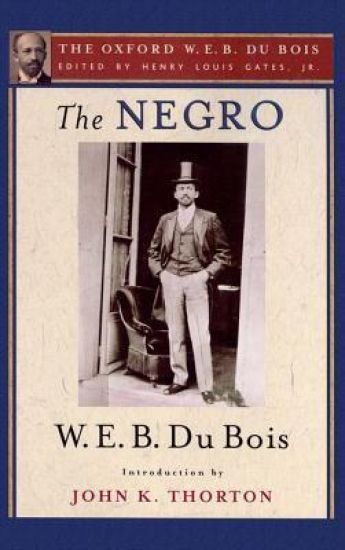
W. E. B. Du Bois was a public intellectual, sociologist, and activist on behalf of the African American community. He profoundly shaped black political culture in the United States through his founding role in the NAACP, as well as internationally through the Pan-African movement. Du Bois's sociological and historical research on African-American communities and culture broke ground in many areas, including the history of the post-Civil War Reconstruction period. Du Bois was also a prolific author of novels, autobiographical accounts, innumerable editorials and journalistic pieces, and several works of history. Intended as an accessible, up-to-date introduction to African American history by its 1915 publisher, The Negro was much more to W. E. B. Du Bois. The chance to write on African American History for a wide audience became his chance to write a manifesto on African history worldwide. Du Bois focuses on the continent of Africa, giving justice to its oft-neglected positive history. Drawing on anthropological and linguistic literature of the time, Du Bois captures a succinct portrait of African and African American history ready for any reader no matter their prior knowledge. His argument enters the narrative fully, revealing his quest for the vindication of black history. With a series introduction by editor Henry Louis Gates, Jr., and an introduction by John K. Thornton, this edition is essential for anyone interested in African American history.
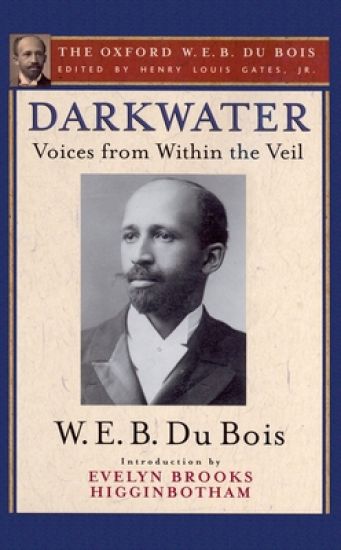
W. E. B. Du Bois was a public intellectual, sociologist, and activist on behalf of the African American community. He profoundly shaped black political culture in the United States through his founding role in the NAACP, as well as internationally through the Pan-African movement. Du Bois's sociological and historical research on African-American communities and culture broke ground in many areas, including the history of the post-Civil War Reconstruction period. Du Bois was also a prolific author of novels, autobiographical accounts, innumerable editorials and journalistic pieces, and several works of history. Considered a sequel to Du Bois's wildly popular The Souls of Black Folks, Darkwater revisits many of the same themes with a more militant edge, even revising previously published essays and poems to include in this newer volume. Published in 1920, Darkwater focuses on the political climate following World War I. In ten carefully crafted chapters, Du Bois explores the important issues of that period- labor, capital, politics, gender, education, and international relations-in tandem with an overarching theme of race. Blending lyrical autobiography with political thoughts and even poetry, Du Bois makes a powerful, forceful argument regarding race and the color line. With a series introduction by editor Henry Louis Gates, Jr., and an introduction by Evelyn Brooks Higginbotham, this edition is essential for anyone interested in African American history.

The Gift of Black Folk (The Oxford W. E. B. Du Bois)
W. E. B. Du Bois
Oxford University Press Inc
2016
sidottu
W. E. B. Du Bois was a public intellectual, sociologist, and activist on behalf of the African American community. He profoundly shaped black political culture in the United States through his founding role in the NAACP, as well as internationally through the Pan-African movement. Du Bois's sociological and historical research on African-American communities and culture broke ground in many areas, including the history of the post-Civil War Reconstruction period. Du Bois was also a prolific author of novels, autobiographical accounts, innumerable editorials and journalistic pieces, and several works of history. Published in 1924 in response to growing racial tensions, W. E. B. Du Bois's The Gift of Black Folk explores the contributions African Americans have made to American society, detailing the importance of racial diversity to the United States. Writing for a general audience, Du Bois employs a sweeping scope for his argument, covering the European discovery of America to the twentieth century. In doing so he works to prove that through African Americans' struggle for freedom and equality, they have most fully realized the goal of democracy. With a series introduction by editor Henry Louis Gates, Jr., and an introduction by Glenda Carpio, this edition is essential for anyone interested in African American history.
Dark Princess (The Oxford W. E. B. Du Bois)
W. E. B. Du Bois; Homi Bhabha
Oxford University Press Inc
2007
sidottu
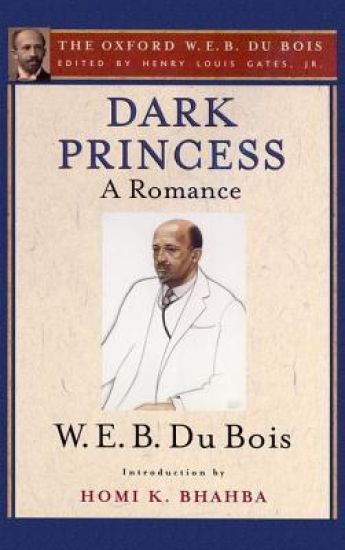
W. E. B. Du Bois was a public intellectual, sociologist, and activist on behalf of the African American community. He profoundly shaped black political culture in the United States through his founding role in the NAACP, as well as internationally through the Pan-African movement. Du Bois's sociological and historical research on African-American communities and culture broke ground in many areas, including the history of the post-Civil War Reconstruction period. Du Bois was also a prolific author of novels, autobiographical accounts, innumerable editorials and journalistic pieces, and several works of history. The Dark Princess is a story of magical love and radical politics, a romance facing obstacles in a white-dominated world. Du Bois's allegorical tale follows Mathew Townes from his political disillusionment to his association with a powerful and seductive revolutionary leader, Kautilya, the princess of the Tibetan Kingdom of Bwodpur. With Dark Princess, Du Bois explores the color line from a fantastical angle while inserting his signature sociological style. With a series introduction by editor Henry Louis Gates, Jr., and an introduction by Homi Bhahba, this edition is essential for anyone interested in African American history.

The Autobiography of W. E. B. Du Bois (The Oxford W. E. B. Du Bois)
W. E. B. Du Bois
Oxford University Press Inc
2016
sidottu
W. E. B. Du Bois was a public intellectual, sociologist, and activist on behalf of the African American community. He profoundly shaped black political culture in the United States through his founding role in the NAACP, as well as internationally through the Pan-African movement. Du Bois's sociological and historical research on African-American communities and culture broke ground in many areas, including the history of the post-Civil War Reconstruction period. Du Bois was also a prolific author of novels, autobiographical accounts, innumerable editorials and journalistic pieces, and several works of history. Published posthumously in 1968, The Autobiography of W. E. B. Du Bois is his last and most complete autobiography. Covering his life over almost a century of living in America, it's the closest thing we have to a true autobiography of this important scholar and activist. The book, broken up into three parts, delves into the 90-year-old Du Bois's thoughts on everything from his relationship with sex to his storied association with the NAACP to his political persecution during the Cold War years to his many travels abroad. As Du Bois writes, he takes the reader on a journey to "view my life as frankly and fully as I can." With a series introduction by editor Henry Louis Gates, Jr., and an introduction by Werner Sollors, this edition is essential for anyone interested in African American history.

Black Folk Then and Now (The Oxford W.E.B. Du Bois)
W. E. B. Du Bois; Wilson J. Moses
Oxford University Press Inc
2014
nidottu
W. E. B. Du Bois was a public intellectual, sociologist, and activist on behalf of the African American community. He profoundly shaped black political culture in the United States through his founding role in the NAACP, as well as internationally through the Pan-African movement. Du Bois's sociological and historical research on African-American communities and culture broke ground in many areas, including the history of the post-Civil War Reconstruction period. Du Bois was also a prolific author of novels, autobiographical accounts, innumerable editorials and journalistic pieces, and several works of history. In Black Folk Then and Now, W. E. B. Du Bois embarks on a mission to correct the omissions, misinterpretations, and deliberate lies he detected in previous depictions of black history. An exemplary revisionist exploration of history and sociology, this essay reflects Du Bois's lifelong mission to bring to light the truths of Black history and expose the African peoples' noble heritage. W. E. B. Du Bois writes extensively about the color line, which he believed at the time of publication to be the defining problem of the twentieth century. In 1946, following the Holocaust, Du Bois revised his arguments, reshaping them into the narrative we find in The World and Africa. With a series introduction by editor Henry Louis Gates, Jr., and an introduction by Wilson Moses, this edition is essential for anyone interested in African American history.
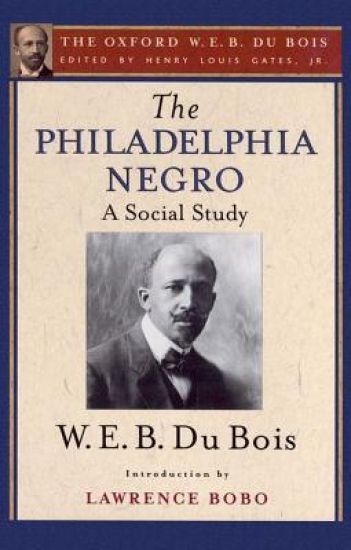
The Philadelphia Negro (The Oxford W. E. B. Du Bois)
W. E. B. Du Bois; Lawrence Bobo
Oxford University Press Inc
2014
nidottu
W. E. B. Du Bois was a public intellectual, sociologist, and activist on behalf of the African American community. He profoundly shaped black political culture in the United States through his founding role in the NAACP, as well as internationally through the Pan-African movement. Du Bois's sociological and historical research on African-American communities and culture broke ground in many areas, including the history of the post-Civil War Reconstruction period. Du Bois was also a prolific author of novels, autobiographical accounts, innumerable editorials and journalistic pieces, and several works of history. First published in 1899 at the dawn of sociology, The Philadelphia Negro: A Social Study is a landmark in empirical sociological research. Du Bois was the first sociologist to document the living circumstances of urban Black Americans. The Philadelphia Negro provides a framework for studying black communities, and it has steadily grown in importance since its original publication. Today, it is an indispensable model for sociologists, historians, political scientists, anthropologists, educators, philosophers, and urban studies scholars. With a series introduction by editor Henry Louis Gates, Jr., and an introduction by Lawrence Bobo, this edition is essential for anyone interested in African American history and sociology.

The Souls of Black Folk (The Oxford W. E. B. Du Bois)
W. E. B. Du Bois; Arnold Rampersad
Oxford University Press Inc
2014
nidottu
W. E. B. Du Bois was a public intellectual, sociologist, and activist on behalf of the African American community. He profoundly shaped black political culture in the United States through his founding role in the NAACP, as well as internationally through the Pan-African movement. Du Bois's sociological and historical research on African-American communities and culture broke ground in many areas, including the history of the post-Civil War Reconstruction period. Du Bois was also a prolific author of novels, autobiographical accounts, innumerable editorials and journalistic pieces, and several works of history. "Herein lie buried many things which if read with patience may show the strange meaning of being black here in the dawning of the Twentieth Century." More than one hundred years after its first publication in 1903, The Souls of Black Folk remains possibly the most important book ever penned by a black American. This collection of previously published essays and one short story, on topics varying from history to sociology to music to religion, expounds on the African American condition and life behind the "Veil," the world outside of the white experience in America. This important collection holds a mirror up to the face of black America, revealing its complete form, slavery, Jim Crow, and all. With a series introduction by editor Henry Louis Gates, Jr., and an introduction by Arnold Rampersad, this edition is essential for anyone interested in African American history.
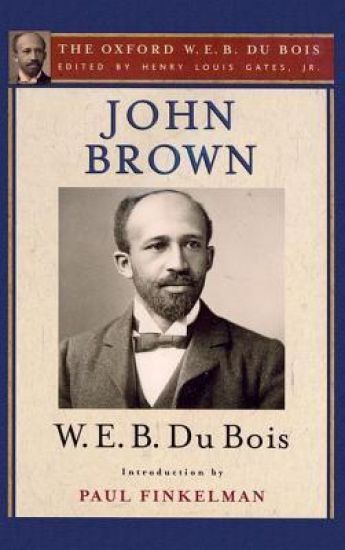
John Brown (The Oxford W. E. B. Du Bois)
W. E. B. Du Bois; Paul Finkelman
Oxford University Press Inc
2014
nidottu
W. E. B. Du Bois was a public intellectual, sociologist, and activist on behalf of the African American community. He profoundly shaped black political culture in the United States through his founding role in the NAACP, as well as internationally through the Pan-African movement. Du Bois's sociological and historical research on African-American communities and culture broke ground in many areas, including the history of the post-Civil War Reconstruction period. Du Bois was also a prolific author of novels, autobiographical accounts, innumerable editorials and journalistic pieces, and several works of history. John Brown is W. E. B. Du Bois's groundbreaking political biography that paved the way for his transition from academia to a lifelong career in social activism. This biography is unlike Du Bois's earlier work; it is intended as a work of consciousness-raising on the politics of race. Less important are the historical events of John Brown's life than the political revelations found within the pages of this biography. At the time that he wrote it in 1909, Du Bois had begun his transformation into the most influential civil rights leader of his time. With a series introduction by editor Henry Louis Gates, Jr., and an introduction by Paul Finkelman, this edition is essential for anyone interested in African American history.
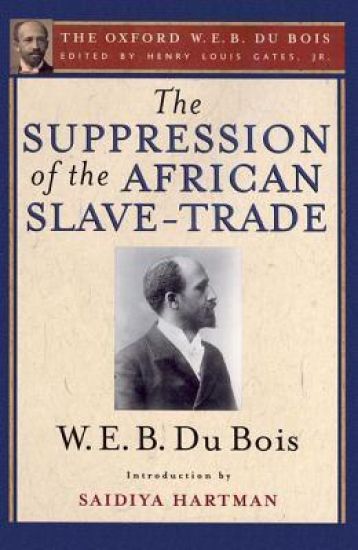
The Suppression of the African Slave-Trade to the United States of America (The Oxford W. E. B. Du Bois)
W. E. B. Du Bois; Saidya Hartman
Oxford University Press Inc
2014
nidottu
W. E. B. Du Bois was a public intellectual, sociologist, and activist on behalf of the African American community. He profoundly shaped black political culture in the United States through his founding role in the NAACP, as well as internationally through the Pan-African movement. DuBois's sociological and historical research on African-American communities and culture broke ground in many areas, including the history of the post-Civil War Reconstruction period. Du Bois was also a prolific author of novels, autobiographical accounts, innumerable editorials and journalistic pieces, and several works of history. The Suppression of the African Slave Trade to the United States of America, 1638-1870, W. E. B. Du Bois's groundbreaking monograph, recounts the moral failures and missed opportunities of the American Revolution and the consequences of compromising with slavery. As Du Bois's first published work and doctoral dissertation, Suppression lays the groundwork for his early commitment to the study of the African American experience. At the time of its publication in 1896, Du Bois's monograph was at the forefront of developments in historiography, embodying a new, empirical approach to history. Suppression is integral to understanding Du Bois's early theories and his evolution into a leading scholar and activist. With a series introduction by editor Henry Louis Gates, Jr., and an introduction by Saidiya Hartman, this edition is essential for anyone interested in African American history.
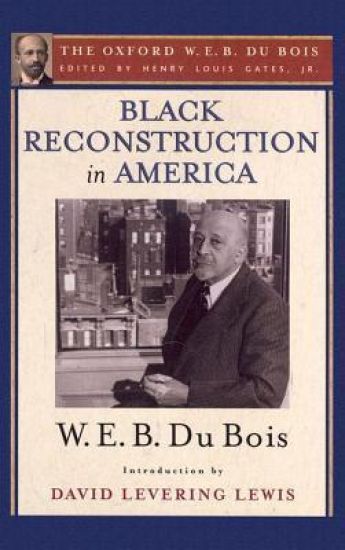
Black Reconstruction in America (The Oxford W. E. B. Du Bois)
W. E. B. Du Bois; David Levering Lewis
Oxford University Press Inc
2014
nidottu
W. E. B. Du Bois was a public intellectual, sociologist, and activist on behalf of the African American community. He profoundly shaped black political culture in the United States through his founding role in the NAACP, as well as internationally through the Pan-African movement. Du Bois's sociological and historical research on African-American communities and culture broke ground in many areas, including the history of the post-Civil War Reconstruction period. Du Bois was also a prolific author of novels, autobiographical accounts, innumerable editorials and journalistic pieces, and several works of history. Black Reconstruction in America tells and interprets the story of the twenty years of Reconstruction from the point of view of newly liberated African Americans. Though lambasted by critics at the time of its publication in 1935, Black Reconstruction has only grown in historical and literary importance. In the 1960s it joined the canon of the most influential revisionist historical works. Its greatest achievement is weaving a credible, lyrical historical narrative of the hostile and politically fraught years of 1860-1880 with a powerful critical analysis of the harmful effects of democracy, including Jim Crow laws and other injustices. With a series introduction by editor Henry Louis Gates, Jr., and an introduction by David Levering Lewis, this edition is essential for anyone interested in African American history.

Africa, Its Geography, People and Products and Africa-Its Place in Modern History (The Oxford W. E. B. Du Bois)
W. E. B. Du Bois; Emmanuel Akyeampong
Oxford University Press Inc
2014
nidottu
W. E. B. Du Bois was a public intellectual, sociologist, and activist on behalf of the African American community. He profoundly shaped black political culture in the United States through his founding role in the NAACP, as well as internationally through the Pan-African movement. Du Bois's sociological and historical research on African-American communities and culture broke ground in many areas, including the history of the post-Civil War Reconstruction period. Du Bois was also a prolific author of novels, autobiographical accounts, innumerable editorials and journalistic pieces, and several works of history. Written in very accessible prose, these two booklets, originally published in 1930, allowed W. E. B. Du Bois to reach a wide audience with an interest in Africa. What is so incredible about the two Africa booklets is their lasting relevance and value to the study of Africa today. Coupling Du Bois's breadth of scholarship with his passion for the subjects, the analyses in these booklets are integral to the study of Africa. Many of his arguments foreshadowed the issues and debates regarding Africa in the twentieth century. Expertly synthesized in an introduction by Emmanuel Akyeampong, this edition of the two Africa booklets is essential for anyone interested in African history.