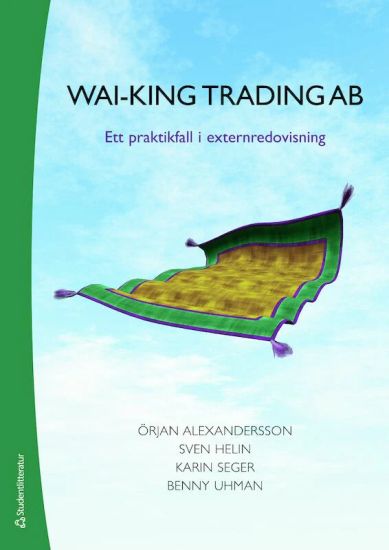
Boken är en praktisk och helhetsorienterad redovisningsuppgift i extern redovisning. Uppgiften utgår från ett fiktivt, men verklighetstroget företag som importerar och säljer orientaliska mattor. Utifrån en bakgrundsbeskrivning av företaget, föregående års bokslut, årsstämmoprotokoll, styrelseprotokoll, bankkontoutdrag samt verifikationer för räkenskapsåret skall studenterna planera redovisningen, genomföra den löpande bokföringen, göra bokslut samt upprätta årsredovisning enligt gällande lagstiftning och praxis.Till detta kan även ett moment av revision tillfogas. Grundtanken är att förankra redovisningsproblem, såväl praktiska som principiella, i ett sammanhang till skillnad från traditionella övningsuppgifter som ofta är fragmentbetonade. Uppgiften ger också träning i att arbeta med en större självständig uppgift där helhet, systematik och kreativitet är viktigt. En tidigare version av materialet har under flera år använts vid högskolor och studieförbund och visar att uppgiften tar en till två veckors heltidsarbete att genomföra.
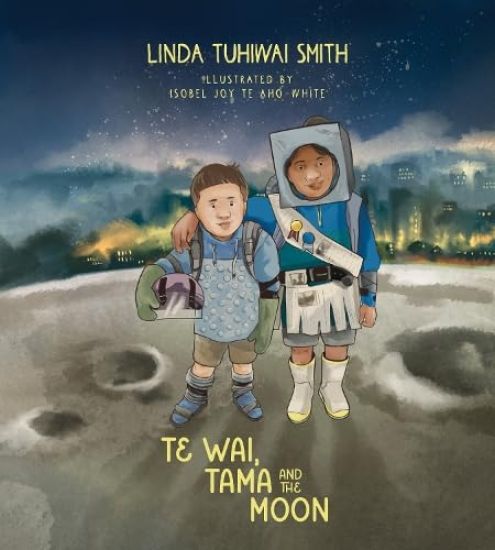
Te Wai's mum is seriously ill, and Tama's mum struggles to make ends meet, but Te Wai's got a big imagination and is determined to make the day better. The friends plan a trip to the moon, and they wait at the bus stop for the spaceship. Each time the bus arrives, someone they know gets off, and they share something to eat with the children while they wait, and Tama and Te Wai help them with the steps and heavy bags. That evening, Aunty Cherrie takes them in her little red 'spaceship' car to look at the stars and tells them how people's spirits become stars when they die. Te Wai understands this will not be long for her mum. Some days later, her tangi takes place, and Te Wai is surrounded by the caring support of her whanau, her community and Tama.
Me kimi ko wai e takaro ana ki runga i te retireti, i te tarere, i te pae piki i runga aha ano i tenei pukupuku papa whakamiharo mo tetahi toronga ki te papatakaro. He pukapuka mama, patai atu, whakahoki mai tona hanga hei hoatu i kupu hou me nga rerenga korero hou ma tetahi tukanga pahekoheko. Ko nga whakaahua rerehua na te kaitango whakaahua rongonui, na Jane Ussher ka whai wahi nga tamariki me o ratou whanau hei korero paki me tuhura i te reo. E ahei hoki ana te tiki i tetahi pukapuka reo rua i te reo Maori me te reo Pakeha. Find out who is playing on the slide, the swing, the climbing frame, and more in a charming, educational boardbook about a visit to the playground. The simple question-and-answer format introduces new words and sentences in an engaging and interactive way. The photographs by renowned New Zealand photographer Jane Ussher provide opportunities for children and their families to tell new stories and explore the Maori language.
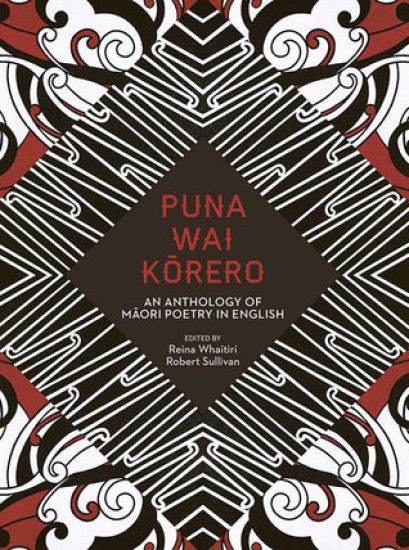
From the chanted songs and oratory of traditional culture, to engagement with the English language in the nineteenth century, and on into the cultural revival of the late twentieth century, M?ori have always been deeply engaged with poetic forms. In this book, two leading M?ori poets collect the major M?ori poetic voices in English together in a pioneering anthology. This will be the first collection of poetry in English written and edited entirely by M?ori . The anthology collects work from the many iwi and hapu of Aotearoa as well as M?ori living in Australia and around the world. Poets featured include Rore Hapipi, Marewa Glover, Rangi Faith, Keri Hulme, Robert Sullivan, Hinewirangi Kohe, Trixie Menzies, Kellyana Morey, Brian Potiki, Roma Potiki, Apirana Taylor, Michael O'Leary, Hinemoana Baker, Bub Bridger and others.
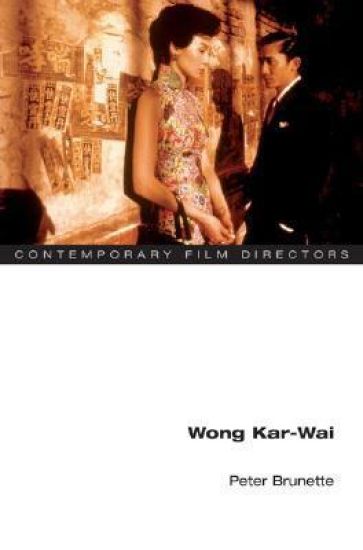
Called the leading heir to the great directors of post-WWII Europe and lavished with awards, Wong Kar-wai has redefined perceptions of Hong Kong's film industry. Wong's visual brilliance and emphasis on atmosphere over action have set him apart from peers while earning him an admiring international audience. In the Mood for Love regularly appears on lists of the twenty-first century's greatest films while critics and filmgoers recognize works like Chungking Express and Happy Together as modern classics. Peter Brunette describes the ways in which Wong's supremely haunting visual films create a new form of cinema by telling a story with stunning, suggestive visual images and audio tracks rather than character, dialogue, and plot. As he shows, Wong's early background in genre film offers fascinating insights on his more studied later works. He also delves into Wong's perennial themes of time, love, and loss and examines the political implications of his films, especially concerning the handover of former British colony Hong Kong to the People's Republic of China.
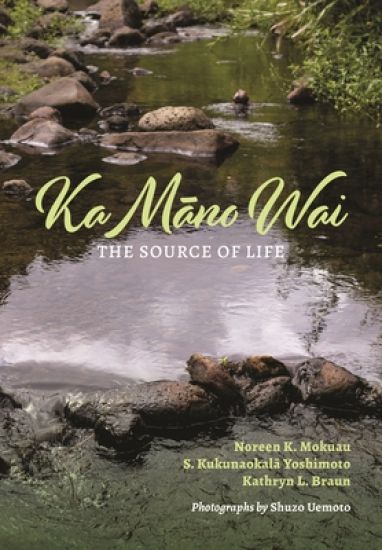
Ka Mano Wai is dedicated to the mo`olelo (stories) of fourteen esteemed kumu loea (expert teachers) who are knowledge keepers of cultural ways. Kamana`opono M. Crabbe, Linda Kaleo`okalani Paik, Eric Michael Enos, Claire Ku`uleilani Hughes, Sarah Patricia `Ilialoha Ayat Keahi, Jonathan Kay Kamakawiwo`ole Osorio, Lynette Ka`opuiki Paglinawan, Sharon Leina`ala Bright, Keola Kawai`ula`iliahi Chan, Charles "Sonny" Kaulukukui III, Jerry Walker, Gordon "`Umi" Kai, Melody Kapilialoha MacKenzie, and Kekuni Blaisdell are renowned authorities in specialty areas of cultural practice that draw from ancestral `ike (knowledge). They are also our mentors, colleagues, friends, and family. Their stories educate us about maintaining and enhancing our well-being through ancestral cosmography and practices such as mana(spiritual, supernatural, or divine power), malama kupuna (care for elders and ancestors), `aina momona (fruitful land and ocean), `olelo Hawai`i (Hawaiian language), ho`oponopono (conflict resolution), la`au lapa`au (Hawaiian medicinal plants), lomilomi (massage), and lua (Hawaiian art of fighting). The trio of authors’ own dedicated cultural work in the community and their deep respect for Hawaiian worldviews and storytelling created the space for the intimate, illuminating conversations with the kumu loea that serve as the foundation of the larger mo`olelo told in this book. With appreciation for the relational aspect of Native Hawaiian culture that links people, spirituality, and the environment, beautifully nuanced photographic portraits of the kumu loea were taken in places uniquely meaningful to them. The title of this book, Ka Mano Wai: The Source of Life, has multilayered meanings: In the same manner that water sustains life, ancestral practices retain history, preserve ways of being, inform identity, and provide answers for health and social justice. This collection of life stories celebrates and perpetuates kanaka values and reveals ancestral solutions to challenges confronting present and future generations. Nourishing connections to the past—as Ka Mano Wai does—helps to build a future of wellness. All who are committed to `ike, healing, and community will find inspiration and guidance in these varied yet intertwined legacies.
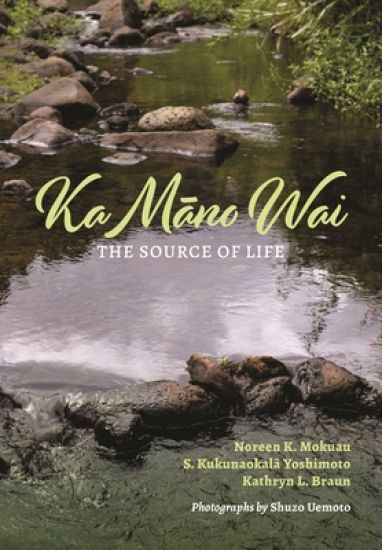
Ka Mano Wai is dedicated to the mo`olelo (stories) of fourteen esteemed kumu loea (expert teachers) who are knowledge keepers of cultural ways. Kamana`opono M. Crabbe, Linda Kaleo`okalani Paik, Eric Michael Enos, Claire Ku`uleilani Hughes, Sarah Patricia `Ilialoha Ayat Keahi, Jonathan Kay Kamakawiwo`ole Osorio, Lynette Ka`opuiki Paglinawan, Sharon Leina`ala Bright, Keola Kawai`ula`iliahi Chan, Charles "Sonny" Kaulukukui III, Jerry Walker, Gordon "`Umi" Kai, Melody Kapilialoha MacKenzie, and Kekuni Blaisdell are renowned authorities in specialty areas of cultural practice that draw from ancestral `ike (knowledge). They are also our mentors, colleagues, friends, and family. Their stories educate us about maintaining and enhancing our well-being through ancestral cosmography and practices such as mana(spiritual, supernatural, or divine power), malama kupuna (care for elders and ancestors), `aina momona (fruitful land and ocean), `olelo Hawai`i (Hawaiian language), ho`oponopono (conflict resolution), la`au lapa`au (Hawaiian medicinal plants), lomilomi (massage), and lua (Hawaiian art of fighting). The trio of authors’ own dedicated cultural work in the community and their deep respect for Hawaiian worldviews and storytelling created the space for the intimate, illuminating conversations with the kumu loea that serve as the foundation of the larger mo`olelo told in this book. With appreciation for the relational aspect of Native Hawaiian culture that links people, spirituality, and the environment, beautifully nuanced photographic portraits of the kumu loea were taken in places uniquely meaningful to them. The title of this book, Ka Mano Wai: The Source of Life, has multilayered meanings: In the same manner that water sustains life, ancestral practices retain history, preserve ways of being, inform identity, and provide answers for health and social justice. This collection of life stories celebrates and perpetuates kanaka values and reveals ancestral solutions to challenges confronting present and future generations. Nourishing connections to the past—as Ka Mano Wai does—helps to build a future of wellness. All who are committed to `ike, healing, and community will find inspiration and guidance in these varied yet intertwined legacies.
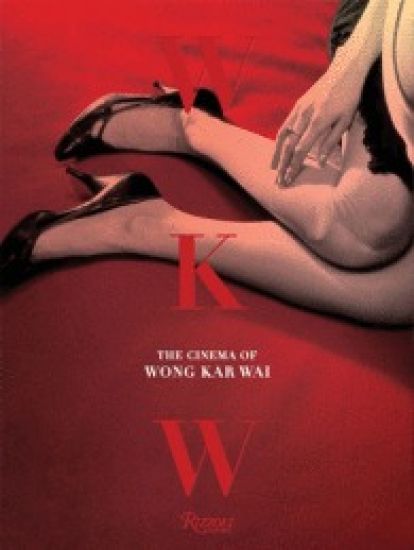
Wong Kar Wai is known for his romantic and stylish films that explore-in saturated, cinematic scenes-themes of love, longing, and the burden of memory. His style reveals a fascination with mood and texture, and a sense of place figures prominently. In this volume, the first on his entire body of work, Wong Kar Wai and writer John Powers explore Wong's complete oeuvre in the locations of some of his most famous scenes. The book is structured as six conversations between Powers and Wong (each in a different locale), including the restaurant where he shot In the Mood for Love and the snack bar where he shot Chungking Express. Discussing each of Wong's eleven films, the conversations also explore Wong's trademark themes of time, nostalgia, and beauty, and their roots in his personal life. This first book by Wong Kar Wai, lavishly illustrated with more than 250 photographs and film stills and featuring an opening critical essay by Powers, is as evocative as walking into one of Wong's lush films.
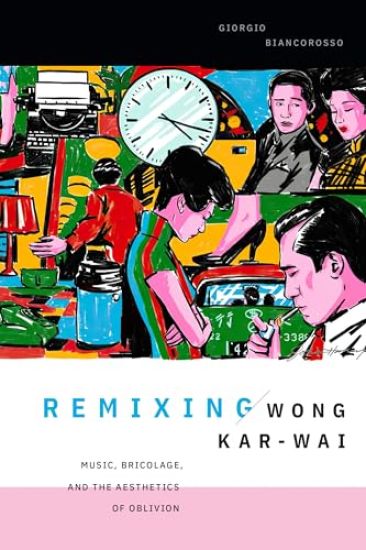
Like his fellow filmmakers Stanley Kubrick, Quentin Tarantino, and Sofia Coppola, Wong Kar-wai crafts the soundtracks of his films by jettisoning original scores in favor of commercial recordings. In Remixing Wong Kar-wai, Giorgio Biancorosso examines the combinatorial practice at the heart of Wong’s cinema to retheorize musical borrowing, appropriation, and repurposing. Wong’s irrepressible penchant for poaching music from other films-whether old Chinese melodramas, Hollywood blockbusters, or European art films-subsumes familiar music under his own brand of cinema. As Wong combs through musical and cinematic archives and splices disparate music together, exceedingly well-known music loses its previous associations and acquires an infinite new constellation of meanings in his films. Drawing on Claude LÉvi-Strauss’s concept of bricolage, Biancorosso contends that Wong’s borrowing is akin to a practice of creative destruction in which Wong becomes a bricoleur who remixes music at hand to create new and complete, self-sustaining statements. By outlining Wong’s modus operandi of indiscriminate borrowing and remixing, Biancorosso prompts readers to reconsider the significance of transforming preexisting music into new compositions for film and beyond.
Like his fellow filmmakers Stanley Kubrick, Quentin Tarantino, and Sofia Coppola, Wong Kar-wai crafts the soundtracks of his films by jettisoning original scores in favor of commercial recordings. In Remixing Wong Kar-wai, Giorgio Biancorosso examines the combinatorial practice at the heart of Wong’s cinema to retheorize musical borrowing, appropriation, and repurposing. Wong’s irrepressible penchant for poaching music from other films-whether old Chinese melodramas, Hollywood blockbusters, or European art films-subsumes familiar music under his own brand of cinema. As Wong combs through musical and cinematic archives and splices disparate music together, exceedingly well-known music loses its previous associations and acquires an infinite new constellation of meanings in his films. Drawing on Claude LÉvi-Strauss’s concept of bricolage, Biancorosso contends that Wong’s borrowing is akin to a practice of creative destruction in which Wong becomes a bricoleur who remixes music at hand to create new and complete, self-sustaining statements. By outlining Wong’s modus operandi of indiscriminate borrowing and remixing, Biancorosso prompts readers to reconsider the significance of transforming preexisting music into new compositions for film and beyond.
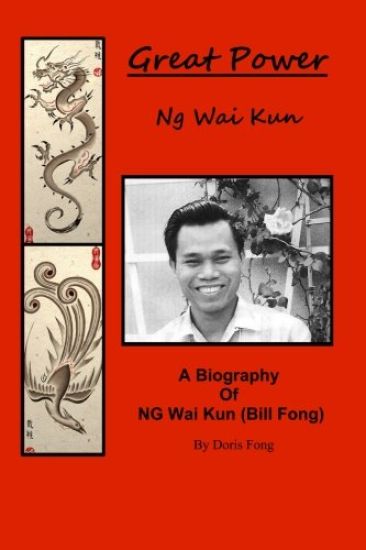
"Sounds of gunfire between the two rivaling forces could be heard in the near distance as the midwife placed the baby boy in the arms of Ng Won Kuk. A carefully chosen name was given shortly after sunset on this wonderful but muggy day. The name "Wei Kun " in English version means "Great Power", a name very suitable for Ng Won Kuk's second son. Ng Wai Kun (Bill Fong) was born during a tumultuous time in China's history that led him to forsake his duties as Head Clansman and immigrate to the United States where he became a successful restaurant operator. This Book is his story as told by him to the "girl of his dreams" who has done a wonderful job of bringing his story to life.
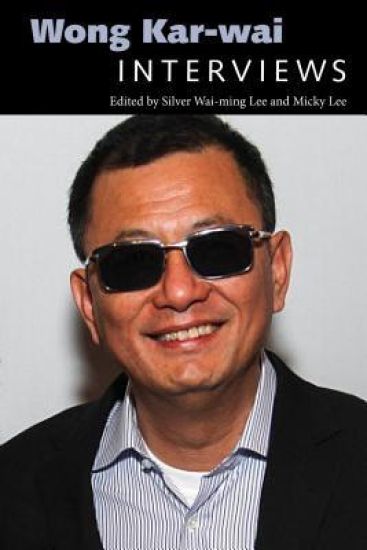
Fans and critics alike perceive Wong Kar-wai (b. 1958) as an enigma. His dark glasses, his nonlinear narrations, and his high expectations for actors all contribute to an assumption that he only makes art for a few high-brow critics. However Wong’s interviews show this Hong Kong auteur is candid about the art of filmmaking, even surprisinghis interlocutors by suggesting his films are commercial and made for a popular audience.Wong’s achievements nevertheless feel like arthouse cinema.His third film, Chungking Express, introduced him to a global audience captivated by the quick and quirky editing style. His Cannes award-winning films Happy Together and In the Mood for Love confirmed an audience beyond the greater Chinese market. His latest film, The Grandmaster, depicts the life of a kung fu master by breaking away from the martial arts genre. In each of these films, Wong Kar-wai’s signature style—experimental, emotive, character-driven, and timeless—remains apparent throughout.This volume includes interviews that appear in English for the first time, including some that appeared in Hong Kong magazines now out of print. The interviews cover every feature film from Wong’s debut As Tears Go By to his 2013 The Grandmaster.