Kirjojen hintavertailu. Mukana 11 342 296 kirjaa ja 12 kauppaa.

Kirjahaku

Etsi kirjoja tekijän nimen, kirjan nimen tai ISBN:n perusteella.

1000 tulosta hakusanalla Wallace

Wallace the Wolf's Day in Court

Wallace the Wolf's Day in Court

Albert Sandoval; Sylvia Sandoval

Tellwell Talent
2024
pokkari
The big bad wolf is finally going to trial and have his day in court. He has been accused of eating two helpless little pigs. Jurors from various fairy tales, nursery rhymes, and fables have been selected to hear this much-anticipated case. They will have to decide the fate of Wallace the Wolf. Will jurors have the ability to set aside their personal beliefs, experiences, and emotions to consider the facts presented in the court? Will Wallace be found guilty of this crime, or is this a case of mistaken identity? Will justice prevail through a fair and just process, or will the jury's biased past impact the final verdict?
Wallace the Wolf's Day in Court

Wallace the Wolf's Day in Court

Albert Sandoval; Sylvia Sandoval

Tellwell Talent
2024
sidottu
The big bad wolf is finally going to trial and have his day in court. He has been accused of eating two helpless little pigs. Jurors from various fairy tales, nursery rhymes, and fables have been selected to hear this much-anticipated case. They will have to decide the fate of Wallace the Wolf. Will jurors have the ability to set aside their personal beliefs, experiences, and emotions to consider the facts presented in the court? Will Wallace be found guilty of this crime, or is this a case of mistaken identity? Will justice prevail through a fair and just process, or will the jury's biased past impact the final verdict?
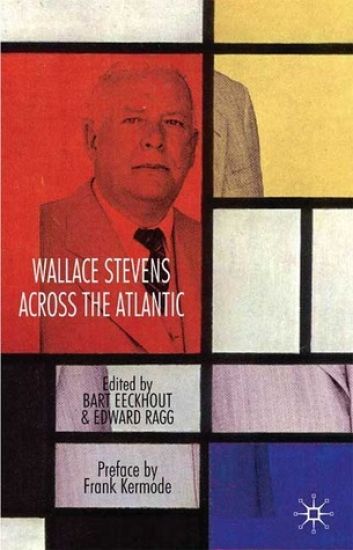
Wallace Stevens across the Atlantic
In a unique collection of essays devoted to one of America's most significant twentieth-century poets, a group of international contributors considers the Transatlantic nature of Stevens' poetry, providing original accounts of how a poet wary of 'influence' created a poetics which continues to haunt contermporary verse.
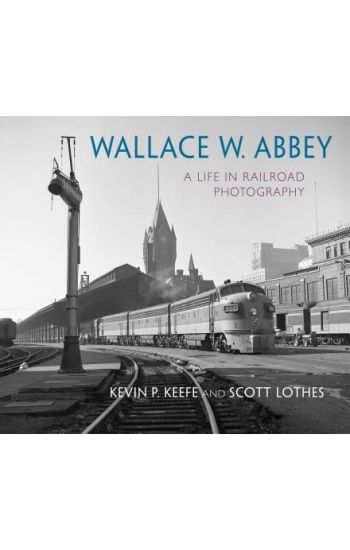
Wallace W. Abbey

Wallace W. Abbey

Scott Lothes; Kevin P. Keefe

Indiana University Press
2018
sidottu
From the late 1940s onward, Wallace W. Abbey masterfully combined journalistic and artistic vision to transform everyday transportation moments into magical photographs. Abbey, a photographer, journalist, historian, and railroad industry executive, helped people from many different backgrounds understand and appreciate what was taken for granted: a world of locomotives, passenger trains, big-city terminals, small-town depots, and railroaders. During his lifetime he witnessed and photographed sweeping changes in the railroading industry from the steam era to the era of diesel locomotives and electronic communication. Wallace W. Abbey: A Life in Railroad Photography profiles the life and work of this legendary photographer and showcases the transformation of transportation and photography after World War II. Featuring more than 175 exquisite photographs in an oversized format, Wallace W. Abbey is an outstanding tribute to a gifted artist and the railroads he loved.
Wallace Stevens

Wallace Stevens

T. Sharpe

Palgrave Macmillan
1999
nidottu
Tony Sharpe explores the symbiotic and antagonistic relations between Stevens's literary life and his working life as insurance executive, outlining the personal, historical and publishing contexts that shaped his writing career, and suggesting how awareness of these contexts throws new light on the poems. In this appreciative but not uncritical study, Sharpe tries to see the man behind the mandarin, whilst remaining alert to the challengingly sumptuous austerities of one of America's most significant poets.
Wallace Stevens
This set comprises of 40 volumes covering nineteenth and twentieth century European and American authors. These volumes will be available as a complete set, mini boxed sets (by theme) or as individual volumes. This second set compliments the first 68 volume set of Critical Heritage published by Routledge in October 1995.
Wallace Stevens and Pre-Socratic Philosophy
This book studies Wallace Stevens and pre-Socratic philosophy, showing how concepts that animate Stevens’ poetry parallel concepts and techniques found in the poetic works of Parmenides, Empedocles, and Xenophanes, and in the fragments of Heraclitus. Tompsett traces the transition of pre-Socratic ideas into poetry and philosophy of the post-Kantian period, assessing the impact that the mythologies associated with pre-Socratism have had on structures of metaphysical thought that are still found in poetry and philosophy today. This transition is treated as becoming increasingly important as poetic and philosophic forms have progressively taken on the existential burden of our post-theological age. Tompsett argues that Stevens’ poetry attempts to ‘play’ its audience into an ontological ground in an effort to show that his ‘reduction of metaphysics’ is not dry philosophical imposition, but is enacted by our encounter with the poems themselves. Through an analysis of the language and form of Stevens’ poems, Tompsett uncovers the mythology his poetry shares with certain pre-Socratics and with Greek tragedy. This shows how such mythic rhythms are apparent within the work of Friedrich Nietzsche, Martin Heidegger and Hans-Georg Gadamer, and how these rhythms release a poetic understanding of the violence of a ‘reduction of metaphysics.’
Wallace Stevens
This set comprises of 40 volumes covering nineteenth and twentieth century European and American authors. These volumes will be available as a complete set, mini boxed sets (by theme) or as individual volumes. This second set compliments the first 68 volume set of Critical Heritage published by Routledge in October 1995.
Wallace Stevens and the Realities of Poetic Language
This study examines Wallace Stevens' ideas and practice of poetic language with a focus on the 1930s, an era in which Stevens persistently thematized a keenly felt pressure for the possible social involvement and political utility of poetic language. The argument suggests how mutually implicated elements of his poetry such as diction, prosody and metaphor are relied on to signify or enact aesthetic closure; both in the negative terms of expressive impotence and unethical isolation and the positive ones of imaginative and linguistic change. In this respect, the study deals closely with the epistemologically and ethically fraught issue of the ambiguous and volatile role of non-semantic elements and linguistic difficulty in Stevens' language. Assuming that these facets are not exclusive to this period but receive a very clear, and therefore instructive, formulation in it, the discussion outlines some of Stevens' most central tropes for poetic creativity at this stage of his career, suggesting ways in which they came to form part of his later discourse on poetic functionality, when polemical concepts for the imagination, such as "evasion" and "escapism," became central. Stevens' prosody is discussed from within an eclectic analytical framework in which cumulative rhythmics is complemented by traditional metrics as a way of doing justice to his rich, varied and cognitively volatile use of verse language. The expressive potency of prosodic patterning is understood both as an effect of its resistance to semantic interpretation and by assuming a formal drive to interpret them in relation to the semantic and metaphoric staging of individual poems. A poem, in turn, is understood both as a strategic, stylistically deviant response to the challenges of a particular historical moment, and as an attempt to communicate through creating a sense of linguistic resistance and otherness.
Wallace Stevens, New York, and Modernism
This unique essay collection considers the impact of New York on the life and works of Wallace Stevens. Stevens lived in New York from 1900 to 1916, working briefly as a journalist, going to law school, laboriously starting up a career as a lawyer, getting engaged and married, gradually mixing with local avant-garde circles, and eventually emerging as one of the most exciting and surprising voices in modern poetry. Although he then left the city for a job in Hartford, Stevens never saw himself as a Hartford poet and kept gravitating toward New York for nearly all things that mattered to him privately and poetically: visits to galleries and museums, theatrical and musical performances, intellectual and artistic gatherings, shopping sprees and gastronomical indulgences. Recent criticism of the poet has sought to understand how Stevens interacted with the literary, artistic, and cultural forces of his time to forge his inimitable aesthetic, with its peculiar mix of post-romantic responses to nature and a metropolitan cosmopolitanism. This volume deepens our understanding of the multiple ways in which New York and its various aesthetic attractions figured in Stevens’ life, both at a biographical and poetic level.
Wallace Stevens and the Realities of Poetic Language
This study examines Wallace Stevens' ideas and practice of poetic language with a focus on the 1930s, an era in which Stevens persistently thematized a keenly felt pressure for the possible social involvement and political utility of poetic language. The argument suggests how mutually implicated elements of his poetry such as diction, prosody and metaphor are relied on to signify or enact aesthetic closure; both in the negative terms of expressive impotence and unethical isolation and the positive ones of imaginative and linguistic change. In this respect, the study deals closely with the epistemologically and ethically fraught issue of the ambiguous and volatile role of non-semantic elements and linguistic difficulty in Stevens' language. Assuming that these facets are not exclusive to this period but receive a very clear, and therefore instructive, formulation in it, the discussion outlines some of Stevens' most central tropes for poetic creativity at this stage of his career, suggesting ways in which they came to form part of his later discourse on poetic functionality, when polemical concepts for the imagination, such as "evasion" and "escapism," became central. Stevens' prosody is discussed from within an eclectic analytical framework in which cumulative rhythmics is complemented by traditional metrics as a way of doing justice to his rich, varied and cognitively volatile use of verse language. The expressive potency of prosodic patterning is understood both as an effect of its resistance to semantic interpretation and by assuming a formal drive to interpret them in relation to the semantic and metaphoric staging of individual poems. A poem, in turn, is understood both as a strategic, stylistically deviant response to the challenges of a particular historical moment, and as an attempt to communicate through creating a sense of linguistic resistance and otherness.
Wallace Stegner and the American West

Wallace Stegner and the American West

Philip L. Fradkin

University of California Press
2009
pokkari
Renowned environmental historian Philip L. Fradkin reveals the Wallace Stegner behind the literary legacy - a generous teacher, conservationist, and man whose early landscapes shaped his life and character. Fradkin chronicles Stegner's formative years, from the raw, desolate plains of Saskatchewan and the canyonlands of Utah to California's Silicon Valley. A lifelong teacher and environmentalist, Stegner inspired countless writers and defended the wilderness against human desecration. In this biography of man, place, and century, Fradkin traces Stegner's life across its many landscapes, and shows us how this child of the fading frontier became the voice, protector, and enduring icon of the West.
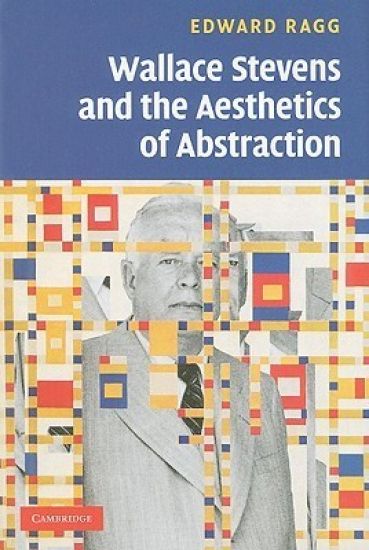
Wallace Stevens and the Aesthetics of Abstraction

Wallace Stevens and the Aesthetics of Abstraction

Edward Ragg

Cambridge University Press
2010
sidottu
Edward Ragg's study was the first to examine the role of abstraction throughout the work of Wallace Stevens. By tracing the poet's interest in abstraction from Harmonium through to his later works, Ragg argues that Stevens only fully appreciated and refined this interest within his later career. Ragg's detailed close-readings highlight the poet's absorption of late nineteenth century and early twentieth century painting, as well as the examples of philosophers and other poets' work. Wallace Stevens and the Aesthetics of Abstraction will appeal to those studying Stevens as well as anyone interested in the relations between poetry and painting. This valuable study embraces revealing philosophical and artistic perspectives, analyzing Stevens' place within and resistance to Modernist debates concerning literature, painting, representation and 'the imagination'.
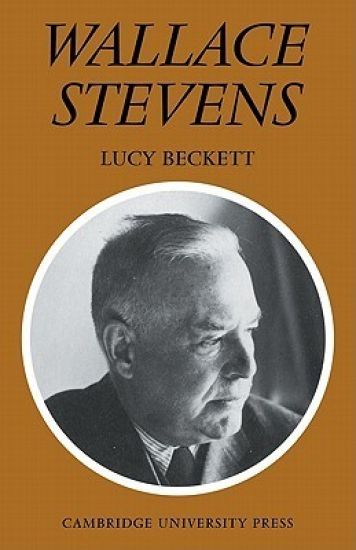
Wallace Stevens

Wallace Stevens

Lucy Beckett

Cambridge University Press
1977
pokkari
Wallace Stevens, who died in 1955, was one of the most original, prolific, serious, and rewarding of twentieth-century American poets. This is a detailed critical study of his poetry, identifying its concerns, from the point of view of a convinced admirer. Lucy Beckett presents Sevens as a contemplative poet, engaged on a long enquiry into the nature of the relationship between the creative imagination and the world it illuminates and recreates. Steven's achievement is seen as one of the great monuments in English of the endeavour to find and sustain a connection between poetry and belief.
Wallace Stevens

Wallace Stevens

Cambridge University Press
1990
pokkari
In this volume, seven renowned critics present different views of Wallace Stevens' place in the evolution of Modernist poetry. The essays offer a fresh scrutiny of the poet's work and influence, re-examining the critical consensus that has developed since Stevens first gained the attention of critics in the fifties. The collection traces both the development of Modernist poetics and Stevens' place in it, from the poet's relation to such contemporaries as Ezra Pound, William Carlos Williams and Marianne Moore to his influence on current writers such as John Ashbery and Robert Duncan. The contributions examine the cultural influences, or 'context', from which Stevens emerges: the Symbolist and Imagist traditions, the social and political context of the war years, and contemporary movements in the visual arts. Finally, two essays investigate the influence of Stevens on later poets.
Wallace Family Affairs Volume II: Sometimes Love Isn't Enough Part 1
Amber Wallace is a angry little girl who struggles to understand herself and the world around her. She doesn't understand why her father being white and her mother being black is an issue for majority of the people she meets. She learns at a young age that a peaceful approach isn't always the best way to survive. With an angry mother that she doesn't understand, and a father who's always working, Amber the youngest of four thinks she knows it all. Amber believes the solution to her life's problems is to find a boyfriend of her own. That's when she meets Malcolm, a beautifully dark and intelligent young man with some anger issues of his own. Amber ignored the warning signs to walk away and she fell head first in love with Malcolm, although she caught the eye of David who seemed to embody everything that she actually said she wanted in a boyfriend. When Amber finds herself pregnant at 14 years old, she learns real fast that the fantasy world she envisioned is not the reality she's living. The unspoken darkness within her family comes to life. She learns about the life or death power within her last name. She struggles to grow up quickly while she holds on to the fantasy of a happy family life with Malcolm who does not want the future picture she paints for them. When the opportunity presents its self Amber jumps at the opportunity to leave Malcolm behind and to start over with David. When the reality of Malcolm's hold on her crushes her dream, Amber tries desperately to hold on to David. Does holding on to David cost him his life?This is Part One of the two Part series of The Wallace Family Affairs Volume II.