A minute-by-minute account of the events on October 6, 1973 covers the dual-ended attack on Israel and the counterattack efforts of Operation Nickel Grass, a conflict that marked a significant point in the nuclear tensions between the United States and Russia. Reprint. 15,000 first printing.
This collection of fifteen essays, selected from papers presented at the April 1981 Citadel Conference on the South, examines three of the most powerful operating forces in southern life: race, class, and folk culture. The Southern Enigma, representing the work of both established and emerging scholars, reflects the most recent historical analyses of southern history.
Although the history of epilepsy, one of the most common serious neurological disorders, can easily be traced back to ancient times, the modern understanding of the disease only began in the middle of the 19th century. This history of the first fifty years of modern epileptology reflects the thinking, accomplishments, and failures of physicians between 1865 and 1914. This epoch presented a very bleak clinical picture: diagnosis was difficult and often arbitrary; treatment was poor and, at times, worse than the disease; and patients, who were usually viewed as having a progressive dementing condition, were shunned by society.Tradition, physicians' immaculate perceptions, their thinking in analogies, and the difficulty a doctor has in separating himself from his society are some of the important factors which led to a lack of clinical advancement during this time. Nevertheless, taking a longer view, a foundation was being established for understanding the physiology of the brain and how that might be related to epilepsy. This book should be of interest to any professional person concerned with or involved in exploring the neurophysiology of brain functions and its deviations, the care and treatment of patience with epilepsy, and the historical and social aspects of medicine.
Did you know that high levels of toxins in the human body can be linked to common conditions such as infertility, obesity, rheumatoid arthritis, heart disease, and diabetes? With therapeutic guidance designed for clinicians, Clinical Environmental Medicine focuses on how toxins such as arsenic, lead, mercury and organophosphates have become one of the leading causes of chronic disease in the industrial world. The first edition of this text describes how to treat these undesirable elements and molecules that can poison enzyme systems, damage DNA, increase inflammation and oxidative stress, and damage cell membranes. Expert authors Walter Crinnion and Joseph E. Pizzorno offer practical guidance for assessing both total body load as well as specific toxins. In addition, evidence-based treatment procedures provide recommendations for decreasing toxin exposure and supporting the body's biotransformation and excretion processes. NEW! Unique! Practical diagnostic and therapeutic guidance designed for clinicians. NEW! Unique! Coverage of the most common diseases for which toxins are a primary cause. NEW! Description of how each toxin causes damage provides insights into sources, body load, and interventions for each toxin. NEW! Unique! Entirely evidence-based content focuses on the most common conditions from which patients suffer. NEW! Unique! Coverage of environmental toxicants, endogenous toxicants, and "toxins of choice" focuses on non-industrially-exposed populations.
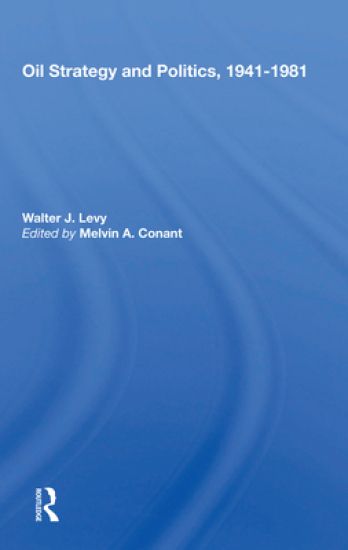
In this book, the author reflects major stages in the principal history of oil from the beginning of World War II to 1981. He focuses on the significance of critical aspects of petroleum logistics and presents the strategic dimensions of oil.
In this book, the author reflects major stages in the principal history of oil from the beginning of World War II to 1981. He focuses on the significance of critical aspects of petroleum logistics and presents the strategic dimensions of oil.
While international negotiations to reduce greenhouse gas (GHG) emissions have been less than satisfactory, there is a presumption that a significant level of multi-lateral commitment will be realized at some point. International air and marine travel have been left to one side in past talks because the pursuit of agreement proceeds on the basis of commitment by sovereign nations and the effects of these specific commercial activities are, by their nature, difficult to corral and assign to specific national jurisdictions. However, air travel is increasing and, unless something is done, emissions from this segment of our world economy will form a progressively larger percentage of the total, especially as emissions fall in other activities. This book focuses on fuel. The aim is to provide background in technical and policy terms, from the broadest reliable sources of information available, for the necessary discourse on society's reaction to the evolving aviation emissions profile. It considers what policy has been, why and how commercial air travel is committed to its current liquid fuel, how that fuel can be made without using fossil-source materials, and the barriers to change. It also advances some elements of policy remedies that make sense in providing an environmentally and economically sound way forward in a context that comprehends a more complete vision of sustainability than 'renewable fuels' traditionally have. The goal of Will Sustainability Fly? is to broaden and contextualize the knowledge resource available to academics, policy makers, air industry leaders and stakeholders, and interested members of the public.
This classic work of Russian spirituality has charmed countless readers with its tale of a nineteenth-century peasant seeking the truth with simple humility, finding joy and plenty everywhere in life.
Walter J. Ong’s classic work provides a fascinating insight into the social effects of oral, written, printed and electronic technologies, and their impact on philosophical, theological, scientific and literary thought.This thirtieth anniversary edition – coinciding with Ong’s centenary year – reproduces his best-known and most influential book in full and brings it up to date with two new exploratory essays by cultural writer and critic John Hartley. Hartley provides: A scene-setting chapter that situates Ong’s work within the historical and disciplinary context of post-war Americanism and the rise of communication and media studies; A closing chapter that follows up Ong’s work on orality and literacy in relation to evolving media forms, with a discussion of recent criticisms of Ong’s approach, and an assessment of his concept of the ‘evolution of consciousness’; Extensive references to recent scholarship on orality, literacy and the study of knowledge technologies, tracing changes in how we know what we know.These illuminating essays contextualize Ong within recent intellectual history, and display his work’s continuing force in the ongoing study of the relationship between literature and the media, as well as that of psychology, education and sociological thought.
Walter J. Ong’s classic work provides a fascinating insight into the social effects of oral, written, printed and electronic technologies, and their impact on philosophical, theological, scientific and literary thought.This thirtieth anniversary edition – coinciding with Ong’s centenary year – reproduces his best-known and most influential book in full and brings it up to date with two new exploratory essays by cultural writer and critic John Hartley. Hartley provides: A scene-setting chapter that situates Ong’s work within the historical and disciplinary context of post-war Americanism and the rise of communication and media studies; A closing chapter that follows up Ong’s work on orality and literacy in relation to evolving media forms, with a discussion of recent criticisms of Ong’s approach, and an assessment of his concept of the ‘evolution of consciousness’; Extensive references to recent scholarship on orality, literacy and the study of knowledge technologies, tracing changes in how we know what we know.These illuminating essays contextualize Ong within recent intellectual history, and display his work’s continuing force in the ongoing study of the relationship between literature and the media, as well as that of psychology, education and sociological thought.
Providing a comprehensive analysis of the dynamic complexities of environmental systems—both natural and manmade—Process Dynamics in Environmental Systems is a unique, practical introduction to the issues and design mandates central to environmental engineering. An outgrowth of the classic text Physicochemical Processes for Water Quality Control, this new book amplifies and updates the important discussion of process dynamics begun in the original. Designed as a stand-alone reference to every aspect of process dynamics, the current book offers a complete theoretical analysis of the subject as well as numerous practical illustrations of how process models are useful in interpreting and designing a wide variety of process operations. Beginning with a broad overview of the factors and features of environmental systems and processes, the book then clearly details the general nature of fundamental processes, the character of the different types of systems in which they occur, and the way in which these factors influence process dynamics and environmental systems. The book then examines the core elements of process analysis—energetics, reaction rates, and reactor dynamics—and shows how process modeling integrates these elements in quantitative descriptions and in designs of engineered systems. Central to the structure of this book is a detailed analysis of the nature of reaction and transport phenomena—the two fundamental aspects of any environmental system. Including a look at reactions on both a macroscopic and microscopic scale, the book examines the mechanics of macroscopic and microscopic transport processes, outlining mass transport concepts basic to an understanding of reaction phenomena and reactor engineering. Subsequent chapters examine environmental reaction phenomena in the context of chemical species and transformations, including a discussion of energy balances and flows in both single-phase and multi-phase systems. A detailed look at the molecular basis for reaction kinetics in both single-phase and multi-phase systems follows. The book then broadens its focus to reactor dynamics, outlining engineering design considerations associated with reactor systems involving one phase; and then reactor systems involving transformations among and between components in two or more phases. A particularly unique feature of the book is its coverage of process dynamics for reactor systems in which transient conditions occur, at both the macroscopic and microscopic scales. A synthesis of the various aspects of process dynamics forms the book's conclusion, enabling the reader to skillfully apply the concepts of process dynamics to the interpretation and design of environmental systems. An ideal reference/handbook to the theory and uses of process dynamics, the book's practical, instructive format includes detailed example problems, assigned problems with answers, as well as suggested supplementary reading. Useful general appendices are provided, and many individual chapters also feature appendices which address issues specific to the chapter. Featuring a practical, forward looking approach to environmental systems design, Process Dynamics in Environmental Systems is a must for professionals and students interested in building the structures that preserve—and elevate—our quality of life. A blueprint to understanding and designing environmental systems...an authoritative text and handbook for the '90s and beyond Process dynamics is the science of quantifying and predicting the various components and phenomena underlying environmental systems. Designed as a comprehensive teaching text, reference, and study guide, Process Dynamics in Environmental Systems offers a complete theoretical analysis of process dynamics as well as numerous practical illustrations of how process models are useful in interpreting and designing a wide variety of process operations. Beginning with a broad overview of the factors and features of environmental systems and processes, the book then clearly details the general nature of fundamental processes, the character of the different types of systems in which they occur, and the way in which these factors influence process dynamics and environmental systems. The book then examines: The core elements of process analysis—energetics, kinetics, and reactor dynamics—and shows how process modeling integrates these into quantitative descriptions and the design of engineered systemsThe mechanics of macroscopic and microscopic transport processesReaction rates in homogeneous and heterogeneous systemsEngineering and design considerations associated with reactor systems involving one and two or more phasesReactor systems involving transient conditions at the macroscopic and/or microscopic scales The book's practical, instructive format includes detailed example problems, assigned problems with answers, as well as suggested supplementary reading.
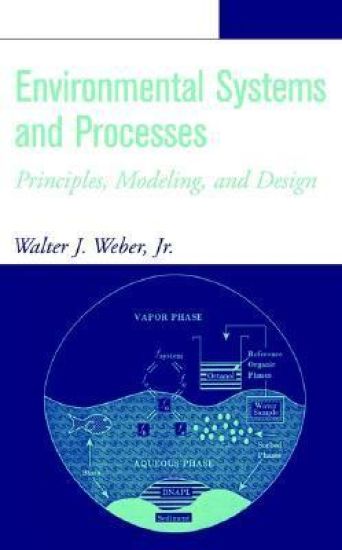
A rigorous and in-depth approach to environmental systems and processes Concern over environmental changes resulting from oversubscription and exploitation of Earth's resources is mounting. Acid rains from power generation and industrial process emissions to the atmosphere, contamination of water resources by spills and discharges of hazardous chemicals, the greenhouse and global warming effects of carbon dioxide generated by consumption of organic fuels, and the depletion of ecosystem stabilizers such as oxygen in lakes and streams overfertilized by human wastes; these are a few of the considerations facing environmental engineers and scientists today. These are complex and confounding processes and phenomena, and their effects vary widely among the virtually limitless number of environmental systems and subsystems on Earth. Environmental Systems and Processes: Principles, Modeling, and Design is the first book to explain that, although environmental systems are virtually limitless in number, change is controlled by a relatively small set of fundamental processes. Written by one of the initiators and foremost proponents of the "first principles" approach to environmental system characterization and problem solving, this informative volume details how three fundamental issues lie at the base of every environmental process; i.e., the amount and form of available energy, the rate at which that energy can be exercised, and the configuration and dynamics of the system in which the process occurs. The author demonstrates how the mastering of relatively few fundamental principles can provide the reader with the tools necessary to solve a broad range of environmental problems. Topics discussed in Environmental Systems and Processes: Principles, Modeling, and Design include: fluid flow and mass transport; passive and reactive interphase mass transfer; elementary and complex process rates; ideal, hybrid, and nonideal system modeling and design; and multiphase and interfacial process dynamics and design. The unique and highly effective format of presenting several simple but essential fundamentals first, followed by detailed illustrative examples and explanations of how these principles describe various complex specific environmental systems and processes, makes Environmental Systems and Processes: Principles, Modeling, and Design a requisite for environmental sciences and engineering classrooms, and a staple for the bookshelves of all environmental professionals.
An introduction to analysis techniques used in the design of linear feedback control systems with emphasis on both classical and matrix methods. This text presents all design methods in a building-block sequence, including a thorough analysis of first- and second-order systems as well as general state space systems.
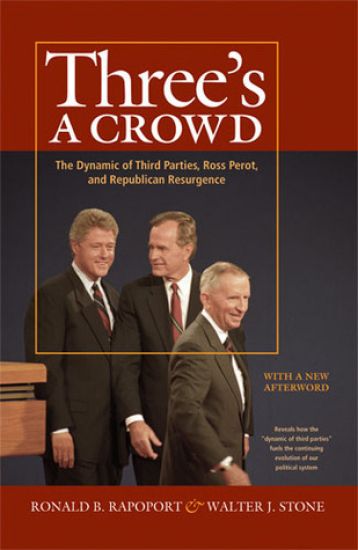
"A significant contribution to our understanding of minor parties and party system change. The authors develop a new theory and provide strong empirical evidence in support of it. They show that the Perot's candidacy has had a strong and lasting impact on partisan competition in elections. ---Paul Herrnson, Director, Center for American Politics and Citizenship Professor, Department of Government and Politics, University of Maryland"Powerfully persuasive in its exhaustive research, Three's a Crowd may surprise many by revealing the long- ignored but pivotal impact of Perot voters on every national election since 1992."---Clay Mulford, Jones Day and General Counsel to the 1992 Perot Presidential Campaign and to the Reform Party."Rapaport and Stone have written an engaging and important book. They bring fresh perspectives, interesting data, and much good sense to this project. Three's a Crowd is fundamentally about political change, which will, in turn, change how scholars and pundits think of Ross Perot in particular, and third parties in general."---John G. Geer, Professor of Political Science at Vanderbilt University and Editor of The Journal of Politics"The definitive analysis of the Perot movement, its role in the 1994 GOP victory, and the emergence of an enduring governing majority."---L. Sandy Maisel, Director, Goldfarb Center for Public Affairs, Colby CollegeThree's a Crowd begins with the simple insight that third parties are creatures of the American two-party system, and derive their support from the failures of the Democratic and Republican parties.While third parties flash briefly in the gaps left by those failures, they nevertheless follow a familiar pattern: a sensation in one election, a disappointment in the next. Rapoport and Stone conclude that this steep arc results from one or both major parties successfully absorbing the third party's constituency. In the first election, the third party raises new issues and defines new constituencies; in the second, the major parties move in on the new territory. But in appropriating the third party's constituents, the major parties open themselves up to change. This is what the authors call the "dynamic of third parties."The Perot campaign exemplified this effect in 1992 and 1996. Political observers of contemporary electoral politics missed the significance of Perot's independent campaign for the presidency in 1992. Rapoport and Stone, who had unfettered-and unparalleled-access to the Perot political machine, show how his run perfectly embodies the third-party dynamic. Yet until now no one has considered the aftermath of the Perot movement through that lens.For anyone who seeks to understand the workings of our stubbornly two-party structure, this eagerly awaited and definitive analysis will shed new light on the role of third parties in the American political system.
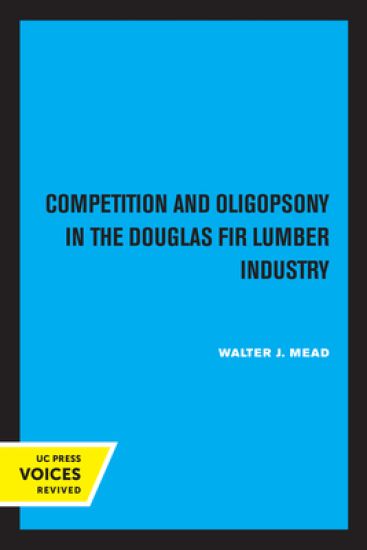
This in-depth analysis of the Douglas fir lumber industry investigates the relationship between industry structure, firm behavior, and performance outcomes. While the lumber production sector exemplifies characteristics of pure competition—with numerous mills and firms producing homogeneous products—the timber input market operates as an oligopsony. In this setting, a few large buyers wield significant influence, leading to price disparities and market power that smaller firms cannot match. The study highlights the dichotomy between competitive lumber production and the noncompetitive dynamics of timber acquisition. The book explores key issues such as economies of scale in production, market concentration, and the elasticity of demand and supply for both timber and lumber. By scrutinizing the auction markets for federal timber and the effects of concentrated timberland ownership, it sheds light on policy questions like the equitable distribution of public resources and the economic efficiency of market structures. Combining theoretical insights with empirical data, this study offers valuable findings for economists, industry stakeholders, and policymakers aiming to balance competition and sustainability in resource management. This title is part of UC Press's Voices Revived program, which commemorates University of California Press’s mission to seek out and cultivate the brightest minds and give them voice, reach, and impact. Drawing on a backlist dating to 1893, Voices Revived makes high-quality, peer-reviewed scholarship accessible once again using print-on-demand technology. This title was originally published in 1966.
This title is part of UC Press's Voices Revived program, which commemorates University of California Press’s mission to seek out and cultivate the brightest minds and give them voice, reach, and impact. Drawing on a backlist dating to 1893, Voices Revived makes high-quality, peer-reviewed scholarship accessible once again using print-on-demand technology. This title was originally published in 1967.
This in-depth analysis of the Douglas fir lumber industry investigates the relationship between industry structure, firm behavior, and performance outcomes. While the lumber production sector exemplifies characteristics of pure competition—with numerous mills and firms producing homogeneous products—the timber input market operates as an oligopsony. In this setting, a few large buyers wield significant influence, leading to price disparities and market power that smaller firms cannot match. The study highlights the dichotomy between competitive lumber production and the noncompetitive dynamics of timber acquisition. The book explores key issues such as economies of scale in production, market concentration, and the elasticity of demand and supply for both timber and lumber. By scrutinizing the auction markets for federal timber and the effects of concentrated timberland ownership, it sheds light on policy questions like the equitable distribution of public resources and the economic efficiency of market structures. Combining theoretical insights with empirical data, this study offers valuable findings for economists, industry stakeholders, and policymakers aiming to balance competition and sustainability in resource management. This title is part of UC Press's Voices Revived program, which commemorates University of California Press’s mission to seek out and cultivate the brightest minds and give them voice, reach, and impact. Drawing on a backlist dating to 1893, Voices Revived makes high-quality, peer-reviewed scholarship accessible once again using print-on-demand technology. This title was originally published in 1966.