Using the theory of language developed by the Soviet critic Mikhail Bakhtin, this book argues that the historically various writings of the Bible have been given formal coherence within the canon by a notion of dialogue. The idea of an extended communication between God and his people is embodied in the continual conversation between one part of the Bible and another. Reed looks beyond the close readings of recent accounts of the bible as literature to the broader patterns of coherence in the Hebrew Bible and the Christian New Testament. He treats the Bible in its different canonical states, distinguishing the genres of law, prophecy and wisdom in the Hebrew Bible and describing how these earlier forms of biblical communication are appropriated and answered by the New Testament genre of gospel. The dialogic character of the Bible is also discovered within individual books: patriarchal answers to primeval problems in Genesis, cross-talk between justice and providence in Job, orchestration of worship and judgement in Revelation. Throughout this wide-ranging study, Reed demonstrates the surprising relevance of Bakhtin's ideas of literature and language to an understanding of the biblical writings as they have been organized within the canon.
This broad-visioned and insightful book examines the march toward global consolidation of our many ethnic, racial, and nationality groups. About 100,000 years ago the dispersion of what was then a homogenous human population from its point of origin in Eastern Africa began. This was slowly followed by the emergence of ethnic and racial differences among the then separated human populations. The Agricultural Revolution, 10,000 years ago, began the long process of re-establishing contact and eventually consolidating the human species once again, but this time globally.Wallace contends that consolidation will contribute greatly to the survival of humankind by reducing the deadly threats humans pose to each other. He also argues that ethnic, racial and nationality consolidation does not imply cultural homogeneity; diversity based on interest, vocation, and other factors will serve as even more fertile replacements. The book is expertly researched.
Williams examines the efforts of public agencies to better incorporate citizen participation in the administrative process. He focuses on the effort of the Department of Energy to use citizen advisory boards composed of stakeholders—persons who stand to gain or lose from policy implementation—in its economic transition, waste management, and environmental restoration programs.The Department's efforts to deal with hazardous and toxic wastes stemming from uranium fuel for the U.S. nuclear weapons program are examined in detail. The case study shows that the stakeholder model was effective: the advisory board was expeditiously organized, reached consensus on critical issues, and accomplished its primary mission. The board's performance was such that the Clinton administration considered it a major example of how federal agencies could be reinvented to produce a government that works better and costs less. Of particular interest to policy makers and researchers involved with US environmental issues and public policy.
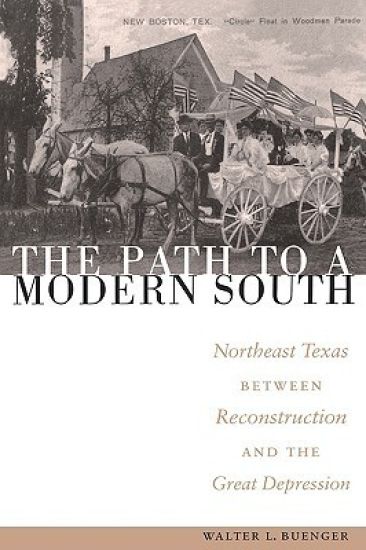
The forces that turned Northeast Texas from a poverty-stricken region into a more economically prosperous area. Winner, Texas State Historical Association Coral H. Tullis Memorial Award for best book on Texas history, 2001Federal New Deal programs of the 1930s and World War II are often credited for transforming the South, including Texas, from a poverty-stricken region mired in Confederate mythology into a more modern and economically prosperous part of the United States. By contrast, this history of Northeast Texas, one of the most culturally southern areas of the state, offers persuasive evidence that political, economic, and social modernization began long before the 1930s and prepared Texans to take advantage of the opportunities presented by the New Deal and World War II.Walter L. Buenger draws on extensive primary research to tell the story of change in Northeast Texas from 1887 to 1930. Moving beyond previous, more narrowly focused studies of the South, he traces and interconnects the significant changes that occurred in politics, race relations, business and the economy, and women's roles. He also reveals how altered memories of the past and the emergence of a stronger identification with Texas history affected all facets of life in Northeast Texas.
In 1845 Texans voted overwhelmingly to join the Union. They voted just as overwhelmingly to secede in 1861. The story of why and how that happened is filled with colorful characters, such as the aged Sam Houston, and with the southwestern flavor of raiding Comanches, German opponents of slavery, and a border with Mexico. Texas was unique among the seceding states because of its ambivalence toward secession. Yet for all its uniqueness the story of the secession of Texas has broad implications for the secession movement in general. Despite the local color and the southwestern nature of the state, Texas was more southern than western in 1860. Texans supported the Union or insisted upon secession for reasons common to the South and to the whole nation. Most Texans in 1860 were recent immigrants from southern and border states. They still thought and acted like citizens of their former states. The newness of Texas then makes it a particularly appropriate place from which to draw conclusions about the entire secession movement. Secession and the Union in Texas is both a narrative of secession in Texas and a case study of the causes of secession in a southern state. Politics play a key role in this history, but politics broadly defined to include the influence of culture, partisanship, ideology, and self-interest. As any study of a mass movement carried out in tense circumstances must be, this is social history as well as political history. It is a study of public hysteria, the pressure for consensus, and the vanishing of a political process in which rational debate about secession and the Union could take place. Although relying primarily on traditional sources such as manuscript collections and newspapers, a particularly rich source for this study, the author also uses election returns, population shifts over the course of the 1850s, and the breakdown of population within Texas counties to provide a balanced approach. These sources indicate that Texans were not simply secessionists or unionists. At the end of 1860 Texans ranged from ardent secessionists to equally passionate supporters of the Union. But the majority fell in between these two extremes, creating an atmosphere of ambivalence toward secession which was not erased even by the war.
A provocative new view of the history of U.S. foreign policy, how it reflects our national identity, and why it so regularly involves the use of military force In this major reconceptualization of the history of U.S. foreign policy, Walter Hixson engages with the entire sweep of that history, from its Puritan beginnings to the twenty-first century’s war on terror. He contends that a mythical national identity, which includes the notion of American moral superiority and the duty to protect all of humanity, has had remarkable continuity through the centuries, repeatedly propelling America into war against an endless series of external enemies. As this myth has supported violence, violence in turn has supported the myth.The Myth of American Diplomacy shows the deep connections between American foreign policy and the domestic culture from which it springs. Hixson investigates the national narratives that help to explain ethnic cleansing of Indians, nineteenth-century imperial thrusts in Mexico and the Philippines, the two World Wars, the Cold War, the Iraq War, and today’s war on terror. He examines the discourses within America that have continuously inspired what he calls our “pathologically violent foreign policy.” The presumption that, as an exceptionally virtuous nation, the United States possesses a special right to exert power only encourages violence, Hixson concludes, and he suggests some fruitful ways to redirect foreign policy toward a more just and peaceful world.
Expository preaching is an elusive ideal. Many preachers aspire to it, few are acknowledged masters. For most a gap exists between the sermon that addresses the needs of the hearers and one that methodically plumbs the depths of Scripture. New Testament Exposition is written to bridge this gap and bring together the disciplines of preaching and exegesis. In this book Liefeld addresses the three main concerns of expository preaching: What is the text saying? How can its message be communicated in ways that are appropriate to the passage, the seeing, and the goals of the sermon? How can the message meet the real needs of the congregation in a way that is consistent with the purpose and function of the text? This book demonstrates how these concerns can be brought together in a sermon, and it is this thoughtful, practical approach that makes the book so valuable to preachers and seminarians. The book is divided into three parts. Part I explores the characteristics of expository preaching. Part II deals with preparing the text and addresses such areas as practical exegesis, exegetical outlines, narratives and compositional patterns, semantic patterns, and underlying assumptions of the text. Part III discusses application of the text by asking, What is the function of the text? What are the needs of the congregation? How can one preach to inner heart needs as well as to the external circumstances facing the congregation? New Testament Exposition is not vague theory, nor is it esoteric study beyond the grasp and time of the busy pastor. Throughout the book Dr. Liefeld reflects his experience in the classroom and pulpit, and his concerns as scholar and pastor are clearly seen in the final chapters of this volume. Chapter 9 examines preaching from difficult texts: How might one handle parables, miracle stories, obscure passages, culturally related texts? The final chapter provides a demonstration of all that is discussed throughout the book by walking the road through the actual preparation for a sermon.
Integrating environmental and world-systems analyses in chapters ranging from the ancient to the contemporary, from the global to the local, from West to East, and from North to South, this book is the first collection to analyze environmental issues from the world-systems perspective. The introduction provides Immanuel Wallerstein's fullest explication of the role of ecological constraints in the world-system. Early chapters diagnose the increasing environmental threats to global sustainability and suggest ways to arrive at an integrated theoretical understanding of those threats. The work then shows the historical and geographical range necessary to do justice to ecological considerations in chapters considering ancient civilizations, capitalism, the circumpolar North, the dam-builders of Asia, and the polluters of East Central Europe. The final chapters analyze the successes and limits of environmental movements in the United States, South Africa, and South Korea.
In this engaging study, Walter L. Arnstein explores both the private life and the public role of the young princess who inherited Britain's throne as a teenager and who became the octogenarian symbolic head of the largest empire in the history of the world.Arnstein incorporates the findings of past studies and recent research (including articles of his own based on previously unpublished letters and journals) to shed light on often-neglected aspects of Victoria's life and reign: her concern with gender roles, religion, politics, and Ireland; as well as her involvement with both the controversial domestic issues and the great international conflicts of the era. Wherever the historical evidence allows, Arnstein enables the monarch to speak in her own words, demonstrating that Victoria was not only the queen who became an adjective, but also a highly-quotable, multi-dimensional human being.Concise, authoritative and attractively illustrated, Queen Victoria provides the economic, social, cultural and political background knowledge to make the life of this fascinating monarch intelligible even to readers unfamiliar with her now distant world.
American Foreign Relations: A New Diplomatic History is a compelling narrative history of American foreign policy from the early settlement of North America to the present. In addition to economic and strategic motives, Walter L. Hixson integrates key cultural factors—including race, gender, and religion—into the story of American foreign policy. He demonstrates how these factors played a vital role in shaping the actions of the United States in world affairs. Beginning with the history of warfare and diplomacy between indigenous peoples and Europeans before the establishment of the United States, this book shows the formative influence of settler colonialism on the country’s later foreign policy and the growth of American empire.Clearly written and comprehensive, the book features: Extensive illustrations, with over 100 images and maps Primary documents in each chapter, showcasing the perspectives of historical actors "Interpreting the Past" features that explore how historians’ understanding of events has changed over time Selected bibliographies of key resources for further research in each chapterIn one concise volume, American Foreign Relations covers the full sweep of American foreign policy from the colonial period to the present day. It is an essential introduction for anyone seeking to understand the history of America’s role in the world.
American Foreign Relations: A New Diplomatic History is a compelling narrative history of American foreign policy from the early settlement of North America to the present. In addition to economic and strategic motives, Walter L. Hixson integrates key cultural factors—including race, gender, and religion—into the story of American foreign policy. He demonstrates how these factors played a vital role in shaping the actions of the United States in world affairs. Beginning with the history of warfare and diplomacy between indigenous peoples and Europeans before the establishment of the United States, this book shows the formative influence of settler colonialism on the country’s later foreign policy and the growth of American empire.Clearly written and comprehensive, the book features: Extensive illustrations, with over 100 images and maps Primary documents in each chapter, showcasing the perspectives of historical actors "Interpreting the Past" features that explore how historians’ understanding of events has changed over time Selected bibliographies of key resources for further research in each chapterIn one concise volume, American Foreign Relations covers the full sweep of American foreign policy from the colonial period to the present day. It is an essential introduction for anyone seeking to understand the history of America’s role in the world.
A comprehensive look at creating pricing strategies that work in both good economic times and bad Written by three preeminent pricing experts at McKinsey & Company, the Second Edition of The Price Advantage is a practical pricing guide for the executive or pricing practitioner who wants to identify, capture, and sustain substantial pricing gains in their business. Pricing is by far the most powerful profit lever that managers can influence. Yet few companies approach pricing in a way that fully capitalizes on its value. This Second Edition, a major revision and extension of the first book, shows you what it takes to achieve the price advantage in today's competitive and complex business environments. Based on in-depth, first-hand experience with thousands of companies, this book provides managers with a pragmatic guide through the maze of pricing issues. It reinforces why pricing excellence is more critical than ever today and then explains state-of-the-art approaches to analyzing and improving your own pricing strategy and execution. Explores the fundamental role of pricing infrastructure in achieving the price advantageIncludes new topics such as software and information products pricing, lifecycle pricing, custom-configured products pricing, pricing of high-count product lines, pricing in distributed sales environments, "razor/razor blades" pricing, and tiered products and services pricingRevisits the full range of classic McKinsey pricing tools, including the pocket price waterfall and value maps Engaging and informative, the Second Edition of The Price Advantage will put this essential discipline in perspective.
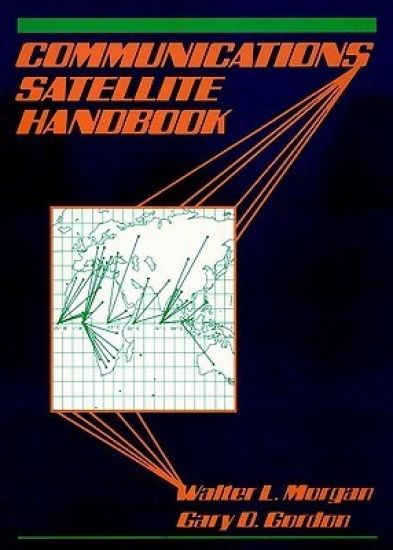
Business Earth Stations for Telecommunications Walter L. Morgan and Denis Rouffet This practical guide provides telecommunications managers with the basic information and procedures needed to configure a telecommunications network to meet the communications needs of their organization. It offers invaluable insights into the planning needs of managers, manufacturers, sellers, and installers of microterminals. The authors give you a complete overview of microterminal technology for the next decade, including: their history and nature, why they are used, who uses them and how service is provided, potential applications, an overview of the U.S. microterminal market, a look at network operators, and the economics of microterminal versus terrestrial services. 1988 (0 471-63556-1) 234 pp. A Basic Atlas of Radio-Wave Propagation Shigekazu Shibuya Now, in one source, planners and designers of telecommunications operating organizations can get direct guidelines for radio system planning and design. Carefully organized to present basic concepts of radio-wave propagation and system design, this indispensable work fully details even the most difficult mathematical theories and equations with graphic presentations that beginners and non-specialists will find particularly helpful. It presents all of the essential design elements required for VHF, UHF, and SHF radio in easy-to-follow chart form. In addition, every problem in this book can be explored using a computer. 1987 (0 471-88183-X) 778 pp. Radio System Design for Telecommunications (1-100 GHz) Roger L. Freeman Heres how to plan, engineer, and design analog and digital radiolinks in the point-to-point telecommunications service. Telecommunications expert Roger Freeman covers every aspect of radio system design used in telecommunications, including siting criteria, hardware layout, performance predictions, links and system analysis, facility planning, and frequency assignment information. The book also describes how radiolinks operate and how to select the necessary performance parameters and equipment specifications to meet the needs of various customers. 1987 (0 471-81236-6) 560 pp.
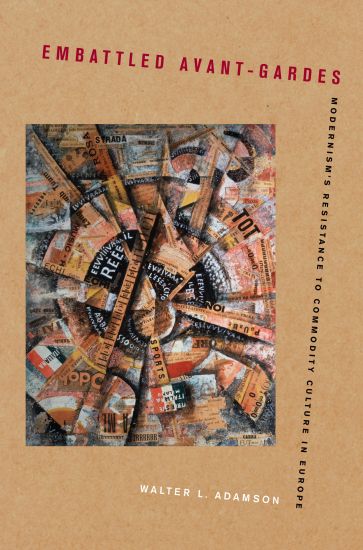
This sweeping work, at once a panoramic overview and an ambitious critical reinterpretation of European modernism, provides a bold new perspective on a movement that defined the cultural landscape of the early twentieth century. Walter L. Adamson embarks on a lucid, wide-ranging exploration of the avant-garde practices through which the modernist generations after 1900 resisted the rise of commodity culture as a threat to authentic cultural expression. Taking biographical approaches to numerous avant-garde leaders, Adamson charts the rise and fall of modernist aspirations in movements and individuals as diverse as Ruskin, Marinetti, Kandinsky, Bauhaus, Purism, and the art critic Herbert Read. In conclusion, Adamson rises to the defense of the modernists, suggesting that their ideas are relevant to current efforts to think through what it might mean to create a vibrant, aesthetically satisfying form of cultural democracy.
Heresy, Crusade, and Inquisition in Southern France 1100-1250 examines the rise of heresy in the Languedoc region, the Albigensian Crusade, and the early years of the Inquisition, focusing on the social and religious dynamics that shaped this turbulent period. Initially conceived as an introduction to William Pelhisson's chronicle--a key firsthand account of the Inquisition in Toulouse--the project expanded into a broader historical study, incorporating Pelhisson's work and other primary documents as appendices. Drawing on the foundational research of scholars like Herbert Grundmann, Antoine Dondaine, and Yves Dossat, the book provides an accessible synthesis for English-speaking readers, blending analysis of dissent, suppression, and institutional authority with translations of key texts. While rooted in medieval events, the book highlights enduring themes of ideological conflict and authority, offering insights valuable to both scholars and general readers. This title is part of UC Press's Voices Revived program, which commemorates University of California Press's mission to seek out and cultivate the brightest minds and give them voice, reach, and impact. Drawing on a backlist dating to 1893, Voices Revived makes high-quality, peer-reviewed scholarship accessible once again using print-on-demand technology. This title was originally published in 1974.
Heresy, Crusade, and Inquisition in Southern France 1100-1250 examines the rise of heresy in the Languedoc region, the Albigensian Crusade, and the early years of the Inquisition, focusing on the social and religious dynamics that shaped this turbulent period. Initially conceived as an introduction to William Pelhisson's chronicle--a key firsthand account of the Inquisition in Toulouse--the project expanded into a broader historical study, incorporating Pelhisson's work and other primary documents as appendices. Drawing on the foundational research of scholars like Herbert Grundmann, Antoine Dondaine, and Yves Dossat, the book provides an accessible synthesis for English-speaking readers, blending analysis of dissent, suppression, and institutional authority with translations of key texts. While rooted in medieval events, the book highlights enduring themes of ideological conflict and authority, offering insights valuable to both scholars and general readers. This title is part of UC Press's Voices Revived program, which commemorates University of California Press's mission to seek out and cultivate the brightest minds and give them voice, reach, and impact. Drawing on a backlist dating to 1893, Voices Revived makes high-quality, peer-reviewed scholarship accessible once again using print-on-demand technology. This title was originally published in 1974.