Kirjojen hintavertailu. Mukana 11 244 527 kirjaa ja 12 kauppaa.

Kirjahaku

Etsi kirjoja tekijän nimen, kirjan nimen tai ISBN:n perusteella.

1000 tulosta hakusanalla Wang Huanlan

Wang Yang: a memoir

Wang Yang: a memoir

Ryan Andrew Peters

Createspace Independent Publishing Platform
2014
nidottu
"Without a doubt, this is one of the most exciting books I've read in years " Imagine you are on a journey where you discover a secret world that exists inside our very own. What if you could break free from the mundane and go on an adventure to an ancient city that still has city walls? As you step inside, you instantly realize that it's not even close to what you've expected. Accompany Ryan Andrew Peters, as he becomes familiar with the intricate Chinese culture and traditions. He makes his new home in Xi'an, one of the oldest cities in China, and also the capital of the Shaanxi Province. Xi'an marks the starting point of the Silk Road and is home to the Terracotta Warriors and Horses. Here he works as an ESL English teacher. "Definitely recommended to anyone who has worked, is working, or wants to work teaching English in a foreign country" Wang Yang, a memoir follows the touching and equally gripping story of Ryan, a young man of Indian and African origin who grew up in Apartheid South Africa. He moves to China to escape his alcohol and drug fused days in London, and gets way more than he bargained for In this story, you meet plenty of foreign teachers, Chinese staff as well as several of the students at his school. Becoming an English teacher takes a lot of practice in the beginning, but he ends up having exciting times in the classroom. The language barrier stands firm as he struggles to communicate and almost gets killed Beijing because of a deal that gets lost in translation. After that, he places his focus on learning Mandarin Chinese, which then unlocks new doors to the colorful Chinese culture. As he makes friends, their lives become intertwined, which portrays an insight into the undercurrents of the Chinese culture. "It's raw and honest. Hilarious and heartbreaking." The Chinese food culture is another new challenge because monks are known to be the only vegetarians in the country. He learns about the variations of mushrooms, edible fungus and spends many a night sitting on miniature chairs at street food stalls while sipping on the local beer. He also passes many nights in the underground gay bars. The nightlife in Xi'an is phenomenal and he finds himself spiraling out of control once again as he slips into another destructive lifestyle. Alcoholism gets the better of him and he faces constant calamities that eventually lead to a breakthrough in his life. More traumatic events unravel around him everyday, such as the Sichuan earthquake that kills over 70,000 people, leaving him to wonder what the meaning of life really is. "A portrayal of physical, emotional and spiritual conflict; desire and talent." As he starts singing in a Terracotta Warrior themed bar, he meets a guitarist he falls in love with, allowing him to explore love from an alternative perspective. It won't be easy, but it is guaranteed to be an adventure to remember Follow Ryan Andrew Peters as he barrels through a life of pain, adventure, love and whimsical hope. It's a travel memoir that readers cling to until the very last hypnotizing page
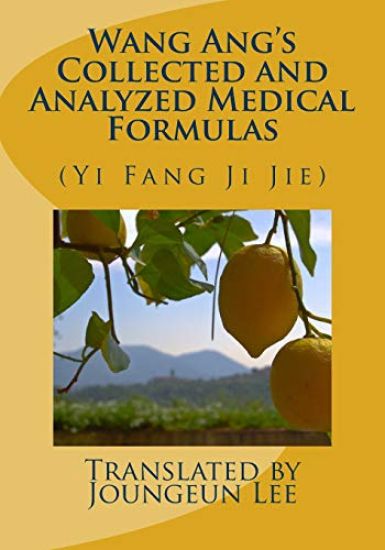
Wang Ang's Collected and Analyzed Medical Formulas: (Yi Fang Ji Jie)

Wang Ang's Collected and Analyzed Medical Formulas: (Yi Fang Ji Jie)

Joungeun Lee

Createspace Independent Publishing Platform
2016
nidottu
Wang Ang (1615 - ?) is a distinguished doctor in the Qing Dynasty in China. He records six or seven hundreds of formulas that are used commonly and extracted from various books. He classified these formulas according to the character of them; Supplementing, Exterior-Effusing Releasing, Ejection, Interior-Attacking, Exterior-Interior, Harmonizing, Qi-Rectifying, Blood-Rectifying, Wind-Dispelling, Cold-Dispelling, Summerheat-Clearing, Dampness Rectifying, Dryness-Moistening, Fire-Draining, Phlegm-Eliminating, Dispersing and Abducting, Contracting and Astringing, The Eyes Brightening, Welling-Abscesses and Sores, and Menstruation and Childbirth.
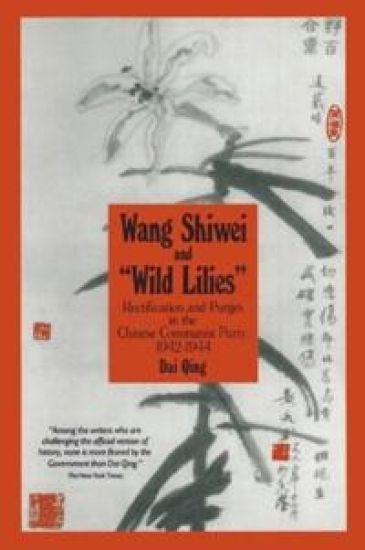
Wang Shiwei and Wild Lilies

Wang Shiwei and Wild Lilies

Dai Qing

M.E. Sharpe
1993
nidottu
This work investigates a case of political persecution that occurred over 50 years ago (the Wang case), but which still raises profound issues for the relationship between revolutionary regimes and the intellectuals who serve them. Song Jinshou has compiled a list of the documents of the Wang case.
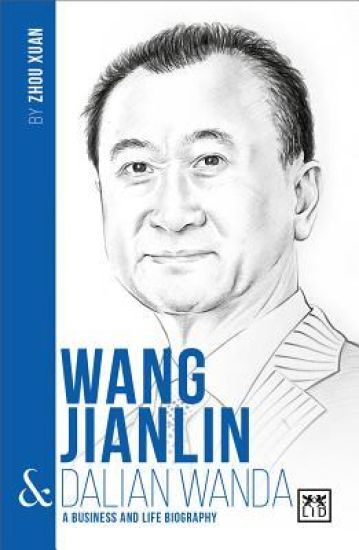
Wang Jianlin & Dalian Wanda

Wang Jianlin & Dalian Wanda

Zhou Xuan

LID Publishing
2017
nidottu
China's economic rise and influence has been one of the most significant developments in the global economy of recent times. A driving force behind this expansion has been the private entrepreneurs and companies of China, some of which have literally redefined the economic and business landscape, both inside and outside of China. Wang Jianlin is one such entrepreneur. From small beginnings as an unknown soldier, Wang ventured into business and led a residential development company that was in imminent danger of going bankrupt. He turned the business around, and today, the Dalian Wanda Group is a transnational enterprise that has become a major player in real estate, football and the entertainment industry. This is the inside story of Asia's richest man, his rise from humble origins, who became one of China's great entrepreneur heroes, and whose presence today is pursued by the world's most important political and business leaders.
Wang Wei and SF Express

Wang Wei and SF Express

Zhou Xibing

LID Publishing
2021
nidottu
China's economic rise and influence has been one of the most significant developments in the global economy of recent times. A driving force behind this expansion has been the private entrepreneurs and companies of China, some of which have literally redefined the economic and business landscape, both inside and outside of China. With a $15,000 loan from his father, the former high school dropout and factory worker Wang Wei started up his courier delivery service, SF Express, in 1993. This book is a classic rags-to-riches story of a young entrepreneur who grew SF Express into a logistics empire with revenues of $7 billion and 400,000 employees by 2015. The phenomenal rise of Wang and his company was further propelled by a $30 billion public listing in Shanghai in 2018. By any standards, this is one of the most remarkable entrepreneurial stories of recent times.
Wang Meng

Wang Meng

MerwinAsia
2018
nidottu
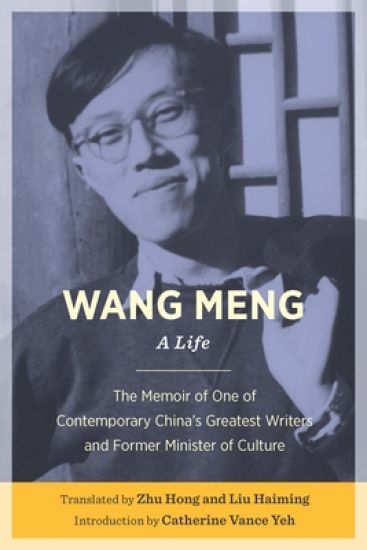
“Wang Meng is the only Chinese writer who really understands China,” according to noted sinologist Merle Goldman, as well as being the writer that many at home and abroad have considered as deserving of a Nobel Prize if any Chinese writer ever did. His memoir is a colorful record of life in an eventful era when one could get up in the morning a CCP official and go to bed an “enemy” of the people.Wang Meng knew the hardships of life from an early age. A brilliant student since childhood, Wang gave up the chance of college to join the Communist underground. Ultimately installed as a regular Communist Party cadre in charge of a district Party Youth League and bored with petty bureaucracy, Wang published a short story which rhapsodized the soul-searching of an earnest young “newcomer” on the scene—an instant bestseller. In spite of Chairman Mao's favorable comments on the story, Wang Meng became a “rightist”—i.e., categorized as the enemy.Banished to distant Xinjiang, Wang Meng mastered the Uighur language, learned farming skills, and was embraced by the Uighurs as one of their own. The attack on his short story “Hard Porridge,” a masterpiece of irony (first English translation published in the Paris Review), only served to highlight his genius and started off a serio-comic string of writings on “porridge” from every conceivable angle by a host Chinese writers, becoming the memorable event of the year.Wang Meng did not change his spots when he became Minister of Culture and a member of the Chinese People’s Consutative Conference. While making contributions to cultural exchanges on the international scene, Wang Meng kept his identity as first and foremost a writer.
Wang Meng

Wang Meng

MerwinAsia
2018
sidottu
“Wang Meng is the only Chinese writer who really understands China,” according to noted sinologist Merle Goldman, as well as being the writer that many at home and abroad have considered as deserving of a Nobel Prize if any Chinese writer ever did. His memoir is a colorful record of life in an eventful era when one could get up in the morning a CCP official and go to bed an “enemy” of the people.Wang Meng knew the hardships of life from an early age. A brilliant student since childhood, Wang gave up the chance of college to join the Communist underground. Ultimately installed as a regular Communist Party cadre in charge of a district Party Youth League and bored with petty bureaucracy, Wang published a short story which rhapsodized the soul-searching of an earnest young “newcomer” on the scene—an instant bestseller. In spite of Chairman Mao's favorable comments on the story, Wang Meng became a “rightist”—i.e., categorized as the enemy.Banished to distant Xinjiang, Wang Meng mastered the Uighur language, learned farming skills, and was embraced by the Uighurs as one of their own. The attack on his short story “Hard Porridge,” a masterpiece of irony (first English translation published in the Paris Review), only served to highlight his genius and started off a serio-comic string of writings on “porridge” from every conceivable angle by a host Chinese writers, becoming the memorable event of the year.Wang Meng did not change his spots when he became Minister of Culture and a member of the Chinese People’s Consutative Conference. While making contributions to cultural exchanges on the international scene, Wang Meng kept his identity as first and foremost a writer.
Wang Xiaoye Liber Amicorum

Wang Xiaoye Liber Amicorum

Institute of Competition Law
2019
sidottu
Without Professor Xiaoye Wang, Chinese competition law would not be in the shape it is today. Perhaps the key competition statute - the Anti-Monopoly Law (AML) - would not even have been enacted without her relentless efforts to push the competition law agenda in China. Professor Wang's 70th birthday saw the tenth anniversary of the AML's entry into force. It presents the ideal moment to take stock of what has been achieved in Chinese competition law over the past decade and to put the spotlight on Professor Wang's significant contributions. In this Liber Amicorum, Professor Wang's colleagues, friends, and admirers in China and around the world come together to celebrate her achievements to date and to discuss recent competition law developments in China and other timely topics. The variety of contributors' backgrounds (academics, enforcers, lawyers, economists) demonstrates the abundance and range of the issues brought out in the book.
Wang Fuzhi’s Reconstruction of Confucianism

Wang Fuzhi’s Reconstruction of Confucianism

Mingran Tan

Springer Nature Switzerland AG
2021
sidottu
Wang Fuzhi (1619-1692), a Ming loyalist, was forced to find solutions for both cultural and political crises of his time. In this book Mingran Tan provides a comprehensive review of Wang Fuzhi’s understanding of historical events and his interpretation of the Confucian classics. Tan explains what kind of Confucian system Wang Fuzhi was trying to construct according to his motto, “The Six Classics require me to create something new”. He sought a basis for Confucian values such as filial piety, humanity and ritual propriety from political, moral and cosmological perspectives, arguing that they could cultivate a noble personality, beatify political governance, and improve social and cosmological harmony. This inspired Wang Fuzhi’s attempt to establish a syncretic blend of the three branches of Neo-Confucianism, i.e., Zhu Xi’s (1130-1200) philosophy of principle , Wang Yangming’s (1472-1529) philosophy of mind and Zhang Zai’s (1020-1077) philosophy of qi (material force). The most thorough work on Wang Fuzhi available in English, this study corrects some general misunderstanding of the nature of Wang Fuzhi’s philosophy and helps readers to understand Wang Fuzhi from an organic perspective. Building upon previous scholars’ research on Wang Fuzhi’s notion of moral cultivation, Tan gives a comprehensive understanding of how Wang Fuzhi improves social and cosmological harmony through compliance with Confucian rituals.
Wang Fuzhi’s Reconstruction of Confucianism

Wang Fuzhi’s Reconstruction of Confucianism

Mingran Tan

Springer Nature Switzerland AG
2022
nidottu
Wang Fuzhi (1619-1692), a Ming loyalist, was forced to find solutions for both cultural and political crises of his time. In this book Mingran Tan provides a comprehensive review of Wang Fuzhi’s understanding of historical events and his interpretation of the Confucian classics. Tan explains what kind of Confucian system Wang Fuzhi was trying to construct according to his motto, “The Six Classics require me to create something new”. He sought a basis for Confucian values such as filial piety, humanity and ritual propriety from political, moral and cosmological perspectives, arguing that they could cultivate a noble personality, beatify political governance, and improve social and cosmological harmony. This inspired Wang Fuzhi’s attempt to establish a syncretic blend of the three branches of Neo-Confucianism, i.e., Zhu Xi’s (1130-1200) philosophy of principle , Wang Yangming’s (1472-1529) philosophy of mind and Zhang Zai’s (1020-1077) philosophy of qi (material force). The most thorough work on Wang Fuzhi available in English, this study corrects some general misunderstanding of the nature of Wang Fuzhi’s philosophy and helps readers to understand Wang Fuzhi from an organic perspective. Building upon previous scholars’ research on Wang Fuzhi’s notion of moral cultivation, Tan gives a comprehensive understanding of how Wang Fuzhi improves social and cosmological harmony through compliance with Confucian rituals.
Wang Tiles in Computer Graphics

Wang Tiles in Computer Graphics

Ares Lagae

Springer International Publishing AG
2009
nidottu
Many complex signals in computer graphics, such as point distributions and textures, cannot be efficiently synthesized and stored. This book presents tile-based methods based on Wang tiles and corner tiles to solve both these problems. Instead of synthesizing a complex signal when needed, the signal is synthesized beforehand over a small set of Wang tiles or corner tiles. Arbitrary large amounts of that signal can then efficiently be generated when needed by generating a stochastic tiling, and storing only a small set of tiles reduces storage requirements. A tile-based method for generating a complex signal consists of a method for synthesizing the signal over a set of Wang tiles or corner tiles, and a method for generating a stochastic tiling using the set of tiles. The method for generating a stochastic tiling using the set of tiles is independent of the signal. This book covers scanline stochastic tiling algorithms and direct stochastic tiling algorithms for Wang tiles and corner tiles. The method for synthesizing the signal over a set of tiles is dependent on the signal. This book covers tile-based methods for texture synthesis and for generating Poisson disk distributions. This book also explores several applications such as tile-based texture mapping and procedural modeling and texturing. Although the methods for constructing a complex signal over a set of Wang tiles or corner tiles are dependent on the signal, the general idea behind these methods generalizes to other kinds of signals. The methods presented in this book therefore have the potential to make the generation and storage of almost any complex signal efficient. Table of Contents: Introduction / Wang Tiles and Corner Tiles / Tiling Algorithms for Wang Tiles and Corner Tiles / Tile-Based Methods for Texture Synthesis / Tile-Based Methods Generating Poisson Disk Distributions / Applications of Poisson Disk Distributions