Kirjojen hintavertailu. Mukana 11 342 296 kirjaa ja 12 kauppaa.

Kirjahaku

Etsi kirjoja tekijän nimen, kirjan nimen tai ISBN:n perusteella.

1000 tulosta hakusanalla Warren Beck

Mandan-Hidatsa Myths and Ceremonies; 32

Mandan-Hidatsa Myths and Ceremonies; 32

Martha Warren 1871-1959 Beckwith

Hassell Street Press
2021
nidottu
This work has been selected by scholars as being culturally important and is part of the knowledge base of civilization as we know it.This work is in the public domain in the United States of America, and possibly other nations. Within the United States, you may freely copy and distribute this work, as no entity (individual or corporate) has a copyright on the body of the work.Scholars believe, and we concur, that this work is important enough to be preserved, reproduced, and made generally available to the public. To ensure a quality reading experience, this work has been proofread and republished using a format that seamlessly blends the original graphical elements with text in an easy-to-read typeface.We appreciate your support of the preservation process, and thank you for being an important part of keeping this knowledge alive and relevant.
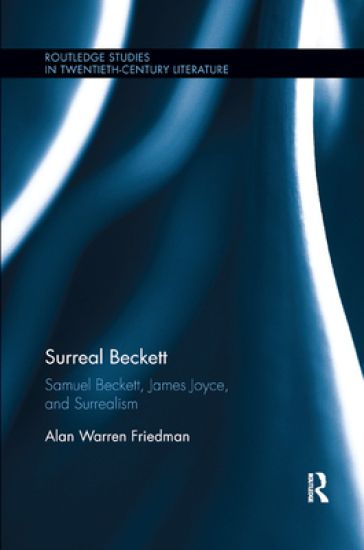
Surreal Beckett

Surreal Beckett

Alan Warren Friedman

Routledge
2019
nidottu
Surreal Beckett situates Beckett‘s writings within the context of James Joyce and Surrealism, distinguishing ways in which Beckett forged his own unique path, sometimes in accord with, sometimes at odds with, these two powerful predecessors. Beckett was so deeply enmeshed in Joyce’s circle during his early Paris days (1928 - late 1930s) that James Knowlson dubbed them his "Joyce years." But Surrealism and Surrealists rivaled Joyce for Beckett’s early and continuing attention, if not affection, so that Raymond Federman called 1929-45 Beckett’s "surrealist period." Considering both claims, this volume delves deeper into each argument by obscuring the boundaries between theses differentiating studies. These received wisdoms largely maintain that Beckett’s Joycean connection and influence developed a negative impact in his early works, and that Beckett only found his voice when he broke the connection after Joyce’s death. Beckett came to accept his own inner darkness as his subject matter, writing in French and using a first-person narrative voice in his fiction and competing personal voices in his plays. Critics have mainly viewed Beckett’s Surrealist connections as roughly co-terminus with Joycean ones, and ultimately of little enduring consequence. Surreal Beckett argues that both early influences went much deeper for Beckett as he made his own unique way forward, transforming them, particularly Surrealist ones, into resources that he drew upon his entire career. Ultimately, Beckett endowed his characters with resources sufficient to transcend limitations their surreal circumstances imposed upon them.
Surreal Beckett

Surreal Beckett

Alan Warren Friedman

Routledge
2017
sidottu
Surreal Beckett situates Beckett‘s writings within the context of James Joyce and Surrealism, distinguishing ways in which Beckett forged his own unique path, sometimes in accord with, sometimes at odds with, these two powerful predecessors. Beckett was so deeply enmeshed in Joyce’s circle during his early Paris days (1928 - late 1930s) that James Knowlson dubbed them his "Joyce years." But Surrealism and Surrealists rivaled Joyce for Beckett’s early and continuing attention, if not affection, so that Raymond Federman called 1929-45 Beckett’s "surrealist period." Considering both claims, this volume delves deeper into each argument by obscuring the boundaries between theses differentiating studies. These received wisdoms largely maintain that Beckett’s Joycean connection and influence developed a negative impact in his early works, and that Beckett only found his voice when he broke the connection after Joyce’s death. Beckett came to accept his own inner darkness as his subject matter, writing in French and using a first-person narrative voice in his fiction and competing personal voices in his plays. Critics have mainly viewed Beckett’s Surrealist connections as roughly co-terminus with Joycean ones, and ultimately of little enduring consequence. Surreal Beckett argues that both early influences went much deeper for Beckett as he made his own unique way forward, transforming them, particularly Surrealist ones, into resources that he drew upon his entire career. Ultimately, Beckett endowed his characters with resources sufficient to transcend limitations their surreal circumstances imposed upon them.
Robert Penn Warren, Critic

Robert Penn Warren, Critic

Charlotte Beck

University of Tennessee Press
2006
sidottu
Despite the fact that Robert Penn Warren was one of the most prolific critics of the twentieth century, Charlotte H. Beck’s Robert Penn Warren, Critic is the first thorough study of Warren as a literary critic in his own right. Part of the blame for this surprising omission lies with Warren himself, who tended to belittle his critical persona, considering himself a poet first, fiction writer second, and critic last. Although Warren was educated at Vanderbilt and befriended by the original New Critics, Warren created and honed his own critical method, often in striking opposition to that of the New Critics. Using a largely chronological approach,Charlotte Beck has carefully traced the evolution of Warren’s criticism, focusing on seminal examples of the critical books, essays, and introductions that Warren produced over a period of almost seventy years. Her surprising conclusions often run counter to previous evaluations of Warren’s criticism, especially to those that complacently link Warren to Cleanth Brooks, his lifelong friend and collaborator, and to New Criticism in general. Beck demonstrates that Warren consistently treats writers holistically, taking into account biographical as well as historical data, to account for their entire body of work, rather than focusing on a single literary text.Beck’s analysis of Warren’s criticism will appeal not only to scholars of American literature and Southern literary history but also will contribute to the contemporary resurgence of interest in Warren’s writing, demonstrating that Warren belongs in the first rank of twentieth-century American critics.
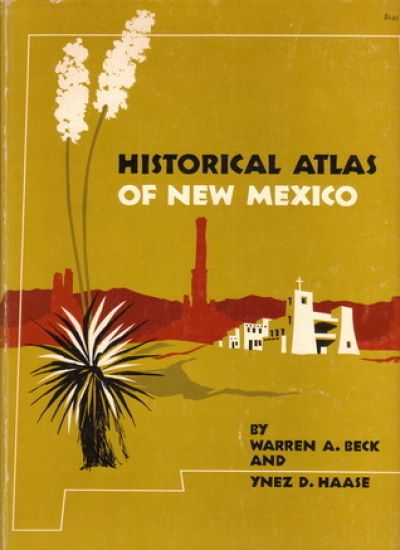
Historical Atlas of New Mexico

Historical Atlas of New Mexico

Warren A. Beck; Ynez D. Haase

University of Oklahoma Press
2012
nidottu
New Mexico's long and dramatic history was in many ways predestined by its location, vast size, and abundant mineral resources. Treasure-hunting Spanish explorers tramped across its plains and scaled its mountains in search of the Seven Cities of Cíbola in the sixteenth century. In clashing with descendants of the prehistoric Indian population, the Spanish began three centuries of struggles that lasted through the nineteenth century when the steamroller of United States expansion arrived. The history of New Mexico is the story of the blending of the three cultures - Hispanic, Indian, and Anglo.In this volume, a historian and a cartographer collaborate to depict specific aspects of the state's geography and events of its history, with the narrative illustrated through maps. Topics include geographical data (from topography to weather), sites of prehistoric civilizations, Spanish and United States expeditions, first towns, historic trails, the Civil War, stagecoach lines, railroads, county boundaries, principal cities and roads, state and national parks and monuments, and state judicial districts.
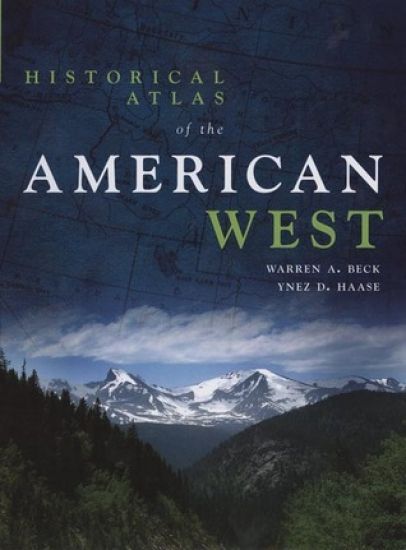
Historical Atlas of the American West

Historical Atlas of the American West

Warren A. Beck; Ynez D. Haase

University of Oklahoma Press
1992
nidottu
The enduring image evoked by the American West is one of grand physical and historical romance, spectacle, and drama. Many generations of historians, both popular and academic, have sought to communication the unique characteristics of this region, whose history and physical setting have for so long captured the public imagination. In the Historical Atlas of the American West, a historian and a geographer meet this challenge by telling the story of the region from a comprehensive geographical perspective. Defining the American West as the seventeen contiguous states from the one-hundredth meridian westward (Texas, Oklahoma, Kansas, Nebraska, North and South Dakota, New Mexico, Colorado, Wyoming, Montana, Arizona, Nevada, Utah, Idaho, California, Oregon, and Washington), Warren A. Beck and Ynez D. Haase provide seventy-eight maps, each with explanatory text and a selective bibliography of further readings.This atlas presents the history of the West from prehistoric times to the present. The physical characteristics of the region - its natural resources and geographic features, climatic zones, agricultural regions, mineral resources, and native flora fauna - are presented, along with special maps stressing the impact of natural disasters such as floods, earthquakes, and the eruption of Mount St. Helens.Several maps provide unique views of Western Indians from ancient times to the latter part of the nineteenth century, including maps devoted to the tragedy at Wounded Knee, the Ghost Dance Religion, and Indian judicial districts. All the major explorations and overland movements in the region, as well as the evolution of transportation routes - from cattle trails to modern railroads - are depicted. The Spanish-Mexican land grants are presented in detail, with special emphasis on the early ranchos of Texas. Locations of important military events and installations, ranging from the Indian Wars of West to World War II POW camps, are recorded.Beck and Haase have thus succeeded in synthesizing and capsulizing a vast amount of information on the American West to create seventy-eight vignettes of uniquely western events and life ways from 1536 to 1980. Offering insights into the region's geography and the various groups that have populated the West over the centuries, this atlas will provide a valuable reference for scholars and fascinating entertainment for Western history buffs.
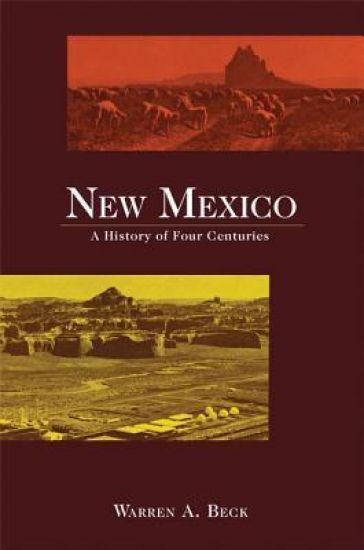
New Mexico

New Mexico

Warren A. Beck

University of Oklahoma Press
2013
nidottu
The history of New Mexico is the story of three contrasting cultures - Indian, Spanish, and Anglo-American - clashing, coexisting, and blending. Here the Indians of Hawikuh - the first Zuñi pueblo encountered by Coronado's soldiers - gave battle to the Europeans in 1540. Here also Indians last took a stand against federal troops in 1913. A rich and colorful Spanish tradition, including institutions of family and church, social organizations, and the Spanish language, continues strong a century and a half after the acquisition of the territory by the United States. Anglo-Americans have also made their mark upon the land with public works, highways, and rapidly developing towns and cities.This history of New Mexico is intended for readers who want a brief, yet comprehensive treatment of the state's development. Warren A. Beck takes a balanced approach to all the themes in the state's varied history. He allows the whole story to emerge from the facts - in a concise and readable format.
Studies in Schizophrenia

Studies in Schizophrenia

Robert G Heath; Hal C Becker; Leona Bersadsky; Robert M Corrigan; Arthur W Epstein; Warren L Founds; Francisco Garcia Bengochea; Charles D Hendley; Robert Hodes; Charles Hogan; H E King; Byron E Leach; Raeburn C Llewellyn; Walter A Mickle; William H Miller; Frederick F Millsaps; Russell R Monroe; Samuel M Peacock; T Duane Price; Ernest Sachs; Florence B Strohmeyer; John J Weber; Kathleen M Young

Harvard University Press
1954
sidottu
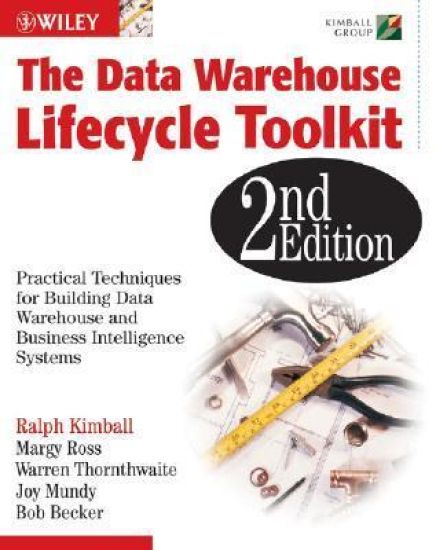
The Data Warehouse Lifecycle Toolkit

The Data Warehouse Lifecycle Toolkit

Ralph Kimball; Margy Ross; Warren Thornthwaite; Joy Mundy; Bob Becker

John Wiley Sons Inc
2008
nidottu
A thorough update to the industry standard for designing, developing, and deploying data warehouse and business intelligence systems The world of data warehousing has changed remarkably since the first edition of The Data Warehouse Lifecycle Toolkit was published in 1998. In that time, the data warehouse industry has reached full maturity and acceptance, hardware and software have made staggering advances, and the techniques promoted in the premiere edition of this book have been adopted by nearly all data warehouse vendors and practitioners. In addition, the term "business intelligence" emerged to reflect the mission of the data warehouse: wrangling the data out of source systems, cleaning it, and delivering it to add value to the business. Ralph Kimball and his colleagues have refined the original set of Lifecycle methods and techniques based on their consulting and training experience. The authors understand first-hand that a data warehousing/business intelligence (DW/BI) system needs to change as fast as its surrounding organization evolves. To that end, they walk you through the detailed steps of designing, developing, and deploying a DW/BI system. You'll learn to create adaptable systems that deliver data and analyses to business users so they can make better business decisions.
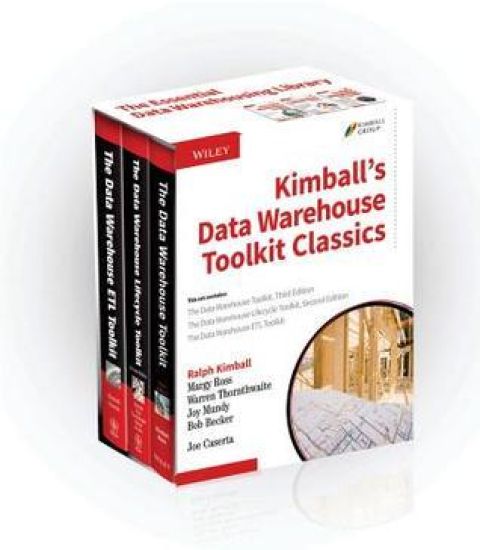
Kimball's Data Warehouse Toolkit Classics, 3 Volume Set

Kimball's Data Warehouse Toolkit Classics, 3 Volume Set

Ralph Kimball; Margy Ross; Warren Thornthwaite; Joy Mundy; Bob Becker; Joe Caserta

John Wiley Sons Inc
2014
nidottu
Three books by the bestselling authors on Data Warehousing! The most authoritative guides from the inventor of the technique all for a value price. The Data Warehouse Toolkit, 3rd Edition (9781118530801) Ralph Kimball invented a data warehousing technique called "dimensional modeling" and popularized it in his first Wiley book, The Data Warehouse Toolkit. Since this book was first published in 1996, dimensional modeling has become the most widely accepted technique for data warehouse design. Over the past 10 years, Kimball has improved on his earlier techniques and created many new ones. In this 3rd edition, he will provide a comprehensive collection of all of these techniques, from basic to advanced. The Data Warehouse Lifecycle Toolkit, 2nd Edition (9780470149775) Complete coverage of best practices from data warehouse project inception through on-going program management. Updates industry best practices to be in sync with current recommendations of Kimball Group. Streamlines the lifecycle methodology to be more efficient and user-friendly The Data Warehouse ETL Toolkit (9780764567575) shows data warehouse developers how to effectively manage the ETL (Extract, Transform, Load) phase of the data warehouse development lifecycle. The authors show developers the best methods for extracting data from scattered sources throughout the enterprise, removing obsolete, redundant, and inaccurate data, transforming the remaining data into correctly formatted data structures, and then physically loading them into the data warehouse. This book provides complete coverage of proven, time-saving ETL techniques. It begins with a quick overview of ETL fundamentals and the role of the ETL development team. It then quickly moves into an overview of the ETL data structures, both relational and dimensional. The authors show how to build useful dimensional structures, providing practical examples of beginning through advanced techniques.
Approaches to Learning and Teaching Mathematics

Approaches to Learning and Teaching Mathematics

Charlie Gilderdale; Alison Kiddle; Ems Lord; Becky Warren; Fran Watson

Cambridge University Press
2017
pokkari
A subject-specific guide for teachers to supplement professional development and provide resources for lesson planning. Approaches to learning and teaching Mathematics is the result of close collaboration between Cambridge University Press and Cambridge International Examinations. Considering the local and global contexts when planning and teaching an international syllabus, the title presents ideas for Mathematics with practical examples that help put theory into context. Teachers can download online tools for lesson planning from our website. This book is ideal support for those studying professional development qualifications or international PGCEs.
Tunnelling ’94

Tunnelling ’94

Vidar Aarvold; I. L. J. Chudleigh; N. S. Webb; G. A. Featherstone; Manfred Bandmann; H. Ramisch; Uwe Beckmann; B. J. Cole; H. J. Lees; Walter Dietz; D. F. Fawcett; P. J. Chapman; D. A. Barratt; M. P. O’Reilly; John Temporal; Jon Baston-Pitt; F. J. Fredriksen; Roald Aabøe; G. J. Hasle; D. A. Hobson; D. C. Gilchrist; Sandor Jancsecz; Walter Steiner; J. P. Farrow; P. M. Claye; R. B. Warren; M. A. Ginary; R. Matthews; H. Kruizenga; C. R. Weeks; T. R. Winterton; Y. Leblais; L. Leblond; Yannis Malios; J. Y. Peron; P. Marcheselli

Springer-Verlag New York Inc.
2013
nidottu
It is now more than twenty years since a proposal was first mooted to hold an international tunnelling symposium in Britain. At the time of the first symposium, held in London in 1976, the Channel Tunnel pro­ ject had just been shelved. Last weekend a charity walk was held in the finished tunnel, which will be open for business later in the year. Tunnels have figured prominently, and at times spectacularly, in the development of national and international links and it is hoped that such links gather pace in the future. It is particularly pleasing that Alastair Biggart of Storebrelt has agreed to deliver the twenty-sixth Sir Julius Wernher Memorial Lecture of the Institution of Mining and Metallurgy, entitled 'The changing face of tunnelling', at the start of this event. * Although almost every edition of the technical journals on tunnelling reports another £1 billion scheme somewhere in the world, it would be unfair of me to suggest that tunnelling is restricted to these prestigious schemes for major transport links. Much of the work that makes mod­ ern life possible receives hardly a mention outside the technical press and one suspects that society at large applies the 'out of sight, out of mind' attitude even more readily to underground construction than it does to other forms of engineering. Clearly, there is a contiiming need to improve the capacity and performance of our infrastructure, while hav­ ing a careful regard for the environment.