Kirjojen hintavertailu. Mukana 12 016 292 kirjaa ja 12 kauppaa.

Kirjahaku

Etsi kirjoja tekijän nimen, kirjan nimen tai ISBN:n perusteella.

1000 tulosta hakusanalla Waugh Colin M.

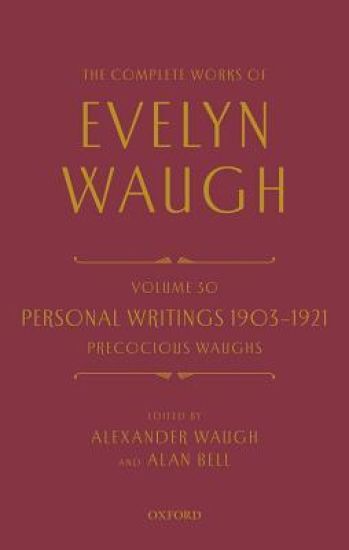
The Complete Works of Evelyn Waugh: Personal Writings 1903-1921: Precocious Waughs
This volume is part of the Complete Works of Evelyn Waugh critical edition, which brings together all Waugh's published and previously unpublished writings for the first time with comprehensive introductions and annotation. The edition's General Editor is Alexander Waugh, Evelyn Waugh's grandson and editor of the twelve-volume Personal Writings sequence, which collates all Waugh's letters, diaries, and other personal writings in chronological order. Volume one of the series covers the years 1903-1921, ending with Waugh's departure from Lancing College, aged 18, with a scholarship to Hertford College, Oxford. For many years at Lancing Waugh kept a daily account of his life, and every diary entry is reprinted here along with the lively pen-and ink drawings that accompanied them and the letters he sent to his parents and friends. No other book presents such a rich anthology of writing by a school-boy, let alone one who would later turn into a major literary figure and novelist of genius.
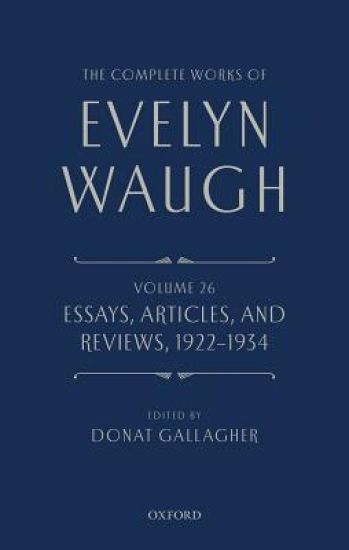
The Complete Works of Evelyn Waugh: Essays, Articles, and Reviews 1922-1934
This volume is part of the Complete Works of Evelyn Waugh critical edition, which brings together all Waugh's published and previously unpublished writings for the first time with comprehensive introductions and annotation, and a full account of each text's manuscript development and textual variants. The edition's General Editor is Alexander Waugh, Evelyn Waugh's grandson and editor of the twelve-volume Personal Writings sequence. This first volume of Evelyn Waugh's Articles, Essays, and Reviews contains every traceable piece of journalism that research could uncover written by Waugh between January 1922, when he first went up to Oxford, and December 1934, when he had recently returned from British Guiana and was enjoying the runaway success of A Handful of Dust. Long interred in fashion magazines, popular newspapers, sober journals, undergraduate reviews, and BBC archives, 110 of the 170 pieces in the volume have never before been reprinted. Several typescripts of articles and reviews are published here for the first time, as are a larger number of unsigned pieces never before identified as Waugh's. Original texts, so easily distorted in the production process, have been established as far as possible using manuscript and other controls. The origins of the works are explored, and annotations to each piece seek to assist the modern reader. The volume embraces university journalism; essays from Waugh's years of drift after Oxford; forcefully emphatic articles and contrasting sophisticated reviews written for the metropolitan press from 1928 to 1930 (the most active and enterprising years of Waugh's career); reports for three newspapers of a coronation in Abyssinia and essays for The Times on the condition of Ethiopia and on British policy in Arabia. Finally, in early 1934 Waugh travelled for three months in remote British Guiana, resulting in nine travel articles and A Handful of Dust, acclaimed as one of the most distinguished novels of the century. Waugh was 19 when his first Oxford review appeared, 31 when the Spectator printed his last review of 1934. This is a young writer's book, and the always lucid articles and reviews it presents read as fresh and lively, as challenging and opinionated, as the day they first appeared.
The Complete Works of Evelyn Waugh: Vile Bodies

The Complete Works of Evelyn Waugh: Vile Bodies

Evelyn Waugh

Oxford University Press
2017
sidottu
This volume is part of the Complete Works of Evelyn Waugh critical edition, which brings together all Waugh's published and previously unpublished writings for the first time with comprehensive introductions and annotation, and a full account of each text's manuscript development and textual variants. The edition's General Editor is Alexander Waugh, Evelyn Waugh's grandson and editor of the twelve-volume Personal Writings sequence. This is the first critical edition of Waugh's celebrated novel, a work that is unapologetically modernist in form and tone. The history of Vile Bodies presents an intriguing bibliographical and biographical detective story, not least because Waugh's first wife left him when he was in the middle of writing it. Drawing on previously unpublished correspondence, this edition plots the novel's composition against the cultural backdrop of the 1929 'Flapper's Election', the world of the Bright Young People, and the Wall Street Crash. An introduction and textual analysis explores a range of questions, including: Why were Waugh's corrections to the only extant typescript ignored? What is the evidence to suggest the very point in the autograph manuscript at which Waugh broke off upon learning of his wife's affair? Did he go back over the previous chapter adding darker touches, and, on returning to composition, use the book as a form of public letter to his wife? What readings did the typist invent through mistranscription?
The Complete Works of Evelyn Waugh: Rossetti His Life and Works
This volume is part of the Complete Works of Evelyn Waugh critical edition, which brings together all Waugh's published and previously unpublished writings for the first time with comprehensive introductions and annotation, and a full account of each text's manuscript development and textual variants. The edition's General Editor is Alexander Waugh, Evelyn Waugh's grandson and editor of the twelve-volume Personal Writings sequence. This, Waugh's first published book, marked the centenary of the birth of the painter and poet Dante Gabriel Rossetti (1828-1882). Waugh was fascinated by the bohemian lives of the Pre-Raphaelite painters, and by his own family connection with them (William Holman Hunt had married, successively, two cousins of his grandfather). Rossetti is both compassionate towards its subject and critical of his self-destructive nature. The incisive analysis of Rossetti's painterly techniques contributed to the resurgence of public interest in Rossetti's art and poetry. The biography was also an early expression of Waugh's lifelong interest in narrative art, and laid the foundations for his own belief in the importance of the spiritual as well as the aesthetic vision of the artist. Although Rossetti was hastily compiled, it is nevertheless elegant and witty.
Complete Works of Evelyn Waugh: Helena

Complete Works of Evelyn Waugh: Helena

Evelyn Waugh

Oxford University Press
2020
sidottu
This volume is part of the Complete Works of Evelyn Waugh critical edition, which brings together all Waugh's published and previously unpublished writings for the first time with comprehensive introductions and annotation, and a full account of each text's manuscript development and textual variants. The edition's General Editor is Alexander Waugh, Evelyn Waugh's grandson and editor of the twelve-volume Personal Writings sequence. Set in the 4th century AD, and Waugh's only historical novel, Helena is the story of the mother of Emperor Constantine and her reputed discovery of the 'True Cross'. Waugh described Helena as his favourite among his works--in a Face to Face interview with John Freeman for the BBC in 1960, for example. His fictional account of Helena's widely-celebrated life and pilgrimage is the product of detailed historical research, and it contributes to our understanding of Waugh's views of the Church, both ancient and modern. Uniquely, however, Helena also demonstrates Waugh's interest in domestic politics set against a backdrop of significant historical acts. This edition of Helena provides the first detailed textual history of the novel. Covering such matters as 'Publication History', 'Cultural Contexts', and 'Critical Reception', the introduction facilitates successful engagement with Waugh's novel from a variety of perspectives, as well as equipping the reader with detailed understanding of its fascinating and complex textual history. Readers are also furnished with a detailed set of explanatory notes which provide information about the people, places, events and texts referenced in Waugh's only historical novel, as well as pointing out links in theme or idea with others of Waugh's works.
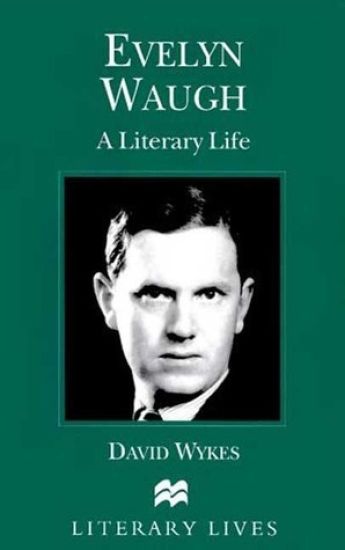
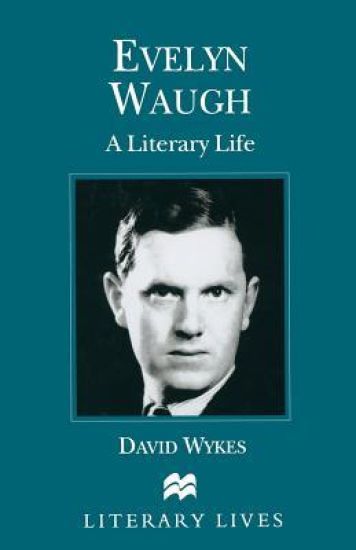
Evelyn Waugh

Evelyn Waugh

David Wykes

Palgrave Macmillan
1999
sidottu
Waugh's life and his literary life exist in fascinating, dynamic relationship. Virtually all of his fiction was autobiographical, yet he maintained that his novels were 'objects', unrelated to the life of their author. This study traces the shifting relationship of ascertainable fact and imaginative fiction throughout Waugh's career, focusing on the endless negotiation he conducted between life and art, and on why, from being author of the anarchic, hilarious Decline and Fall , he transformed himself into the author of the romantic, eschatological Brideshead Revisited .
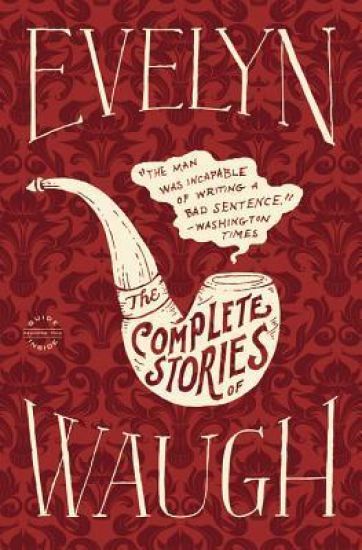
Evelyn Waugh: The Complete Stories

Evelyn Waugh: The Complete Stories

Evelyn Waugh

Back Bay Books
2012
nidottu
A "lavishly entertaining" (Publishers Weekly) distillation of Waugh's genius--abundant evidence that one of the twentieth century's most admired and enjoyed English novelists was also a master of the short form.Evelyn Waugh's short fiction reveals in miniaturized perfection the elements that made him the greatest satirist of the twentieth century. The stories collected here range from delightfully barbed portraits of the British upper classes to an alternative ending to Waugh's novel A Handful of Dust; from a "missing chapter" in the life of Charles Ryder, the nostalgic hero of Brideshead Revisited, to a plot-packed morality tale that Waugh composed at a very tender age; from an epistolary lark in the voice of "a young lady of leisure" to a darkly comic tale of scandal in a remote (and imaginary) African outpost.
Evelyn Waugh

Evelyn Waugh

Palgrave Macmillan
1991
sidottu
In this volume of essays casting new light on aspects of Waugh's life and writings, the essential Waugh emerges as a diffident artist and a sensitive recorder not only of the Roaring Twenties but also of his century. Evelyn Waugh's undisputed talent and controversial personality are set off in a series of studies that provide new elements towards the understanding of the man and the artist: the annulment of his first marriage, his relations with the BBC are for the first time dealt with in depth and objectivity.
Evelyn Waugh

Evelyn Waugh

David Wykes

Palgrave Macmillan
1999
sidottu
Waugh's life and his literary life exist in fascinating, dynamic relationship. Virtually all of his fiction was autobiographical, yet he maintained that his novels were 'objects', unrelated to the life of their author. This study traces the shifting relationship of ascertainable fact and imaginative fiction throughout Waugh's career, focusing on the endless negotiation he conducted between life and art, and on why, from being author of the anarchic, hilarious Decline and Fall , he transformed himself into the author of the romantic, eschatological Brideshead Revisited .
Evelyn Waugh

Evelyn Waugh

David Wykes

Palgrave Macmillan
1999
nidottu
Waugh's life and his literary life exist in fascinating, dynamic relationship. Virtually all of his fiction was autobiographical, yet he maintained that his novels were 'objects', unrelated to the life of their author. This study traces the shifting relationship of ascertainable fact and imaginative fiction throughout Waugh's career, focusing on the endless negotiation he conducted between life and art, and on why, from being author of the anarchic, hilarious Decline and Fall , he transformed himself into the author of the romantic, eschatological Brideshead Revisited .
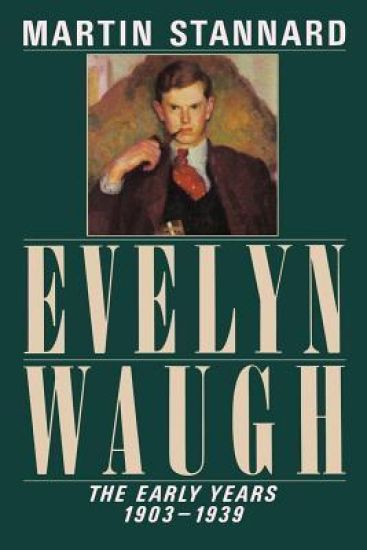
Evelyn Waugh: The Early Years, 1903-1939

Evelyn Waugh: The Early Years, 1903-1939

Martin Stannard

W. W. Norton Company
1989
nidottu
"The Evelyn Waugh who emerges from this fascinating and masterful account is a far different, and a far more complex, figure than the one most readers know. . . . Not only supersedes all earlier accounts of the writer but also is a model of the biographer's art." --Michael Gorra, New York Newsday
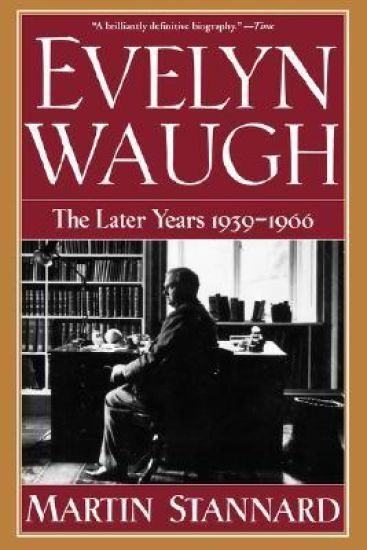
Evelyn Waugh: The Later Years 1939-1966

Evelyn Waugh: The Later Years 1939-1966

Martin Stannard

W. W. Norton Company
1994
nidottu
"Definitive. . . . Deeply researched and pondered." "A literary biography of the same caliber as Richard Ellmann's James Joyce." These words of praise from Edmund Morris in the New York Times and Michael Dirda in the Washington Post are but some of the acclaim that greeted Martin Stannard's Evelyn Waugh: The Early Years 1903-1939. This eagerly awaited second volume, spanning the years from World War II to Waugh's death in 1966, completes the portrait of one of the foremost writers of the century. This was the period of some of Waugh's greatest work, including Brideshead Revisited, The Loved One, and the Sword of Honour trilogy.
Evelyn Waugh

Evelyn Waugh

Routledge
1997
sidottu
This set comprises 40 volumes covering nineteenth and twentieth century European and American authors. These volumes will be available as a complete set, mini boxed sets (by theme) or as individual volumes. This second set compliments the first 68 voulme set of Critical Heritage published by Routledge in October 1995.
Evelyn Waugh

Evelyn Waugh

Routledge
2013
nidottu
This set comprises 40 volumes covering nineteenth and twentieth century European and American authors. These volumes will be available as a complete set, mini boxed sets (by theme) or as individual volumes. This second set compliments the first 68 voulme set of Critical Heritage published by Routledge in October 1995.
Autobiography Of Lorenzo Waugh

Autobiography Of Lorenzo Waugh

Lorenzo Waugh

Nobel Press
2010
nidottu
This book, "Autobiography Of Lorenzo Waugh", by Lorenzo Waugh, is a replication of a book originally published before 1885. It has been restored by human beings, page by page, so that you may enjoy it in a form as close to the original as possible. This book was created using print-on-demand technology. Thank you for supporting classic literature.
Evelyn Waugh

Evelyn Waugh

Ann Pasternak-Slater

Liverpool University Press
2018
nidottu
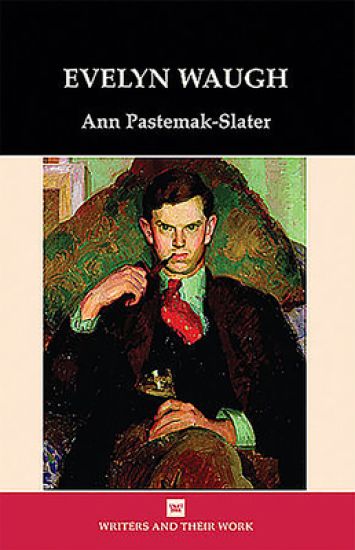
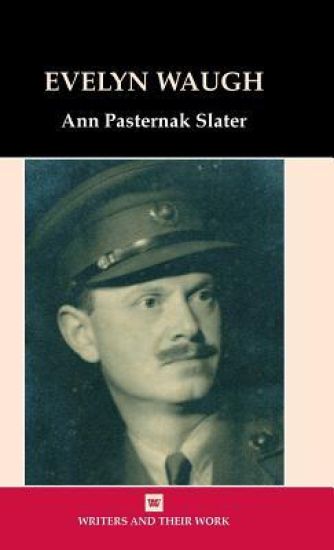
Everyone knows how funny Evelyn Waugh is. One of his finest comic creations was his own increasingly rebarbative public persona – a self-confessed ‘front of pomposity mitigated by indiscretion, that was as hard, bright and antiquated as a cuirass’. No wonder new biographies of Waugh are popular. The life and work cannot be separated. Gathered productively at the writer’s desk are the chaotic and often bizarre details of Waugh’s own life, what he called the ‘adroit jigsaw’ of his unobtrusively elegant aesthetic structures, and his moral coherence. This study shows how Waugh transformed his own experiences into painfully comic, brilliantly constructed novels. They are works, in his own words, of ‘elegance and variety of contrivance’. Ann Pasternak Slater has written an ingenious and engaging study of the relationship between Waugh’s life and work, between his sharp moral vision and Dionysiac comic genius. She focuses on Waugh’s entire fictional oeuvre in a book notable for its intelligent sympathy.
Evelyn Waugh

Evelyn Waugh

Ann Pasternak-Slater

Liverpool University Press
2013
sidottu
Everyone knows how funny Evelyn Waugh is. One of his finest comic creations was his own increasingly rebarbative public persona - a self-confessed 'front of pomposity mitigated by indiscretion, that was as hard, bright and antiquated as a cuirass'. No wonder new biographies of Waugh are popular. The life and work cannot be separated. Gathered productively at the writer's desk are the chaotic and often bizarre details of Waugh's own life, what he called the 'adroit jigsaw' of his unobtrusively elegant aesthetic structures, and his moral coherence. This study shows how Waugh transformed his own experiences into painfully comic, brilliantly constructed novels. They are works, in his own words, of 'elegance and variety of contrivance'. Ann Pasternak Slater has written an ingenious and engaging study of the relationship between Waugh's life and work, between his sharp moral vision and Dionysiac comic genius. She focuses on Waugh's entire fictional oeuvre in a book notable for its intelligent sympathy.
Evelyn Waugh and the Modernist Tradition

Evelyn Waugh and the Modernist Tradition

George McCartney

Transaction Publishers
2003
nidottu
In Evelyn Waugh and the Modernist Tradition, George McCartney argues that unlike traditional satirists, Evelyn Waugh was not primarily concerned with correcting morals and manners. Instead, he laid siege to the cultural and metaphysical assumptions of his time. McCartney demonstrates that the one constant in Waugh's work was his lively engagement with contemporary intellectual fashion. It was especially his response to modernism, the zeitgeist of his formative years, that gave his fiction its distinctive energy.McCartney shows how at every turn Waugh's writing pays parodic tribute to modernist esthetics. Although he deplored many of the movement's philosophical premises, he nevertheless admired its methods, borrowing them freely whenever it suited his purposes. In effect, Waugh developed an alternate modernism. Whether it was his playful reworking of Bauhaus and Futurist theory, or his borrowings from film technique, he was determined to take his place in what he called "the advance-guard" despite his avowedly "antique" tastes. Part aesthete, part traditionalist, he appropriated the strategies of experimental art in order to defeat its metaphysical implications. McCartney provides evidence that this ambivalent regard for modernism reveals not only Waugh's interest in aesthetics and philosophy, but also his personal conflicts. For a man who prized rationality, he was remarkably, even notoriously impulsive. McCartney concludes that Waugh's satire sprang not only from his dismay with contemporary intellectual fashions but also from an inward struggle between his orthodox and wayward selves, a struggle that registered the cultural conflicts of his time with uncanny accuracy.In McCartney's reading, Waugh's personal and intellectual ambivalence enabled him to become a prescient critic of our age. The result was a body of work that remains as vital today as when it was written.