
Kirjahaku
Etsi kirjoja tekijän nimen, kirjan nimen tai ISBN:n perusteella.
1000 tulosta hakusanalla White F
White Fish Pate, Smoked Salmon & a Loaf of Raisin Nut Bread ...
Deborah M Cofer
iUniverse
2007
pokkari

White Folks Guide to Understanding the Black Community and Get Out the Vote
Pastor Shannon Wright
Nouveau Ink Publishing
2012
nidottu

It is the early 1980s, and Don MacRobert finds himself in Soweto during the height of apartheid in South Africa and its abuse of human rights. It is here where he sees first-hand how systems of oppression have forced the majority of the nation's population into abject poverty and without the means to provide beyond the basics of survival. Afraid and uncertain, but determined and not alone, Don seeks to overcome his fear - as well as that of the ruling government at the time - in order to bring about greater opportunities for some of the country's poorest and most oppressed people.

THIS YOUNG MAN IS AN EXTREMELY IMPORTANT PERSON FOR THE FUTURE OF MANKIND...An old adversary rears its head in the quest for world domination and the CIA has to deal with numerous threats from this old enemy.An exceptionally talented student is trained to become a ruthless killer.Analytical skill of the CIA agent ensures that the old enemy's plans are thwarted as he exposes these multiple threats.The USA administration is heavily reliant on the CIA to ferret out any impending threat to that nation.Who knows what the consequences of multiple nuclear warheads exploding in space would be.Possible black out of the sun which would drastically affect life on earth leading to starvation within weeks of such an event.The President walked to the sideboard and poured himself a stiff scotch.He returned to his desk, put his feet up, clasped his hands behind his head and pondered what he should do and whether trying to set up a meeting with the President of Russia and the President of the People's Republic of China would solve the problem.Desperate people do desperate things he thought to himself and this could be the end of the world as we know it.
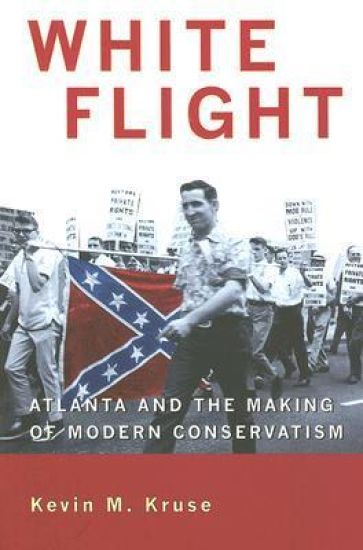
During the civil rights era, Atlanta thought of itself as "The City Too Busy to Hate," a rare place in the South where the races lived and thrived together. Over the course of the 1960s and 1970s, however, so many whites fled the city for the suburbs that Atlanta earned a new nickname: "The City Too Busy Moving to Hate." In this reappraisal of racial politics in modern America, Kevin Kruse explains the causes and consequences of "white flight" in Atlanta and elsewhere. Seeking to understand segregationists on their own terms, White Flight moves past simple stereotypes to explore the meaning of white resistance. In the end, Kruse finds that segregationist resistance, which failed to stop the civil rights movement, nevertheless managed to preserve the world of segregation and even perfect it in subtler and stronger forms. Challenging the conventional wisdom that white flight meant nothing more than a literal movement of whites to the suburbs, this book argues that it represented a more important transformation in the political ideology of those involved. In a provocative revision of postwar American history, Kruse demonstrates that traditional elements of modern conservatism, such as hostility to the federal government and faith in free enterprise, underwent important transformations during the postwar struggle over segregation. Likewise, white resistance gave birth to several new conservative causes, like the tax revolt, tuition vouchers, and privatization of public services. Tracing the journey of southern conservatives from white supremacy to white suburbia, Kruse locates the origins of modern American politics.
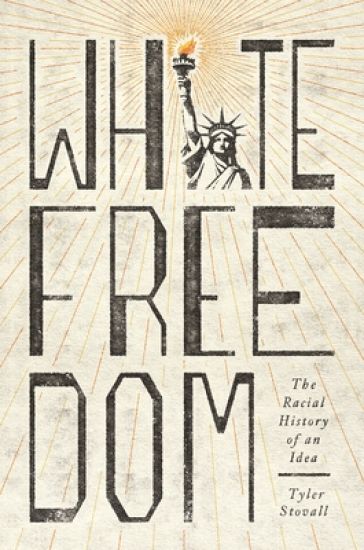
The racist legacy behind the Western idea of freedomThe era of the Enlightenment, which gave rise to our modern conceptions of freedom and democracy, was also the height of the trans-Atlantic slave trade. America, a nation founded on the principle of liberty, is also a nation built on African slavery, Native American genocide, and systematic racial discrimination. White Freedom traces the complex relationship between freedom and race from the eighteenth century to today, revealing how being free has meant being white.Tyler Stovall explores the intertwined histories of racism and freedom in France and the United States, the two leading nations that have claimed liberty as the heart of their national identities. He explores how French and American thinkers defined freedom in racial terms and conceived of liberty as an aspect and privilege of whiteness. He discusses how the Statue of Liberty—a gift from France to the United States and perhaps the most famous symbol of freedom on Earth—promised both freedom and whiteness to European immigrants. Taking readers from the Age of Revolution to today, Stovall challenges the notion that racism is somehow a paradox or contradiction within the democratic tradition, demonstrating how white identity is intrinsic to Western ideas about liberty. Throughout the history of modern Western liberal democracy, freedom has long been white freedom.A major work of scholarship that is certain to draw a wide readership and transform contemporary debates, White Freedom provides vital new perspectives on the inherent racism behind our most cherished beliefs about freedom, liberty, and human rights.
The racist legacy behind the Western idea of freedomThe era of the Enlightenment, which gave rise to our modern conceptions of freedom and democracy, was also the height of the trans-Atlantic slave trade. America, a nation founded on the principle of liberty, is also a nation built on African slavery, Native American genocide, and systematic racial discrimination. White Freedom traces the complex relationship between freedom and race from the eighteenth century to today, revealing how being free has meant being white.Tyler Stovall explores the intertwined histories of racism and freedom in France and the United States, the two leading nations that have claimed liberty as the heart of their national identities. He explores how French and American thinkers defined freedom in racial terms and conceived of liberty as an aspect and privilege of whiteness. He discusses how the Statue of Liberty—a gift from France to the United States and perhaps the most famous symbol of freedom on Earth—promised both freedom and whiteness to European immigrants. Taking readers from the Age of Revolution to today, Stovall challenges the notion that racism is somehow a paradox or contradiction within the democratic tradition, demonstrating how white identity is intrinsic to Western ideas about liberty. Throughout the history of modern Western liberal democracy, freedom has long been white freedom.A major work of scholarship that is certain to draw a wide readership and transform contemporary debates, White Freedom provides vital new perspectives on the inherent racism behind our most cherished beliefs about freedom, liberty, and human rights.
White Faculty at HBCUs: Perceptions of Racial Climate
Safiya D. Hoskins Phd
Ubiquitous Press
2015
nidottu

White Flag: Stories about God and Us and How the Freedom We Want Looks a Lot Like Surrender
Matthew Jones
Rocket Farmer
2015
nidottu

The classic tale of White Fang, half-wolf, half-dog, by Jack London retold for children ready to tackle longer and more complex stories. Part of the Usborne Reading Programme developed with reading experts at the University of Roehampton.

The origins of P&A Campbell's White Funnel Fleet of paddle steamers lie in early nineteenth century Scotland, when the Campbell family began its steamer services on the River Clyde. In the 1880s a series of events led the brothers, Peter and Alexander, to transfer their business from Glasgow to Bristol, where, despite intense competition, they quickly established themselves as the major pleasure steamer operators. As the popularity of marine excursions flourished in the 1890s they increased their fleet, extended their network of Bristol Channel services and ventured into a new enterprise on the south coast of England. The Golden Age of the paddle steamer ended abruptly with the outbreak of the First World War, when, in common with most other fleets of excursion ships, the Admiralty requisitioned the thirteen Campbell vessels principally for minesweeping. At the end of the hostilities the company recommenced its peace-time services, which continued throughout the difficult years of industrial unrest and the Depression, until the outbreak of the Second World War, when the Admiralty, once again, requisitioned the entire fleet, which then consisted of eleven vessels. Only four of those paddle steamers survived to sail again, but after the gradual resumption of sailings in 1946, and with the delivery of three new steamers, the company enjoyed a number of profitable seasons during the early post-war years. In the 1950s, however, the company's fortunes went into decline; partly as a result of its own practices, which failed to keep pace with the changing demands of the public; and partly as a result of rising costs, the increasing trend towards private motoring, and one bad summer after another. Although the company was saved from demise in 1959 and continued its services for a further twenty-one years, economic pressures enforced the disposal of the last of the paddle steamers in 1968. This account of the company's post-war history touches, only briefly, on the broader issues of management and finance. It is concerned, principally, with the activities of the steamers themselves, and has been meticulously researched over many years from a wide variety of sources. The aims of the book are simple - to enable those who have known and loved the paddle steamers to relive their memories of a bygone era, and to introduce younger generations to the exitement and sense of adventure experienced in sailing on the Bristol Channel.

The White Funnel Fleet of P&A Campbell had a long and successful association with England's south coast, with the company's Bristol Channel steamer excursions perhaps being their best-known operation. Covering the period from the 1880s to the 1950s, from the tentative beginnings when brothers Alexander and Peter Campbell took up the challenge of the busy and tempestuous Bristol Channel, this beautifully illustrated history - using many rare and previously unpublished images from the archives of the Paddle Steamer Preservation Society - takes the reader through the golden years of the Victorian and Edwardian eras, the difficult years of the 1920s and 1930s, and the resurgence of the late 1940s before the harsh economic pressures of the 1950s led to the company's decline.Including heart-warming stories from the two world wars, when the ships donned warship grey and swept the sea lanes for mines, as well as fascinating 'White Funnel Trivia', this book evokes the hey-day of the White Funnel Steamers and their enduring appeal.
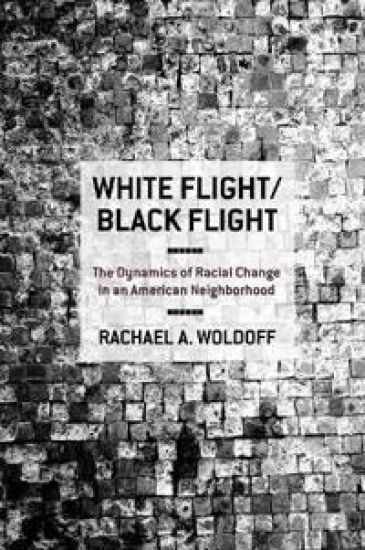
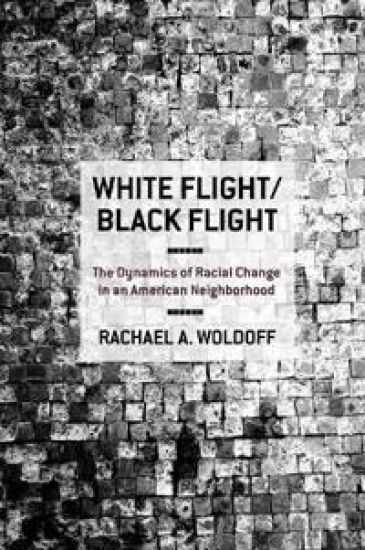
Urban residential integration is often fleeting—a brief snapshot that belies a complex process of racial turnover in many U.S. cities. White Flight/Black Flight takes readers inside a neighborhood that has shifted rapidly and dramatically in race composition over the last two decades. The book presents a portrait of a working-class neighborhood in the aftermath of white flight, illustrating cultural clashes that accompany racial change as well as common values that transcend race, from the perspectives of three groups: white stayers, black pioneers, and "second-wave" blacks. Rachael A. Woldoff offers a fresh look at race and neighborhoods by documenting a two-stage process of neighborhood transition and focusing on the perspectives of two understudied groups: newly arriving black residents and whites who have stayed in the neighborhood. Woldoff describes the period of transition when white residents still remain, though in diminishing numbers, and a second, less discussed stage of racial change: black flight. She reveals what happens after white flight is complete: "Pioneer" blacks flee to other neighborhoods or else adjust to their new segregated residential environment by coping with the loss of relationships with their longer-term white neighbors, signs of community decline, and conflicts with the incoming second wave of black neighbors. Readers will find several surprising and compelling twists to the white flight story related to positive relations between elderly stayers and the striving pioneers, conflict among black residents, and differences in cultural understandings of what constitutes crime and disorder.
Urban residential integration is often fleeting—a brief snapshot that belies a complex process of racial turnover in many U.S. cities. White Flight/Black Flight takes readers inside a neighborhood that has shifted rapidly and dramatically in race composition over the last two decades. The book presents a portrait of a working-class neighborhood in the aftermath of white flight, illustrating cultural clashes that accompany racial change as well as common values that transcend race, from the perspectives of three groups: white stayers, black pioneers, and "second-wave" blacks. Rachael A. Woldoff offers a fresh look at race and neighborhoods by documenting a two-stage process of neighborhood transition and focusing on the perspectives of two understudied groups: newly arriving black residents and whites who have stayed in the neighborhood. Woldoff describes the period of transition when white residents still remain, though in diminishing numbers, and a second, less discussed stage of racial change: black flight. She reveals what happens after white flight is complete: "Pioneer" blacks flee to other neighborhoods or else adjust to their new segregated residential environment by coping with the loss of relationships with their longer-term white neighbors, signs of community decline, and conflicts with the incoming second wave of black neighbors. Readers will find several surprising and compelling twists to the white flight story related to positive relations between elderly stayers and the striving pioneers, conflict among black residents, and differences in cultural understandings of what constitutes crime and disorder.
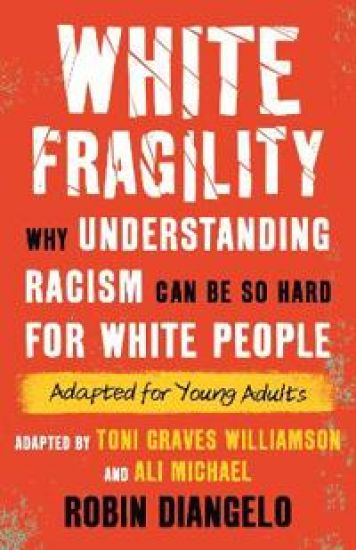
A reimagining of the best-selling book that gives young adults the tools to ask questions, engage in dialogue, challenge their ways of thinking, and take action to create a more racially just world. "I was taught to treat everyone the same." "I don't see color." "My parents voted for Obama." When white people have the opportunity to think and talk about race and racism, they more often than not don't know how. In this adaptation of Dr. Robin DiAngelo's best-selling book White Fragility, anti-racist educators Toni Graves Williamson and Ali Michael explain the concept of systemic racism to young adult readers and how to recognize it in themselves and the world around them. Along the way, Williamson and Michael provide tools for taking action to challenge systems of inequity and racism as they move into adulthood. Throughout the book, readers will find the following: A dialogue between the adaptors that models anti-racist discussionsDefinitions of key termsPersonal stories from this multiracial teamDiscussion prompts to encourage readers to journal their reactions and feelingsIllustrations to help concepts of white fragility and systemic racism come alivePortraits of scholars and activists, including Carol Anderson, Ta-Nehisi Coates, and Ijeoma Oluo, whose work is amplified throughout Dr. DiAngelo's theory of white fragility.
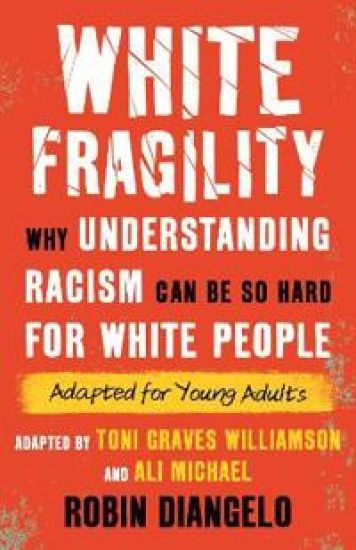
A reimagining of the best-selling book that gives young adults the tools to ask questions, engage in dialogue, challenge their ways of thinking, and take action to create a more racially just world. "I was taught to treat everyone the same." "I don't see color." "My parents voted for Obama." When white people have the opportunity to think and talk about race and racism, they more often than not don't know how. In this adaptation of Dr. Robin DiAngelo's best-selling book White Fragility, anti-racist educators Toni Graves Williamson and Ali Michael explain the concept of systemic racism to young adult readers and how to recognize it in themselves and the world around them. Along the way, Williamson and Michael provide tools for taking action to challenge systems of inequity and racism as they move into adulthood. Throughout the book, readers will find the following: - A dialogue between the adaptors that models anti-racist discussions - Definitions of key terms - Personal stories from this multiracial team - Discussion prompts to encourage readers to journal their reactions and feelings - Illustrations to help concepts of white fragility and systemic racism come alive - Portraits of scholars and activists, including Carol Anderson, Ta-Nehisi Coates, and Ijeoma Oluo, whose work is amplified throughout Dr. DiAngelo's theory of white fragility.

White Fragility: Why It's So Hard for White People to Talk about Racism
Robin Diangelo
BEACON PRESS
2020
sidottu
The New York Times best-selling book exploring the counterproductive reactions white people have when their assumptions about race are challenged, and how these reactions maintain racial inequality. In this "vital, necessary, and beautiful book" (Michael Eric Dyson), antiracist educator Robin DiAngelo deftly illuminates the phenomenon of white fragility and "allows us to understand racism as a practice not restricted to 'bad people' (Claudia Rankine). Referring to the defensive moves that white people make when challenged racially, white fragility is characterized by emotions such as anger, fear, and guilt, and by behaviors including argumentation and silence. These behaviors, in turn, function to reinstate white racial equilibrium and prevent any meaningful cross-racial dialogue. In this in-depth exploration, DiAngelo examines how white fragility develops, how it protects racial inequality, and what we can do to engage more constructively.