
Kirjahaku
Etsi kirjoja tekijän nimen, kirjan nimen tai ISBN:n perusteella.
1000 tulosta hakusanalla Wilhelm Deimann

Wilhelm Meister's Apprenticeship and Travels V2 (1824)
Johann Wolfgang von Goethe
KESSINGER PUBLISHING CO
2007
pokkari
Wilhelm Meister's Apprenticeship
Johann Wolfgang Von Goethe; Thomas (TRN) Carlyle
Kessinger Pub
2007
pokkari


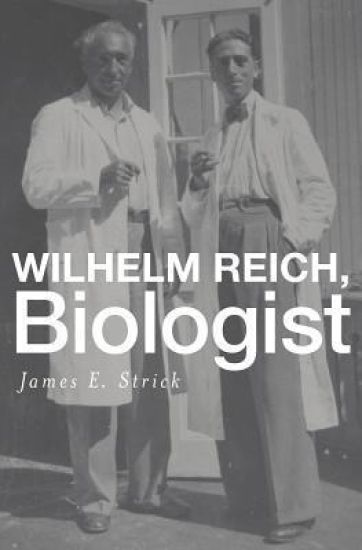
Psychoanalyst, political theorist, pioneer of body therapies, prophet of the sexual revolution—all fitting titles, but Wilhelm Reich has never been recognized as a serious laboratory scientist, despite his experimentation with bioelectricity and unicellular organisms. Wilhelm Reich, Biologist is an eye-opening reappraisal of one of twentieth-century science’s most controversial figures—perhaps the only writer whose scientific works were burned by both the Nazis and the U.S. government. Refuting allegations of “pseudoscience” that have long dogged Reich’s research, James Strick argues that Reich’s lab experiments in the mid-1930s represented the cutting edge of light microscopy and time-lapse micro-cinematography and deserve to be taken seriously as legitimate scientific contributions.Trained in medicine and a student of Sigmund Freud, Reich took to the laboratory to determine if Freud’s concept of libido was quantitatively measurable. His electrophysiological experiments led to his “discovery” of microscopic vesicles (he called them “bions”), which Reich hypothesized were instrumental in originating life from nonliving matter. Studying Reich’s laboratory notes from recently opened archives, Strick presents a detailed account of the bion experiments, tracing how Reich eventually concluded he had discovered an unknown type of biological radiation he called “orgone.” The bion experiments were foundational to Reich’s theory of cancer and later investigations of orgone energy.Reich’s experimental findings and interpretations were considered discredited, but not because of shoddy lab technique, as has often been claimed. Scientific opposition to Reich’s experiments, Strick contends, grew out of resistance to his unorthodox sexual theories and his Marxist political leanings.
Introduction to the Human Sciences carries forward a projected six-volume translation series of the major writings of Wilhelm Dilthey (1833-1911)--a philosopher and historian of culture who has had a strong and continuing influence on twentieth-century Continental philosophy as well as a broad range of other scholarly disciplines. In addition to his landmark works on the theories of history and the human sciences, Dilthey made important contributions to hermeneutics and phenomenology, aesthetics, psychology, and the methodology of the social sciences. The Selected Works will make accessible to English-speaking readers the full range of Dilthey's thought, including some historical essays and literary criticism. The series provides translations of complete texts, together with editorial notes, and contains manuscript materials that are currently being published for the first time in Germany. This volume brings together the various parts of the Introduction to the Human Sciences published separately in the German edition. Rudolf Makkreel and Frithjof Rodi have underscored the systematic character of Dilthey's theory of the human sciences by translating the bulk of Dilthey's first volume (published in 1883) and his important drafts for the never-completed second volume.
This is the fifth volume in a six-volume translation of the major writings of Wilhelm Dilthey (1833-1911), a philosopher and historian of culture who has had a significant, and continuing, influence on twentieth-century Continental philosophy and in a broad range of scholarly disciplines. In addition to his landmark works on the theories of history and the human sciences, Dilthey made important contributions to hermeneutics and phenomenology, aesthetics, psychology, and the methodology of the social sciences. This volume presents Dilthey's principal writings on aesthetics and the philosophical understanding of poetry, as well as representative essays of literary criticism. The essay "The Imagination of the Poet" (also known as his Poetics) is his most sustained attempt to examine the philosophical bearings of literature in relation to psychological and historical theory. Also included are "The Three Epochs of Modern Aesthetics and its Present Task," "Fragments for a Poetics," and two final essays discussing Goethe and Holderlin. The latter are drawn from Das Erlebnis und die Dichtung, a volume that was acclaimed on publication as a classic of literary criticism and that continues to be a model for the geistesgeschichtliche approach to literary history.
This is the second volume in a six-volume translation of the major writings of Wilhelm Dilthey (1833-1911), a philosopher and historian of culture who continues to have a significant influence on Continental philosophy and a broad range of scholarly disciplines. In addition to his landmark works on the theories of history and the human sciences, Dilthey made important contributions to hermeneutics, phenomenology, aesthetics, psychology, and the methodology of the social sciences. This volume presents Dilthey's main theoretical works from the 1890s, the period between the "Introduction to the Human Sciences" and "The Formation of the Historical World". A common thread of the writings included here is an interest in the relation between the self and the world. In "The Origin of Our Belief in the Reality of the External World and Its Justification", Dilthey argues that our engagement with the world is rooted in our practical drives and the resistance they meet. The basic nexus of our beliefs about reality is volitional rather than representational. The next essay, "Life and Cognition", examines the main categories with which we organize our experience of life into an understanding of the human world: selfsameness; doing and undergoing; and, essentiality. These categorial relations are further articulated with the aid of Dilthey's structural psychology in ways that rival some of the insights of phenomenology. This occurs in "The Ideas for a Descriptive and Analytic Psychology". By focusing on how lived experience places everything in a temporal continuum that can be described and analyzed, Dilthey saw the opportunity to establish a structural psychology that could be of great use to the human sciences in general. In the final essay, "Contributions to the Study of Individuality", Dilthey attacks Windelband's thesis that the human sciences are idiographic. Many human sciences have systematic and structural aims that combine the study of uniformities with the examination of individuation. Applying the comparative method, Dilthey argues that living beings share many basic similarities within which typical variations tend to recur. For human individuation, however, the specification of the historical nexus is also essential.
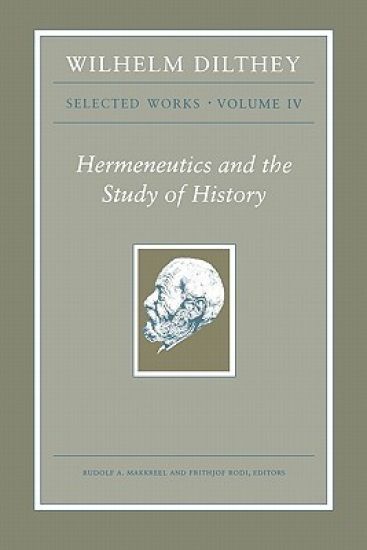
The philosopher and historian of culture Wilhelm Dilthey (1833-1911) has had a significant and continuing influence on twentieth-century Continental philosophy and in a broad range of scholarly disciplines. This volume is the third to be published in Princeton University Press's projected six-volume series of his most important works. Part One makes available three of his works on hermeneutics and its history: "Schleiermacher's Hermeneutical System in Relation to Earlier Protestant Hermeneutics" (The Prize Essay of 1860); "On Understanding and Hermeneutics" (1867-68), based on student lecture notes, and the "The Rise of Hermeneutics" (1900), which traces the history of hermeneutics back to Hellenistic Greece. All the addenda to this well-known essay are translated here, some for the first time. In them Dilthey articulates three philosophical aporias concerning hermeneutics and projects an ultimate convergence between understanding and explanation. Part Two provides translations of review essays by Dilthey on Buckle's use of statistical history and on Burckhardt's cultural history; an essay "Friedrich Schlosser and the Problem of Universal History;" and a talk recalling his early years as a student of Boeckh, Jakob Grimm, Mommsen, Ranke, and Ritter. It also contains the important historical essay "The Eighteenth Century and the Historical World," in which Dilthey reexamines the Enlightenment to show its significant contributions to the rise of historical consciousness.
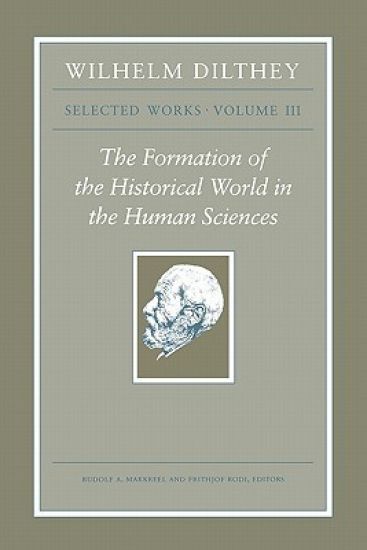
This volume provides Dilthey's most mature and best formulation of his Critique of Historical Reason. It begins with three "Studies Toward the Foundation of the Human Sciences," in which Dilthey refashions Husserlian concepts to describe the basic structures of consciousness relevant to historical understanding. The volume next presents the major 1910 work The Formation of the Historical World in the Human Sciences. Here Dilthey considers the degree to which carriers of history--individuals, cultures, institutions, and communities--can be articulated as productive systems capable of generating value and meaning and of realizing purposes. Hegel's idea of objective spirit is reconceived in a more empirical form to designate the medium of commonality in which historical beings are immersed. Any universal claims about history need to be framed within the specific productive systems analyzed by the various human sciences. Dilthey's drafts for the Continuation of the Formation contain extensive discussions of the categories most important for our knowledge of historical life: meaning, value, purpose, time, and development. He also examines the contributions of autobiography to historical understanding and of biography to scientific history. The finest summary of Dilthey's views on hermeneutics can be found in "The Understanding of Other Persons and Their Manifestations of Life." Here, Dilthey differentiates understanding relative to three kinds of manifestations of life. After giving his analysis of elementary understanding, he examines the role of induction in higher understanding and interpretation, and the relevance of transposition and re-experiencing for grasping individuality.
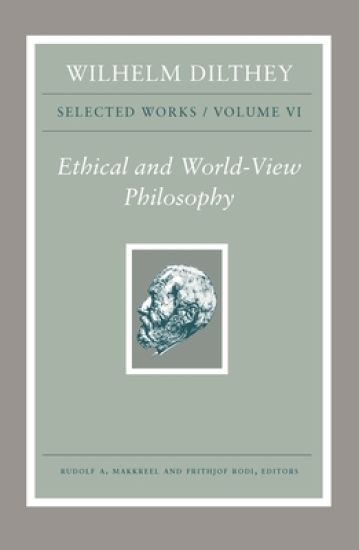
This book completes a landmark six-volume translation of the major writings of Wilhelm Dilthey (1833–1911), a philosopher and historian of culture who continues to have a significant influence on philosophy, hermeneutics, and the theory of the human sciences. These volumes make available to English readers texts that represent the full range of Dilthey's work.The works in this volume present Dilthey's most deeply held views about philosophy and how it can guide human practices. System of Ethics (1890) argues that Humean sympathy motivates us only externally and must be replaced with the internally motivated fellow-feeling of solidarity that respects others as ends in themselves. The Essence of Philosophy (1907) demonstrates how philosophy has developed from its traditional metaphysical role to the epistemological and encyclopedic functions that ground and order the natural and human sciences. The work also discloses an orientational function of philosophy that is explored further in "The Types of World-View and Their Development" (1911). Philosophical world-views are important in that they address the existential needs and riddles that grow out of life experience and are not solved by any of the sciences.In addition, the book features three other significant essays. "Present Day Culture and Philosophy" (1898) concerns the challenges to philosophy posed by contemporary culture. "Dream" (1903) is about the thinkers portrayed in Raphael's School of Athens and Dilthey's worries about them breaking up into three divergent groups. Finally, "The Problem of Religion" (1911) considers how religiosity can still inform lived experience in secular times.
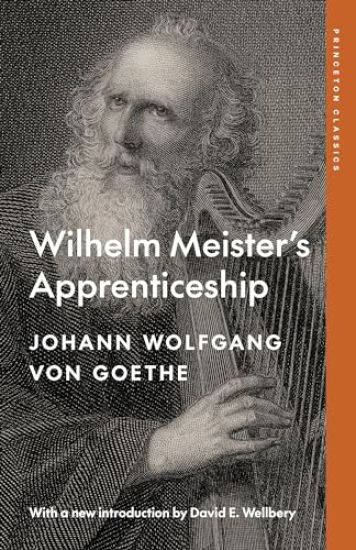
An authoritative English translation of one of the most important works in the history of the novelWilhelm Meister’s Apprenticeship (1795–1796), Goethe’s second novel, is a foundational work in the history of the genre—perhaps the first Bildungsroman, a coming-of-age story focusing on the growth and self-realization of the main character. The story centers on Wilhelm, a young man living in the mid-1700s who strives to break free from the restrictive bourgeois world of his upbringing and seek fulfillment as an actor and playwright. Goethe’s novel had a huge impact on the Romantics. Hegel, Schelling, Novalis, and Schopenhauer considered it one of the most important novels yet written. Schlegel famously called it one of the “three tendencies of the age,” along with the French Revolution and the philosophy of Fichte. And Beethoven, Schubert, and Schumann set poems from the novel to music. It also had a major influence on nineteenth-century British writers, including Thomas Carlyle, who was its first English translator, and George Eliot. Drawn from Princeton’s authoritative collected works of Goethe, and featuring a new introduction by David Wellbery, this is the definitive English version of a landmark of world literature.
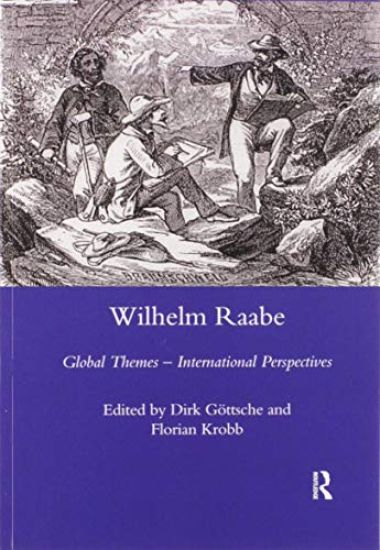
The book is divided into three parts: an overview of Raabc's career, his problems with the public, and the early reception history that did so much to damage his reputation; thematic analyses that seek to release him from received opinions concerning the nature and quality of his oeuvre by exhibiting his versatility and polyperspectivism; and interpretations of individual works. Originally published in 1987. The Princeton Legacy Library uses the latest print-on-demand technology to again make available previously out-of-print books from the distinguished backlist of Princeton University Press. These editions preserve the original texts of these important books while presenting them in durable paperback and hardcover editions. The goal of the Princeton Legacy Library is to vastly increase access to the rich scholarly heritage found in the thousands of books published by Princeton University Press since its founding in 1905.

The book is divided into three parts: an overview of Raabc's career, his problems with the public, and the early reception history that did so much to damage his reputation; thematic analyses that seek to release him from received opinions concerning the nature and quality of his oeuvre by exhibiting his versatility and polyperspectivism; and interpretations of individual works. Originally published in 1987. The Princeton Legacy Library uses the latest print-on-demand technology to again make available previously out-of-print books from the distinguished backlist of Princeton University Press. These editions preserve the original texts of these important books while presenting them in durable paperback and hardcover editions. The goal of the Princeton Legacy Library is to vastly increase access to the rich scholarly heritage found in the thousands of books published by Princeton University Press since its founding in 1905.
Wilhelm II (1859-1941), King of Prussia and German Emperor from 1888 to 1918, reigned during a period of unprecedented economic, cultural, and intellectual achievement in Germany. This volume completes Lamar Cecil's prize-winning scholarly biography of the Kaiser, one of modern history's most powerful--and most misunderstood--rulers. As Cecil shows, Wilhelm's private life reflects a deeply troubled and very superficial man. But the book's larger focus is on Wilhelm as a head of state. Cecil traces the events of the years leading up to World War I, a period that offers ample evidence of the Kaiser's inept conduct of foreign affairs, especially relations with England. Once war broke out, his generals and statesmen kept him on the sidelines. He was dethroned on November 9, 1918, when a socialist republic was established in Berlin, and he fled in exile to Holland, where he resided for the remaining twenty-three years of his life, working energetically, but to no avail, for his restoration to the throne. A UNC Press Enduring Edition -- UNC Press Enduring Editions use the latest in digital technology to make available again books from our distinguished backlist that were previously out of print. These editions are published unaltered from the original, and are presented in affordable paperback formats, bringing readers both historical and cultural value.Coming Soon: Wilhelm II Volume 1: Prince and Emperor, 1859-1900 by Lamar Cecil (A UNC Press Enduring Edition)
Wilhelm II (1859-1941), King of Prussia and German Emperor from 1888 to 1918, reigned during a period of unprecedented economic, cultural, and intellectual achievement in Germany. Unlike most European sovereigns of his generation, Wilhelm was no mere figurehead, and his imprint on imperial Germany was profound. In this book and a second volume, historian Lamar Cecil provides the first comprehensive biography of one of modern history's most powerful--and most misunderstood--rulers. Wilhelm II: Prince and Emperor, 1859-1900 concentrates on Wilhelm's youth. As Cecil shows, the future ruler's Anglo-German genealogy, his education, and his subsequent service as an officer in the Prussian army proved to be unfortunate legacies in shaping Wilhelm's behavior and ideas. Throughout his thirty-year reign, Wilhelm's connection with his subjects was tenuous. He surrounded himself with a small coterie of persons drawn from the government, the military, and elite society, most of whom were valued not for their ability but for their loyalty to the crown. They, in turn, contrived to keep Wilhelm isolated from outside influences, learned to be accomplished in catering to his prejudices, and strengthened his conviction that the government should be composed only of those who agreed with him. The day-to-day conduct of Germany's affairs was left in the hands of these loyal followers, for the Kaiser himself did not at all enjoy work. Rejoicing instead in pageantry and the superficial trappings of authority, he was particular about what he did and what he read, eliminating anything that was unpleasant, difficult, or tedious. He never learned to listen, to reason, or to make decisions in a sound, informed manner; he was customarily inclined to act solely on the basis of his personal feelings.Many people believed him to be mad. Even courtiers who admired Wilhelm recognized that he was responsible for the diplomatic embarrassment in which Germany found itself by 1914 and that the Kaiser's maladroit behavior endangered the prestige of the Hohenzollern crown. His is the story of a bizarre and incapable sovereign who never doubted that he possessed both genius and divine inspiration.A UNC Press Enduring Edition -- UNC Press Enduring Editions use the latest in digital technology to make available again books from our distinguished backlist that were previously out of print. These editions are published unaltered from the original, and are presented in affordable paperback formats, bringing readers both historical and cultural value.