Kirjojen hintavertailu. Mukana 11 244 527 kirjaa ja 12 kauppaa.

Kirjahaku

Etsi kirjoja tekijän nimen, kirjan nimen tai ISBN:n perusteella.

1000 tulosta hakusanalla Wilhelm Herrmann

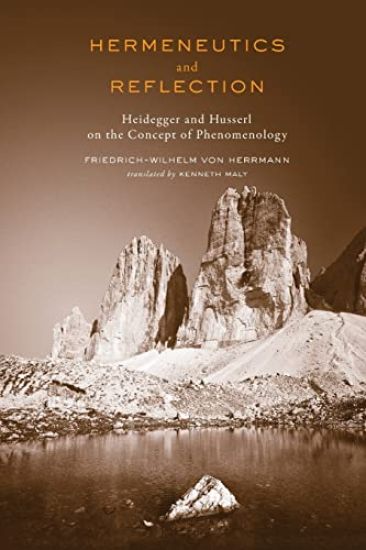
Hermeneutics and Reflection

Hermeneutics and Reflection

Friedrich-Wilhelm Von Herrmann

UNIVERSITY OF TORONTO PRESS
2022
pokkari
Friedrich-Wilhelm von Herrmann is known as a major figure in phenomenological and hermeneutics research: he was Martin Heidegger’s personal assistant for the last ten years of Heidegger’s life, and assistant to Eugen Fink, who in turn was primary assistant to Edmund Husserl. However, his own philosophical commentaries and readings of Heidegger’s work are not familiar to many in the English-speaking world. Von Herrmann’s Hermeneutics and Reflection, translated here from the original German, represents the most fundamental and critical reflection in any language of the concept of phenomenology as it was used by Heidegger and by Husserl. It provides a careful rendition of Husserl’s essential contribution to phenomenology, then draws a clear demarcation between Husserl’s reflective phenomenology and Heidegger’s hermeneutic phenomenology. While showing the fullest respect for Husserl’s phenomenology, Hermeneutics and Reflection offers a full-fledged critique of Husserl from the perspective of Heidegger’s hermeneutic phenomenology.
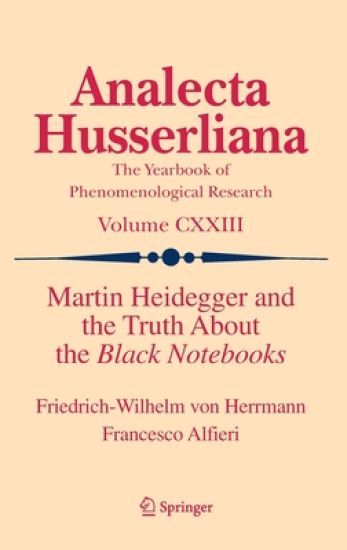
Martin Heidegger and the Truth About the Black Notebooks

Martin Heidegger and the Truth About the Black Notebooks

Friedrich-Wilhelm Von Herrmann; Francesco Alfieri

Springer Nature Switzerland AG
2021
sidottu
Toward the beginning of 2013, I received reports of passages in the Black Notebooks that offered observations on Jewry, or as the case may be, world Jewry. It immediately became clear to me that the publication of the Black Notebooks would call forth a wide-spread international debate. Already in the Spring of 2013, I had asked Professor Friedrich-Wilhelm von Herrmann, last private assistant – and in the words of my grandfather, the “chief co-worker of the complete edition”, – if he might review the Notebooks as a whole, based on his profound insight into the thought of Martin Heidegger, and in particular, review those Jewish-related passages that were the focus of the public eye.Publications about the Black Notebooks quickly came to propagate catchy expressions such as “being-historical anti-Semitism” and “metaphysical anti-Semitism”. The first question that obviously arises is: Does the thought of Martin Heidegger exhibit any kind of anti-Semitism at all?In this book Professor von Herrmann now advances his hermeneutic explication. With Professor Francesco Alfieri of the Pontificia Università Lateranense he has found a colleague who has drawn up a comprehensive philological analysis of volumes GA 94 through GA 97 of the Complete Edition.The fact that Heidegger designated the hitherto published “black notebooks” as Ponderings (Überlegungen) and as Observations (Anmerkungen) has been given little consideration. He intentionally placed them at the conclusion of the Complete Edition because without acquaintance with the lectures, and above all, with the being-historical treatises that would come to be published in the framework of the Complete Edition, they would not be comprehensible. (Arnulf Heidegger)
Martin Heidegger and the Truth About the Black Notebooks

Martin Heidegger and the Truth About the Black Notebooks

Friedrich-Wilhelm von Herrmann; Francesco Alfieri

Springer Nature Switzerland AG
2022
nidottu
Toward the beginning of 2013, I received reports of passages in the Black Notebooks that offered observations on Jewry, or as the case may be, world Jewry. It immediately became clear to me that the publication of the Black Notebooks would call forth a wide-spread international debate. Already in the Spring of 2013, I had asked Professor Friedrich-Wilhelm von Herrmann, last private assistant – and in the words of my grandfather, the “chief co-worker of the complete edition”, – if he might review the Notebooks as a whole, based on his profound insight into the thought of Martin Heidegger, and in particular, review those Jewish-related passages that were the focus of the public eye.Publications about the Black Notebooks quickly came to propagate catchy expressions such as “being-historical anti-Semitism” and “metaphysical anti-Semitism”. The first question that obviously arises is: Does the thought of Martin Heidegger exhibit any kind of anti-Semitism at all?In this book Professor von Herrmann now advances his hermeneutic explication. With Professor Francesco Alfieri of the Pontificia Università Lateranense he has found a colleague who has drawn up a comprehensive philological analysis of volumes GA 94 through GA 97 of the Complete Edition.The fact that Heidegger designated the hitherto published “black notebooks” as Ponderings (Überlegungen) and as Observations (Anmerkungen) has been given little consideration. He intentionally placed them at the conclusion of the Complete Edition because without acquaintance with the lectures, and above all, with the being-historical treatises that would come to be published in the framework of the Complete Edition, they would not be comprehensible. (Arnulf Heidegger)
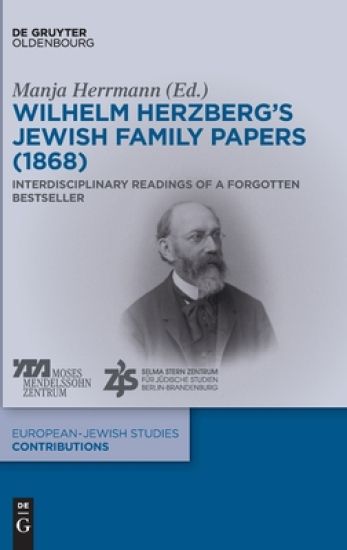
Wilhelm Herzberg’s Jewish Family Papers (1868)
Wilhelm Herzberg’s novel Jewish Family Papers, which was first published under a pseudonym in 1868, was one of the bestselling German-Jewish books of the nineteenth century. Its numerous editions, reviews, and translations – into Dutch, English, and Hebrew – are ample proof of its impact. Herzberg’s Jewish Family Papers picks up on some of the most central contemporary philosophical, religious, and social debates and discusses aspects such as emancipation, antisemitism, Jewishness and Judaism, nationalism, and the Christian religion and culture, as well as gender roles. So far, however, the novel has not received the scholarly attention it so assuredly deserves. This bilingual volume is the first attempt to acknowledge how this outstanding source can contribute to our understanding of German-Jewish literature and culture in the nineteenth century and beyond. Through interdisciplinary readings, it will discuss this forgotten bestseller, embedding it within various contemporary discourses: religion, literature, emancipation, nationalism, culture, transnationalism, gender, theology, and philosophy.
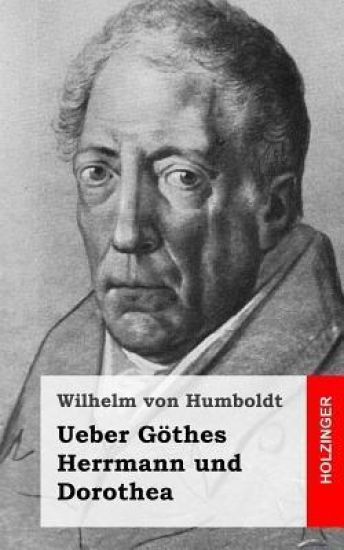
Ueber Göthes Herrmann und Dorothea

Ueber Göthes Herrmann und Dorothea

Wilhelm Von Humboldt

Createspace Independent Publishing Platform
2013
nidottu
Wilhelm von Humboldt: Ueber G thes Herrmann und Dorothea Edition Holzinger. Taschenbuch Berliner Ausgabe, 2013 Vollst ndiger, durchgesehener Neusatz mit einer Biographie des Autors bearbeitet und eingerichtet von Michael Holzinger Erstdruck in: Wilhelm von Humboldt: Aesthetische Versuche, 1. Theil, Braunschweig (Vieweg) 1799. Textgrundlage ist die Ausgabe: Wilhelm von Humboldt: Werke in f nf B nden. Herausgegeben von Andreas Flitner und Klaus Giel, Darmstadt: Wissenschaftliche Buchgemeinschaft, 1963. Herausgeber der Reihe: Michael Holzinger Reihengestaltung: Viktor Harvion Umschlaggestaltung unter Verwendung des Bildes: Wilhelm von Humboldt, Kreidezeichnung von Johann Joseph Schmeller Gesetzt aus Minion Pro, 10 pt
Irgendwie fuehl ich mich wie Frodo...!

Irgendwie fuehl ich mich wie Frodo...!

Wilhelm Gr?b; J?rg Herrmann

Peter Lang AG
2006
nidottu
Medienreligion ist ein Massenphanomen. Jeder Mensch in der modernen Mediengesellschaft partizipiert in der einen oder anderen Weise an diesem Prozess der Verstandigung des Subjektes uber sich selbst und die Welt. Medienreligion versteht sich so als Vollzug der subjektiv-persoenlichen Anverwandlung medialer Sinnmuster. Was aber haben Kinofilme wie Der Herr der Ringe -Die Gefahrten, Lola rennt und Fight Club mit Religion zu tun? Und wie werden die religioesen Sinngehalte von Kinofilmen individuell angeeignet? Die Studie geht diesen Fragen in der Kombination von Werk- und Rezeptionsanalysen popularer Kinofilme nach und legt damit die erste empirische Untersuchung zur These der Medienreligion vor.
Präparationsmethodik in der Elektronenmikroskopie

Präparationsmethodik in der Elektronenmikroskopie

David G. Robinson; K. Mühlethaler; Ulrich Ehlers; Rainer Herken; Bernd Herrmann; Frank Mayer; Friedrich-Wilhelm Schürmann

Springer-Verlag Berlin and Heidelberg GmbH Co. K
1985
nidottu
Als im Jahre 1939 in Berlin im Laboratorium fur Elektronenoptik der Siemens & Halske AG die ersten Elektronenmikroskope serienmassig fabriziert wurden, stan- den den Biologen und Medizinern unerwartet Gerate zur Verfugung, welche das Aufloesungsvermoegen der Lichtmikroskope um das 100fache ubertrafen. Der sofor- tigen und breiten Anwendung dieses neuen Verfahrens in der Erforschung der zel- lularen Strukturen standen aber fast unuberwindliche praparative Schwierigkeiten im Wege. Die bisher in der Lichtmikroskopie verwendete Mikrotechnik konnte nicht ubernommen werden, weil selbst die feinsten Paraffinschnitte von den Elek- tronen nicht durchstrahlt werden konnten. Viele damals kompetente Biologen und Mediziner ausserten auch die Befurchtung, dass die im Hochvakuum befindlichen Objekte durch die vollstandige Entwasserung verandert und schliesslich durch die absorbierte Elektronenenergie bis zu einem rudimentaren Kohlenstoffskelett abge- baut werden wurden. Es schien auch zweifelhaft, ob es gelingen wurde, Dunn- schnitte in der Groessenordnung von 0,5 j. Lm aus den heterogen zusammengesetzten biologischen Praparaten herzustellen. Man besass ploetzlich ein voellig neuartiges In- strument, das gegenuber dem Lichtmikroskop eine um zwei Zehnerpotenzen hoehe- re Aufloesung ermoeglichte, aber keine dafur geeignete Praparationstechnik I Diese skeptische Einstellung zur Anwendung des Elektronenmikroskopes in der Biologie und Medizin wurde gleichzeitig auch durch die Lehrmeinung der damals aktuellen Kolloidchemie unterstutzt, in der postuliert wurde, dass es im amikrosko- pischen Bereich der lebenden Strukturen keine stabilen Bauelemente gebe, die man mit diesem Gerat abbilden koennte. Man stellte sich damals das Cytoplasma, die Kernmatrix, den Inhalt der Mitochondrien und Plastiden als ein amorphes, homo- genes Gelgerust ohne definierte Strukturhierarchie vor.
Methods of Preparation for Electron Microscopy

Methods of Preparation for Electron Microscopy

David G. Robinson; K. Mühlethaler; Ulrich Ehlers; Rainer Herken; Bernd Herrmann; Frank Mayer; Friedrich-Wilhelm Schürmann

Springer-Verlag Berlin and Heidelberg GmbH Co. K
1987
nidottu
In 1939, when the electron optics laboratory of Siemens & Halske Inc. began to manufacture the first electron microscopes, the biological and medical profes­ sions had an unexpected instrument at their disposal which exceeded the reso­ lution of the light microscope by more than a hundredfold. The immediate and broad application of this new tool was complicated by the overwhelming prob­ lems inherent in specimen preparation for the investigation of cellular struc­ tures. The microtechniques applied in light microscopy were no longer appli­ cable, since even the thinnest paraffin layers could not be penetrated by electrons. Many competent biological and medical research workers expressed their anxiety that objects in high vacuum would be modified due to complete dehydration and the absorbed electron energy would eventually cause degrada­ tion to rudimentary carbon backbones. It also seemed questionable as to whether it would be possible to prepare thin sections of approximately 0. 5 11m from heterogeneous biological specimens. Thus one was suddenly in posses­ sion of a completely unique instrument which, when compared with the light microscope, allowed a 10-100-fold higher resolution, yet a suitable preparation methodology was lacking. This sceptical attitude towards the application of electron microscopy in bi­ ology and medicine was supported simultaneously by the general opinion of colloid chemists, who postulated that in the submicroscopic region of living structures no stable building blocks existed which could be revealed with this apparatus.
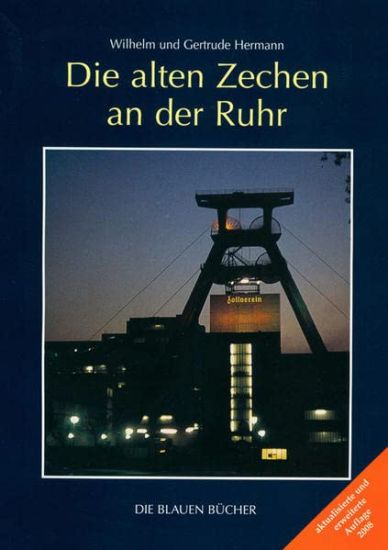
Die alten Zechen an der Ruhr

Die alten Zechen an der Ruhr

Wilhelm Hermann; Gertrude Hermann

Langewiesche K.R.
2008
sidottu
Dieses Lesebuch, Nachschlagewerk und Bilderbuch in einem behandelt nahezu alle Aspekte einer Schlüsselindustrie der Zeit zwischen etwa 1850 und 2007. Der Katalogteil bietet ?Lebensgeschichten? von fast 500 Zechen vom Mittelalter bis heute: Zechen und Schachtnamen, Förderkapazität, Beschäftigte, technische Neuerungen, Erst-Einsätze, bauliche Besonderheiten, besondere Ereignisse, Stilllegungen, Denkmalschutz und Umweltschutz.