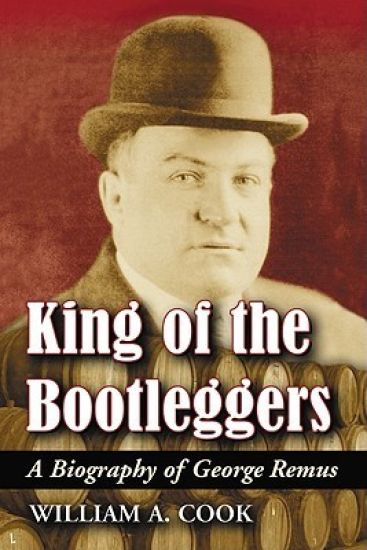
As a pharmacist turned lawyer turned master prohibition era bootlegger, George Remus is now remembered as one of the most notorious figures of the American prohibition. Even though he was a lifelong teetotaler, Remus built one of the nation's largest illegal liquor empires with little regard to disguises or secrecy. This biography tells the complete story of Remus' private life and public persona, focusing especially on the turbulent rise and fall of his bootlegging kingdom. It begins with an overview of Remus' early life and careers in pharmacy and law, and covers his bootlegging career, including his overwhelmingly successful early business ventures, his 1922 bootlegging conviction, his murder of wife Imogene (after she had a well-publicized affair with prohibition agent Franklin Dodge), and Remus' subsequent trial for her murder.
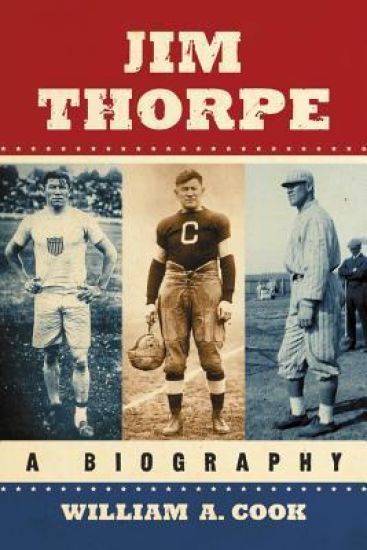
Most biographies of Jim Thorpe (1888-1953) emphasize his Olympic glory and his remarkable abilities in track and football. Thorpe's 1912 gold medals in the decathalon and pentathalon and his talent on the gridiron rank him high among outstanding athletes of the twentieth century. That Thorpe also played brilliantly on the baseball diamond is an often overlooked facet of his career. This narrative of Thorpe's rise and fall in American sports pays particular attention to his time in the major and minor leagues, including his stormy relationship with New York Giants manager John McGraw and baseball's role in stripping Thorpe of his Olympic medals. By chronicling Thorpe's involvement in baseball, football and track concurrently, this profile offers a complete portrait of one of the most versatile athletes in sports history.
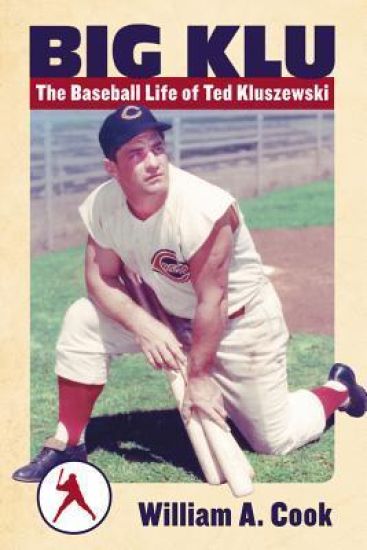
During the mid-1950s, an unlikely star stood alongside baseball standouts Mickey Mantle, Henry Aaron and Willie Mays--a slugger with a funny name and muscles so bulging that he had to cut the sleeves off his uniform to swing freely. Ted Kluszewski played little baseball in his youth, making a name for himself instead as a hard-hitting football player at Indiana University before showing potential on the diamond and being signed by the Cincinnati Reds. Between 1953 and 1956, no other player in major league baseball hit more home runs than Kluszewski. If not for a back injury, he might have gone down in major league history as one its greatest players. With detailed statistics from both his football and baseball careers, this biography chronicles the unusual odyssey that took Kluszewski to the big leagues and ultimately made him a ballgame icon in the 1950s.
Born in Austin, Texas, in 1899, Bibb August Falk was the classic stereotype of a Texan, standing six feet. He brimmed with confidence and played the game of baseball with swagger. He played three years of varsity football and baseball at the University of Texas before being signed by the Chicago White Sox following graduation in 1920. Falk reported to the Sox that summer without having played a single minor league game. In just a couple of months, he--an untested rookie--would confront the challenge of replacing Shoeless Joe Jackson, newly banned from organized ball for complicity in the 1919 World Series scandal. Retiring from the major leagues in 1931 after a brilliant career, Falk returned to the University of Texas in 1940 as head baseball coach and became a Longhorn legend. During his 25 years as head coach, his teams won two National Championships, 15 Southwest Conference titles and four co-championships. When Bibb Falk died in June 1989, at the age of 90, he was the last surviving member of the 1920 Chicago White Sox.
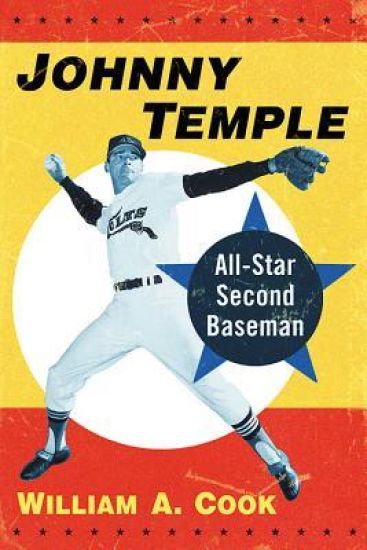
Cincinnati Reds leadoff hitter Johnny Temple batted over .300 three times between 1954 and 1959. A tobacco chewing and tough-talking hustler, he had a fiery disposition on the field, which led many sportswriters, teammates and opposing players to refer to him as a throwback to baseball's early days--an Eddie Stanky or Enos Slaughter type who would challenge anyone to a fight. He and Milwaukee Braves shortstop Johnny Logan engaged in one of the Major League's longest-running feuds. Temple was an expert glove man, forming one of the premier double play combinations of the 1950s with shortstop Roy McMillan. Following his retirement in 1964, making ends meet became a daily struggle. Temple's life ended in disappointment and disgrace.
"Tyler and his approach to sandwiches are equal parts clever, hilarious, and deeply dirty (in all the right ways). I'm obsessed with the never-ending possibility of what a sandwich can be, and so I'm a supreme fan girl of everything that Tyler and his crazy mind inserts between these pages and two pieces of bread." --Christina Tosi Known genius and broccoli savant Tyler Kord is chef-owner of the lauded No. 7 Sub shops in New York. He is also a fabulously neurotic man who directs his energy into ruminations on sandwich philosophy, love, self-loathing, pay phones, getting drunk in the shower, Tom Cruise, food ethics, and what it's like having the names of two different women tattooed on your body. But being a chef means that it's your job to make people happy, and so, to thank you for being there while he works out his issues, he offers you this collection of truly excellent recipes, like roast beef with crispy shallots and smoky French dressing, a mind-blowing mayonnaise that tastes exactly like pho, or so many ways to make vegetables into sandiwches that you may never eat salad again. A Super Upsetting Cookbook About Sandwiches will make you laugh, make you cry, and most of all, make you hungry.
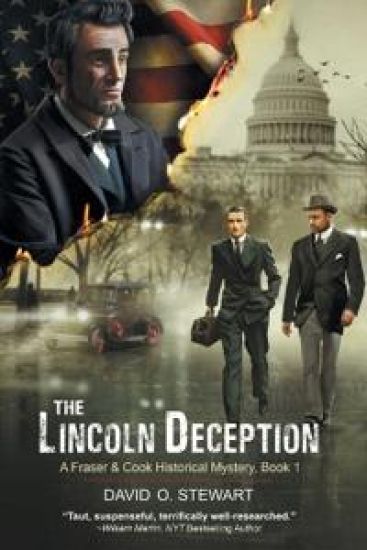
"A taut, suspenseful, terrifically well-researched historical thriller about the greatest crime of the 19th Century." William Martin, New York Times Bestselling Author of The Lincoln Letter and Bound for Gold. In 1900, former Congressman John Bingham tells his doctor, Jamie Fraser, about a terrible secret he learned thirty-five years ago while prosecuting John Wilkes Booth's co-conspirators in the assassination of Abraham Lincoln--a secret that could destroy the republic. Then Bingham dies before revealing what he knows. Obsessed with discovering Bingham's secret, Fraser encounters aspiring newspaper publisher Speed Cook--the last black man to play baseball in the big leagues. Navigating perilous social norms designed to separate blacks and whites, they set out to unravel the truth. While dodging race riots, kidnappers, and muggers, elusive clues reveal an alliance between the nation's foremost cotton tycoon--with connections to a Northern pro-Confederacy faction--and the last general of the Confederate Army. Now face-to-face with the treacherous pair, Fraser and Cook must survive long enough to expose the deception thrust upon the entire nation. Publisherʼs Note: The Fraser and Cook Historical Mystery Series will be enjoyed by fans of American history and period mystery novels. Free of graphic sex and with some mild profanity, this series can be enjoyed by readers of all ages. "...more than enough to satisfy any reader of historical whodunits...its conclusion has a wry double edge that Lincoln himself would have appreciated."--Washington Post "...a rip-snorting tale about those involved in the assassination of President Abraham Lincoln. What secret did Union prosecutor John Bingham carry to the grave...did the conspiracy involve more than John Wilkes Booth?"--Frank J. Williams, Founding Chair of The Lincoln Forum and retired Chief Justice, Rhode Island Supreme Court "The Lincoln Deception is a superb melding of fact, mystery, and imaginary 'what-ifsʼ that blow open the conspiracy shrouds surrounding the murder of a president."--GateHouse News Service "David O. Stewart dramatically reopens the file on the Lincoln assassination conspiracy with a nail-biting, historically grounded page-turner. Where the facts end and the fiction begins will inspire plenty of debate. Meanwhile, enjoy this for the terrific read Stewart provides."--Harold Holzer The Fraser and Cook Historical Mystery Series The Lincoln Deception The Paris Deception The Babe Ruth Deception
"A taut, suspenseful, terrifically well-researched historical thriller about the greatest crime of the 19th Century." William Martin, New York Times Bestselling Author of The Lincoln Letter and Bound for Gold. In 1900, former Congressman John Bingham tells his doctor, Jamie Fraser, about a terrible secret he learned thirty-five years ago while prosecuting John Wilkes Booth's co-conspirators in the assassination of Abraham Lincoln--a secret that could destroy the republic. Then Bingham dies before revealing what he knows. Obsessed with discovering Bingham's secret, Fraser encounters aspiring newspaper publisher Speed Cook--the last black man to play baseball in the big leagues. Navigating perilous social norms designed to separate blacks and whites, they set out to unravel the truth. While dodging race riots, kidnappers, and muggers, elusive clues reveal an alliance between the nation's foremost cotton tycoon--with connections to a Northern pro-Confederacy faction--and the last general of the Confederate Army. Now face-to-face with the treacherous pair, Fraser and Cook must survive long enough to expose the deception thrust upon the entire nation. Publisherʼs Note: The Fraser and Cook Historical Mystery Series will be enjoyed by fans of American history and period mystery novels. Free of graphic sex and with some mild profanity, this series can be enjoyed by readers of all ages. "...more than enough to satisfy any reader of historical whodunits...its conclusion has a wry double edge that Lincoln himself would have appreciated."--Washington Post "...a rip-snorting tale about those involved in the assassination of President Abraham Lincoln. What secret did Union prosecutor John Bingham carry to the grave...did the conspiracy involve more than John Wilkes Booth?"--Frank J. Williams, Founding Chair of The Lincoln Forum and retired Chief Justice, Rhode Island Supreme Court "The Lincoln Deception is a superb melding of fact, mystery, and imaginary 'what-ifsʼ that blow open the conspiracy shrouds surrounding the murder of a president."--GateHouse News Service "David O. Stewart dramatically reopens the file on the Lincoln assassination conspiracy with a nail-biting, historically grounded page-turner. Where the facts end and the fiction begins will inspire plenty of debate. Meanwhile, enjoy this for the terrific read Stewart provides."--Harold Holzer The Fraser and Cook Historical Mystery Series The Lincoln Deception The Paris Deception The Babe Ruth Deception
The 18th century was a wealth of knowledge, exploration and rapidly growing technology and expanding record-keeping made possible by advances in the printing press. In its determination to preserve the century of revolution, Gale initiated a revolution of its own: digitization of epic proportions to preserve these invaluable works in the largest archive of its kind. Now for the first time these high-quality digital copies of original 18th century manuscripts are available in print, making them highly accessible to libraries, undergraduate students, and independent scholars.This collection reveals the history of English common law and Empire law in a vastly changing world of British expansion. Dominating the legal field is the Commentaries of the Law of England by Sir William Blackstone, which first appeared in 1765. Reference works such as almanacs and catalogues continue to educate us by revealing the day-to-day workings of society.++++The below data was compiled from various identification fields in the bibliographic record of this title. This data is provided as an additional tool in helping to insure edition identification: ++++British LibraryT066791The last eleven leaves contain the index.London: printed by His Majesty's law printers, for Edward Brooke, 1785. viii, 8], *iv,372, 8], ccxxxiii, 23]p.; 8
The 18th century was a wealth of knowledge, exploration and rapidly growing technology and expanding record-keeping made possible by advances in the printing press. In its determination to preserve the century of revolution, Gale initiated a revolution of its own: digitization of epic proportions to preserve these invaluable works in the largest archive of its kind. Now for the first time these high-quality digital copies of original 18th century manuscripts are available in print, making them highly accessible to libraries, undergraduate students, and independent scholars.Medical theory and practice of the 1700s developed rapidly, as is evidenced by the extensive collection, which includes descriptions of diseases, their conditions, and treatments. Books on science and technology, agriculture, military technology, natural philosophy, even cookbooks, are all contained here.++++The below data was compiled from various identification fields in the bibliographic record of this title. This data is provided as an additional tool in helping to insure edition identification: ++++British LibraryT063887With an appendix and a final leaf of advertisements.London: printed for S. Crowder, and Co., J. Coote; and J. Fletcher, 1762. iv, 18],330,473-486, 2]p., plate; 8
The 18th century was a wealth of knowledge, exploration and rapidly growing technology and expanding record-keeping made possible by advances in the printing press. In its determination to preserve the century of revolution, Gale initiated a revolution of its own: digitization of epic proportions to preserve these invaluable works in the largest archive of its kind. Now for the first time these high-quality digital copies of original 18th century manuscripts are available in print, making them highly accessible to libraries, undergraduate students, and independent scholars.Delve into what it was like to live during the eighteenth century by reading the first-hand accounts of everyday people, including city dwellers and farmers, businessmen and bankers, artisans and merchants, artists and their patrons, politicians and their constituents. Original texts make the American, French, and Industrial revolutions vividly contemporary.++++The below data was compiled from various identification fields in the bibliographic record of this title. This data is provided as an additional tool in helping to insure edition identification: ++++British LibraryT041102London: printed: and sold by J. Roberts in Warwick-lane, 1715]. 39, 1] p.; 8
The 18th century was a wealth of knowledge, exploration and rapidly growing technology and expanding record-keeping made possible by advances in the printing press. In its determination to preserve the century of revolution, Gale initiated a revolution of its own: digitization of epic proportions to preserve these invaluable works in the largest archive of its kind. Now for the first time these high-quality digital copies of original 18th century manuscripts are available in print, making them highly accessible to libraries, undergraduate students, and independent scholars.Delve into what it was like to live during the eighteenth century by reading the first-hand accounts of everyday people, including city dwellers and farmers, businessmen and bankers, artisans and merchants, artists and their patrons, politicians and their constituents. Original texts make the American, French, and Industrial revolutions vividly contemporary.++++The below data was compiled from various identification fields in the bibliographic record of this title. This data is provided as an additional tool in helping to insure edition identification: ++++British LibraryT041102London: printed: and sold by J. Roberts in Warwick-lane, 1715]. 39, 1] p.; 8