A fundraiser of the William Allen White Community Partnership. This volume contains pieces related to or about White. Includes 3 Kansas Poets Laureate. Author range from a student to professional writers with extensive credits.
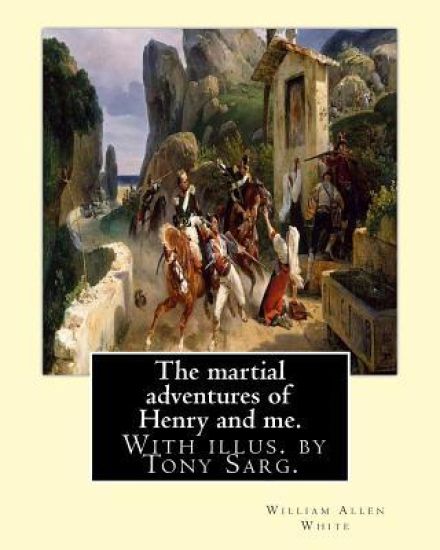
William Allen White (February 10, 1868 - January 29, 1944) was a renowned American newspaper editor, politician, author, and leader of the Progressive movement. Between 1896 and his death, White became the iconic spokesman for middle America. *Early life* Born in Emporia, Kansas, White moved to El Dorado, Kansas, with his parents, Allen and Mary Ann Hatten White, where he spent the majority of his childhood. He loved animals and reading various books.He attended the College of Emporia and the University of Kansas, and in 1892 started work at The Kansas City Star as an editorial writer. *Family* White married Sallie Lindsay in 1893. They had two children, William Lindsay, born in 1900, and Mary Katherine, born in 1904. Mary died in a 1921 horse-riding accident, prompting her father to write a famous eulogy, "Mary White," on August 17, 1921.White visited six of the seven continents at least once in his long life. Due to his fame and success, he received 10 honorary degrees from universities, including one from Harvard. White taught his son William L. the importance of journalism, and after his death, William L. took charge of the Gazette and continued its local success. William L.'s wife, Kathrine, ran it after he died. Their daughter, Barbara, and her husband, David Walker, took it over much as William had earlier, and today the paper remains family-run, currently headed by WAW's great-grandson, Christopher White Walker. White developed a friendship with President Theodore Roosevelt in the 1890s that lasted until Roosevelt's death in 1919. Roosevelt spent several nights at White's Wight and Wight-designed home, Red Rocks, during trips across the United States.White was to say later, "Roosevelt bit me and I went mad."Later, White supported much of the New Deal, but voted against Franklin D. Roosevelt every time.... Anthony Frederick Sarg (April 21, 1880 - February 17, 1942), known professionally as Tony Sarg, was a German American puppeteer and illustrator. He was described as "America's Puppet Master", and in his biography as the father of modern puppetry in North America. Sarg was born in Cob n, Guatemala, to Francis Charles Sarg and his wife, Mary Elizabeth Parker. The elder Sarg was a consul representing Germany; Parker was English. The family returned to the German Empire in 1887; Sarg entered a military academy at age 14 and received a commission as lieutenant at 17; in 1905 (in his mid-20s) he resigned his commission and took up residence in the United Kingdom, where he pursued a relationship with Bertha Eleanor McGowan, an American he had met when she was a tourist in Germany. They were married in her hometown of Cincinnati, Ohio, January 20, 1909, and returned to England where their daughter Mary was born two years later. In 1914, with the start of World War I, he sent Bertha and the children to Cincinnati, followed them soon after, and settled the family in New York City in 1915. He had been raised around puppets, inherited his grandmother's collection of them, developed them as a hobby that enhanced the impression he made on other artists, and finally in 1917 turned them into a profession. In 1920, he became a naturalized citizen of the United States.
This book has been considered by academicians and scholars of great significance and value to literature. This forms a part of the knowledge base for future generations. So that the book is never forgotten we have represented this book in a print format as the same form as it was originally first published. Hence any marks or annotations seen are left intentionally to preserve its true nature.
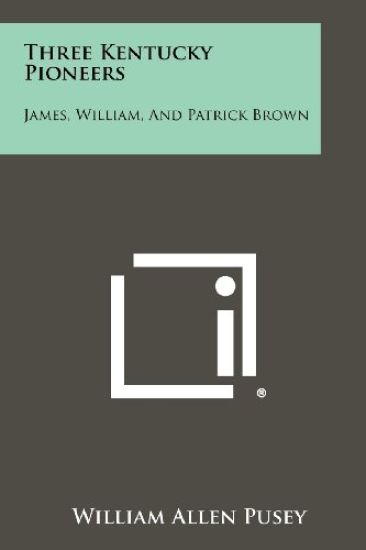
Three Kentucky Pioneers: James, William, and Patrick Brown is a historical book authored by William Allen Pusey. The book primarily focuses on the lives and contributions of the Brown brothers, who were among the earliest settlers in Kentucky. The book is divided into three sections, each section dedicated to one of the Brown brothers.The first section covers the life of James Brown, who was born in Virginia in 1736 and later moved to Kentucky. James Brown was a prominent figure in the American Revolution and played a significant role in the establishment of Kentucky as a state. The section also discusses the Brown family's involvement in the formation of the Transylvania Company, which was responsible for the settlement of Kentucky.The second section of the book focuses on William Brown, who was James Brown's younger brother. William Brown was a successful businessman and landowner who played a crucial role in the development of Kentucky's economy. The section provides insight into William Brown's personal life, including his marriage and family.The final section of the book is dedicated to Patrick Brown, who was the youngest of the three brothers. Patrick Brown was a surveyor and played an essential role in the establishment of Kentucky's boundaries. The section also covers Patrick Brown's involvement in the American Revolution and his contributions to the development of Kentucky's infrastructure.Overall, Three Kentucky Pioneers: James, William, and Patrick Brown is a comprehensive historical account of the Brown family's contributions to the establishment and development of Kentucky. The book is an essential read for anyone interested in the history of Kentucky and the role of early settlers in shaping the state's identity.Reprinted From The Filson Club History Quarterly, Volume 4, Number 4, October, 1930.This scarce antiquarian book is a facsimile reprint of the old original and may contain some imperfections such as library marks and notations. Because we believe this work is culturally important, we have made it available as part of our commitment for protecting, preserving, and promoting the world's literature in affordable, high quality, modern editions, that are true to their original work.
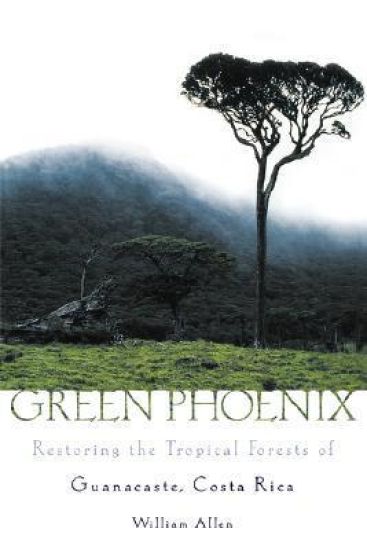
Can we prevent the destruction of the world's tropical forests? In the fire-scarred hills of Costa Rica, award-winning science writer William Allen found a remarkable answer: we can not only prevent their destruction--we can bring them back to their former glory. In Green Phoenix, Allen tells the gripping story of a large group of Costa Rican and American scientists and volunteers who set out to save the tropical forests in the northwestern section of the country. It was an area badly damaged by the fires of ranchers and small farmers; in many places a few strands of forest strung across a charred landscape. Despite the widely held belief that tropical forests, once lost, are lost forever, the team led by the dynamic Daniel Janzen from the University of Pennsylvania moved relentlessly ahead, taking a broad array of political, ecological, and social steps necessary for restoration. They began with 39 square miles and, by 2000, they had stitched together and revived some 463 square miles of land and another 290 of marine area. Today this region is known as the Guanacaste Conservation Area, a fabulously rich landscape of dry forest, cloud forest, and rain forest that gives life to some 235,000 species of plants and animals. It may be the greatest environmental success of our time, a prime example of how extensive devastation can be halted and reversed. This is an inspiring story, and in recounting it, Allen writes with vivid power. He creates lasting images of pristine beaches and dense forest and captures the heroics and skill of the scientific teams, especially the larger-than-life personality of the maverick ecologist Daniel Janzen. It is a book everyone concerned about the environment will want to own.