William Dean Howells ( March 1, 1837 - May 11, 1920) was an American realist novelist, literary critic, and playwright. Nicknamed "The Dean of American Letters", he was particularly known for his tenure as editor of the Atlantic Monthly as well as his own prolific writings, including the Christmas story "Christmas Every Day", and the novels The Rise of Silas Lapham and A Traveler from Altruria.
William Dean Howells March 1, 1837 - May 11, 1920) was an American realist novelist, literary critic, and playwright. Nicknamed "The Dean of American Letters", he was particularly known for his tenure as editor of The Atlantic Monthly as well as his own prolific writings, including the Christmas story "Christmas Every Day", and the novels The Rise of Silas Lapham and A Traveler from Altruria. William Dean Howells was born on March 1, 1837, in Martinsville, Ohio (now known as Martins Ferry, Ohio), to William Cooper, and Mary Dean, Howells. He was the second of eight children. His father was a newspaper editor and printer, who moved frequently around Ohio. In 1840, the family settled in Hamilton, Ohio, where William Cooper Howells oversaw a Whig newspaper and followed Swedenborgianism; their nine years there marked the longest they would stay in one place. Though the family had to live frugally, the young Howells was encouraged by his parents in his literary interests. Howells began to help his father with typesetting and printing work at an early age, a job known at the time as a printer's devil. In 1852, his father arranged to have one of Howells' poems published in the Ohio State Journal without telling him.
William Dean Howells ( March 1, 1837 - May 11, 1920) was an American realist novelist, literary critic, and playwright, nicknamed "The Dean of American Letters". He was particularly known for his tenure as editor of The Atlantic Monthly, as well as for his own prolific writings, including the Christmas story "Christmas Every Day" and the novels The Rise of Silas Lapham and A Traveler from Altruria. Early life and family: William Dean Howells was born on March 1, 1837 in Martinsville, Ohio (now known as Martins Ferry, Ohio) to William Cooper Howells and Mary Dean Howells, the second of eight children. His father was a newspaper editor and printer who moved frequently around Ohio. In 1840, the family settled in Hamilton, Ohio, where his father oversaw a Whig newspaper and followed Swedenborgianism.Their nine years there were the longest period that they stayed in one place. The family had to live frugally, although the young Howells was encouraged by his parents in his literary interests. He began at an early age to help his father with typesetting and printing work, a job known at the time as a printer's devil. In 1852, his father arranged to have one of his poems published in the Ohio State Journal without telling him. Early career: In 1856, Howells was elected as a clerk in the State House of Representatives. In 1858, he began to work at the Ohio State Journal where he wrote poetry and short stories, and also translated pieces from French, Spanish, and German. He avidly studied German and other languages and was greatly interested in Heinrich Heine. In 1860, he visited Boston and met with writers James Thomas Fields, James Russell Lowell, Oliver Wendell Holmes, Sr., Nathaniel Hawthorne, Henry David Thoreau, and Ralph Waldo Emerson. He became a personal friend to many of them, including Henry Adams, William James, Henry James, and Oliver Wendell Holmes, Jr. In 1860 Howells wrote Abraham Lincoln's campaign biography Life Of Abraham Lincoln and subsequently gained a consulship in Venice. He married Elinor Mead on Christmas Eve 1862 at the American embassy in Paris. She was a sister of sculptor Larkin Goldsmith Mead and architect William Rutherford Mead of the firm McKim, Mead, and White. Among their children was architect John Mead Howells. Editorship and other literary pursuits: The Howells returned to America in 1865 and settled in Cambridge, Massachusetts. He wrote for various magazines, including the Atlantic Monthly and Harper's Magazine. In January 1866, James Fields offered him a position as assistant editor at the Atlantic Monthly; he accepted after successfully negotiating for a higher salary, though he was frustrated by Fields' close supervision. Howells was made editor in 1871, after five years as assistant editor, and he remained in this position until 1881. In 1869, he met Mark Twain with whom he formed a longtime friendship. But his relationship with journalist Jonathan Baxter Harrison was more important for the development of his literary style and his advocacy of Realism. Harrison wrote a series of articles for the Atlantic Monthly during the 1870s on the lives of ordinary Americans.Howells gave a series of twelve lectures on "Italian Poets of Our Century" for the Lowell Institute during its 1870-71 season..............
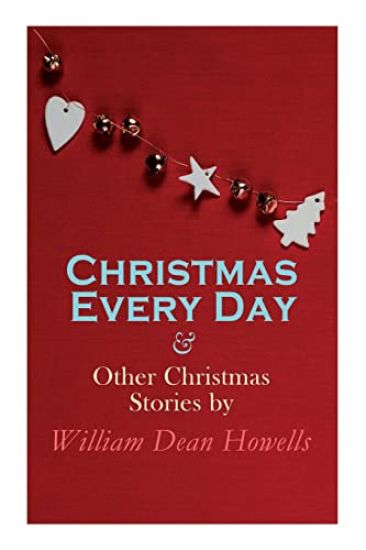
e-artnow presents the Christmas Specials Series. We have selected the greatest Christmas novels, short stories and fairy tales for this joyful and charming holiday season, for all those who want to keep the spirit of Christmas alive with a heartwarming tale. Table of Contents: - Christmas Every Day - Turkeys Turning the Tables - The Pony Engine and the Pacific Express - The Pumpkin Glory - Butterflyfutterby and Flutterbybutterfly
Despite efforts at revival by John Updike and others, William Dean Howells still remains in the shadows of his close friends Mark Twain and Henry James. This book works against decades of unfavorable comparisons with these literary giants. William Dean Howells and the Ends ofRealism helps us to see him as a writer very much aware of his limitations and of his enormous importance in the development of an American literary tradition. A close look at his late works gives us a richer understanding of this powerful moment of transition in American literature, a moment when Howells and his venerable friends were inspiring and anointing a new generation of writers and taking a long, hard look at their own legacies and contributions.
Despite efforts at revival by John Updike and others, William Dean Howells still remains in the shadows of his close friends Mark Twain and Henry James. This book works against decades of unfavorable comparisons with these literary giants. William Dean Howells and the Ends ofRealism helps us to see him as a writer very much aware of his limitations and of his enormous importance in the development of an American literary tradition. A close look at his late works gives us a richer understanding of this powerful moment of transition in American literature, a moment when Howells and his venerable friends were inspiring and anointing a new generation of writers and taking a long, hard look at their own legacies and contributions.
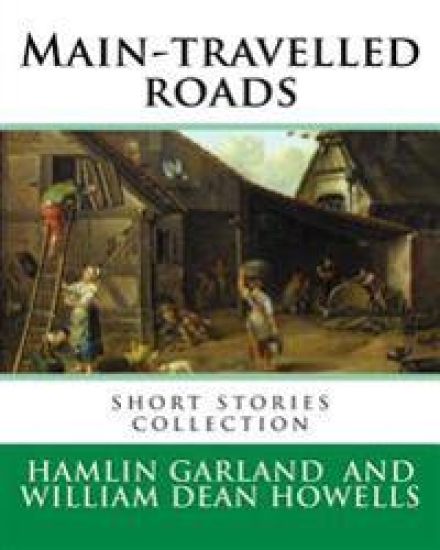
Hannibal Hamlin Garland (September 14, 1860 - March 4, 1940) was an American novelist, poet, essayist, and short story writer, Georgist, and parapsychology skeptic/researcher. He is best known for his fiction involving hard-working Midwestern farmers...... Main-Travelled Roads is a collection of short stories by the American author Hamlin Garland. First published in 1891, the stories are set in what the author refers to as the "Middle Border," the northwestern prairie states of Wisconsin, Nebraska, Iowa, Minnesota and South Dakota. In the book's eleven stories, Garland portrays the hardships of agrarian life, deconstructing the conventional myth of the American prairie while highlighting the economic and social conditions that characterized agricultural communities in the rural Midwest. Summary Main-Travelled Roads contains eleven semi-autobiographical short stories, including "A Branch Road", "Up the Coolly", "Among the Corn-Rows", "The Return of a Private", "Under the Lion's Paw", "The Creamery Man", "A Day's Pleasure", "Mrs. Ripley's Trip", "Uncle Ethan Ripley", "God's Ravens and A 'Good Fellow's' Wife". The tales inflect human drama into the harsh, spirit-crushing conditions Garland experienced as a boy, vividly portraying the "overwhelming forces in nature and social injustices" that mark rural existence.Garland's book dedication is a story in itself: "To my father and mother, whose half-century pilgrimage on the main travelled road of life has brought them only toil and deprivation, this book of stories is dedicated by a son to whom every day brings a deepening sense of his parents' silent heroism". As foreshadowed by the dedication, Garland's stories paint an unforgiving portrait of Midwestern farm life: unrelenting physical toil, harsh living conditions, widespread poverty and an overwhelming sense of hopelessness. In his introduction to Main-Travelled Roads, scholar Joseph B. McCullough recognizes Garland as one of the 19th century's most influential voices concerning the challenges of post Civil War agrarian society, especially the inequities of the tax system and the struggle for women's rights. Contents "A Branch Road" - lost and found love between a young farmer and the girl he left behind. "Up the Coolly" - an affluent New York City actor's mixed feelings of guilt and affection while visiting his family's Wisconsin farm. "Among the Corn-Rows" - an eager young homesteader's wooing of a Norwegian girl. "The Return of the Private" - the bittersweet homecoming of a wounded army private. "Under the Lion's Paw" - a hard-working farmer is victimized by a greedy landlord. "The Creamery Man" - a peddler's affections are thwarted by local gossip. "A Day's Pleasure" - a downtrodden farm wife's visit to town is made special by an invitation into a person's home. "Mrs. Ripley's Trip" - after twenty-three years away, an elderly farm wife longs to visit her childhood home. "Uncle Ethan Ripley" - a farmer trades signage space on his barn for "medicinal bitters," creating friction between him and his wife. "God's Ravens" - a family's initial prejudice towards their less cultured neighbors dissipates after being shown great kindness. "A Good Fellow's Wife" - after losing his depositors' money, a banker finds redemption by owning up to his mistakes and working with his clever wife to repay their debts. William Dean Howells (March 1, 1837 - May 11, 1920) was an American realist novelist, literary critic, and playwright. Nicknamed "The Dean of American Letters", he was particularly known for his tenure as editor of The Atlantic Monthly as well as his own prolific writings, including the Christmas story "Christmas Every Day", and the novels The Rise of Silas Lapham and A Traveler from Altruria.
Hannibal Hamlin Garland (September 14, 1860 - March 4, 1940) was a Pulitzer prizewinning American novelist, poet, essayist, and short story writer, Georgist, and parapsychology skeptic/researcher. He is best known for his fiction involving hard-working Midwestern farmers.Hannibal Hamlin Garland was born on a farm near West Salem, Wisconsin, on September 14, 1860, the second of four children of Richard Garland of Maine and Charlotte Isabelle McClintock.The boy was named after Hannibal Hamlin, the candidate for vice-president under Abraham Lincoln.He lived on various Midwestern farms throughout his young life, but settled in Boston, Massachusetts, in 1884 to pursue a career in writing. He read diligently in the Boston Public Library.There he became enamored with the ideas of Henry George, and his Single Tax Movement.George's ideas came to influence a number of his works, such as Main-Travelled Roads (1891), Prairie Folks (1892), and his novel Jason Edwards (1892). Main-Travelled Roads was his first major success. It was a collection of short stories inspired by his days on the farm. He serialized a biography of Ulysses S. Grant in McClure's Magazine before publishing it as a book in 1898. The same year, Garland traveled to the Yukon to witness the Klondike Gold Rush, which inspired The Trail of the Gold Seekers (1899). He lived on a farm between Osage, and St. Ansgar, Iowa for quite some time. Many of his writings are based on this era of his life. In Illinois, Garland married Zulime Taft, the sister of sculptor Lorado Taft, and began working as a teacher and a lecturer. A prolific writer, Garland continued to publish novels, short fiction, and essays. In 1917, he published his autobiography, A Son of the Middle Border. The book's success prompted a sequel, A Daughter of the Middle Border, for which Garland won the 1922 Pulitzer Prize for Biography. After two more volumes, Garland began a second series of memoirs based on his diary. Garland naturally became quite well known during his lifetime and had many friends in literary circles. He was made a member of the American Academy of Arts and Letters in 1918.... William Dean Howells ( March 1, 1837 - May 11, 1920) was an American realist novelist, literary critic, and playwright. Nicknamed "The Dean of American Letters", he was particularly known for his tenure as editor of The Atlantic Monthly as well as his own prolific writings, including the Christmas story "Christmas Every Day", and the novels The Rise of Silas Lapham and A Traveler from Altruria.
Frederick James Gould (19 December 1855 - 6 April 1938) was an English teacher, writer, and pioneer secular humanist.He was born in Brighton, the son of William James Gould and his wife Julia, who were evangelicalist Anglicans. He grew up in London, and at the age of seven was sent to study and sing in the choir at St George's Chapel, Windsor Castle. He then went to school at Chenies, Buckinghamshire, where he became a day and Sunday school teacher. At the age of fifteen, he thought he heard voices in his head exclaiming "How wonderful is the love of God ", following which he studied theology "in a kind of devout fury".However, after he was appointed head teacher at Great Missenden church school in 1877, he began to develop doubts about his own religious faith
Die Untersuchung bemuht sich, typisch amerikanische Elemente in der realistischen und naturalistischen amerikanischen Literatur des spaten 19. Jahrhunderts herauszuarbeiten. Dabei geht es sowohl um Adaptations- und Assimilierungsprozesse europaischer Literaturtheorien und Darstellungstechniken als auch um amerikanische Sonderentwicklungen. Die -Realismusformel- von Howells, truthful treatment of material, bildet die breite Basis fur einen Konsens, der aber je nach Betonung der einzelnen Elemente anders akzentuiert und vertreten wird. Mit den Begriffen truth, accuracy, sincerity, personality und honesty of vision verwenden die Schriftsteller zwar ein einheitliches Vokabular, die Begriffe werden aber je nach Verstandnis der amerikanischen Traditionen inhaltlich unterschiedlich gefullt."