William traces the ordeal of an American army veteran whose unusual abilities have attracted the interest of military authorities. We follow William as he flees a covert US Army experimental facility and, in a dangerous game of cat and mouse, is hunted by shadowy operatives. Along the way, as he fights off his pursuers and his own demons, he seeks solace in his martial arts practice, particularly Aikido, and falls into a reluctant friendship with a young woman.
This book has been considered by academicians and scholars of great significance and value to literature. This forms a part of the knowledge base for future generations. So that the book is never forgotten we have represented this book in a print format as the same form as it was originally first published. Hence any marks or annotations seen are left intentionally to preserve its true nature.
The first book to map William James’s preoccupation with medical ideas, concerns, and values across the breadth of his work. William James is known as a nineteenth-century philosopher, psychologist, and psychical researcher. Less well-known is how his interest in medicine influenced his life and work, driving his ambition to change the way American society conceived of itself in body, mind, and soul. William James, MD offers an account of the development and cultural significance of James’s ideas and works, and establishes, for the first time, the relevance of medical themes to his major lines of thought. James lived at a time when old assumptions about faith and the moral and religious possibilities for human worth and redemption were increasingly displaced by a concern with the medically “normal” and the perfectibility of the body. Woven into treatises that warned against humanity’s decline, these ideas were part of the eugenics movement and reflected a growing social stigma attached to illness and invalidism, a disturbing intellectual current in which James felt personally implicated. Most chronicles of James’s life have portrayed a distressed young man, who then endured a psychological or spiritual crisis to emerge as a mature thinker who threw off his pallor of mental sickness for good. In contrast, Emma K. Sutton draws on his personal correspondence, unpublished notebooks, and diaries to show that James considered himself a genuine invalid to the end of his days. Sutton makes the compelling case that his philosophizing was not an abstract occupation but an impassioned response to his own life experiences and challenges. To ignore the medical James is to misread James altogether.
The first book to map William James’s preoccupation with medical ideas, concerns, and values across the breadth of his work. William James is known as a nineteenth-century philosopher, psychologist, and psychical researcher. Less well-known is how his interest in medicine influenced his life and work, driving his ambition to change the way American society conceived of itself in body, mind, and soul. William James, MD offers an account of the development and cultural significance of James’s ideas and works, and establishes, for the first time, the relevance of medical themes to his major lines of thought. James lived at a time when old assumptions about faith and the moral and religious possibilities for human worth and redemption were increasingly displaced by a concern with the medically “normal” and the perfectibility of the body. Woven into treatises that warned against humanity’s decline, these ideas were part of the eugenics movement and reflected a growing social stigma attached to illness and invalidism, a disturbing intellectual current in which James felt personally implicated. Most chronicles of James’s life have portrayed a distressed young man, who then endured a psychological or spiritual crisis to emerge as a mature thinker who threw off his pallor of mental sickness for good. In contrast, Emma K. Sutton draws on his personal correspondence, unpublished notebooks, and diaries to show that James considered himself a genuine invalid to the end of his days. Sutton makes the compelling case that his philosophizing was not an abstract occupation but an impassioned response to his own life experiences and challenges. To ignore the medical James is to misread James altogether.
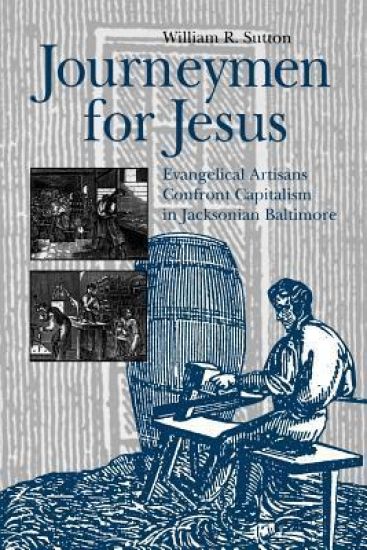
When industrialization swept through American society in the nineteenth century, it brought with it turmoil for skilled artisans. Changes in technology and work offered unprecedented opportunity for some, but the deskilling of craft and the rise of factory work meant dislocation for others. Journeymen for Jesus explores how the artisan community in one city, Baltimore, responded to these life-changing developments during the years of the early republic. Baltimore in the Jacksonian years (1820s and 1830s) was America's third largest city. Its unions rivaled those of New York and Philadelphia in organization and militancy, and it was also a stronghold of evangelical Methodism. These circumstances created a powerful mix at a time when workers were confronting the negative effects of industrialism. Many of them found within Methodism and its populist spirituality an empowering force that inspired their refusal to accept dependency and second-class citizenship. Historians often portray evangelical Protestantism as either a top-down means of social control or as a bottom-up process that created passive workers. Sutton, however, reveals a populist evangelicalism that undergirded the producer tradition dominant among those supportive of trade union goals. Producers were not socialists or social democrats, but they were anticapitalist and reform-minded. In populist evangelicalism they discovered a potent language and ethic for their discontent. Journeymen for Jesus presents a rich and unromanticized portrait of artisan culture in early America. In the process, it adds to our understanding of the class tensions present in Jacksonian America.
When industrialization swept through American society in the nineteenth century, it brought with it turmoil for skilled artisans. Changes in technology and work offered unprecedented opportunity for some, but the deskilling of craft and the rise of factory work meant dislocation for others. Journeymen for Jesus explores how the artisan community in one city, Baltimore, responded to these life-changing developments during the years of the early republic. Baltimore in the Jacksonian years (1820s and 1830s) was America's third largest city. Its unions rivaled those of New York and Philadelphia in organization and militancy, and it was also a stronghold of evangelical Methodism. These circumstances created a powerful mix at a time when workers were confronting the negative effects of industrialism. Many of them found within Methodism and its populist spirituality an empowering force that inspired their refusal to accept dependency and second-class citizenship. Historians often portray evangelical Protestantism as either a top-down means of social control or as a bottom-up process that created passive workers. Sutton, however, reveals a populist evangelicalism that undergirded the producer tradition dominant among those supportive of trade union goals. Producers were not socialists or social democrats, but they were anticapitalist and reform-minded. In populist evangelicalism they discovered a potent language and ethic for their discontent. Journeymen for Jesus presents a rich and unromanticized portrait of artisan culture in early America. In the process, it adds to our understanding of the class tensions present in Jacksonian America.
Agriculture is one of the most climate-sensitive of all economic sectors. In many countries, such as the four examined in Looking Beyond the Horizon, the risks of climate change are an immediate and fundamental problem because the majority of the rural population depends either directly or indirectly on agriculture for its livelihood. The risks of climate change to agriculture cannot be effectively dealt with-hand the opportunities cannot be effectively exploited-without a clear plan for aligning agricultural policies with climate change, developing the capabilities of key agricultural institutions, and investing in infrastructure, support services, and on-farm improvements. Developing such a plan ideally involves a combination of high-quality quantitative analysis; consultation with key stakeholders, particularly farmers and local agricultural experts; and investments in both human and physical capital. The diverse experiences of Albania, the former Yugoslav Republic of Macedonia, Moldova, and Uzbekistan, highlighted in this book, show that it is possible to develop a plan to meet these objectives-one that is comprehensive and empirically driven as well as consultative and quick to develop. The approach of this volume is predicated on strong country ownership and participation, and is defined by its emphasis on 'win-win' or 'no regrets' solutions to the multiple challenges posed by climate change for the farmers of Eastern Europe and Central Asia. The solutions are measures that increase resilience to future climate change, boost current productivity despite the greater climate variability already occurring, and limit greenhouse gas emissions-also known as 'climate-smart agriculture'. Looking Beyond the Horizon draws on the experiences of applying this approach to these four nations in Eastern Europe and Central Asia with the goal of helping each country mainstream climate change adaptation into its agricultural policies, programmes, and investments. The book also highlights the projected impacts of climate change on agriculture in these countries through forecast variations in temperature and rainfall patterns, which are crucial to farming, and offers a map for navigating the risks and realising the opportunities. Finally, a detailed explanation of the approach, as well as lessons learned from its implementation, is provided for those who would like to implement similar programmes in other countries of Europe, Central Asia, or anywhere else in the world.
The Complete Guidebook to Model Railroading by David Sutton is a comprehensive guide that provides readers with everything they need to know about model railroading. The book is designed for both beginners and experienced hobbyists, covering a wide range of topics from basic setup and design to advanced techniques and strategies.The book is divided into several sections, each covering a different aspect of model railroading. The first section covers the basics, including choosing a scale, selecting a layout, and setting up a track plan. The second section delves into the details of building a model railroad, including constructing scenery, buildings, and rolling stock.The third section of the book covers advanced techniques and strategies, including weathering, detailing, and customizing locomotives and rolling stock. The fourth section provides tips and tricks for operating a model railroad, including how to run trains, control signals, and manage a layout.Throughout the book, readers will find helpful illustrations, diagrams, and photographs that illustrate key concepts and techniques. The author also provides a wealth of resources, including a glossary of terms, a list of suppliers, and a bibliography of recommended books and websites.Overall, The Complete Guidebook to Model Railroading is an essential resource for anyone interested in this fascinating hobby. Whether you are just starting out or are an experienced model railroader, this book has something to offer.Tread Book 199.This scarce antiquarian book is a facsimile reprint of the old original and may contain some imperfections such as library marks and notations. Because we believe this work is culturally important, we have made it available as part of our commitment for protecting, preserving, and promoting the world's literature in affordable, high quality, modern editions, that are true to their original work.
Agriculture is one of the most climate-sensitive of all economic sectors. In many countries, such as in Uzbekistan, the risks of climate change are an immediate and fundamental problem because the majority of the rural population depends either directly or indirectly on agriculture for their livelihoods. The risks of climate change to agriculture in Uzbekistan cannot be effectively dealt with—and the opportunities cannot be effectively exploited—without a clear plan for aligning agricultural policies with climate change, developing the capabilities of key agricultural institutions, and making needed investments in infrastructure, support services and on-farm improvements. Developing such a plan ideally involves a combination of high-quality quantitative analysis, consultation with key stakeholders, particularly farmers and local agricultural experts, and investments in both human and physical capital. The experience of Uzbekistan, highlighted in this work, shows that it is possible to develop a plan to meet these objectives—one that is comprehensive and empirically driven as well as consultative and quick to develop. The approach of this study is predicated on strong country ownership and participation, and is defined by its emphasis on “win-win” or “no regrets” solutions to the multiple challenges posed by climate change for farmers in Uzbekistan. The solutions are measures that increase resilience to future climate change, boost current productivity despite the greater climate variability already occurring, and limit greenhouse gas emissions. Reducing The Vulnerability of Uzbekistan's Agricultural Systems to Climate Change: Impact Assessment and Adaptation Options applies this approach to Uzbekistan with the goal of helping the country mainstream climate change adaptation into its agricultural policies, programmes, and investments. The study projects impacts of climate change on agriculture across Uzbekistan’s three agro-ecological areas through forecast variations in temperature and rainfall patterns so crucial to farming. It offers a map for navigating the risks and realising the opportunities, outlined through a series of consultations with local farmers. A detailed explanation of the approach is provided for those who would like to implement similar programmes in other countries of Europe, Central Asia, or anywhere else in the world. This is one of four country studies that were produced under the World Bank’s programme, “Reducing Vulnerability to Climate Change in European and Central Asian Agricultural Systems”. The other countries included in this series are Albania, FYR Macedonia, and Moldova. The results from the four studies are consolidated in the book Looking Beyond the Horizon: How Climate Change Impacts and Adaptation Responses Will Reshape Agriculture in Eastern Europe and Central Asia website.
Agriculture is one of the most climate-sensitive of all economic sectors. In many countries, such as in FYR Macedonia, the risks of climate change are an immediate and fundamental problem because the majority of the rural population depends either directly or indirectly on agriculture for their livelihoods. The risks of climate change to agriculture in FYR Macedonia cannot be effectively dealt with—and the opportunities cannot be effectively exploited—without a clear plan for aligning agricultural policies with climate change, developing the capabilities of key agricultural institutions, and making needed investments in infrastructure, support services and on-farm improvements. Developing such a plan ideally involves a combination of high-quality quantitative analysis, consultation with key stakeholders, particularly farmers and local agricultural experts, and investments in both human and physical capital. The experience of FYR Macedonia, highlighted in this work, shows that it is possible to develop a plan to meet these objectives—one that is comprehensive and empirically driven as well as consultative and quick to develop. The approach of this study is predicated on strong country ownership and participation, and is defined by its emphasis on “win-win” or “no regrets” solutions to the multiple challenges posed by climate change for farmers in FYR Macedonia. The solutions are measures that increase resilience to future climate change, boost current productivity despite the greater climate variability already occurring, and limit greenhouse gas emissions. Reducing The Vulnerability of FYR Macedonia's Agricultural Systems to Climate Change: Impact Assessment and Adaptation Options applies this approach to the FYR Macedonia with the goal of helping the country mainstream climate change adaptation into its agricultural policies, programmes, and investments. The study projects impacts of climate change on agriculture across FYR Macedonia’s three agro-ecological areas through forecast variations in temperature and rainfall patterns so crucial to farming. It offers a map for navigating the risks and realising the opportunities, outlined through a series of consultations with local farmers. A detailed explanation of the approach is provided for those who would like to implement similar programmes in other countries of Europe, Central Asia, or anywhere else in the world. This is one of four country studies that were produced under the World Bank’s programme, “Reducing Vulnerability to Climate Change in European and Central Asian Agricultural Systems”. The other countries included in this series are Albania, Moldova, and Uzbekistan. The results from the four studies are consolidated in the book Looking Beyond the Horizon: How Climate Change Impacts and Adaptation Responses Will Reshape Agriculture in Eastern Europe and Central Asia website.
Agriculture is one of the most climate-sensitive of all economic sectors. In many countries, such as in Moldova, the risks of climate change are an immediate and fundamental problem because the majority of the rural population depends either directly or indirectly on agriculture for their livelihoods. The risks of climate change to agriculture in Moldova cannot be effectively dealt with—and the opportunities cannot be effectively exploited—without a clear plan for aligning agricultural policies with climate change, developing the capabilities of key agricultural institutions, and making needed investments in infrastructure, support services and on-farm improvements. Developing such a plan ideally involves a combination of high-quality quantitative analysis, consultation with key stakeholders, particularly farmers and local agricultural experts, and investments in both human and physical capital. The experience of Moldova, highlighted in this work, shows that it is possible to develop a plan to meet these objectives—one that is comprehensive and empirically driven as well as consultative and quick to develop. The approach of this study is predicated on strong country ownership and participation, and is defined by its emphasis on “win-win” or “no regrets” solutions to the multiple challenges posed by climate change for farmers in Moldova. The solutions are measures that increase resilience to future climate change, boost current productivity despite the greater climate variability already occurring, and limit greenhouse gas emissions. Reducing The Vulnerability of Moldova's Agricultural Systems to Climate Change: Impact Assessment and Adaptation Options applies this approach to Moldova with the goal of helping the country mainstream climate change adaptation into its agricultural policies, programmes, and investments. The study projects impacts of climate change on agriculture across Moldova’s three agro-ecological areas through forecast variations in temperature and rainfall patterns so crucial to farming. It offers a map for navigating the risks and realising the opportunities, outlined through a series of consultations with local farmers. A detailed explanation of the approach is provided for those who would like to implement similar programmes in other countries of Europe, Central Asia, or anywhere else in the world. This is one of four country studies that were produced under the World Bank’s programme, “Reducing Vulnerability to Climate Change in European and Central Asian Agricultural Systems”. The other countries included in this series are Albania, FYR Macedonia, and Uzbekistan. The results from the four studies are consolidated in the bookLooking Beyond the Horizon: How Climate Change Impacts and Adaptation Responses Will Reshape Agriculture in Eastern Europe and Central Asia website.
Agriculture is one of the most climate-sensitive of all economic sectors. In many countries, such as in Albania, the risks of climate change are an immediate and fundamental problem because the majority of the rural population depends either directly or indirectly on agriculture for their livelihoods. The risks of climate change to agriculture in Albania cannot be effectively dealt with—and the opportunities cannot be effectively exploited—without a clear plan for aligning agricultural policies with climate change, developing the capabilities of key agricultural institutions, and making needed investments in infrastructure, support services and on-farm improvements. Developing such a plan ideally involves a combination of high-quality quantitative analysis, consultation with key stakeholders, particularly farmers and local agricultural experts, and investments in both human and physical capital. The experience of Albania, highlighted in this work, shows that it is possible to develop a plan to meet these objectives—one that is comprehensive and empirically driven as well as consultative and quick to develop. The approach of this study is predicated on strong country ownership and participation, and is defined by its emphasis on “win-win” or “no regrets” solutions to the multiple challenges posed by climate change for farmers in Albania. The solutions are measures that increase resilience to future climate change, boost current productivity despite the greater climate variability already occurring, and limit greenhouse gas emissions. Reducing The Vulnerability of Albania's Agricultural Systems to Climate Change: Impact Assessment and Adaptation Options applies this approach to Albania with the goal of helping the country mainstream climate change adaptation into its agricultural policies, programmes, and investments. The study projects impacts of climate change on agriculture across Albania’s three agro-ecological areas through forecast variations in temperature and rainfall patterns so crucial to farming. It offers a map for navigating the risks and realising the opportunities, outlined through a series of consultations with local farmers. A detailed explanation of the approach is provided for those who would like to implement similar programmes in other countries of Europe, Central Asia, or anywhere else in the world. This is one of four country studies that were produced under the World Bank’s programme, “Reducing Vulnerability to Climate Change in European and Central Asian Agricultural Systems”. The other countries included in this series are FYR Macedonia, Moldova, and Uzbekistan. The results from the four studies are consolidated in the book Looking Beyond the Horizon: How Climate Change Impacts and Adaptation Responses Will Reshape Agriculture in Eastern Europe and Central Asiawebsite.
Drawing on their numerous years experience as counsellors, tutors, and writers, Jan Sutton and William Stewart introduce readers to the basic principles that underpin counselling practice. Written in a clear, concise and jargon-free style, and with its wealth of case studies, examples of skills in practice, and practical exercises, this new edition is an ideal text for those embarking on a counselling or psychotherapy course, trainee counsellors, counselling tutors to use in training, professionals working in the area of health care, management and education, and counsellors working in the voluntary sector. It provides insight into various counselling approaches; clarifies the nature of counselling and the role of the counsellor, and assists readers to develop a repertoire of key counselling skills and qualities, such as active listening, genuineness, unconditional positive regard, empathy, goal-setting, etc. The book also addresses the important issues of ongoing supervision to enhance counselling practice, and counsellor self-care to reduce the risk of burnout.
Sometimes It's More Than Black & White is a collection of Bill Sutton's SportsBusiness Journal columns known simply as, 'Sutton Impact'. With over a decade worth of columns, Sutton has provided insight on topics and lessons regarding owners, leaders, managers, entry-level employees and students aspiring to enter the sport and entertainment business. The lessons from his experience working in the industry for over 40 years has been described as 'catalysts' in changing the way the industry learns and develops. While the scenarios that inspired these columns may have changed over time, the intent to help transform the thinking inside the industry or to provide alternative ways of conducting business, has remained the same. All proceeds from this book will be donated to funding opportunities for future graduate students in the Sport and Entertainment Business MBA/MS Program at the University of South Florida.
William Carleton; Sir John Gilbert; William (Visiting Clinician and Boots Opticians' Tutor Practitioner Fight for Sight Optometry Clinic City University London UK Clinical Editor Optician Reed Business Information Sutton UK Examiner College of Optometrists London UK) Harvey