Kirjojen hintavertailu. Mukana 11 699 587 kirjaa ja 12 kauppaa.

Kirjahaku

Etsi kirjoja tekijän nimen, kirjan nimen tai ISBN:n perusteella.

1000 tulosta hakusanalla William V Healey M D

The Military and the Media

The Military and the Media

William V. Kennedy

Praeger Publishers Inc
1993
sidottu
This book is the first about military-media relations to argue for a fundamental restructuring of national journalism and the first to document the failure of American journalism in the national security field for the past thirty years. Press complaints of excessive control by the military during the Persian Gulf War of 1990-91 were the inevitable result of the failure of American journalism to train competent specialists in military reporting and to provide an organizational structure that would assure continuing, comprehensive coverage of national defense in peace and war. This, in turn, is the result of retaining the city-room concept as the basic organizational feature of the press, with continuing reliance on the generalist in an age that demands increasingly well-trained specialists.So long as the press fails to modernize its basic methods of training to assure well-trained defense specialists, the military will be required to closely control reporters, as in the Persian Gulf War, as a basic requirement of security for armed forces members and the national interests. Permitting the military to control how the military itself is reported is a grave danger to the democratic process. Yet, so long as the press refuses to accept responsibility for large-scale reform, the public will continue to support close military control as an essential element of safety for its sons and daughters in the armed forces, and out of concern for the success of U.S. military operations. This book will be of interest to students of the press, of the military, and of the media at large.
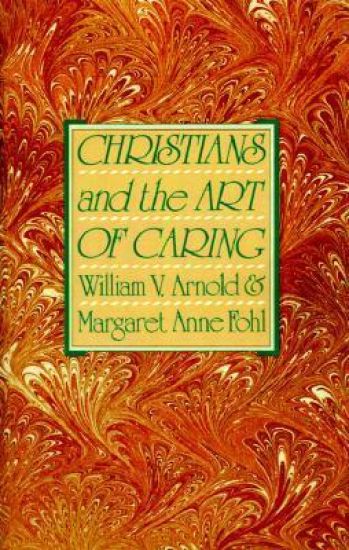
Christians and the Art of Caring

Christians and the Art of Caring

William V. Arnold; Margaret Anne Fohl

Westminster/John Knox Press,U.S.
1988
nidottu
William V. Arnold and Margaret Anne Fohl describe Christian caring as a unique form of helping that finds special expression in the church. Daily, Christians have opportunities to extend care, whether it is to a bereaved colleague or a sick friend. In simple, clear language, the authors describe how important it is that everyday women and men share in the ministry of caring and illustrate that this ministry involves skills that can be learned.
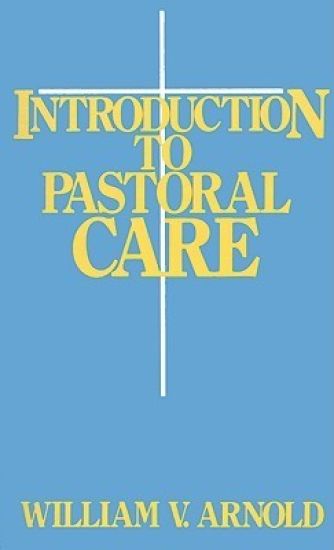
Introduction to Pastoral Care

Introduction to Pastoral Care

William V. Arnold

Westminster/John Knox Press,U.S.
1982
nidottu
Valuable for both seminarians and practicing clergy, this basic work integrates theology and pastoral care in a practical and useful way. Citing actual experiences, with questions for personal reflection, this much-needed study brings about a new awareness of the ministry of pastoral care.
When You Are Alone

When You Are Alone

William V. Arnold; Margaret Anne Fohl

Westminster/John Knox Press,U.S.
1990
nidottu
This problem-and-solution book looks at the positive values of solitude as well as the negative problems of loneliness. Integrating religious and psychological perspectives and a variety of personal experiences, this resource explores many of the factors that shape the ways we handle being alone.
Pastoral Responses to Sexual Issues

Pastoral Responses to Sexual Issues

William V. Arnold

Westminster/John Knox Press,U.S.
1993
nidottu
This excellent book offers help to pastors and other caring Christians who must act as "triage officers" on the front lines of congregational and community life and who believe in and want to explore the importance of sexual issues in ministry. William Arnold believes that our sexuality is a defining element for understanding who we are and who God is. For a pastor to work with people in a helpful and redemptive manner, this powerful force must be faced with courage and care. However, the pastor must be aware that attempts to care can be damaging if there is not an openness to learning more about the multiple forces at work in our sexuality. The pastor's awareness must be physiological, psychological, and theological. William Arnold stresses self-awareness as the key to dealing with sexual issues and advises the pastor not to rely strictly on intellectual information.
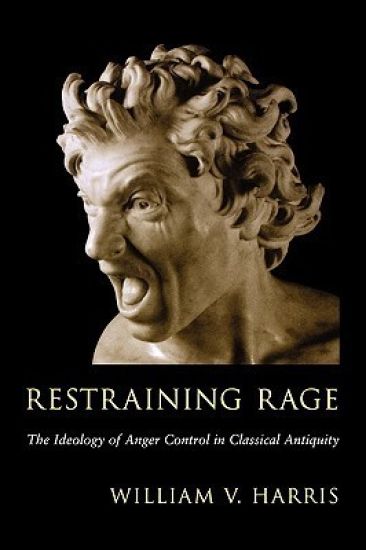
Restraining Rage

Restraining Rage

William V. Harris

Harvard University Press
2004
nidottu
The angry emotions, and the problems they presented, were an ancient Greek preoccupation from Homer to late antiquity. From the first lines of the Iliad to the church fathers of the fourth century A.D., the control or elimination of rage was an obsessive concern. From the Greek world it passed to the Romans.Drawing on a wide range of ancient texts, and on recent work in anthropology and psychology, Restraining Rage explains the rise and persistence of this concern. W. V. Harris shows that the discourse of anger-control was of crucial importance in several different spheres, in politics--both republican and monarchical--in the family, and in the slave economy. He suggests that it played a special role in maintaining male domination over women. He explores the working out of these themes in Attic tragedy, in the great Greek historians, in Aristotle and the Hellenistic philosophers, and in many other kinds of texts.From the time of Plato onward, educated Greeks developed a strong conscious interest in their own psychic health. Emotional control was part of this. Harris offers a new theory to explain this interest, and a history of the anger-therapy that derived from it. He ends by suggesting some contemporary lessons that can be drawn from the Greek and Roman experience.
Dreams and Experience in Classical Antiquity

Dreams and Experience in Classical Antiquity

William V. Harris

Harvard University Press
2009
sidottu
From the Iliad to Aristophanes, from the gospel of Matthew to Augustine, Greek and Latin texts are constellated with descriptive images of dreams. Some are formulaic, others intensely vivid. The best ancient minds—Plato, Aristotle, the physician Galen, and others—struggled to understand the meaning of dreams.With Dreams and Experience in Classical Antiquity the renowned ancient historian William Harris turns his attention to oneiric matters. This cultural history of dreams in antiquity draws on both contemporary post-Freudian science and careful critiques of the ancient texts. Harris traces the history of characteristic forms of dream-­description and relates them both to the ancient experience of dreaming and to literary and religious imperatives. He analyzes the nuances of Greek and Roman belief in the truth-telling potential of dreams, and in a final chapter offers an assessment of ancient attempts to understand dreams naturalistically.How did dreaming culture evolve from Homer’s time to late antiquity? What did these dreams signify? And how do we read and understand ancient dreams through modern eyes? Harris takes an elusive subject and writes about it with rigor and precision, reminding us of specificities, contexts, and changing attitudes through history.
Ancient Literacy

Ancient Literacy

William V. Harris

Harvard University Press
1991
nidottu
How many people could read and write in the ancient world of the Greeks and Romans? No one has previously tried to give a systematic answer to this question. Most historians who have considered the problem at all have given optimistic assessments, since they have been impressed by large bodies of ancient written material such as the graffiti at Pompeii. They have also been influenced by a tendency to idealize the Greek and Roman world and its educational system. In Ancient Literacy W. V. Harris provides the first thorough exploration of the levels, types, and functions of literacy in the classical world, from the invention of the Greek alphabet about 800 B.C. down to the fifth century A.D. Investigations of other societies show that literacy ceases to be the accomplishment of a small elite only in specific circumstances. Harris argues that the social and technological conditions of the ancient world were such as to make mass literacy unthinkable. Noting that a society on the verge of mass literacy always possesses an elaborate school system, Harris stresses the limitations of Greek and Roman schooling, pointing out the meagerness of funding for elementary education.Neither the Greeks nor the Romans came anywhere near to completing the transition to a modern kind of written culture. They relied more heavily on oral communication than has generally been imagined. Harris examines the partial transition to written culture, taking into consideration the economic sphere and everyday life, as well as law, politics, administration, and religion. He has much to say also about the circulation of literary texts throughout classical antiquity.The limited spread of literacy in the classical world had diverse effects. It gave some stimulus to critical thought and assisted the accumulation of knowledge, and the minority that did learn to read and write was to some extent able to assert itself politically. The written word was also an instrument of power, and its use was indispensable for the construction and maintenance of empires. Most intriguing is the role of writing in the new religious culture of the late Roman Empire, in which it was more and more revered but less and less practiced.Harris explores these and related themes in this highly original work of social and cultural history. Ancient Literacy is important reading for anyone interested in the classical world, the problem of literacy, or the history of the written word.
American Catholics Today

American Catholics Today

William V. D'Antonio; James Davidson; Dean Hoge; Mary L. Gautier

Rowman Littlefield Publishers
2007
nidottu
The Catholic Church has had a tumultuous recent history, in the wake of the election of a new pope and sex abuse scandals, and the views of Catholic lay people have not stood untouched. What are the effects of these events upon Catholics' beliefs? How do beliefs of older and younger generations of Catholics differ? Using key Gallup surveys from 1987 to 2005, this book reveals a rift between Catholics born before and after Vatican II and suggests that the future will find more Catholics making decisions about their own faith and fewer who are fervently committed to church life. This discussion is vital to anyone concerned with American Catholicism and its future.
Herman Melville and the American Calling

Herman Melville and the American Calling

William V. Spanos

State University of New York Press
2008
sidottu
Argues that Herman Melville's later work anticipates the resurgence of an American exceptionalist ethos underpinning the U.S.-led global "war on terror."Oriented by the new Americanist perspective, this book constitutes a rereading of Herman Melville's most prominent fiction after Moby-Dick. In contrast to prior readings of this fiction, William V. Spanos's interpretation takes as its point of departure the theme of spectrality precipitated by the metaphor of orphanage-disaffiliation from the symbolic fatherland, on the one hand, and the myth of American exceptionalism on the other-that emerged as an abiding motif in Melville's creative imagination. This book voices an original argument about Melville's status as an "American" writer, and foregrounds Melville's remarkable anticipation and critique of the exceptionalism that continues to drive American policy in the post-9/11 era.
Herman Melville and the American Calling

Herman Melville and the American Calling

William V. Spanos

State University of New York Press
2009
pokkari
Argues that Herman Melville's later work anticipates the resurgence of an American exceptionalist ethos underpinning the U.S.-led global "war on terror."Oriented by the new Americanist perspective, this book constitutes a rereading of Herman Melville's most prominent fiction after Moby-Dick. In contrast to prior readings of this fiction, William V. Spanos's interpretation takes as its point of departure the theme of spectrality precipitated by the metaphor of orphanage-disaffiliation from the symbolic fatherland, on the one hand, and the myth of American exceptionalism on the other-that emerged as an abiding motif in Melville's creative imagination. This book voices an original argument about Melville's status as an "American" writer, and foregrounds Melville's remarkable anticipation and critique of the exceptionalism that continues to drive American policy in the post-9/11 era.
In the Neighborhood of Zero

In the Neighborhood of Zero

William V. Spanos

University of Nebraska Press
2010
sidottu
Like so many soldiers of his generation, William V. Spanos was not much more than a boy when he went off to fight in World War II. In the chaos of his first battle, what would later become legendary as the Battle of the Bulge, he was separated from his antitank gun crew and taken prisoner in the Ardennes forest. Along with a procession of other prisoners of war, he was marched and conveyed by freight train to Dresden. Surviving the brutal conditions of the labor camps and the Allies' devastating firebombing of the city, he escaped as the losing German army retreated. For Spanos, this was never a "war story." It was the singular, irreducible, unnameable, dreadful experience of war. In the face of the American myth of the greatest generation, this renowned literary scholar looks back at that time and crafts a dissident, dissonant remembrance of the "just war." Retrieving the singularity of the experience of war from the grip of official American cultural memory, Spanos recaptures something of the boy's life that he lost. His book is an attempt to rescue some semblance of his awakened being—and that of the multitude of young men who fought—from the oblivion to which they have been relegated under the banalizing memorialization of the "sacrifices of our greatest generation."