

Kirjahaku
Etsi kirjoja tekijän nimen, kirjan nimen tai ISBN:n perusteella.
382 tulosta hakusanalla Yael Avrahami

One of the central issues in modern linguistics has been the relationship between syntax and semantics. Within the framework of generative grammar, established by Chomsky in the early 1960s, it has been assumed that syntax is distinct from, and independent of, semantics. This premise has been challenged recently by Chomsky himself; he now proposes semantics, and in particular thematic roles, as the basis for generating syntactic structures. Yael Ravin argues that thematic roles are not valid semantic entities, and that syntax and semantics are indeed autonomous and independent of one another. She advocates a Decompositional approach to lexical semantics, in the spirit of Katz's semantic theory. In the course of her argument she discusses theoretical issues such as indeterminacy and ambiguity, lexical configuration rules, and lexical projection, and analyses the semantic content of event concepts such as causation, action, and change.

The book builds on current interventions in modernist scholarship in order to rethink Joseph Conrad's contribution to literary history. It utilizes emerging critical modernisms, the work of Henri Bergson and Gilles Deleuze, and late modernist fiction, to stage an encounter between Conrad and a radically different literary tradition. It does so in order to uncover critical blind spots that have limited our appreciation of his poetics. The purpose of this investigation is threefold: first, to participate in recent critical attempts to correct a neglect of ontological preoccupations in Conrad's writing and uncover the author's exploration of a human subject beyond the Cartesian cogito. Second, to demonstrate the manner in which such an exploration is accompanied by the reconfiguration of the very building blocks of fiction: character, narration, focalization, language and plot have to be rethought to accommodate a subject who is no longer conceived of as autonomous and whole but is rendered permeable and interdependent. Third, to show how this redrawing of the literary imaginary communicates with the projects of late modernist writers such as Samuel Beckett, writers whose literary endeavours have long been held separate from Conrad's. In the spirit of current re-examinations of modernism and critical endeavours to think it anew outside the commonplaces that once defined it, this study returns to Conrad's art with an eye to twentieth-century shifts in the way we process, understand and evaluate information. Thematic, stylistic and philosophical instantiations of the slow are offered here as a gauge for this meaningful transformation.

Because new nations need new pasts, they create new ways of commemorating and recasting select historic events. In this volume Yael Zerubavel illuminates this dynamic process by examining the construction of Israeli national tradition. Zerubavel focuses on the nationalist reinterpretation of the defence of Masada against the Romans in 73 C.E. and the Bar Kokhba revolt of 133-135; and on the transformation of the 1920 defence of a new Jewish settlement in Tel Hai into a national myth. Zerubavel demonstrates how, in each case, Israeli memory transforms events that ended in death and defeat into heroic myths and symbols of national revival. Drawing on a broad range of official and popular sources and original interviews, Zerubavel shows that the construction of a new national tradition is not necessarily the product of government policy but a creative collaboration between politicians, writers, and educators. Her discussion of the politics of commemoration demonstrates how rival groups can turn the past into an arena of conflict as they posit competing interpretations of history and opposing moral claims on the use of the past. Zerubavel analyzes the emergence of counter-memories within the reality of Israel's frequent wars, the ensuing debates about the future of the occupied territories, and the embattled relations with Palestinians.

Unlike the literary traditions of the United States, England, and France, the first century of Hebrew literature was lacking in women novelists; women tended to write poetry, while prose fiction was mainly the domain of male writers. Since the 1980s, however, there has been a virtual explosion of commercially successful Hebrew fiction by women that includes many traditionally male genres, such as the historical novel, fictional autobiography, and the mystery novel. No Room of Their Own is a comparative analysis of recent Israeli fiction by women and some of its Western models, from Virginia Woolf and Simone de Beauvoir to Marilyn French and Marie Cardinal. Feldman shows the richness and subtleties of Israeli women's fiction as she explores the themes of gender and nation, as well as the (non)representation of the "New Hebrew Woman" in five authors-the "foremothers" of the contemporary boom in Israeli Women's fiction: Amalia Kahana-Carmon (Up on Montifer, With Her on Her Way Home), Shulamith Hareven (City of Many Days, Thirst, The Vocabulary of Peace), Netiva BenYehuda (The Palmach Trilogy), Ruth Almog (Women, The Story of a [Writer's] Block, Roots of Air), and Shulamit Lapid (Gei Oni).

WINNER OF THE WOMEN'S PRIZE 2025SHORTLISTED FOR THE BOOKER PRIZE 2024SHORTLISTED FOR THE DYLAN THOMAS PRIZE 2025SHORTLISTED FOR THE WALTER SCOTT PRIZE 2025LONGLISTED FOR THE WINGATE PRIZE 2025An exhilarating tale of twisted desire, histories and homes, and the unexpected shape of revenge - for readers of Patricia Highsmith, Sarah Waters and Ian McEwan's Atonement.It is fifteen years after the Second World War, and Isabel has built herself a solitary life of discipline and strict routine in her late mother's country home, with not a fork or a word out of place. But all is upended when her brother Louis delivers his graceless new girlfriend, Eva, at Isabel's doorstep - as a guest, there to stay for the season…In the sweltering heat of summer, Isabel's desperate need for control reaches boiling point. What happens between the two women leads to a revelation which threatens to unravel all she has ever known.'A thrilling, razor-sharp, perfectly plotted debut novel' Sunday Times'Moving, unnerving and deeply sexy' Tracy Chevalier, bestselling author of GIRL WITH A PEARL EARRING'A brave and thrilling debut about facing up to the truth of history, and to one's own desires… Van der Wouden brings stunning power and control to her page-turner about trauma and repression' Justine Jordan, Booker Prize Judge 2024

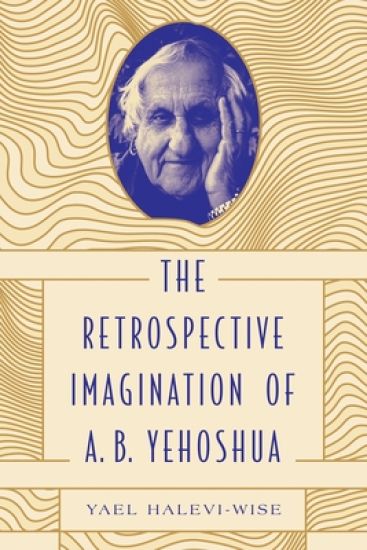
The Retrospective Imagination of A. B. Yehoshua
Yael Halevi-Wise
Pennsylvania State University Press
2020
sidottu
Once referred to by the New York Times as the “Israeli Faulkner,” A. B. Yehoshua’s fiction invites an assessment of Israel’s Jewish inheritance and the moral and political options that the country currently faces in the Middle East. The Retrospective Imagination of A. B. Yehoshua is an insightful overview of the fiction, nonfiction, and hundreds of critical responses to the work of Israel’s leading novelist.Instead of an exhaustive chronological-biographical account of Yehoshua’s artistic growth, Yael Halevi-Wise calls for a systematic appreciation of the author’s major themes and compositional patterns. Specifically, she argues for reading Yehoshua’s novels as reflections on the “condition of Israel,” constructed multifocally to engage four intersecting levels of signification: psychological, sociological, historical, and historiosophic. Each of the book’s seven chapters employs a different interpretive method to showcase how Yehoshua’s constructions of character psychology, social relations, national history, and historiosophic allusions to traditional Jewish symbols manifest themselves across his novels. The book ends with a playful dialogue in the style of Yehoshua’s masterpiece, Mr. Mani, that interrogates his definition of Jewish identity.Masterfully written, with full control of all the relevant materials, Halevi-Wise’s assessment of Yehoshua will appeal to students and scholars of modern Jewish literature and Jewish studies.
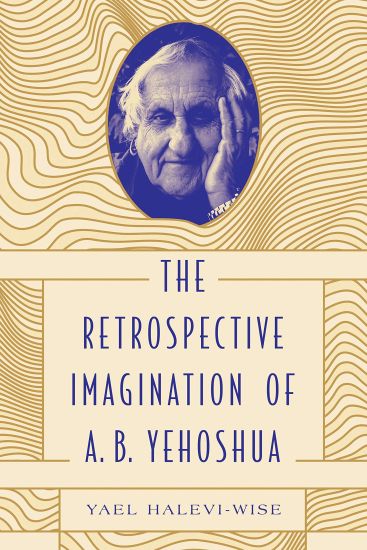
The Retrospective Imagination of A. B. Yehoshua
Yael Halevi-Wise
Pennsylvania State University Press
2024
pokkari
Once referred to by the New York Times as the “Israeli Faulkner,” A. B. Yehoshua’s fiction invites an assessment of Israel’s Jewish inheritance and the moral and political options that the country currently faces in the Middle East. The Retrospective Imagination of A. B. Yehoshua is an insightful overview of the fiction, nonfiction, and hundreds of critical responses to the work of Israel’s leading novelist.Instead of an exhaustive chronological-biographical account of Yehoshua’s artistic growth, Yael Halevi-Wise calls for a systematic appreciation of the author’s major themes and compositional patterns. Specifically, she argues for reading Yehoshua’s novels as reflections on the “condition of Israel,” constructed multifocally to engage four intersecting levels of signification: psychological, sociological, historical, and historiosophic. Each of the book’s seven chapters employs a different interpretive method to showcase how Yehoshua’s constructions of character psychology, social relations, national history, and historiosophic allusions to traditional Jewish symbols manifest themselves across his novels. The book ends with a playful dialogue in the style of Yehoshua’s masterpiece, Mr. Mani, that interrogates his definition of Jewish identity.Masterfully written, with full control of all the relevant materials, Halevi-Wise’s assessment of Yehoshua will appeal to students and scholars of modern Jewish literature and Jewish studies.

Sheds light on the art and artists that gave material form to Mughal imperial visionOver the course of the sixteenth and early seventeenth centuries, Mughal court painters evolved from illustrators of manuscripts and albums to active mediators of imperial visionary experience, cultivating their patrons' earthly and spiritual authority. Featuring over 80 color illustrations, The Brush of Insight traces this shift, demonstrating how royal artists created a new visual economy that featured highly naturalistic royal portraits and depictions of the emperors' dreams. These images, in turn, shaped the perception of the Mughal emperors' preeminence in all domains—temporal and spiritual—from the reign of Akbar to that of his son and successor, Jahangir. In analyzing a wide range of visual materials including manuscripts, albums, and coins, art historian Yael Rice documents how manuscript painters and paintings challenged the status of writing as the primary medium for the transmission of knowledge and experience. With compelling material and original arguments, The Brush of Insight probes how pictures and illustrated books became central to imperial modes of seeing and being in early modern Mughal South Asia.
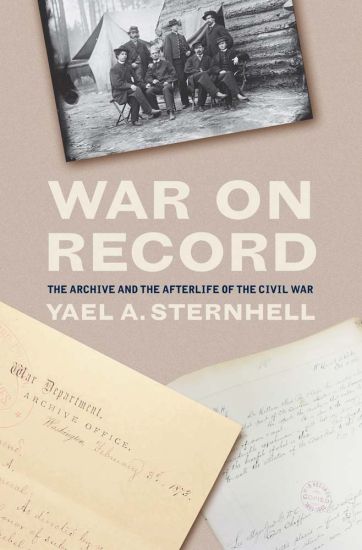
A history of the United States’ greatest archival project and how it has shaped what we know about the Civil War Winner of the 2024 Tom Watson Brown Book Award • Shortlisted for the 2024 Gilder Lehrman Lincoln Prize The Civil War generated a vast archive of official records—documents that would shape the postwar era and determine what future generations would know about the war. Yael Sternhell traces these records from their creation during wartime through their deployment in a host of postwar battles, including those between the federal government and Southerners seeking reparations and between veterans blaming each other for defeat. These documents were eventually published in the most important historical collection ever to have been assembled in the United States: The War of the Rebellion: The Official Records of the Union and the Confederate Armies. Known as the OR, it is the ultimate source for generations of scholars and writers and ordinary citizens researching the war. By delving into the archive, Sternhell reveals its power to shape myths, hide truths, perpetuate rancor, and foster reconciliation. Far more than a storehouse of papers, the Civil War archive is a major historical actor in its own right.

The men, women, and even animals in this collection live at the mercy of their hearts. Young and old, on two legs or four, they grope for love and tenderness, knowing that all connection is fraught with danger and all relationship random and evanescent. Yet the heart wants what it wants. The title novella, a wrenching account of the end of love, traces a gentle dog's transformation into a vicious beast as the couple who owns him breaks apart. In The Happiness Game the tenuous bonds between husband and wife are undermined by black crows and weak hearts, while Matti presents a chorus of voices--doctors, nurses, jilted wife, dying husband--that recounts an old man's passion for his lover, a fifteen-year-old Lolita. Wise and deft, Housebroken navigates the moments of decision, betrayal, longing, and jealousy that torment the souls of wounded lovers.
Arguing that genre must play a role in our study of narrative fiction, this tour of the novel examines interactive storytelling scenes in which characters argue about how to tell a tale that meets their respective social and aesthetic expectations. Through intense readings of interactive storytelling scenes in works spanning the 17th through 20th centuries, Halevi-Wise demonstrates how dramatized arguments about storytelling open a window on social and generic dilemmas affecting the narrative of each novel at the time of its composition. Examined in detail are Cervantes' Don Quixote, Sterne's Tristam Shandy, Austen's Northanger Abbey, Dickens's Little Dorrit, Conrad's Lord Jim, Yehoshua's Mr. Mani, and Esquivel'sI Like Water for Chocolate.Redressing an imbalance between sociological approaches that displace aesthetic considerations and aesthetic analyses that bracket cultural phenomena, the author shows why both genre and culture must be taken into account when we analyze the formation and reception of a narrative. Each interactive storytelling event illustrates how social and aesthetic interests compete and reinvent themselves within their framing texts and those texts' respective national and historical contexts. Just as social interactions cannot be indefinitely displaced in the study of narrative fiction, genre cannot be ignored in the study of identity politics. What emerges from this unique examination is a postmodern poetics of the novel that takes genre and history into account.

Let's Keep Talking: Lacanian Tales of Love, Sex, and Other Catastrophes is a collection of original Lacanian case studies of young people today as they struggle with their own modern existential dilemmas of sex and love, life and death. The context, background, and forms of expression may be contemporary, but the clients' problems, structures, and existential dilemmas are quite classic. The five narrative tales highlight the role a Lacanian orientation played in the interactions, formulations, and results, from initial meetings to terminations. Grounded in concrete clinical material, the case studies illuminate specific and universal themes of human suffering and how we can treat that suffering by speaking. Yael Baldwin argues that in our cultural milieu of "connective technologies", and the rise of biotechnology and psychopharmacology in particular, we are in need of mental health treatment methods that highlight talking and relationships as essential to our personhood, our suffering, and our healing and growth. Let's Keep Talking argues that now, more than ever, we need the endeavour of analytic talk therapy.

With chapters from Rik Loose, Fabian Naparstek, Patricia Gherovici, Bruce Fink, Thomos Svolos and many others, the anthology is for people interested in the topic of addictions, or in Lacanian psychoanalysis, and especially for those interested in how the two intersect. Lacan and Addiction is based on papers presented at a 2006 conference where Lacanians from around the world gathered to speak about addictions. Conference participants explored the complexity of the problem for the individual, society, clinicians, and for treatment. In the current climate, where addiction is mostly treated by variations of twelve step approaches and psychopharmacological "countermeasures", it is all too easy to lose sight of the dimensions of addiction that render it not just a disease to be managed but rather a significant form of human suffering and a subjective responsibility, both of which are critical components of addiction treatment. More and more, addiction treatment is turning away from psychological and psychoanalytic theorization and towards psychopharmacological measures; this anthology attempts to rectify that situation.
International Responses to Traumatic Stress
Yael Danieli; Nigel S. Rodley; Lars Weisaeth
Routledge
2018
nidottu
"International Responses to Traumatic Stress" asks pertinent questions as the United Nations observes its 50th Anniversary. It focuses on the effects of traumatic stress which accompany personal and collective disasters. In an overcrowded world, recent catastrophes, natural as well as man-made, have left a wake of tormented people, ranging from political prisoners to humiliated UN peace-keepers.
"Sharing the Front Line and the Back Hills" points to a crisis facing international institutions and the media who seek to alleviate and report human suffering throughout the world. The goals of the editor are to tell the story of thousands of individuals dedicated to helping others; and to integrate issues of protection and care into all levels of planning, implementing and evaluating international intervention and action. The book identifies approaches that have proven useful and explores and suggests future directions.
The Universal Declaration of Human Rights
Yael Danieli; Elsa Stamatopoulou; Clarence Dias
Routledge
2018
nidottu
Containing contributions by specialists from the intergovernmental and non-governmental worlds and voices of victim/survivors, the book critically reviews the international and regional human rights systems established over the past 50 years in terms of their effectiveness for the victims of human rights violations, and provides future directions for the promotion and protection of human rights.

In this book, Yael Greenberg discusses and clarifies a number of controversial issues and phenomena in the generic literature, including the existence of "episodic genericity," existential presuppositions, and contextual restrictions of generics.
In this book, Yael Greenberg discusses and clarifies a number of controversial issues and phenomena in the generic literature, including the existence of "episodic genericity," existential presuppositions, and contextual restrictions of generics.