This book provides a detailed study of urban agricultural development. It establishes a comprehensive evaluation system for urban agriculture and accurately grasps the development level and status of urban agriculture, to provide action guidelines for decision-making bodies in urban agriculture. This book is intended for graduate students who are interested in the development of urban agriculture and researchers studying the field of urban agriculture.
This is a unique book that provides a comprehensive understanding of nonlinear equations involving the fractional Laplacian as well as other nonlocal operators. Beginning from the definition of fractional Laplacian, it gradually leads the readers to the frontier of current research in this area. The explanations and illustrations are elementary enough so that first year graduate students can follow easily, while it is advanced enough to include many new ideas, methods, and results that appeared recently in research literature, which researchers would find helpful. It focuses on introducing direct methods on the nonlocal problems without going through extensions, such as the direct methods of moving planes, direct method of moving spheres, direct blowing up and rescaling arguments, and so on. Different from most other books, it emphasizes on illuminating the ideas behind the formal concepts and proofs, so that readers can quickly grasp the essence.
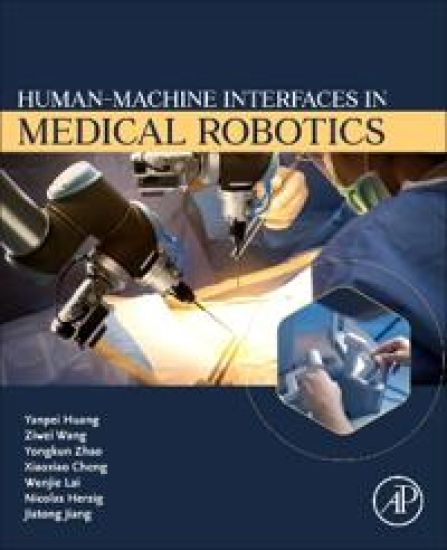
Human-Machine Interfaces in Medical Robotics presents essential and advanced information on developing intuitive human-machine interfaces (HMI) for robotic surgery and rehabilitation. This book provides extensive coverage of multidisciplinary information needed to develop efficient HMI, discussing core technologies of the field, including hand-free control strategies, sensory feedback, data-driven approaches, human-robot shared control, autonomous control, human motor adaption, training, and learning. Arranged in three parts, including interfaces in medical robotics, intelligent machines, and human users, this book provides potential solutions to open questions like what the optimal interface and efficient interaction mode is to facilitate a surgeon’s operation, a patient’s motor control, or human augmentation.
This book introduces polyhedra as a tool for graph theory and discusses their properties and applications in solving the Gauss crossing problem. The discussion is extended to embeddings on manifolds, particularly to surfaces of genus zero and non-zero via the joint tree model, along with solution algorithms. Given its rigorous approach, this book would be of interest to researchers in graph theory and discrete mathematics.