
Kirjahaku
Etsi kirjoja tekijän nimen, kirjan nimen tai ISBN:n perusteella.
945 tulosta hakusanalla Yosef Cohen

River - Yosef and Angelique
Lulu.com
2017
pokkari
My first book of two short stories. There are no chapters in this book, and if you like romantic fiction taken from a different perspective, then this book is for you.
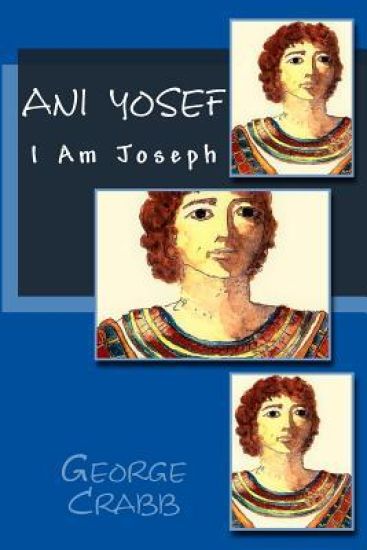
"Ani Yosef", "I am Joseph", he said to his brothers who thought he was dead long ago. This was the story of Joseph, and in it we see a story of another. His father loved him the most, his brothers conspired to murder him, sold him for silver, and gave him over to the Gentiles. Sound familiar? There's much more to see if you read this book.
Benyamin Yosef Bria
Secut Press
2012
nidottu
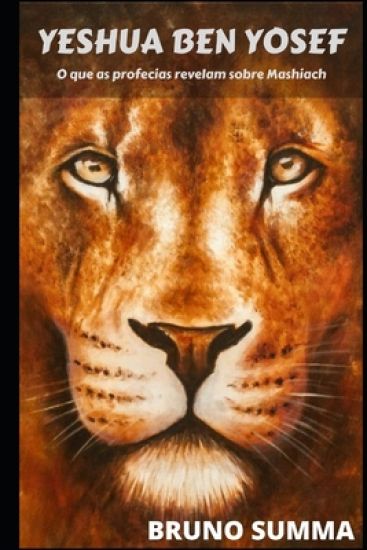
Yeshua Ben Yosef: O que as profecias revelam sobre Mashiach
Bruno Summa
Independently Published
2020
nidottu
As profecias encontradas no Antigo Testamento s o verdadeiras fontes de revela o e sabedoria que s o entregues por Deus aos homens. Atrav s delas, Deus mostra a santidades em Sua obra e como tais s o conectadas com Sua santidade quando se d o cumprimento de cada uma delas. Cada profecia sobre Messias, as quais muitas se cumpriram na vida de Yeshua Ben Yosef, o torna cada vez mais conectado com a vontade de Deus, pois o revela como o maior plano divino antes da cria o de todas as coisas. Apesar de muitos seguidores de Yeshua entenderem suas realiza es e feitos, poucos entendem suas verdadeiras miss es e objetivos. O plano de reden o formulado por Deus atrav s de Messias, ao mesmo tempo que tem uma apar ncia clara e direta, um tanto obscuro em diversos meios, pois o foco de sua miss o muito pouco compreendido. A mais profunda declara o de Yeshua foi de ser o Messias, por m existem muitas d vidas em torno do que realmente significa ser Messias e em como a mentalidade judaica, a mesma que levou Yeshua a se declarar tal, define a pessoa de Messias e os motivos de sua cria o antes de todas as coisas.Mil anos antes de sua vinda, profetas por todo Israel come aram a afirmar como se daria esse plano de Deus. Atrav s de suas palavras, Deus revela muito mais do que o entendimento humano consegue absorver. Toda profecia do Tanakh que se cumpriu na vida de Yeshua, possui revela es ocultas e profundas sobre sua pessoa, as miss es de Mashiach e os motivos do plano de reden o de Deus.Esse livro traz, de uma forma como nunca vista antes, estudos sobre as profecias mais conhecidas que se concretizaram na vida de Yeshua e como elas podem revelar aquilo que os olhos n o enxergam, assim trazendo uma compreens o sobre a verdadeira obra de Yeshua, sua vida, sua pessoa e principalmente, por quem ele realmente veio.

Merry Christmas Yosef - Xmas Activity Book: (Personalized Children's Activity Book)
Xmasst
Createspace Independent Publishing Platform
2017
nidottu
Merry Christmas Yosef is a personalized kids activity book, it includes personalized crosswords, word searches, number puzzles, jokes, drawing and coloring >It is suitable for children between 6-11 years old It is a unique Christmas present for Yosef, and is the perfect gift this Xmas This personalized book is also available for other names This is a great gift for children and an amazing keepsake for parents
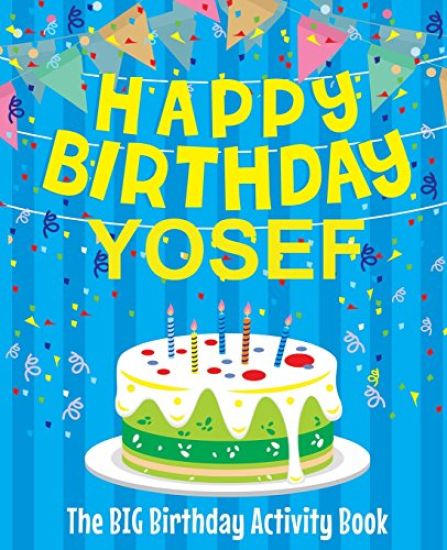
Happy Birthday Yosef - The Big Birthday Activity Book: (Personalized Children's Activity Book)
Birthdaydr
Createspace Independent Publishing Platform
2018
nidottu
Happy Birthday Yosef is a personalized kids activity book, it includes personalized crosswords, word searches, number puzzles, jokes, drawing and coloring >It is suitable for children between 6-11 years old It is the perfect birthday present for Yosef, and is a great keepsake for parents to remember their child's early years and birthdays This personalized book is available for other names also This is a great gift for children and an amazing keepsake for parents Happy Birthday Yosef

Yeshua Bar Yosef
VDM Verlag Dr. Muller Aktiengesellschaft Co. KG
2010
nidottu
Observera att förlaget som ger ut denna produkt baserar innehållet i sina produkter på fria källor som Wikipedia. Boken är med stor sannolikhet endast ett utdrag ur dessa informationskällor, alltså inte en vanlig bok i den bemärkelsen.
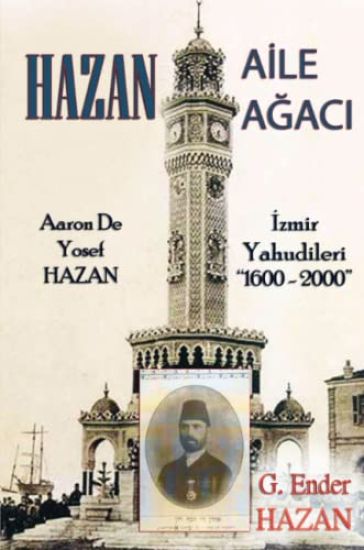
Hazan Aile Agaci: "Aaron De Yosef Hazan - Izmir Yahudileri (1600 - 2000)"
G. Ender Hazan
Lulu.com
2015
nidottu
Bu kitap, HAZAN ailesinin, 400 yil boyunca Izmir'de dogmus ve yasamis , Osmanli Imparatorlugunun degisik sehirlerinde "HAHAMBASI" olarak gorev almis din bilgini buyuk liderlerini anlatmaktadir. Kitabin ikinci yarisi, Izmir Yahudilerinin buyuk laik lideri AARON DE YOSEF HAZAN (1848 - 1931)'a aittir. * LEV TOV = IYI KALP olarak bilinen Aaron de Yosef Hazan, pek cok konuda Izmir Musevilerine liderlik yapmistir. * Izmir'deki ilk Musevi gazetelerden biri olan La Bueno Esperansa gazetesini 41 yil tek basina ayakta tutmustur. * Ozer Dalim Yardimlasma cemiyetini kurup, 50 yil baskanligini yapmistir. * Izmir Musevilerine 50 yil Oz Turkce ogretmenligi yapmistir. * Karatas Hastanesi kurucularindan olup, Bet Israel sinagogunun insasini tamamlattirmistir. * Izmir'de ilk Musevi KIZ OKULUNU acmis, LIGA cemiyetini kurmustur. * Fakir genclere MESLEK okulunu kurabilmek icin buyuk mucadeleler vermistir. * Rav Hayim Palaci'nin kuzenidir. * Ailesinde 400 yil boyunca Izmir dogumlu hahambasilar bulunmaktadir.
Forefathers Vol.4: Life of Yosef
Pinchas Polonsky
Createspace Independent Publishing Platform
2013
nidottu

Ghetto, Shtetl, or Polis? The Jewish Community in the Writings of Karl Emil Franzos, Sholom Aleichem, and Shmuel Yosef Agnon
Miriam Roshwald
WILDSIDE PRESS
2007
sidottu

Ghetto, Shtetl, or Polis? The Jewish Community in the Writings of Karl Emil Franzos, Sholom Aleichem, and Shmuel Yosef Agnon
Miriam Roshwald
Borgo Press
2007
pokkari
Broca's region has been in the news ever since scientists realized that particular cognitive functions could be localized to parts of the cerebral cortex. Its discoverer, Paul Broca, was one of the first researchers to argue for a direct connection between a concrete behavior--in this case, the use of language--and a specific cortical region. Today, Broca's region is perhaps the most famous part of the human brain, and for over a century, has persisted as the focus of intense research and numerous debates. The name has even penetrated mainstream culture through popular science and the theater. Broca's region is famous for a good reason: As language is one of the most distinctive human traits, the cognitive mechanisms that support it and the tissues in which these mechanisms are housed are also quite complex, and so have the potential to reveal a lot not only about how words, phrases, sentences, and grammatical rules are instantiated in neural tissue, but also, and more broadly, about how brain function relates to behavior. Paul Broca's discoveries were an important, driving force behind the more general effort to relate complex behavior to particular parts of the cerebral cortex, which, significantly, produced the first brain maps. These early studies also, however, suffered from the use of crude techniques, definitions, and distinctions, as well as from ill founded and misdirected assumptions. Although much has been discovered since Broca's work, even today, these problems have not been completely solved. Nonetheless, particularly as a result of important advances made in neuroimaging during the past two decades, Broca's region and all language areas are currently being investigated from every angle. Indeed, as the volume of research into the relations between brain and language has created several communities, each with its own concepts, methods, and considerations, it seemed that it was time to stop, get together, and reflect on the state of the art. This book is the result of that collective reflection, which took place primarily at the Broca's Region Workshop, held in Jülich and Aachen, Germany, in June 2004. In it, Yosef Grodzinsky and Katrin Amunts tried to accomplish a nearly impossible task: to mix intellectual traditions and cultures, and juxtapose rather disparate bodies of knowledge, styles of reasoning, and forms of argumentation. Participants were scientists with diverse backgrounds; each invited to contribute his/her particular take, with the hope that a coherent, perhaps even novel, picture would emerge. All of the participants have a special interest in Broca's Region, and represent the myriad angles from which we currently approach it: neuroanatomy, physiology, evolutionary biology, cognitive psychology, clinical neurology, functional imaging, speech and language research, computational biology, and psycho-, neuro-, and theoretical linguistics. The book's main chapters are the contributions of the Workshop's participants and their research teams. Parts of the discussion during the Workshop are included to underscore the richness of viewpoints, and to give readers an idea of the level of interaction that took place. As Broca's region is such an historically significant concept and rich area, this book contains a collection of classic and recent-yet-classic papers. Along with cutting-edge science, Grodzinsky and Amunts want to remind readers of the celebrated past from which much can be learned. The historical chapters include the first two papers written by Paul Broca, as well some work by two of the most important neurologists of the nineteenth century, Ludwig Lichtheim and John Hughlings-Jackson. Also included are parts of twentieth century papers by Korbinian Brodmann, Roman Jakobson, Norman Geschwind, Harold Goodglass, and Jay Mohr. Because this book both reflects the state of the art in Broca's-region research and contains a tribute to its celebrated past, it will be a valuable resource for student and professional researchers. It will also stimulate further interdisciplinary research, which is a significant contribution, as the project called "Broca's region," encompassing the study of brain/language relations, is far from finished.
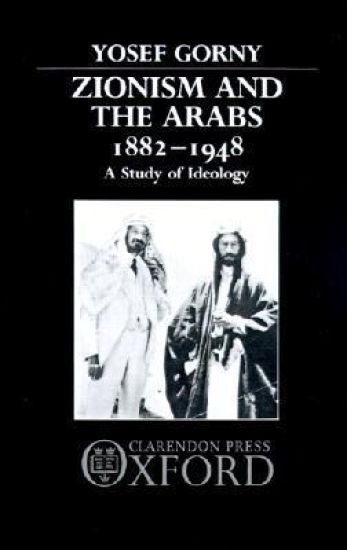
Yosef Gorny examines the attitudes of Jewish settlers and Zionist intellectual and political leaders towards the Arab population in the period when Jewish settlement began in Palestine, and shows that the ideological principles of Zionism were a decisive influence throughout the world.

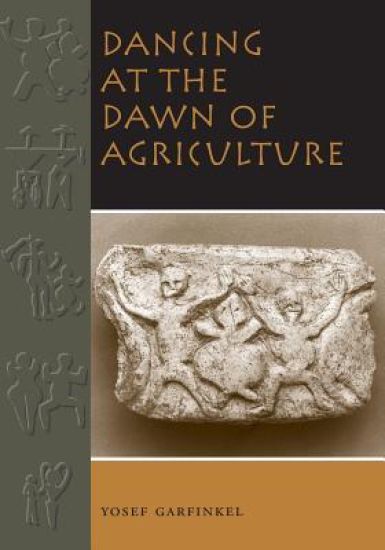
As the nomadic hunters and gatherers of the ancient Near East turned to agriculture for their livelihood and settled into villages, religious ceremonies involving dancing became their primary means for bonding individuals into communities and households into villages. So important was dance that scenes of dancing are among the oldest and most persistent themes in Near Eastern prehistoric art, and these depictions of dance accompanied the spread of agriculture into surrounding regions of Europe and Africa.In this pathfinding book, Yosef Garfinkel analyzes depictions of dancing found on archaeological objects from the Near East, southeastern Europe, and Egypt to offer the first comprehensive look at the role of dance in these Neolithic (7000-4000 BC) societies. In the first part of the book, Garfinkel examines the structure of dance, its functional roles in the community (with comparisons to dance in modern pre-state societies), and its cognitive, or symbolic, aspects. This analysis leads him to assert that scenes of dancing depict real community rituals linked to the agricultural cycle and that dance was essential for maintaining these calendrical rituals and passing them on to succeeding generations. In the concluding section of the book, Garfinkel presents and discusses the extensive archaeological data-some 400 depictions of dance-on which his study is based.
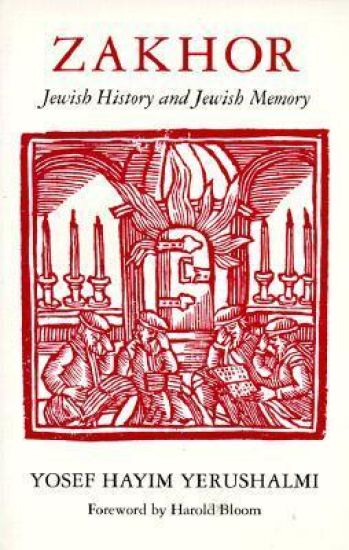
"Mr. Yerushalmi's previous writings . . . established him as one of the Jewish community's most important historians. His latest book should establish him as one of its most important critics. Zakhor is historical thinking of a very high order - mature speculation based on massive scholarship." - New York Times Book Review
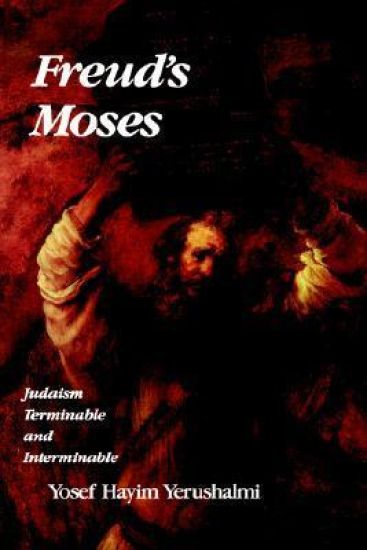
Moses and Monotheism, Freud’s last major book and the only one specifically devoted to a Jewish theme, has proved to be one of the most controversial and enigmatic works in the Freudian canon. Among other things, Freud claims in the book that Moses was an Egyptian, that he derived the notion of monotheism from Egyptian concepts, and that after he introduced monotheism to the Jews he was killed by them. Since these historical and ethnographic assumptions have been generally rejected by biblical scholars, anthropologists, and historians of religion, the book has increasingly been approached psychoanalytically, as a psychological document of Freud’s inner life—of his allegedly unresolved Oedipal complex and ambivalence over his Jewish identity. In Freud’s Moses a distinguished historian of the Jews brings a new perspective to this puzzling work. Yosef Hayim Yerushalmi argues that while attempts to psychoanalyze Freud’s text may be potentially fruitful, they must be preceded by a genuine effort to understand what Freud consciously wanted to convey to his readers. Using both historical and philological analysis, Yerushalmi offers new insights into Freud’s intentions in writing Moses and Monotheism. He presents the work as Freud’s psychoanalytic history of the Jews, Judaism, and the Jewish psyche—his attempt, under the shadow of Nazism, to discover what has made the Jews what they are. In the process Yerushalmi’s eloquent and sensitive exploration of Freud’s last work provides a reappraisal of Freud’s feelings toward anti-Semitism and the gentile world, his ambivalence about psychoanalysis as a “Jewish” science, his relationship to his father, and above all a new appreciation of the depth and intensity of Freud’s identity as a “godless Jew.”
An anthology of over 200 Amharic poems that incorporate anthropomorphic and personified characters in satirizing social issues.