This colourful book uses real life photographs and attractive images to help children learn the letter sounds, upper and lower case letters, word and picture association, sound association, and practising writing lower case letters.
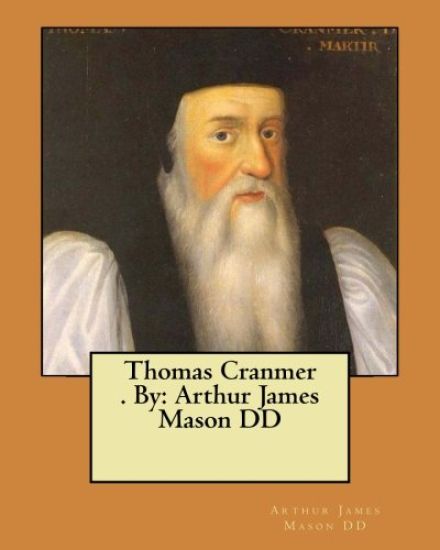
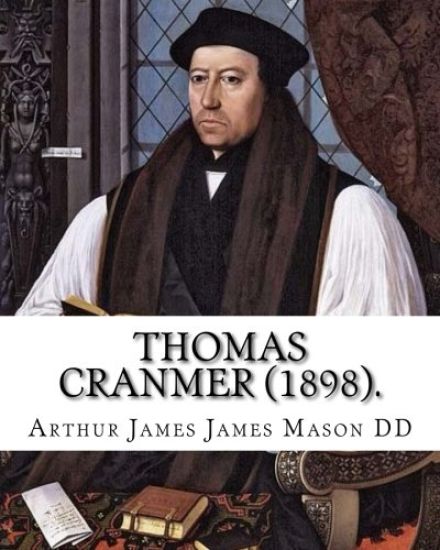
Thomas Cranmer (2 July 1489 - 21 March 1556) was a leader of the English Reformation and Archbishop of Canterbury during the reigns of Henry VIII, Edward VI and, for a short time, Mary I. He helped build the case for the annulment of Henry's marriage to Catherine of Aragon, which was one of the causes of the separation of the English Church from union with the Holy See. Along with Thomas Cromwell, he supported the principle of Royal Supremacy, in which the king was considered sovereign over the Church within his realm. During Cranmer's tenure as Archbishop of Canterbury, he was responsible for establishing the first doctrinal and liturgical structures of the reformed Church of England. Under Henry's rule, Cranmer did not make many radical changes in the Church, due to power struggles between religious conservatives and reformers. However, he succeeded in publishing the first officially authorised vernacular service, the Exhortation and Litany. When Edward came to the throne, Cranmer was able to promote major reforms. He wrote and compiled the first two editions of the Book of Common Prayer, a complete liturgy for the English Church. With the assistance of several Continental reformers to whom he gave refuge, he changed doctrine in areas such as the Eucharist, clerical celibacy, the role of images in places of worship, and the veneration of saints. Cranmer promulgated the new doctrines through the Prayer Book, the Homilies and other publications. After the accession of the Roman Catholic Mary I, Cranmer was put on trial for treason and heresy. Imprisoned for over two years and under pressure from Church authorities, he made several recantations and apparently reconciled himself with the Roman Catholic Church. However, on the day of his execution, he withdrew his recantations, to die a heretic to Roman Catholics and a martyr for the principles of the English Reformation. Cranmer's death was immortalised in Foxe's Book of Martyrs and his legacy lives on within the Church of England through the Book of Common Prayer and the Thirty-Nine Articles, an Anglican statement of faith derived from his work..... Arthur James Mason DD (4 May 1851 - 24 April 1928) was an English clergyman, theologian and classical scholar. He was Lady Margaret's Professor of Divinity, Master of Pembroke College, Cambridge, and Vice-Chancellor of the University of Cambridge. Early life: The third son of George William Mason JP, of Morton Hall, Retford, Nottinghamshire, by his marriage to Marianne Atherton Mitford (born 1821 in India), a daughter of Captain Joseph George Mitford (1791-1875), of the Madras Army, Mason was educated at Repton School and Trinity College, Cambridge. The third of four sons, his youngest brother, Charles Evelyn Mason, was killed in the Zulu War of 1879.His brother William Henry Mason was a High Sheriff of Nottinghamshire. His sister, Harriet, was a poor law inspector and another sister, Agnes founded a religious community. Their grandfather, J. G. Mitford, was the son of Bertram Mitford (1748-1800) of Mitford Castle in Northumberland. Career: Mason was elected a Fellow of Trinity College in 1873 and was a college tutor from 1874 to 1877, when he went to Cornwall as Canon of Truro. His departure from Cambridge was at the urging of his friend Edward White Benson, who had been appointed as Bishop of Truro and wanted Mason to act as diocesan missioner.....
William Edward Collins (18 February 1867 - 22 March 1911) was an Anglican bishop, Bishop of Gibraltar from 1904 until his death. Biography: William Edward Collins was the second son of Joseph Henry Collins, a mining engineer and writer on geology. He was born in London, but his father moved to Cornwall while he was a child. One of his brothers was Arthur L. Collins, a mining engineer who was murdered in the United States. He was educated at Nuttall's and Chancellor's schools in Truro and at Selwyn College, Cambridge.Ordained in 1891, he began his career as a Curate at All Hallows-by-the-Tower in the City of London. After a short spell as a Lecturer at his old college he became Professor of Ecclesiastical History at King's College London where he remained until his elevation to the Episcopate. As Bishop of Gibraltar he worked from The Convent, which was the residence of the Governor of Gibraltar, although he had his own house in Malta. A Sub-Prelate of the Order of St John of Jerusalem, he died on 22 March 1911 in Constantinople.He is interred at the St. John the Evangelist's Anglican Church, Izmir in Turkey.Collins' life was described in a biography by Arthur James Mason.......... Arthur James Mason DD (4 May 1851 - 24 April 1928) was an English clergyman, theologian and classical scholar. He was Lady Margaret's Professor of Divinity, Master of Pembroke College, Cambridge, and Vice-Chancellor of the University of Cambridge. Early life: The third son of George William Mason JP, of Morton Hall, Retford, Nottinghamshire, by his marriage to Marianne Atherton Mitford (born 1821 in India), a daughter of Captain Joseph George Mitford (1791-1875), of the Madras Army, Mason was educated at Repton School and Trinity College, Cambridge. The third of four sons, his youngest brother, Charles Evelyn Mason, was killed in the Zulu War of 1879.His brother William Henry Mason was a High Sheriff of Nottinghamshire. His sister, Harriet, was a poor law inspector and another sister, Agnes founded a religious community. Their grandfather, J. G. Mitford, was the son of Bertram Mitford (1748-1800) of Mitford Castle in Northumberland. Career: Mason was elected a Fellow of Trinity College in 1873 and was a college tutor from 1874 to 1877, when he went to Cornwall as Canon of Truro. His departure from Cambridge was at the urging of his friend Edward White Benson, who had been appointed as Bishop of Truro and wanted Mason to act as diocesan missioner. In 1884, after Benson had been translated to Canterbury, Mason took up a benefice as Vicar of All Hallows-by-the-Tower, Barking, in the City of London, where he remained until 1895. That year he returned to Cambridge as Lady Margaret's Professor of Divinity (1895-1903) and also became a Canon of Canterbury Cathedral. He was a Fellow of Jesus from 1896 to 1903, before serving as Master of Pembroke from 1903 to 1912. In 1908 he was elected Vice-Chancellor of the University, continuing in the post for two years. As well as works on theology and biography, Mason wrote and translated hymns. As "A. J. M.", he was a contributor to the Dictionary of National Biography. Private life: On 11 January 1899, Mason married Mary Margaret, a daughter of the Rev. G. J. Blore DD, Honorary Canon of Canterbury Cathedral and a former Head Master of King's School, Canterbury. They had two sons, Paul and Lancelot, and a daughter, Mildred. Paul became a diplomat and was ambassador to the Netherlands in the 1950s, while Lancelot followed his father into the Church and was Archdeacon of Chichester from 1946 to 1973. Arthur James Mason died at Canterbury on 24 April 1928....................
Der erste Band der DSKE enthält Kierkegaards Journale und Aufzeichnungen der Jahre 1835-1839 und beruht auf der historisch-kritischen dänischen Neuausgabe. Die Texte der von Kierkegaard mit AA, BB, CC und DD gekennzeichneten Journale zeigen die Vielfalt der Interessen und Studien, die Kierkegaard in jenen Jahren, also zu Beginn seiner formativen Periode, verfolgt. Die von autobiographischen Notizen, literarisch-ästhetischen Studien und Entwürfen bis hin zu philosophischen und theologischen Erörterungen reichenden Aufzeichnungen erlauben einen einzigartigen Einblick in die Werkstatt Kierkegaards und damit in die Textgenese selbst. Die Erschließung dieser Aufzeichnungen, die teils privater Natur sind, teils im Hinblick auf eine spätere Veröffentlichung entstanden oder bewahrt wurden, ist häufig unerlässlich für die angemessene Interpretation auch der veröffentlichten Werke. Eine Kierkegaards Intellektualität, Religiosität und poetischer Sprachkraft Genüge tuende Übersetzung der Journale und Aufzeichnungen ist nicht nur Zeichen der ungebrochenen Aktualität Kierkegaards für Theologie, Philosophie, Psychologie und Ästhetik, sondern auch die Grundlage für ein neues und tieferes Verständnis seines Gesamtwerkes, das auf einer zuverlässigen Textgrundlage basiert.
Observera att förlaget som ger ut denna produkt baserar innehållet i sina produkter på fria källor som Wikipedia. Boken är med stor sannolikhet endast ett utdrag ur dessa informationskällor, alltså inte en vanlig bok i den bemärkelsen.
Observera att förlaget som ger ut denna produkt baserar innehållet i sina produkter på fria källor som Wikipedia. Boken är med stor sannolikhet endast ett utdrag ur dessa informationskällor, alltså inte en vanlig bok i den bemärkelsen.
Observera att förlaget som ger ut denna produkt baserar innehållet i sina produkter på fria källor som Wikipedia. Boken är med stor sannolikhet endast ett utdrag ur dessa informationskällor, alltså inte en vanlig bok i den bemärkelsen.
Observera att förlaget som ger ut denna produkt baserar innehållet i sina produkter på fria källor som Wikipedia. Boken är med stor sannolikhet endast ett utdrag ur dessa informationskällor, alltså inte en vanlig bok i den bemärkelsen.
Observera att förlaget som ger ut denna produkt baserar innehållet i sina produkter på fria källor som Wikipedia. Boken är med stor sannolikhet endast ett utdrag ur dessa informationskällor, alltså inte en vanlig bok i den bemärkelsen.
Observera att förlaget som ger ut denna produkt baserar innehållet i sina produkter på fria källor som Wikipedia. Boken är med stor sannolikhet endast ett utdrag ur dessa informationskällor, alltså inte en vanlig bok i den bemärkelsen.
Observera att förlaget som ger ut denna produkt baserar innehållet i sina produkter på fria källor som Wikipedia. Boken är med stor sannolikhet endast ett utdrag ur dessa informationskällor, alltså inte en vanlig bok i den bemärkelsen.
Observera att förlaget som ger ut denna produkt baserar innehållet i sina produkter på fria källor som Wikipedia. Boken är med stor sannolikhet endast ett utdrag ur dessa informationskällor, alltså inte en vanlig bok i den bemärkelsen.
Observera att förlaget som ger ut denna produkt baserar innehållet i sina produkter på fria källor som Wikipedia. Boken är med stor sannolikhet endast ett utdrag ur dessa informationskällor, alltså inte en vanlig bok i den bemärkelsen.