The 18th century was a wealth of knowledge, exploration and rapidly growing technology and expanding record-keeping made possible by advances in the printing press. In its determination to preserve the century of revolution, Gale initiated a revolution of its own: digitization of epic proportions to preserve these invaluable works in the largest archive of its kind. Now for the first time these high-quality digital copies of original 18th century manuscripts are available in print, making them highly accessible to libraries, undergraduate students, and independent scholars.Western literary study flows out of eighteenth-century works by Alexander Pope, Daniel Defoe, Henry Fielding, Frances Burney, Denis Diderot, Johann Gottfried Herder, Johann Wolfgang von Goethe, and others. Experience the birth of the modern novel, or compare the development of language using dictionaries and grammar discourses. ++++The below data was compiled from various identification fields in the bibliographic record of this title. This data is provided as an additional tool in helping to insure edition identification: ++++British LibraryT005654Titlepage in red and black. Parallel English text and German verse translation. Hrn. C.. = J. P. de Crousaz. Variant has comma after "man" in 16 of title.Hamburg: verlegts Christian Herold, 1740. 30],318p., plate: port.; 8
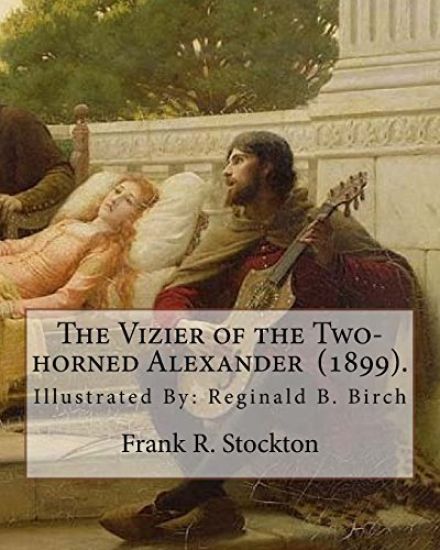
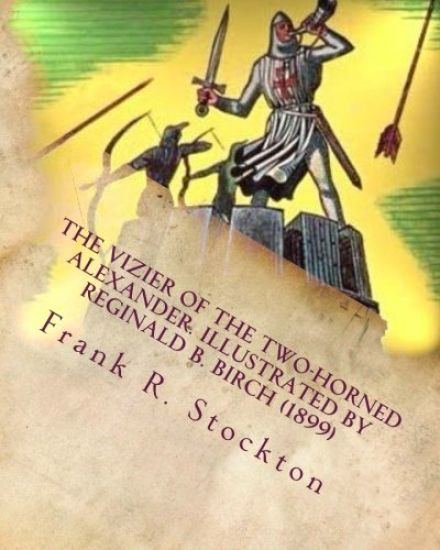
Reginald Bathurst Birch (May 2, 1856 - June 17, 1943) was an English-American artist and illustrator. He was best known for his depiction of the titular hero of Frances Hodgson Burnett's 1886 novel Little Lord Fauntleroy, which started a craze in juvenile fashion. While his illustrated corpus has eclipsed his other work, he was also an accomplished painter of portraits and landscapes......................... Frank Richard Stockton (April 5, 1834 - April 20, 1902) was an American writer and humorist, best known today for a series of innovative children's fairy tales that were widely popular during the last decades of the 19th century. Life: Born in Philadelphia in 1834, Stockton was the son of a prominent Methodist minister who discouraged him from a writing career. After marrying Mary Ann Edwards Tuttle, he and his wife moved to Burlington, New Jersey, where he produced some of his first literary work. The couple then moved to Nutley, New Jersey. For years he supported himself as a wood engraver until his father's death in 1860. In 1867, he moved back to Philadelphia to write for a newspaper founded by his brother. His first fairy tale, "Ting-a-ling," was published that year in The Riverside Magazine; his first book collection appeared in 1870. He was also an editor for Hearth and Home magazine in the early 1870s.Around 1899, he moved to Charles Town, West Virginia. He died in 1902 of cerebral hemorrhage and is buried at The Woodlands in Philadelphia. Writings: Stockton avoided the didactic moralizing common to children's stories of the time. Instead, he humorously poked fun at greed, violence, abuse of power and other human foibles, describing his fantastic characters' adventures in a charming, matter-of-fact way in stories like "The Griffin and the Minor Canon" (1885) and "The Bee-Man of Orn" (1887). These last two stories were republished in 1963 and 1964, respectively, in editions illustrated by Maurice Sendak. "The Griffin and the Minor Canon" won a Lewis Carroll Shelf Award in 1963. His most famous fable, "The Lady, or the Tiger?" (1882), is about a man sentenced to an unusual punishment for having a romance with a king's beloved daughter. Taken to the public arena, he is faced with two doors, behind one of which is a hungry tiger that will devour him. Behind the other is a beautiful lady-in-waiting, whom he will have to marry, if he opens that door. While the crowd waits anxiously for his decision, he sees the princess among the spectators, who points him to the door on the right. The lover starts to open the door and ... the story ends abruptly there. Did the princess save her love by pointing to the door leading to the lady-in-waiting, or did she prefer to see her lover die rather than see him marry someone else? That quandary has made the story a staple in English classes in American schools, especially since Stockton was careful never to hint at what he thought the ending would be (according to Hiram Collins Haydn in The Thesaurus of Book Digests, ISBN 0-517-00122-5). He also wrotea sequel to the story, "The Discourager of Hesitancy." His 1895 adventure novel The Adventures of Captain Horn was the third-best selling book in the United States in 1895. The Bee Man of Orn and several other tales were incorporated in a book published in 1887 by Charles Scribner's Sons entitled The Bee Man of Orn. Stories included "The Bee-man of Orn," "The Griffin and the Minor Canon," "Old Pipes and The Dryad," "The Queen's Museum," "Christmas Before Last," "Prince Hassak's March," "The Battle of the Third Cousins," "The Banished King," and "Philopena." Like his contemporary Mark Twain, Stockton often pokes gentle fun at people's credulity and irrationality.....
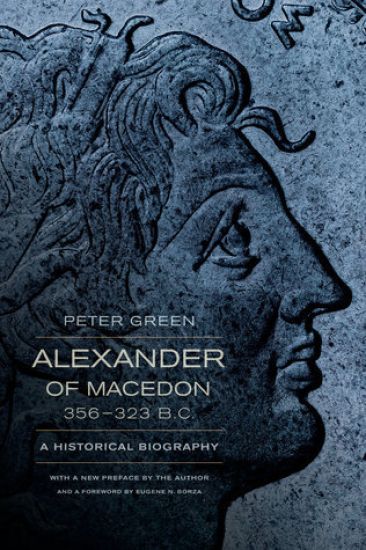
Until recently, popular biographers and most scholars viewed Alexander the Great as a genius with a plan, a romantic figure pursuing his vision of a united world. His dream was at times characterized as a benevolent interest in the brotherhood of man, sometimes as a brute interest in the exercise of power. Green, a Cambridge-trained classicist who is also a novelist, portrays Alexander as both a complex personality and a single-minded general, a man capable of such diverse expediencies as patricide or the massacre of civilians. Green describes his Alexander as "not only the most brilliant (and ambitious) field commander in history, but also supremely indifferent to all those administrative excellences and idealistic yearnings foisted upon him by later generations, especially those who found the conqueror, tout court, a little hard upon their liberal sensibilities." This biography begins not with one of the universally known incidents of Alexander's life, but with an account of his father, Philip of Macedonia, whose many-territoried empire was the first on the continent of Europe to have an effectively centralized government and military. What Philip and Macedonia had to offer, Alexander made his own, but Philip and Macedonia also made Alexander form an important context for understanding Alexander himself. Yet his origins and training do not fully explain the man. After he was named hegemon of the Hellenic League, many philosophers came to congratulate Alexander, but one was conspicuous by his absence: Diogenes the Cynic, an ascetic who lived in a clay tub. Piqued and curious, Alexander himself visited the philosopher, who, when asked if there was anything Alexander could do for him, made the famous reply, "Don't stand between me and the sun." Alexander's courtiers jeered, but Alexander silenced them: "If I were not Alexander, I would be Diogenes." This remark was as unexpected in Alexander as it would be in a modern leader. For the general reader, the book, redolent with gritty details and fully aware of Alexander's darker side, offers a gripping tale of Alexander's career. Full backnotes, fourteen maps, and chronological and genealogical tables serve readers with more specialized interests.
Title: Alexandra Park Prize Essays. Essays on the capabilities and development of the Alexandra Park. ... By R. G., and M. A. Morel. ... With selections from other essays received by the Committee. Edited by B. Ringrose.]Publisher: British Library, Historical Print EditionsThe British Library is the national library of the United Kingdom. It is one of the world's largest research libraries holding over 150 million items in all known languages and formats: books, journals, newspapers, sound recordings, patents, maps, stamps, prints and much more. Its collections include around 14 million books, along with substantial additional collections of manuscripts and historical items dating back as far as 300 BC.The FICTION & PROSE LITERATURE collection includes books from the British Library digitised by Microsoft. The collection provides readers with a perspective of the world from some of the 18th and 19th century's most talented writers. Written for a range of audiences, these works are a treasure for any curious reader looking to see the world through the eyes of ages past. Beyond the main body of works the collection also includes song-books, comedy, and works of satire. ++++The below data was compiled from various identification fields in the bibliographic record of this title. This data is provided as an additional tool in helping to insure edition identification: ++++ British Library Glover, Richard; 1871. 8 . 10350.cc.22/12.
Frank Richard Stockton (April 5, 1834 - April 20, 1902) was an American writer and humorist, best known today for a series of innovative children's fairy tales that were widely popular during the last decades of the 19th century. The story told in this book is based upon legendary history, and the statements on which it is founded appear in the chronicles of Abou-djafar Mohammed Tabari.