Kirjojen hintavertailu. Mukana 12 111 018 kirjaa ja 12 kauppaa.

Kirjahaku

Etsi kirjoja tekijän nimen, kirjan nimen tai ISBN:n perusteella.

1000 tulosta hakusanalla Andrew Merrifield

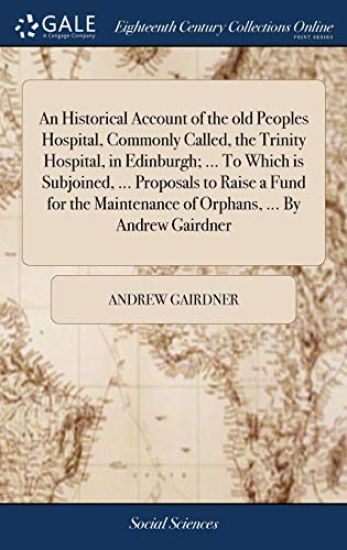
An Historical Account of the old Peoples Hospital, Commonly Called, the Trinity Hospital, in Edinburgh; ... To Which is Subjoined, ... Proposals to Raise a Fund for the Maintenance of Orphans, ... By Andrew Gairdner
The 18th century was a wealth of knowledge, exploration and rapidly growing technology and expanding record-keeping made possible by advances in the printing press. In its determination to preserve the century of revolution, Gale initiated a revolution of its own: digitization of epic proportions to preserve these invaluable works in the largest archive of its kind. Now for the first time these high-quality digital copies of original 18th century manuscripts are available in print, making them highly accessible to libraries, undergraduate students, and independent scholars.Delve into what it was like to live during the eighteenth century by reading the first-hand accounts of everyday people, including city dwellers and farmers, businessmen and bankers, artisans and merchants, artists and their patrons, politicians and their constituents. Original texts make the American, French, and Industrial revolutions vividly contemporary.++++The below data was compiled from various identification fields in the bibliographic record of this title. This data is provided as an additional tool in helping to insure edition identification: ++++Bodleian Library (Oxford)T194062Edinburgh: printed in the year, 1734. viii,56p.; 8
The Whole Works of the Reverend and Pious Mr. Andrew Gray, Late Minister of the Gospel in Glasgow.
The 18th century was a wealth of knowledge, exploration and rapidly growing technology and expanding record-keeping made possible by advances in the printing press. In its determination to preserve the century of revolution, Gale initiated a revolution of its own: digitization of epic proportions to preserve these invaluable works in the largest archive of its kind. Now for the first time these high-quality digital copies of original 18th century manuscripts are available in print, making them highly accessible to libraries, undergraduate students, and independent scholars.The Age of Enlightenment profoundly enriched religious and philosophical understanding and continues to influence present-day thinking. Works collected here include masterpieces by David Hume, Immanuel Kant, and Jean-Jacques Rousseau, as well as religious sermons and moral debates on the issues of the day, such as the slave trade. The Age of Reason saw conflict between Protestantism and Catholicism transformed into one between faith and logic -- a debate that continues in the twenty-first century.++++The below data was compiled from various identification fields in the bibliographic record of this title. This data is provided as an additional tool in helping to insure edition identification: ++++National Library of ScotlandT219017Falkirk: printed by Patrick Mair, for Hugh Mitchell, 1789. 580p.; 8
What is Christ to me, if he is not Mine? or, A Seasonable Defence of the old Protestant Doctrine of Justifying Faith; With a Particular Answer to Mr. Giles Firmin's Eight Arguments to the Contrary. By Andrew Croswell
The 18th century was a wealth of knowledge, exploration and rapidly growing technology and expanding record-keeping made possible by advances in the printing press. In its determination to preserve the century of revolution, Gale initiated a revolution of its own: digitization of epic proportions to preserve these invaluable works in the largest archive of its kind. Now for the first time these high-quality digital copies of original 18th century manuscripts are available in print, making them highly accessible to libraries, undergraduate students, and independent scholars.The Age of Enlightenment profoundly enriched religious and philosophical understanding and continues to influence present-day thinking. Works collected here include masterpieces by David Hume, Immanuel Kant, and Jean-Jacques Rousseau, as well as religious sermons and moral debates on the issues of the day, such as the slave trade. The Age of Reason saw conflict between Protestantism and Catholicism transformed into one between faith and logic -- a debate that continues in the twenty-first century.++++The below data was compiled from various identification fields in the bibliographic record of this title. This data is provided as an additional tool in helping to insure edition identification: ++++British LibraryW029701Booksellers' advertisements, p. 47-48].Boston: Printed and sold by Rogers and Fowle in Queen Street, next to the prison, 1745. 46, 2]p.; 4
An Evil and Adulterous Generation. A Sermon Preached on the Publick Fast, April 19. 1753. By Andrew Eliot, M.A. Pastor of a Church in Boston
The 18th century was a wealth of knowledge, exploration and rapidly growing technology and expanding record-keeping made possible by advances in the printing press. In its determination to preserve the century of revolution, Gale initiated a revolution of its own: digitization of epic proportions to preserve these invaluable works in the largest archive of its kind. Now for the first time these high-quality digital copies of original 18th century manuscripts are available in print, making them highly accessible to libraries, undergraduate students, and independent scholars.The Age of Enlightenment profoundly enriched religious and philosophical understanding and continues to influence present-day thinking. Works collected here include masterpieces by David Hume, Immanuel Kant, and Jean-Jacques Rousseau, as well as religious sermons and moral debates on the issues of the day, such as the slave trade. The Age of Reason saw conflict between Protestantism and Catholicism transformed into one between faith and logic -- a debate that continues in the twenty-first century.++++The below data was compiled from various identification fields in the bibliographic record of this title. This data is provided as an additional tool in helping to insure edition identification: ++++British LibraryW032161Half-title: Mr. Eliot's fast sermon. April 19. 1753.Boston: Printed by S. Kneeland, for J. Winter, over against the King's Arms in Union-Street, 1753. 4],26, 2]p.; 8
The Trial of Lady Maria Bayntun, Wife of Andrew Bayntun, Esq

The Trial of Lady Maria Bayntun, Wife of Andrew Bayntun, Esq

Andrew Bayntun-Rolt

Gale Ecco, Print Editions
2018
sidottu
The 18th century was a wealth of knowledge, exploration and rapidly growing technology and expanding record-keeping made possible by advances in the printing press. In its determination to preserve the century of revolution, Gale initiated a revolution of its own: digitization of epic proportions to preserve these invaluable works in the largest archive of its kind. Now for the first time these high-quality digital copies of original 18th century manuscripts are available in print, making them highly accessible to libraries, undergraduate students, and independent scholars.This collection reveals the history of English common law and Empire law in a vastly changing world of British expansion. Dominating the legal field is the Commentaries of the Law of England by Sir William Blackstone, which first appeared in 1765. Reference works such as almanacs and catalogues continue to educate us by revealing the day-to-day workings of society.++++The below data was compiled from various identification fields in the bibliographic record of this title. This data is provided as an additional tool in helping to insure edition identification: ++++Harvard University Law LibraryN013828London: printed for E. Rich; and sold by the booksellers of Great Britain and Ireland, 1781?]. 40p., plate; 8
Select Sermons by the Late Reverend, Learned, and Pious Mr Andrew Gray
The 18th century was a wealth of knowledge, exploration and rapidly growing technology and expanding record-keeping made possible by advances in the printing press. In its determination to preserve the century of revolution, Gale initiated a revolution of its own: digitization of epic proportions to preserve these invaluable works in the largest archive of its kind. Now for the first time these high-quality digital copies of original 18th century manuscripts are available in print, making them highly accessible to libraries, undergraduate students, and independent scholars.The Age of Enlightenment profoundly enriched religious and philosophical understanding and continues to influence present-day thinking. Works collected here include masterpieces by David Hume, Immanuel Kant, and Jean-Jacques Rousseau, as well as religious sermons and moral debates on the issues of the day, such as the slave trade. The Age of Reason saw conflict between Protestantism and Catholicism transformed into one between faith and logic -- a debate that continues in the twenty-first century.++++The below data was compiled from various identification fields in the bibliographic record of this title. This data is provided as an additional tool in helping to insure edition identification: ++++National Library of ScotlandT175728With a list of subscribers.Edinburgh: printed by John Robertson, 1765. 31, 1],708p.; 12
Memorial and Abstract of the Proof for Andrew Reid, Andrew Boyter, and Alexander Reid, Bailies of the Borough of Kilrenny; Alexander Paton, Treasurer; Alexander Wedderburn, Esq; William Alexander, Esq; James Edie, David Watson, Thomas Smart
The 18th century was a wealth of knowledge, exploration and rapidly growing technology and expanding record-keeping made possible by advances in the printing press. In its determination to preserve the century of revolution, Gale initiated a revolution of its own: digitization of epic proportions to preserve these invaluable works in the largest archive of its kind. Now for the first time these high-quality digital copies of original 18th century manuscripts are available in print, making them highly accessible to libraries, undergraduate students, and independent scholars.This collection reveals the history of English common law and Empire law in a vastly changing world of British expansion. Dominating the legal field is the Commentaries of the Law of England by Sir William Blackstone, which first appeared in 1765. Reference works such as almanacs and catalogues continue to educate us by revealing the day-to-day workings of society.++++The below data was compiled from various identification fields in the bibliographic record of this title. This data is provided as an additional tool in helping to insure edition identification: ++++National Library of ScotlandT173808Drop-head title. Dated at head: February 18. 1766. Edinburgh, 1766]. 46p.; 4
Select Sermons by the Late Reverend, Learned, and Pious MR Andrew Gray, to Which Are Added, Three Sermons, Preached at Bothwell
The 18th century was a wealth of knowledge, exploration and rapidly growing technology and expanding record-keeping made possible by advances in the printing press. In its determination to preserve the century of revolution, Gale initiated a revolution of its own: digitization of epic proportions to preserve these invaluable works in the largest archive of its kind. Now for the first time these high-quality digital copies of original 18th century manuscripts are available in print, making them highly accessible to libraries, undergraduate students, and independent scholars.The Age of Enlightenment profoundly enriched religious and philosophical understanding and continues to influence present-day thinking. Works collected here include masterpieces by David Hume, Immanuel Kant, and Jean-Jacques Rousseau, as well as religious sermons and moral debates on the issues of the day, such as the slave trade. The Age of Reason saw conflict between Protestantism and Catholicism transformed into one between faith and logic -- a debate that continues in the twenty-first century.++++The below data was compiled from various identification fields in the bibliographic record of this title. This data is provided as an additional tool in helping to insure edition identification: ++++National Library of ScotlandN021817Falkirk: printed by Patrick Mair, for James Buchanan and John Hanna, the publishers, 1792. 628p.; 12
Andrew Buckingham

Andrew Buckingham

Jeffri Roberts

Lulu.com
2017
pokkari
Andrew is a young man that's hit by tragedy and knocked down to his knees, only to pick himself back up to travel the world to find himself through experiences. Andrew finds his purpose in life through his adventure, and returns to college to teach the meaning of his experiences.
Andrew and Sue make a kite

Andrew and Sue make a kite

Kath Beattie

Raintree
2021
nidottu
Red Squirrel Phonics is a new series of decodable readers from Raintree, packed with real stories using words that children can read. The programme teaches children phonics skills in a sequential and systematic way so that they can learn the sounds (phonemes) and the letters that represent them (graphemes) and then practise and apply this knowledge through reading appealing, decodable texts that make sense. This ensures that every beginner reader will experience success in their reading from their very first book! In this Level 6 book Andrew and Sue want to make a kite. They look up on the computer how to make one. They use newspaper and paint it red and blue and it flies!
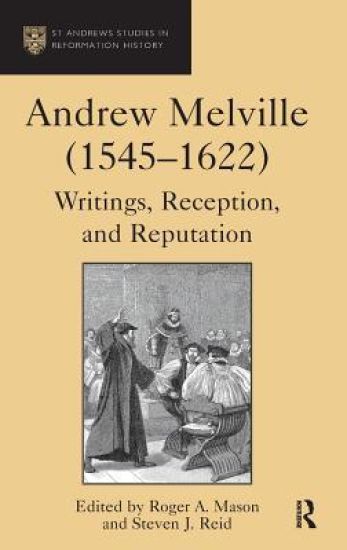
Andrew Melville (1545-1622)

Andrew Melville (1545-1622)

Steven J. Reid

Ashgate Publishing Limited
2014
sidottu
Andrew Melville is chiefly remembered today as a defiant leader of radical Protestantism in Scotland, John Knox’s heir and successor, the architect of a distinctive Scottish Presbyterian kirk and a visionary reformer of the Scottish university system. While this view of Melville’s contribution to the shaping of Protestant Scotland has been criticised and revised in recent scholarship, his broader contribution to the development of the neo-Latin culture of early modern Britain has never been given the attention it deserves. Yet, as this collection shows, Melville was much more than simply a religious reformer: he was an influential member of a pan-European humanist network that valued classical learning as much as Calvinist theology. Neglect of this critical aspect of Melville’s intellectual outlook stems from the fact that almost all his surviving writings are in Latin - and much of it in verse. Melville did not pen any substantial prose treatise on theology, ecclesiology or political theory. His poetry, however, reveals his views on all these topics and offers new insights into his life and times. The main concerns of this volume, therefore, are to provide the first comprehensive listing of the range of poetry and prose attributed to Melville and to begin the process of elucidating these texts and the contexts in which they were written. While the volume contributes to an on-going process that has seen Melville’s role as an ecclesiastical politician and educational reformer challenged and diminished, it also seeks to redress the balance by opening up other dimensions of Melville’s career and intellectual life and shedding new light on the broader cultural context of Jacobean Scotland and Britain.
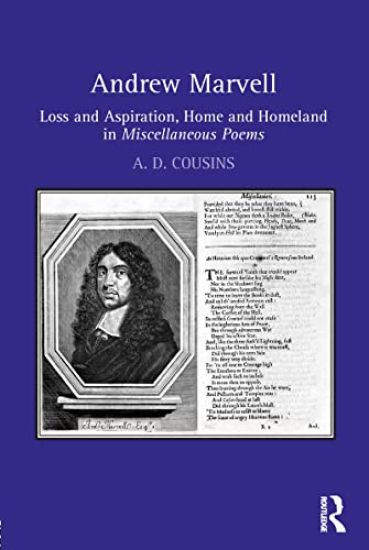
Andrew Marvell

Andrew Marvell

A. D. Cousins

Ashgate Publishing Limited
2016
sidottu
This monograph studies how, across the Folio of 1681, Marvell's poems engage not merely with different kinds of loss and aspiration, but with experiences of both that were, in mid-seventeenth-century England, disturbingly new and unfamiliar. It particularly examines Marvell's preoccupation with the search for home, and with redefining the homeland, in times of civil upheaval. In doing so it traces his progression from being a poet who plays sophisticatedly with received myth to being one who is a national mythmaker in rivalry with his poetic contemporaries such as Waller and Davenant. Although focusing primarily on poems in the Folio of 1681, this book considers those poems in relation to others from the Marvell canon, including the Latin poems and the satires from the reign of Charles II. It closely considers them as well in relation to verse by poets from the classical past and the European, especially English, present.