
Kirjahaku
Etsi kirjoja tekijän nimen, kirjan nimen tai ISBN:n perusteella.
1000 tulosta hakusanalla Ben Ray Redman
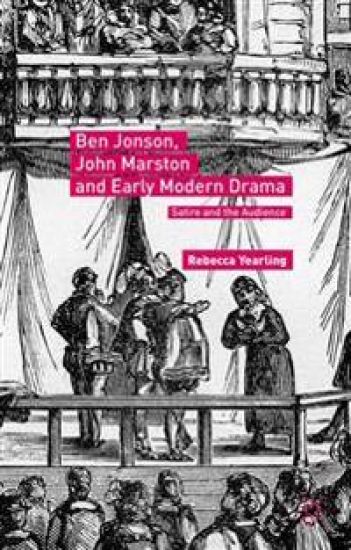
This book examines the influence of John Marston, typically seen as a minor figure among early modern dramatists, on his colleague Ben Jonson. While Marston is usually famed more for his very public rivalry with Jonson than for the quality of his plays, this book argues that such a view of Marston seriously underestimates his importance to the theatre of his time. In it, the author contends that Marston's plays represent an experiment in a new kind of satiric drama, with origins in the humanist tradition of serio ludere. His works—deliberately unpredictable, inconsistent and metatheatrical—subvert theatrical conventions and provide confusingly multiple perspectives on the action, forcing their spectators to engage actively with the drama and the moral dilemmas that it presents. The book argues that Marston's work thus anticipates and perhaps influenced the mid-period work of Ben Jonson, in plays such as Sejanus, Volpone and The Alchemist.
While most critical writing on Jonson concentrates on the plays, poems or masques seen in isolation, this title, first published in 1981, ranges across the genres to explore Jonson’s vision as a whole. The author points to the inner connections that make of the rich variety of Jonson’s writing a single coherent body of work. We see Jonson exploring the relations between culture and society, the difficulties of ideal virtue in a far from ideal world, and above all the problems of art itself. Combining a wide-ranging discussion of Jonson’s interests with a detailed examination of his major works, this book provides a balanced critical introduction to one of the most complex and fascinating figures in English Literature.
While most critical writing on Jonson concentrates on the plays, poems or masques seen in isolation, this title, first published in 1981, ranges across the genres to explore Jonson’s vision as a whole. The author points to the inner connections that make of the rich variety of Jonson’s writing a single coherent body of work. We see Jonson exploring the relations between culture and society, the difficulties of ideal virtue in a far from ideal world, and above all the problems of art itself. Combining a wide-ranging discussion of Jonson’s interests with a detailed examination of his major works, this book provides a balanced critical introduction to one of the most complex and fascinating figures in English Literature.
While most critical writing on Jonson concentrates on the plays, poems or masques seen in isolation, this title, first published in 1981, ranges across the genres to explore Jonson’s vision as a whole. The author points to the inner connections that make of the rich variety of Jonson’s writing a single coherent body of work. We see Jonson exploring the relations between culture and society, the difficulties of ideal virtue in a far from ideal world, and above all the problems of art itself. Combining a wide-ranging discussion of Jonson’s interests with a detailed examination of his major works, this book provides a balanced critical introduction to one of the most complex and fascinating figures in English Literature.
While most critical writing on Jonson concentrates on the plays, poems or masques seen in isolation, this title, first published in 1981, ranges across the genres to explore Jonson’s vision as a whole. The author points to the inner connections that make of the rich variety of Jonson’s writing a single coherent body of work. We see Jonson exploring the relations between culture and society, the difficulties of ideal virtue in a far from ideal world, and above all the problems of art itself. Combining a wide-ranging discussion of Jonson’s interests with a detailed examination of his major works, this book provides a balanced critical introduction to one of the most complex and fascinating figures in English Literature.
Though he is one of the undisputed giants of English literature, Ben Jonson is known to most people only as the author of one or two masterly plays which regularly appear in the drama repertory. He is much less well-known for his whole oeuvre, which encompasses poetry, criticism, masque-making, and a lifetime of linguistic and lexicographical study. In this book, first published in 1990, the author presents a comprehensive critical study of the whole of Jonson’s output from his earliest beginnings through to the final achievement. Looking at every word he ever wrote, in drama, masque, poetry, philosophy and literary criticism, the author reveals an interesting and varied picture of Jonson. This title will be of interest to students of English literature and Renaissance drama.
Though he is one of the undisputed giants of English literature, Ben Jonson is known to most people only as the author of one or two masterly plays which regularly appear in the drama repertory. He is much less well-known for his whole oeuvre, which encompasses poetry, criticism, masque-making, and a lifetime of linguistic and lexicographical study. In this book, first published in 1990, the author presents a comprehensive critical study of the whole of Jonson’s output from his earliest beginnings through to the final achievement. Looking at every word he ever wrote, in drama, masque, poetry, philosophy and literary criticism, the author reveals an interesting and varied picture of Jonson. This title will be of interest to students of English literature and Renaissance drama.
The extraordinary character of Ben Jonson has only recently been brought into the light. Critics traditionally exalted Shakespeare, at Jonson’s expense. In this biography, first published in 1986, the author presents a full and accurate account of Jonson’s life in modern times. Rosalind Miles follows Jonson from his obscure beginnings to his burial in Westminster Abbey, as the first Poet Laureate, in 1637. Her Jonson is vivid and vigorous, equally alive in his life and in his work. This title will be of interest to students of history, English literature and Renaissance drama.
The extraordinary character of Ben Jonson has only recently been brought into the light. Critics traditionally exalted Shakespeare, at Jonson’s expense. In this biography, first published in 1986, the author presents a full and accurate account of Jonson’s life in modern times. Rosalind Miles follows Jonson from his obscure beginnings to his burial in Westminster Abbey, as the first Poet Laureate, in 1637. Her Jonson is vivid and vigorous, equally alive in his life and in his work. This title will be of interest to students of history, English literature and Renaissance drama.
First published in 1982. To study Tillett’s career is to study the modern British labour movement in its formative stages. His rhetoric and activities cast light upon some of the most important periods in labour history. In this book, not only the career of this remarkable and mercurial man is analysed, but our knowledge of the wider scene in which he played so major a role is increased. This title will be of interest to scholars and students of political history.

First published in 1982. To study Tillett’s career is to study the modern British labour movement in its formative stages. His rhetoric and activities cast light upon some of the most important periods in labour history. In this book, not only the career of this remarkable and mercurial man is analysed, but our knowledge of the wider scene in which he played so major a role is increased. This title will be of interest to scholars and students of political history.

First published in 1999, this volume examines how under the patronage of James I and then Charles I, Ben Jonson wrote no less than 28 court masques. Paying particular attention to the antimasque, Lesley Mickel discusses in detail those court entertainments which contributed significantly to the genre’s evolution and development. Her approach is innovative in that she examines these court entertainments in relation to Jonson’s poetry and dramatic works. This reveals some idea of the way in which Jonson perceived the relationship between satire and panegyric, as well as highlighting the related, if oppositional, views of state power which he expresses in the Roman plays and in the masques.
First published in 1999, this volume examines how under the patronage of James I and then Charles I, Ben Jonson wrote no less than 28 court masques. Paying particular attention to the antimasque, Lesley Mickel discusses in detail those court entertainments which contributed significantly to the genre’s evolution and development. Her approach is innovative in that she examines these court entertainments in relation to Jonson’s poetry and dramatic works. This reveals some idea of the way in which Jonson perceived the relationship between satire and panegyric, as well as highlighting the related, if oppositional, views of state power which he expresses in the Roman plays and in the masques.
The power struggle between Ben-Gurion and the Knesset was not primarily concerned with who should hold the reins of power, but with the ideals that should lie behind government. Ben-Gurion did not think that the Knesset had the moral backbone required at a historic turning-point in Israeli history, when the character of the nation was being developed; although he conceded that it was capable of dealing with the more mundane administrative tasks. He therefore denied the Knesset the right to take part in the policy-making process, caused a decline in the support of the elite and the general public, encouraged partisanship, and endeavored to reduce competitiveness. Ben-Gurion was so dismissive of the Knesset and its members, that he would not even attend parties at which Knesset members were being given awards.

An essential insight into this central figure in the modern history of Israel and Zionism. This important new study explores the years that built up to the Six Day War and details the crucial issues and events the world is still grappling with today. This book traces Daniel Ben-Gurion’s waning years in Israeli politics. After his resignation from the office of prime minister in 1963, the ‘Old Man’ soon lost faith in his self-chose successor, Levi Eshkol, and ceaselessly tried to undermine the latter’s premiership, eventually forming a breakaway party. The events leading up to the Six-Day War in June 1967 caught Ben-Gurion by surprise. During the weeks-long ‘waiting period’ prior to the outbreak of hostilities, he paid little attention to daily security issues. But when war did erupt, he displayed one of his key leadership skills – the ability to formulate an accurate, independent situation assessment. It will be of interest to scholars working in Israeli politics and history, this is a lucid, thoroughly researched account of the sunset years of the driving force behind the Israeli nation-state.
This volume of the Collected Writings of Modern Western Scholars on Japan brings together the work of Ben-Ami Shillony on modern history, crisis and culture, Japan and the Jews.

Four Select Plays. Viz. the Silent Woman. Volpone, or the Fox. Cataline's Conspiracy. the Alchemist. by Ben. Johnson. to Which Is Added, Timon of Athens, ... by Mr. Shadwell.
Ben Jonson
Gale Ecco, Print Editions
2010
pokkari