It is said that clothes make the man. But in this book, they have a great deal to do with the un-making of Joseph. Two garments, the coat of many colors and the undistinguished garment Potiphar's wife strips off of him, end up contributing to his trials, each being a catalyst for his descent to Egypt and to prison, respectively.The first garment that gets Joseph into trouble is the coat of many colors, which his father made for him. The text says, "When his brothers saw that he was the one their father loved, more than any of his brothers, they hated him and could not bear to speak peaceably to him" Josephs coat of many colors is a symbol of Glory, Honor, Favor of God, Grace of God, Love of the father Gen 37v3. We would study the life of Joseph, especially the four garments that he has to wear in four stages of his life and each garment represents a particular role and calling that God wants him to fulfill. And each change of garment symbolizes a new season that God wants to usher him into.
We value virtue but do not discuss it. The honest book-keeper, the faithful wife, the earnest scholar get little of our attention compared to the embezzler, the tramp, the cheat. - John SteinbeckThe Seven Heavenly Virtues is a classic interpretation of seven basic concepts that will lead us to glory. In alphabetical order, (each of which conveniently corresponds to one of the Seven Deadly Sins), along with some examples demonstrating each. According to Christian theology, The Seven Heavenly Virtues are the stepping stones to the glorification of the soul. They are a combination of the three Theological Virtues and the four Cardinal Virtues.The purpose of the Seven Virtues is to guide you on the path of righteousness, and keep you away from sins. In fact, they tell the virtuous what he should do, as opposed to The Seven Deadly Sins that tell you what you should keep away from.This article provides an insight into The Seven Holy Virtues and their meanings. The description is accompanied by a Bible verse that high-lights the value of each one of these virtues.
Isaiah 40:28-31 (KJV)Even the youths shall faint and be weary, and the young men shall utterly fall: But they that wait upon the LORD shall renew their strength; they shall mount up with wings as eagles; they shall run, and not be weary; and they shall walk, and not faintMan for many years have taken Eagles as a symbol of beauty, bravery, courage, honor, pride, determination and grace. What makes this bird so important and symbolic to humanity is its characteristics. These 7 important characteristics of the Eagle has been closely associated to leadership and is widely researched and the facts accepted globally.For centuries, these seemingly larger-than-life birds have fascinated and inspired us with their brilliant leadership characteristics. When eagles come to mind, people commonly imagine an enormous hunter soaring above wide-open spaces on out-sized wings.Indeed, eagles are among the world's largest birds of prey. We venerate them as living symbols of power, freedom, and transcendence. In some religions, these creatures are believed to touch the face of God. Legend holds that Mexico's Aztec civilizations so revered the birds that they built Tenochtitlan, their capital, at the spot where an eagle perched on a cactus.This bird is important and symbolic to humanity because of its characteristics. You that is reading this book right now might be one of these eagles being raised up by the Lord. Study this eagle analogy very carefully, as I believe the Lord is giving all of us a very powerful and profound insight.
A time like this, calls for a book like this. When things are difficult we need to find a way out. What prompted the writing of this book is to give hope to humanity in our generation. The only thing that is constant in life is change therefore if we are in a time of difficulty, be rest assured that very soon the tide of time will turn around. What the world is experiencing today is not new in history. It happened during the time of Joseph and Pharaoh in Egypt. However, I want you to know that the difficult time in Egypt was what brought Joseph to limelight. Therefore the period we are passing through will definitely bring you to the top were people will celebrate you, only if you can see the unseen benefit in a time of difficulty. The bible says that everything works together for good to them that loves God, so remove your eyes from the negative condition around you. (It's only a symptom of something good) and look very deep in the situation you will see the good in it. As my mentor would say... Your worst days are over things can only get better, this is the best time to be alive. Arise shine for your light has come.
Gossip is a sad and destructive fact of life. It damages reputations, ruins relationships, divides families and creates too much bad blood. This book examines gossip: the undeniable evil it does; the reasons why people gossip; ways of stopping it.I've noticed that gossip is one of those things that is so common in a relationship, in our conversations and in our cultural experience, that we hardly even notice it anymore. Unless of course we're the current victim of this whispery, yet pervasive and destructive enemy. Let me start off by saying that I have gossi-ped. I'm not proud of it. It's horribly wrong. And I have had to ask for forgiveness and repent both personally and publicly over speaking badly or out of turn about people that I love and knew well, or at times, barely knew at all. I hate that I have done this. And I hate when others gossip about me. Gossip sucks. Let me show you how to stop it.If gossip is such a mean and evil thing, why do so many people do it? Why don't they see the harm, and stop? After all, we would be very upset if someone else were to spoil our name. this book gives us the reason. Everyone at one point or the other has been directly involved or been affected by gossip.The truth is that every human is guilty in either ways: (1) By directly being involved in gossip. No human being can ever claim that he/she has never gossiped. (2) By listening to gossip. In fact, the bible likens gossip to a tasty dainty, the idea is, the same way man enjoys a tasty meal is the way our human nature enjoys listening to rumors/gossip. (Prov. 18:8). Both the gossiper and the listener have one thing in common. They all have interest in gossip. A gossiper will look for someone of like mind (who tell you sey gossip no dey look face?), the summary is: "He who partici-pates in gossip, either by actively spreading rumor about others or by passively listening to gossip are guilty. It takes a rumormonger to listen to gossip. If you are not a gossiper you will not be interested in gossip. (3) Lastly, everyone at one point have been the subject of gossip. There is nothing good about it; hence, there is no small gossip, even a casual back-talk about somebody can be very deadly and destructive. The result of gossip is always broken trust and hurt feelings. The recommendations/suggestions made in this book is in two dimensions and it is based on the assumption that all are guilty.(1). Personal commitment: How to deal with my own tendency to gossip. The best way to inspire change in others is to begin it yourself. (2) Extended Commitment: How to deal with gossip in others. Don't encourage it by even listening to it. Nip it in the bud.Let me use this opportunity to explain a particular lexicon. A person that gossips is called a gossip or a gossiper whichever one used is correct. I will be using it interchangeably.
I know that Muslims would play a role in Bible Prophecy regardless of what was being taught by Western Clergy. This book is a revelation of End-Time prophecies from several Old Testament and New Testament books especially the book of Revelation. It presents biblical exposition of eschatology comparing the Bible and Islamic teaching. My position is totally different from mainstream western viewpoint of Christian eschatology, you will not regret reading this book and there's a pretty good chance that you will see the future in a different light as I have. I highly recommend that all Pastors study this book for your enlightenment. This book is not for narrow-minded people, but is for those Christians who are always seeking the truth.In this book I expose Western readers to the traditions of Islam. This revelations will stun readers who are unaware of the similarities between the Antichrist and the Islamic expectations about a coming Mahdi. The relationship between Christian end-time prophecy and Islamic expectations of world domination shocked me and revolutionized my eschatological expectations. Islam in Bible Prophecy is the book to read for insights on the truth about end time prophecy.The most powerful and informative book on the prophetic role of Islam, this is a comprehensive analysis of Bible prophecy viewed through a Middle Eastern lens. The resulting picture will displease those who are wedded to the conventional but false Eurocentric view of prophecy with its European Antichrist and Global New Age/Roman Catholic religion. Unfortunately, too many book-selling, prophecy experts have built lucrative careers on the old paradigm and are unlikely to give this book the attention it deserves. That is unfortunate and will only contribute to the Western World's (and the Church's) blindness. Not only is this a brilliant analysis of Bible prophecy, it is one of the most informative books on Islamic eschatology.
Douglas C Ligor; Benjamin M Miller; Maria McCollester; Brian Phillips; Geoffrey Kirkwood; Josh Becker; Gwen Mazzotta; Bruce McClintock; Barbara Bicksler
At the request of Congress, RAND researchers assessed the progress that the commercial spaceflight industry has made in adopting voluntary safety standards, the industry's progress in meeting key industry metrics set out by the Federal Aviation Administration in 2017, and whether the industry has reached a level of maturity such that certain areas identified in previous Federal Aviation Administration reports are ready for regulatory action.
It's tempting sometimes to fall into the habit of thinking that God only hears the prayers of those who have achieved some level of holiness above the average. Have you ever found your-self asking your pastor or priest to pray for something as if their prayers are likely to ring louder in the ears of God than yours? We're taught, Jesus won't hear your prayers if your motives are selfish. And, Jesus won't answer you if you don't believe the right things about him. But in the Bible we find Jesus not just answering, but honoring, the request of a woman made out of selfish motives and based on an entirely false assumption about him. The nameless woman's story appears in all 3 gospels (Mark 5:25-34, Matthew 9:20-22, Luke 8:43-48) and it's one of Jesus' strangest and yet most touching miracles. In all three accounts, the healing of the bleeding woman is presented as an interruption to a larger story; Jesus raising Jairus' daughter from the dead. Jairus, a synagogue leader has approached Jesus, asking him to heal his dying child, and the two of them, together with the disciples, are making their way through a dense crowd of onlookers and supplicants toward Jairus' house. En route, the nameless woman approaches Jesus in secret, blending in with the thronging crowd, believing if she can merely touch the fringe of Jesus' cloak she might be healed. We're told she had been subject to vaginal bleeding for 12 years. She's spent all her money on remedies and treatments, only to find herself destitute and alone, a shadow person dwelling at the edges of society. She would have been viewed as a niddah, that is, a menstruating woman and therefore ceremonially unclean. But she wasn't menstruating. She was continuo-usly bleeding, which effectively made her a per-manent niddah, in a constant state of uncleann-ess. The implications of this are tragic. At this time, no man would put up with this condition. As a single woman, a very rare thing, she lived an extremely tenuous existence in the ancient Near East. It would appear she was unable to carry a child or give birth. She would have been barred entry to the synagogue or temple. She was broke. As an unmarried, childless, penniless woman, unable to enter religious premises or make offerings to God, I can't emphasize enough the social and religious isolation she would have endured, not to mention the discomfort of her physical condition. Little wonder she believes she can't approach Jesus directly. Instead, she tries to steal a miracle from him by touching the fringe of his garment. At first this might seem like an odd decision, but there was some precedent for this. The Pharisees at that time had taken to wearing the tzitzit - extra-long fringes or tassels on their prayer shawls or clothing. In Matthew 23:5, Jesus berates them for such outward displays of religiosity, bemoaning, "They make their phylacteries wide and the tassels on their garments long." Nonetheless, common people had come to believe that because of the Pharisees' great religious standing their tzitzit was imbued with a mystical power. This might very well be exactly what the Pharisees wanted them to think, but Jesus had scorned them for behaving so. There's no power in a Pharisee's tzitzit whatsoever, he declares. It's all for show. They're charlatans. Unaware of this, and assuming Jesus to be equivalent to a Pharisee, the bleeding woman comes to believe that if she could just touch the fringe of his clothing she would be healed. This whole situation is so desperately sad. A filthy, hungry, sick woman, who dare not appear openly in public or approach a holy man face-to-face, slinks furtively through the crowd, edging her way toward Jesus, not knowing there's actually no special power in the fringe of his robe. And yet... Mark's Gospel says that upon touching Jesus' cloak, "Immediately her bleeding stopped and she felt in her body that she was freed from her suffering." (Mk 5:29) It's weird, isn
Cordoba Photographs - Photographic observations of star-clusters from impressions made at the Argentine national observatory is an unchanged, high-quality reprint of the original edition of 1897. Hansebooks is editor of the literature on different topic areas such as research and science, travel and expeditions, cooking and nutrition, medicine, and other genres. As a publisher we focus on the preservation of historical literature. Many works of historical writers and scientists are available today as antiques only. Hansebooks newly publishes these books and contributes to the preservation of literature which has become rare and historical knowledge for the future.
A History Of Quebec, Its Resources And People (Volume I) has been considered by academicians and scholars of great significance and value to literature. This forms a part of the knowledge base for future generations. So that the book is never forgotten we have represented this book in a print format as the same form as it was originally first published. Hence any marks or annotations seen are left intentionally to preserve its true nature.
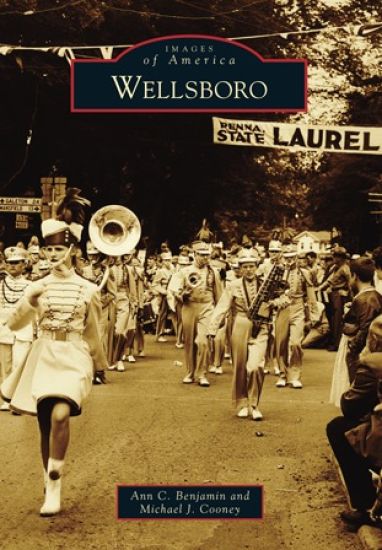
Wellsboro, the county seat of Tioga County, owes much of its vitality to dense forests, abundant wildlife, and mountainous terrain. Named by the National Park Service as a Natural Landmark in 1968, nearby Pine Creek Gorge was introduced by George Washington Sears, better known as Nessmuk, in 1860 and later publicized as the Grand Canyon of Pennsylvania. A weeklong Laurel Festival, organized in 1938, celebrates the canyon, the state flower, and Wellsboro. The Laurel Parade and the Laurel Queen coronation conclude the festivities each year. Wellsboro also owes its long-term prosperity to agriculture, logging, mining, and industry, all of which have contributed to the town's economic survival and growth. Corning Glass Works, a shining example of industrial innovation, made Wellsboro the Christmas Bulb Capital of the World. Described as quaint, Wellsboro is often compared to a New England village. In addition to a row of antique gaslights lining the boulevard, the Penn-Wells Hotel, the Arcadia Theatre, and Dunham's Department Store, all of which date to the early 1900s, add to Main Street's charm, while the Green features a fountain statue of Wynken, Blynken, and Nod.
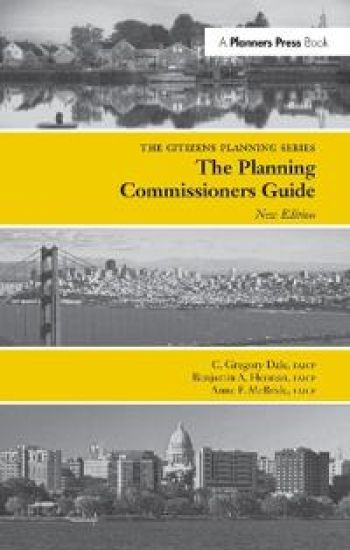
Across the country, communities rely on their planning commissions for guidance. But who guides the planning commissioners? This step-by-step guidebook gets new commissioners off on the right foot and helps experienced commission members navigate their roles. The authors, all practicing planners, have worked extensively with planning commissions for decades. They have watched commissioners scramble up a steep learning curve, sit in the hot seat of controversy, and strive to make sound decisions for the places they call home.In this helpful handbook, the authors share ideas, insights, and information to help commissioners succeed. Eight detailed chapters cover everything from the nuts and bolts of development applications to the nuances of legal issues to the part commissioners play in long-range planning. Readers will learn how to prepare for their first commission meeting, review a development plan, invite productive public input, and steer clear of ethical dilemmas. Added resources include a glossary of planning terms, a list of training resources, and the American Planning Association’s Statement of Ethical Principles in Planning. For anyone serving on a planning commission, The Planning Commissioners Guide is essential reading.