
Kirjahaku
Etsi kirjoja tekijän nimen, kirjan nimen tai ISBN:n perusteella.
1000 tulosta hakusanalla Benjamin Doth

Mathematical Tracts Of The Late Benjamin Robins V2 (1761)
Benjamin Robins
KESSINGER PUBLISHING, LLC
2009
pokkari
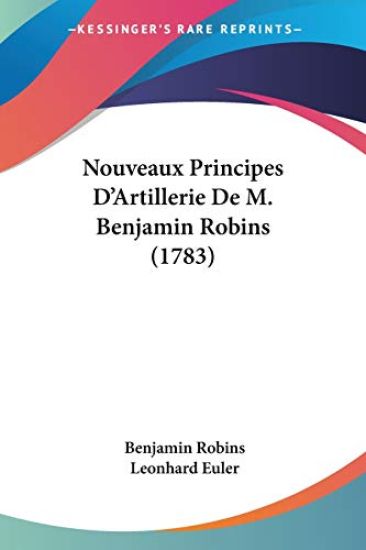
Nouveaux Principes D'Artillerie De M. Benjamin Robins (1783)
Benjamin Robins
KESSINGER PUBLISHING, LLC
2009
nidottu
College Sermons by Benjamin Jowett
Benjamin Jowett; W. H. (EDT) Fremantle
Kessinger Pub
2009
pokkari
Benjamin Griffith
KESSINGER PUBLISHING, LLC
2009
pokkari
Selections From The Writings Of Benjamin Franklin (1905)
Benjamin Franklin
KESSINGER PUBLISHING, LLC
2009
pokkari


Benjamin Constant and the Birth of French Liberalism
K. Steven Vincent
Palgrave Macmillan
2013
nidottu
This book advances a new interpretation of the timing and character of French (and more broadly European) liberalism, and contributes to the ongoing debate concerning the place of morality, sociability, and conceptions of the "self" in modern liberal thought.
Benjamin, Adorno, and the Experience of Literature
Routledge
2018
sidottu
This collection features original essays that examine Walter Benjamin’s and Theodor Adorno’s essays and correspondence on literature. Taken together, the essays present the view that these two monumental figures of 20th-century philosophy were not simply philosophers who wrote about literature, but that they developed their philosophies in and through their encounters with literature.Benjamin, Adorno, and the Experience of Literature is divided into three thematic sections. The first section contains essays that directly demonstrate the ways in which literature enriched the thinking of Benjamin and Adorno. It explores themes that are recognized to be central to their thinking—mimesis, the critique of historical progress, and the loss and recovery of experience—through their readings of literary authors such as Baudelaire, Beckett, and Proust. The second section continues the trajectory of the first by bringing together four essays on Benjamin’s and Adorno’s reading of Kafka, whose work helped them develop a distinctive critique of and response to capitalism. The third and final section focuses more intently on the question of what it means to gain authentically critical insight into a literary work. The essays examine Benjamin’s response to specific figures, including Georg Büchner, Robert Walser, and Julien Green, whose work he sees as neglected, undigested, or misunderstood.This book offers a unique examination of two pivotal 20th-century philosophers through the lens of their shared experiences with literature. It will appeal to a wide range of scholars across philosophy, literature, and German studies.
‘Who can turn skies back and begin again?’-PeterThis book contends that Peter Grimes, widely regarded as one of the greatest and most influential operas of the 20th century, is also one of the British theatre’s finest ‘lost’ plays. Seeking to liberate Britten and Slater’s work from the blinkered traditions of theatre and opera criticism, Sam Kinchin-Smith poses two questions: If an opera was created like a play, and can be staged as a play, is it a play? If a portion of its success and influence is the product of this newly identified theatrical engine, is it then a great play?The answers involve Wagner and W.G. Sebald, George Crabbe and Complicité, Akenfield and Twin Peaks. Challenging long-established narratives of post-war theatre history, this book makes a compelling case for why practitioners and scholars of performance ought to pay more attention to Britten and Slater’s achievement – a milestone of unconventional English modernism – and perhaps to other operatic masterpieces too.
In life, Benjamin Franklin sought to manage debt, organize credit, build capital and promote virtue. After death, he continued this work by leaving a codicil to his last will and testament, bequeathing £2,000 to Boston and Philadelphia. This study examines Franklin’s codicil and the financial history of America over the 200 years since his death.
‘Who can turn skies back and begin again?’-PeterThis book contends that Peter Grimes, widely regarded as one of the greatest and most influential operas of the 20th century, is also one of the British theatre’s finest ‘lost’ plays. Seeking to liberate Britten and Slater’s work from the blinkered traditions of theatre and opera criticism, Sam Kinchin-Smith poses two questions: If an opera was created like a play, and can be staged as a play, is it a play? If a portion of its success and influence is the product of this newly identified theatrical engine, is it then a great play?The answers involve Wagner and W.G. Sebald, George Crabbe and Complicité, Akenfield and Twin Peaks. Challenging long-established narratives of post-war theatre history, this book makes a compelling case for why practitioners and scholars of performance ought to pay more attention to Britten and Slater’s achievement – a milestone of unconventional English modernism – and perhaps to other operatic masterpieces too.