Kirjojen hintavertailu. Mukana 12 083 983 kirjaa ja 12 kauppaa.

Kirjahaku

Etsi kirjoja tekijän nimen, kirjan nimen tai ISBN:n perusteella.

1000 tulosta hakusanalla Brian H Appleton

The Mind and the Brain

The Mind and the Brain

Ornstein J.H.

Kluwer Academic Publishers
1972
nidottu
2 no predictions or experimental findings based on the Identity Theory differ from those based on mind-brain Parallelism or Epiphenomenal­ ism, i.e., Dualism in general. The Identity Theory, therefore, must stand or fall on its reputed conceptual advantages over Dualism. Then the conceptual issues at stake in the mind-brain problem are discussed. The kernel of truth present in the Identity Theory is shown to be obscured by all the talk about reducing sensations to neural processes. An attempt is made to characterize pain adequately as a pattern or complex of bodily processes. This view is then reconciled with the asymmetry in the way one is aware of one's own pains and the way in which others are. This asymmetry constitutes an epistemological dualism which no philosophical theory or scientific experiment could alter. The sense in which experiences are both mental and physical is thus elucidated. A Multi-Aspect Theory of the mind is presented and defended. Five aspects of pain are discussed in some detail: experiential, neural, bodily, behavioral and verbal. Having a mind characteristically involves having all of these features except the bodily (i.e., a physical irregularity). Thus having a mind characteristically entails having experiences and a healthy, functioning brain. It also involves being able to act and speak reasonably intelligently.

The Snowdrop on The Briar

The Snowdrop on The Briar

H J Croall

TROUBADOR PUBLISHING
2026
nidottu
Beneath the roots of the great tree Elaren lies Tir Caelin, a hidden city of fairies. It is a place of safety, light and song – yet not for Eirlys. Born beneath snowdrops, fierce and full of joy, she dreams of something more. When whispers on the wind and visions of pirates disturb her peace, she follows the call north... and finds her fate forever changed. Captured far from home, Eirlys is drawn into the world of the Briar – a ship feared as pirate but crewed by men who are more than their reputation. At their helm stands Corwin Rhyll, young, disciplined, and marked by secrets of his own. Though distrust runs deep between fairy and sailor, the sea forges bonds no land could shape. Across enchanted ports, storm-lashed seas, and battles with the merrow who haunt the deeps, Eirlys and Corwin discover a connection that neither fate nor distance can deny. But destiny has not finished with them. A letter sealed in wax, an island whispered in legend, and a choice that could change the isles forever lie ahead. In a world where roots hum with magic and the sea carries whispers of prophecy, love may be the bravest tether of all.
The Superficial Veins of the Human Brain

The Superficial Veins of the Human Brain

H. M. Duvernoy

Springer-Verlag Berlin and Heidelberg GmbH Co. K
1974
nidottu
Interest in a detailed anatomical description our knowledge of the venous system has of the veins of the human brain is of fairly been advanced more by radiological than by recent date. The general layout of the dural anatomical methods. This is due to the diffi- culty of obtaining a post-mortem display of sinuses and of the large encephalic veins the veins. Injection techniques often give de- that drain into them has long been known, ceptive results; most authors use back-flow but a more detailed study of the venous sys- tem has been made necessary by recent ad- injection from the larger collecting veins, vances in neurosurgery and neuroradiology. but this method generally gives very incom- plete results. The technique we have used is The progress and methods of neurora- diology have made it possible to follow the radically different, consisting of an arterial superficial venous network * further and injection of a solution of indian ink and gel- further. There are obvious practical advan- atine. When this injection is successful the tages in having a detailed knowledge of the arterial, capillary, and venous networks of venous network and these are not to be de- the encephalon are clearly displayed; the re- rived from a knowledge of the arterial net- sults are particularly clear in the venous work: the venous network is in close con- network which is visible from the main veins to their smallest branches.
Proliferation of Different Cell Types in the Brain

Proliferation of Different Cell Types in the Brain

H. Korr

Springer-Verlag Berlin and Heidelberg GmbH Co. K
1980
nidottu
Studies on cell kinetics in untreated animals have for the most part been done on or­ gans in which many proliferating cells can be found. In general the proliferating cells have been identified either in histologic sections as mitoses or by autoradiography as labeled interphase cells following the injection of a labeled precursor of DNA, such as 3H_ or 14C-thymidine (TdR). A great many proliferating cells can be observed in the rat and mouse brain during the embryonic period and for a short time after birth, and many studies on cell kinetics have been performed for this phase of life. By contrast, very few proliferating cells are found in the brain of adult rodents (except for the subependymallayer, see below). As a result, only isolated studies have been done on cell kinetics during this period. Al­ though there is an increase in proliferating cells in adult animals which had been pre­ treated (e g. , by wounding, X-irradiation, viral infection, withdrawal of water), this proliferation too has not been investigated in detail. A number of studies have been done since 1959 on the proliferation of cells in the sub­ ependymal layer of the lateral ventricles of the forebrain. This cell type is well suited for such investigations because mitoses can be found there even in animals which are quite old. Since the studies ofLe blond and co-workers (Walker and Leblond 1958 ;Messier et al.
Selected Stories by H.G. Wells

Selected Stories by H.G. Wells

Terry O'Brien

Rupa Publications India Pvt. Ltd
2014
nidottu
The Masterpieces of World Fiction series brings together the best-loved short stories by the great masters of the genre from Chekov and Maupassant, Kipling and Wilde, to O. Henry and Saki and Tolstoy and Conrad. Thoughtfully compiled by the bestselling author Terry O' Brien, this series is a great way for readers to revisit old favorites and for introducing literary masterpieces to newer, younger readers.
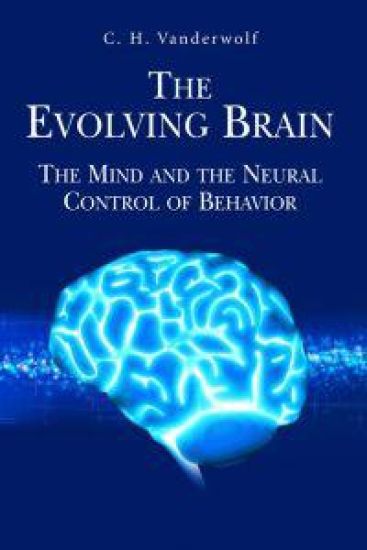
The Evolving Brain

The Evolving Brain

C. H. Vanderwolf

Springer-Verlag New York Inc.
2006
sidottu
Present-day behavioral and cognitive neuroscience is based on the idea that the conventional philosophical theory of the mind provides a reliable guide to the functional organization of the brain. Consequently, much effort has been expended in a search for the neural basis of such psychological categories as memory, attention, emotion, motivation, and perception. This book argues that (a) conventional psychological concepts originate from the philosophical speculations of ancient Greek philosophers, especially Plato and Aristotle; (b) there is serious doubt that these ancient philosophical analyses provide a reliable guide to the understanding of the human mind, human behavior, or the organization of the brain; and (c) that modern scientific studies of animal behavior provide a better guide to the study of the functional organization of the brain than is provided by conventional psychological concepts.
Dyslexia, Reading and the Brain

Dyslexia, Reading and the Brain

H.N. Hirsch

Psychology Press Ltd
2012
nidottu
Despite the wealth of literature available on the subject of dyslexia, there is little that explores the subject beyond a single theoretical framework. The need for a comprehensive review of the literature by both researchers and practitioners from different fields and theoretical backgrounds is the central motivation behind Dyslexia, Reading and the Brain. By combining the existing fragmented and one-sided accounts, Alan Beaton has created a sourcebook that provides the much-needed basis for a more integrated and holistic approach to dyslexia.The book is divided into two sections: the first, The Cognitive Context, outlines the theoretical context of normal reading development and introduces the role of phonological awareness and the relation between dyslexia and IQ. Section two, The Biological Context, provides an explanation of the genetic background as well as exploring hormonal theories and the visual aspects of dyslexia. By including both historical theories and some of the most recent developments, Dyslexia, Reading and the Brain succeeds in presenting the reader with a balanced and unbiased overview of the current thinking and achieves a unique breadth and depth of coverage. The comprehensive coverage and impartial approach mean that this sourcebook will prove an invaluable resource for anyone involved in study, research or practice in the fields of reading and dyslexia.
Stress, the Brain and Depression

Stress, the Brain and Depression

H. M. van Praag; E. R. de Kloet; J. van Os

Cambridge University Press
2004
sidottu
Can traumatic life events cause depression? Studies generally point to a connection between adverse life events and depression. However, establishing a causal rather than associative connection, the key concern of this book, is more problematic. What neurobiological changes may be induced by stress and depression, and to what extent do these changes correspond? The authors structure their examination around three major themes: the pathophysiological role of stress in depression; whether or not a subtype of depression exists that is particularly stress-inducible; and, finally, how best to diagnose and treat depression in relation to its biological underpinnings.
Justice Robert H. Jackson's Unpublished Opinion in Brown v. Board
Brown v. Board of Education is widely recognized as one of the US Supreme Court’s most important decisions in the twentieth century. Robert H. Jackson, an associate justice on the case, is generally considered one of the Court’s most gifted writers. Though much has been written about Brown, citing the writing and remarks of the justices who participated in the 1954 decision, comparatively little has been said about Jackson or his unpublished opinion, which is sometimes even mistakenly taken as a dissenting opinion. This book visits Brown v. Board of Education from Jackson’s perspective and, in doing so, offers a reinterpretation of the justice's thinking, and of the Supreme Court's decision making, in a ruling that continues to reverberate through the nation’s politics and public life.Weaving together judicial biography, legal history, and judicial politics, Justice Robert H. Jackson’s Unpublished Opinion in Brown v. Board provides a nuanced look at constitutional interpretation, and the intersection of law and politics, from inside the mind of a justice, within the context of a Court deciding a seminal case. Through an analysis of six drafts of Jackson's unpublished concurring opinion, David M. O’Brien explores the justice’s evolving thoughts on relevant issues at critical moments in the case. His retelling of Brown presents a new view of longstanding arguments confronted by Jackson and the other justices over “original intent” versus a “living Constitution,” the role of the Court, and social change and justice in American political life. The book includes the final draft of Jackson’s unpublished opinion, as well as the Warren Court's opinions in Brown and in Bolling v. Sharpe, for comparison, along with a timeline of developments and decision making leading to the Court’s landmark ruling.
Stress, the Brain and Depression

Stress, the Brain and Depression

H. M. van Praag; E. R. de Kloet; J. van Os

Cambridge University Press
2012
pokkari
Can traumatic life events cause depression? Studies generally point to a connection between adverse life events and depression. However, establishing a causal rather than associative connection, the key concern of this book, is more problematic. What neurobiological changes may be induced by stress and depression, and to what extent do these changes correspond? The authors structure their examination around three major themes: the pathophysiological role of stress in depression; whether or not a subtype of depression exists that is particularly stress-inducible; and, finally, how best to diagnose and treat depression in relation to its biological underpinnings.
The Evolving Brain

The Evolving Brain

C. H. Vanderwolf

Springer-Verlag New York Inc.
2010
nidottu
Present-day behavioral and cognitive neuroscience is based on the idea that the conventional philosophical theory of the mind provides a reliable guide to the functional organization of the brain. Consequently, much effort has been expended in a search for the neural basis of such psychological categories as memory, attention, emotion, motivation, and perception. This book argues that (a) conventional psychological concepts originate from the philosophical speculations of ancient Greek philosophers, especially Plato and Aristotle; (b) there is serious doubt that these ancient philosophical analyses provide a reliable guide to the understanding of the human mind, human behavior, or the organization of the brain; and (c) that modern scientific studies of animal behavior provide a better guide to the study of the functional organization of the brain than is provided by conventional psychological concepts.
Dyslexia, Reading and the Brain

Dyslexia, Reading and the Brain

H.N. Hirsch

Psychology Press Ltd
2004
sidottu
Despite the wealth of literature available on the subject of dyslexia, there is little that explores the subject beyond a single theoretical framework. The need for a comprehensive review of the literature by both researchers and practitioners from different fields and theoretical backgrounds is the central motivation behind Dyslexia, Reading and the Brain. By combining the existing fragmented and one-sided accounts, Alan Beaton has created a sourcebook that provides the much-needed basis for a more integrated and holistic approach to dyslexia.The book is divided into two sections: the first, The Cognitive Context, outlines the theoretical context of normal reading development and introduces the role of phonological awareness and the relation between dyslexia and IQ. Section two, The Biological Context, provides an explanation of the genetic background as well as exploring hormonal theories and the visual aspects of dyslexia. By including both historical theories and some of the most recent developments, Dyslexia, Reading and the Brain succeeds in presenting the reader with a balanced and unbiased overview of the current thinking and achieves a unique breadth and depth of coverage. The comprehensive coverage and impartial approach mean that this sourcebook will prove an invaluable resource for anyone involved in study, research or practice in the fields of reading and dyslexia.
Notice Sur La Commune Et La Paroisse de Brain-Sur-l'Authion (Maine-Et-Loire) Suivie d'Un
Notice sur la commune et la paroisse de Brain-sur-l'Authion (Maine-et-Loire); suivie d'un Abrege sur la comptabilite des communes / par l'abbe H. BoutavantDate de l'edition originale: 1909Sujet de l'ouvrage: Brain (France)Ce livre est la reproduction fidele d'une oeuvre publiee avant 1920 et fait partie d'une collection de livres reimprimes a la demande editee par Hachette Livre, dans le cadre d'un partenariat avec la Bibliotheque nationale de France, offrant l'opportunite d'acceder a des ouvrages anciens et souvent rares issus des fonds patrimoniaux de la BnF.Les oeuvres faisant partie de cette collection ont ete numerisees par la BnF et sont presentes sur Gallica, sa bibliotheque numerique.En entreprenant de redonner vie a ces ouvrages au travers d'une collection de livres reimprimes a la demande, nous leur donnons la possibilite de rencontrer un public elargi et participons a la transmission de connaissances et de savoirs parfois difficilement accessibles.Nous avons cherche a concilier la reproduction fidele d'un livre ancien a partir de sa version numerisee avec le souci d'un confort de lecture optimal. Nous esperons que les ouvrages de cette nouvelle collection vous apporteront entiere satisfaction.Pour plus d'informations, rendez-vous sur www.hachettebnf.fr
Neuropedia: Un Compendio Breve Sobre El Cerebro / Neuropedia: A Brief Compendium of Brain Phenomena
Un compendio breve sobre el cerebro.Desde los alucinantes efectos del LSD hasta las desafortunadas consecuencias del virus del Zika en el cerebro, Neuropedia recoge las maravillas y misterios relacionados con el rgano responsable de todas nuestras funciones.El eminente neurocient fico Eric H. Chudler te lleva por un emocionante viaje a trav s del sistema nervioso, en el que encontrar s docenas de t rminos que exploran y describen la estructura y el funcionamiento del cerebro, a los visionarios que dedicaron su vida a su estudio, adem s de curiosidades sorprendentes de este rgano viscoso.Con Neuropedia tendr s a la mano todos los recovecos de ese universo de neuronas que tienes entre las orejas.ENGLISH DESCRIPTIONA fun and fact-filled A-Z treasury for anyone with a head on their shoulders Neuropedia journeys into the mysteries and marvels of the three pounds of tissue between your ears--the brain. Eric Chudler takes you on a breathtaking tour of the nervous system with dozens of entries that explore the structure and function of the brain and cover topics such as the spinal cord and nerve cells, the methods of neuroscientific research, and the visionary scientists who have dedicated their lives to understanding what makes each of us who we are. The brain has fascinated and puzzled researchers, physicians, and philosophers for thousands of years and captivated us with each new discovery. This compendium of neuroscientific wonders is brimming with facts and insights, helping us to make sense of our current understanding of the nervous system while identifying the frontiers in our knowledge that remain unexplored. Chudler guides readers through a variety of rare and common neurological disorders such as alien hand disorder, Capgras syndrome, Alzheimer's disease, Parkinson's disease, and stroke, and discusses the latest brain-imaging methods used to diagnose them. He discusses neurochemicals, neurotoxins, and lifesaving drugs, and offers bold perspectives on human consciousness that enable us to better appreciate our place in nature. With marvelous illustrations by Kelly Chudler, Neuropedia is an informative and entertaining trip into the inner world of the brain.
Traumatic Brain Injury

Traumatic Brain Injury

Ahmed A Abd-Rabou; Hanaa H Ahmed

Lap Lambert Academic Publishing
2023
pokkari
Traumatic brain injury (TBI) is a disorder that destructs brain functions and results in severe cognitive and emotional disturbances. It is a common reason for mortality and morbidity of human beings globally. Recent researches indicated that the transplanted mesenchymal stem cells (MSCs) can migrate and accommodate into the injured brain sites to contribute in the healing of the damaged brain tissue. The underlying mechanisms behind the action of MSCs are the anti- apoptotic and anti-inflammatory properties of these cells beside their ability to release neurotrophic and angiogenic factors. On the other hand, the poor target engagement of TBI delivered therapeutics has extended the opportunities of nanoparticle (NP)-based approaches to improve site-specific drug delivery and bioavailability. The therapeutic strategies via NP delivery system showed promise in exhibiting neuroprotective effect, reducing neurovascular unit disruption and preventing the expansion of biochemical perturbations to the adjacent healthy brain. This book will mainly discuss the updates about the latest therapeutic modalities for TBI hoping to set evidence for treatment of this disorder.