Kirjojen hintavertailu. Mukana 12 016 292 kirjaa ja 12 kauppaa.

Kirjahaku

Etsi kirjoja tekijän nimen, kirjan nimen tai ISBN:n perusteella.

1000 tulosta hakusanalla Bridget S Howe

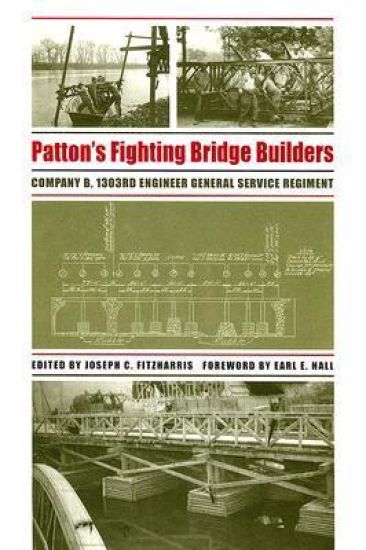
Patton's Fighting Bridge Builders

Patton's Fighting Bridge Builders

Earl E. Hall

Texas A M University Press
2007
sidottu
Pinned down in a ditch next to the vehicles, they returned the fire with three M-1 rifles, two carbines, and a submachine gun...The enemy was using...several automatic weapons...and after about five minutes...began to flank the cars to the left... These words may seem to have been written by an advance infantry unit or a combat brigade, carrying out an assault against entrenched enemy troops. Instead, this hair-raising narrative comes from the diary of ""B"" Company of the 1303rd Engineer General Service Regiment, a ""non-combat"" unit attached to Patton's Third Army during his epic pursuit of the retreating German forces across France during August, 1944. Though the 1303rd (called ""the thirteen-third"" by its soldiers) was supposed to perform its duties outside the zone of armed conflict, these men found themselves acting as the southern flank of Patton's rapid advance. More than once, they had to re-build bridges the Germans had hastily destroyed in order to permit the continued advance of American troops - often doing so under enemy fire. Twice they were called upon to deploy as infantry in holding back German attacks. Careful editing and annotation by military historian, Joseph C. Fitzharris corrects occasional lapses in the diary, clarifies references, and provides important context for following the movements and understanding the importance of Company B, the 1303rd, and its sister regiments. ""Patton's Fighting Bridge Builders"" rewards its readers with a new understanding of both the messiness and the bravery of the Second World War.

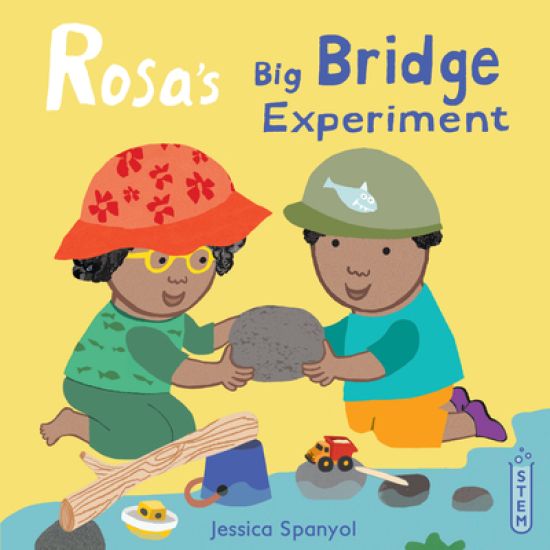
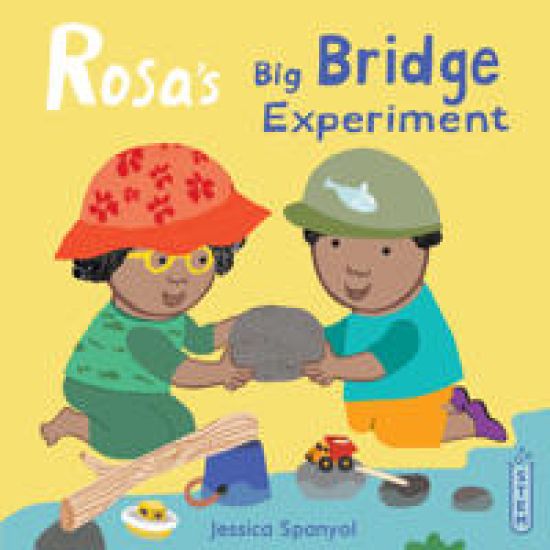
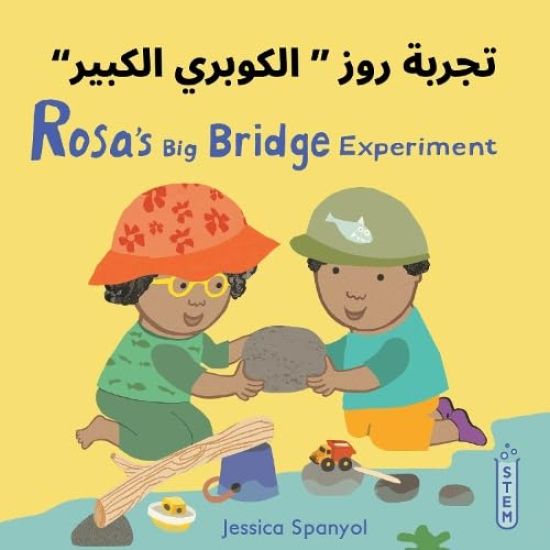
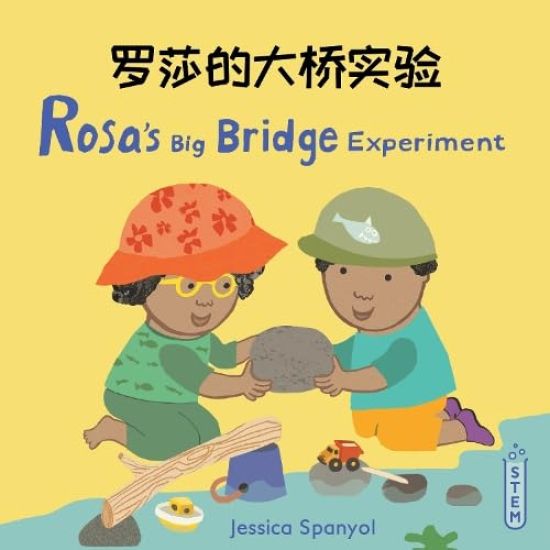
Rosa's Big Bridge Experiment

Rosa's Big Bridge Experiment

Jessica Spanyol

Child's Play (International) Ltd
2020
sidottu
What is a bridge? Rosa and her friends investigate, using critical thinking and the objects found on the beach around them. There are many kinds of bridges but not all of the ones they make are sturdy! Can they apply what they have learned when Rosa's pet dog finds himself stranded?
Quebec's Covered Bridges

Quebec's Covered Bridges

Harold Stiver

Harold Stiver
2024
pokkari
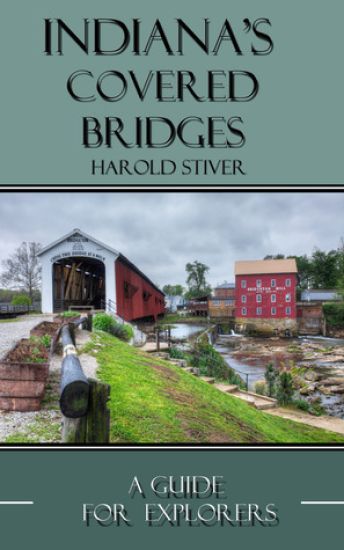
Quebec's Covered Bridges UPDATED FOR 2024 A Source book for Travelers, Photographers, Explorers...Descriptions to all of Quebec's 88 Remaining Historic Covered Bridges, as well as color photosGPS Positions Written Driving Directions Basic Info for each Site Truss types described and illustrated Short History of Covered Bridges Seven Self-guided ToursAbiti-Est County TourAbiti-Ouest County TourCompton County TourGatineau County TourLabelle County TourMatane County TourMatap dia County Tour
Quebec's Covered Bridges

Quebec's Covered Bridges

Harold Stiver

Harold Stiver
2024
pokkari
Quebec's Covered BridgesUPDATED FOR 2024 A Source book for Travelers, Photographers, Explorers...Descriptions to all of Quebec's 88 Remaining Historic Covered Bridges, as well as photos GPS Positions Written Driving Directions Basic Info for each Site Truss types described and illustrated Short History of Covered BridgesSeven Self-guided ToursAbiti-Est County TourAbiti-Ouest County TourCompton County TourGatineau County TourLabelle County TourMatane County TourMatap dia County Tour
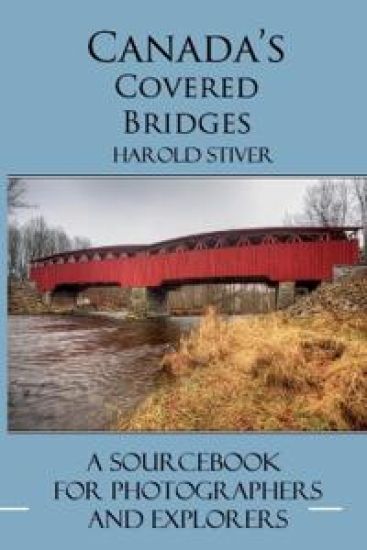
Canada's Covered Bridges

Canada's Covered Bridges

Harold Stiver

Harold Stiver
2024
pokkari
UPDATED TO 2024 A Source book for Photographers and Explorers. Descriptions to all of Canada's Remaining Historic Covered Bridges. This includes 88 for Quebec, 58 for New Brunswick, and 2 each for British Columbia and Ontario.Photographs of each BridgeGPS PositionsWritten directions from a nearby townA short history of Covered Bridges in North AmericaNotes on interesting or unique history or structureA review of the various Truss Types New Brunswick Self guided ToursAlbert County TourCarleton and York Counties TourCharlotte County TourKings County East TourKings County West TourWestmoreland County TourQuebec Self guided ToursAbiti-Est County TourAbiti-Ouest County TourCompton County TourGatineau County TourLabelle County TourMatane County TourMatap dia County Tour
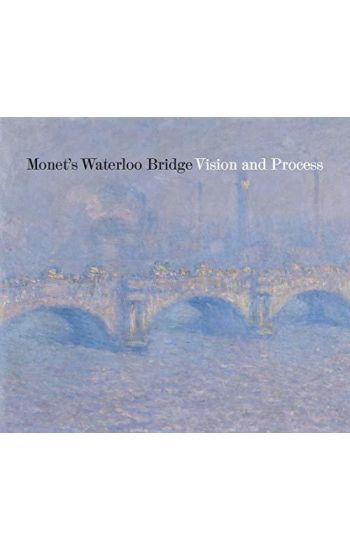
Monet's Waterloo Bridge

Monet's Waterloo Bridge

RIT Cary Graphic Arts Press
2018
pokkari
The catalogue of an exhibition comparing versions of Monet's Waterloo Bridge at the Memorial Art Gallery in Rochester, NY. Impressionist master Claude Monet began over forty versions of Waterloo Bridge during his three London sojourns between 1899 and 1901. He viewed his paintings of the landmark bridge both individually and as an ensemble, collectively expressing his sense of the essential subject - the atmosphere and colors of the fog-bound landscape of London's Thames River. Monet struggled to complete these paintings after his return to France, where he re-worked many of the canvases in his Giverny studio, releasing them for sale over the course of several years. The exhibition Monet's Waterloo Bridge: Vision and Process brings together eight paintings from the famous London series. Scholarly essays and an in-depth technical study of the Memorial Art Gallery's Waterloo Bridge, Veiled Sun (1903) explore Monet's artistic vision as well as the process by which he struggled to achieve that vision. NANCY NORWOODis Curator of European Art, Memorial Art Gallery, Rochester, New York.
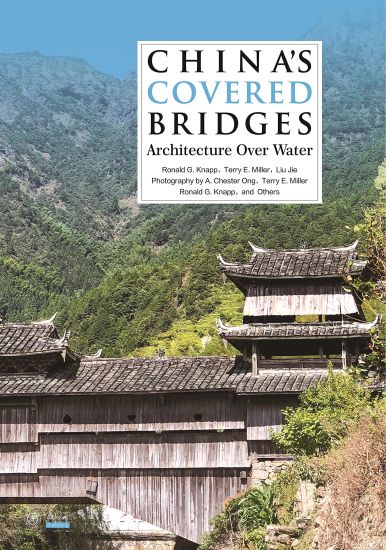
China's Covered Bridges

China's Covered Bridges

Ronald G. Knapp; Terry E. Miller; Liu Jie

University of Hawaii Press
2020
sidottu
China’s Covered Bridges: Architecture over Water is the first book in English to examine comprehensively one of the three great covered bridge traditions in the world. Based on decades of observation and ten years of intensive field research throughout China, this book illuminates countless covered bridges that have never been presented in a Western language.Terry E. Miller, Ronald G. Knapp, and A. Chester Ong, whose America’s Covered Bridges: Practical Crossings, Nostalgic Icons, broke new ground, have joined here with Liu Jie, China’s leading timber covered bridge scholar. This team has traveled in areas rarely visited by others to document a living tradition whose roots go deep into Chinese history.Long before professional engineers analyzed bridge structure mechanically, early builders in China, as in North America and Europe, solved the daunting problem of spanning deep ravines and wild rivers to facilitate the flow of pedestrians, animals, and vehicles. Their collective, yet independent, efforts represent the triumph of ingenuity and common sense. Although there has been no census of covered bridges, and it is impossible to calculate how many existed in the past in China, some 3,000 remain, far more than found elsewhere in the world. Wooden trusses as understood in the West were not a component of China’s bridge-building traditions. Instead, covered corridors were situated atop either a masonry base or, more significantly, supported by an ingenious assemblage of timbers. China’s Covered Bridges highlights covered bridges with a timber sub-structure, including both a variety of cantilevered forms and extraordinary "woven arch/woven arch-beam" types that until the until the last quarter of the 20th century were believed to have died out more than a millennium earlier. The story of China’s covered bridges is fascinating not only in terms of technological achievement, social functioning, and aesthetic identity. Each covered bridge in China, whether still standing or long gone, has a story to tell about the nature of rural and urban life.Thoroughly researched with a text of over 70,000 words and profusely illustrated with more than 600 historic and contemporary photographs, this book features the work of master photographer A. Chester Ong and is supplemented by photographs by the authors.Like America’s Covered Bridges, China’s Covered Bridges is written in an accessible style that will satisfy not only those with general interests but also those with more specialized knowledge.
Rosa's Big Bridge Experiment

Rosa's Big Bridge Experiment

Jessica Spanyol

CHILD'S PLAY INTERNATIONAL LTD
2026
nidottu
What is a bridge? Rosa and her friends investigate, using critical thinking and the objects found on the beach around them. There are many kinds of bridges, but not all of the ones they make are sturdy! Can they apply what they have learned when Rosa's pet dog finds himself stranded?
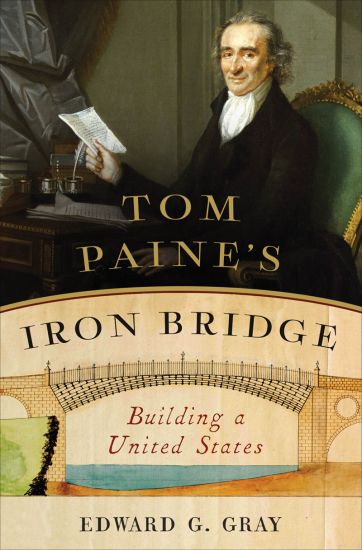
Tom Paine's Iron Bridge

Tom Paine's Iron Bridge

Edward G. Gray

WW Norton Co
2016
sidottu
In a letter to his wife Abigail, John Adams judged the author of Common Sense as having “a better hand at pulling down than building.” Adams’s dismissive remark has helped shape the prevailing view of Tom Paine ever since. But, as Edward G. Gray shows in this fresh, illuminating work, Paine was a builder. He had a clear vision of success for his adopted country. It was embodied in an architectural project that he spent a decade planning: an iron bridge to span the Schuylkill River at Philadelphia. When Paine arrived in Philadelphia from England in 1774, the city was thriving as America’s largest port. But the seasonal dangers of the rivers dividing the region were becoming an obstacle to the city’s continued growth. Philadelphia needed a practical connection between the rich grain of Pennsylvania’s backcountry farms and its port on the Delaware. The iron bridge was Paine’s solution. The bridge was part of Paine’s answer to the central political challenge of the new nation: how to sustain a republic as large and as geographically fragmented as the United States. The iron construction was Paine’s brilliant response to the age-old challenge of bridge technology: how to build a structure strong enough to withstand the constant battering of water, ice, and wind. The convergence of political and technological design in Paine’s plan was Enlightenment genius. And Paine drew other giants of the period as patrons: Benjamin Franklin, George Washington, Thomas Jefferson, and for a time his great ideological opponent, Edmund Burke. Paine’s dream ultimately was a casualty of the vicious political crosscurrents of revolution and the American penchant for bridges of cheap, plentiful wood. But his innovative iron design became the model for bridge construction in Britain as it led the world into the industrial revolution.