In questo lavoro, volutamente, si privilegia il punto di vista dell'insegnante, ma si cercato di non dimenticare quello che Maruyama definisce "trans-spezione" "mettersi. nella testa di un altro senza ridurre la logica dell'altro alla propria logica, e lasciare che l'altro compia un'analoga operazione di "trans-spezione" nei nostri confronti". (op. cit. pag. 39) Questi processi fanno circolo e non si danno indipendentemente l'uno dall'altro. In sintesi, "una mappa del sapere non data dall'alto, non data in anticipo: non si pu sorvolare neppure un momento a volo di uccello il territorio delle conoscenze nella sua totalit . Siamo inevitabilmente e costitutiva mente all'interno del territorio, e dall'interno apriamo e percorriamo sentieri, raggiungiamo regioni diverse e progressivamente ci figuriamo, disfiamo e nuovamente disegniamo le nostre mappe".
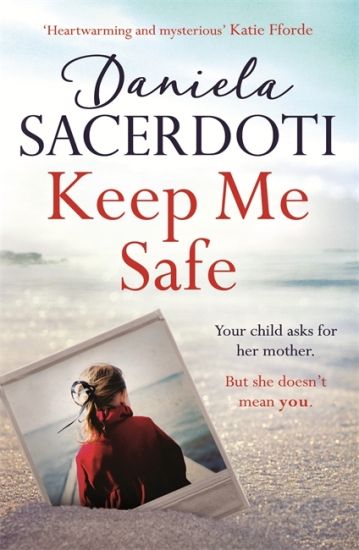
'Lovely book to get lost in.' 'This book blew me away!' 'It's a book that you just fall into.' 'My book of the year.' 'Her best book yet.' 'Beautiful...'Lose yourself in this breathtaking love story set on the mysterious, windswept island of Seal, from the bestselling author of Watch Over Me. Perfect for fans of Lulu Taylor, Tracy Rees and Rosanna Ley.** Over 1 million copies sold of Daniela Sacerdoti's novels **Can a tiny Scottish island bring a heart back to life.. and offer a second chance at love?When Anna's partner walks away from their relationship, she is shattered. But it is her little girl Ava who takes it hardest of all, falling silent for three days. When she does finally speak, Ava talks about a new place - a small island of beauty, salt and sea in the Western Scottish Isles. In search of a new start, Anna and Ava embark on a journey to the remote and gorgeous Island of Seal. Falling in love with the locals and the landscape, could Seal offer the second chance they both need? Readers have been raving about Keep Me Safe:'A brilliant read. Love Daniela's books. *****' A reader'My book of the year. Highly recommended' A reader'I've already read Daniela's Glen Avich books and loved them but this one surpassed them' A reader'I could almost hear the sea and the wind. A great book' Lesley Pearse'I couldn't put it down' Daily Mail'Astoundingly good' The Sun'I fell in love with this book' Prima magazine'Heartwarming and mysterious' Katie Fforde'A mysterious journey to Seal, a place I already want to revisit' Dani Atkins'Exciting and emotional. I'm thrilled to find this is the first in a new series' Linda's Book Bag
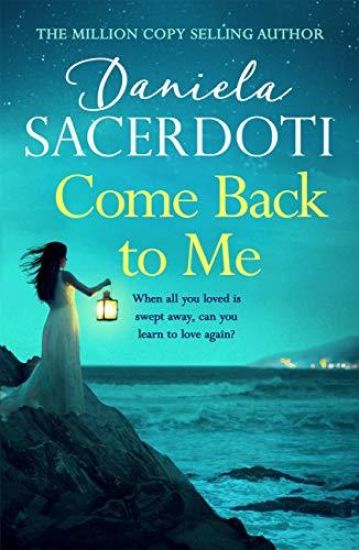
'Atmospheric, romantic and compelling. Daniela writes with huge warmth and sincerity' Rosanna LeyA beautiful, heartrending story of finding love against all odds.After her mother dies, heartbroken Cora discovers she has been left a cottage on a remote Scottish isle called Seal. The moment she arrives, she falls under the island's spell... and finds herself drawn to a brooding stranger. For wanderer Innes, returning to the island means confronting the demons of his past. He knows he can't offer beautiful Cora anything more than a collection of moments - yet he can't deny the immediate intensity of their connection.As Cora begins to trace her mother's roots, she learns Gealach Cottage has a turbulent history. Another young woman had sought refuge here, waiting for her lover to return. What became of her? Only by unravelling a forgotten story of passion and courage can Cora understand what has pulled her to Seal... and to a man who feels like home.Readers love the breathtaking novels of Daniela Sacerdoti:'A love story that will satisfy even the most hopeless romantics' Daily Express on Keep Me Safe'Beautifully written, and the descriptions of Seal were so realistic I could almost hear the sea and the wind. A great book - Lesley Pearse on Keep Me Safe 'Emotional. I couldn't put it down' Daily Mail on Keep Me Safe'I fell in love with this book' Prima magazine on Keep Me Safe'Beautifully written and atmospheric' The Sun on Keep Me Safe'One of my favourite reads of the year so far. If there's such a thing as book heaven, this wonderfully original, poignant read deserves a place there' Shari Low, Daily Record on Watch Over Me'A beautiful story of love, loss, discovering one's true abilities and, above all, never forgetting who you really are' Debbie Flint on Take Me Home'A story of love, loss, hope and pastures new. I give this book 5 out of 5' A Lover of Books on Set Me Free'Dani's writing pulled me in... It reminded me of the safety of those arms around you as a young child when something scares you' Jera's Jamboree on Don't Be Afraid
From the bestselling author of WATCH OVER ME, Daniela Sacerdoti's latest Seal Island novel is a romantic, moving and uplifting story of three different lives, connected by a thread.** Over 1 million copies sold of Daniela Sacerdoti's novels **Three separate lives. Three broken hearts. Haunted by his wife's death, Matt arrives on Seal Island determined to be alone and unable to escape his grief. In the island's hospital, a young woman named Rose lies in a coma, trapped by the memories of events leading up to her accident. Grace, the island's doctor, is at the heart of the community. Only she knows how much she regrets turning down the chance of love and a family years ago. For these three people hope seems gone. But life is about to offer an unexpected new beginning... Readers adore the captivating novels of Daniela Sacerdoti 'A love story that will satisfy even the most hopeless romantics' Daily Express 'Beautifully written and atmospheric' The Sun 'A great book' Lesley Pearse 'Emotional. I couldn't put it down' Daily Mail 'I fell in love with this book' Prima magazine
All institutions concerned with the process of judging - whether it be deciding between alternative courses of action, determining a judge’s professional integrity, assigning culpability for an alleged crime, or ruling on the credibility of an asylum claimant - are necessarily directly concerned with the question of doubt. By putting ritual and judicial settings into comparative perspective, in contexts as diverse as Indian and Taiwanese divination and international cricket, as well as legal processes in France, the UK, India, Denmark, and Ghana, this book offers a comprehensive and novel perspective on techniques for casting and dispelling doubt, and the roles they play in achieving verdicts or decisions that appear both valid and just. Broadening the theoretical understandings of the social role of doubt, both in social science and in law, the authors present these understandings in ways that not only contribute to academic knowledge but are also useful to professionals and other participants engaged in the process of judging. This collection will consequently be of great interest to academics researching in the fields of legal anthropology, ritual studies, legal sociology, criminology, and socio-legal studies.
Judicial institutions are directly involved in law making and law enforcement. Their core business tightly refers to the venture, the fate, and the prospect of the law. And yet, despite numerous investigations of how far and deep courts intervene in policy making as well as how far and deep they reshape the law, very little has been revealed about the impact law making processes have on courts and more generally on the judicial system. This book seeks to fill this gap by examining the law making process that unfolds in the context of judicial reforms. A `reform’ is meant here as an intentional change brought about in the institutional, organisational, cultural, procedural, managerial, setting where courts operate. Therefore, the book deals with `change’ of the judiciary. This change is not considered as the outcome of the reform - rather the change is considered, and accordingly conceptualised, as a process. As such, the book tells the story of the redistribution of power, resources, legitimacy, and capacity triggered by the process of the reform experienced by the judicial actors, both individual and institutional. Theoretically, the book takes an institutionalist approach and draws on research over a 10 year period and an extensive empirical field comprising 8 EU member states. The analysis is informed by a large dataset drawn from the author’s sole research along with those of two international research groups.
The analysis and interpretation of conflicts can be a dangerously simplistic exercise. A western, developed socio-economic perspective can simplify conflicts in the so-called ‘Third World’ as the inevitable struggles of people who cannot coexist because of ethnic, religious or cultural differences. While acknowledging that many contemporary conflicts are characterised and influenced by these factors, this book calls for an approach to conflict prevention and resolution which mainly addresses the underlying political, economic and social causes. The conflict in Sudan, where narratives evolved from an interpretation based on religious differences between a Muslim North and the Christian South, provides a case study through which the author explores how most prevention and resolution strategies were based on flawed assumptions leading to poor results. By focusing instead on the underlying socio-economic inequality and marginalisation among groups she analyses the dynamics of the complex peace process to ascertain if and how economic and social rights were effectively included and implemented as a part of the peace agreement, including after South Sudan’s independence.
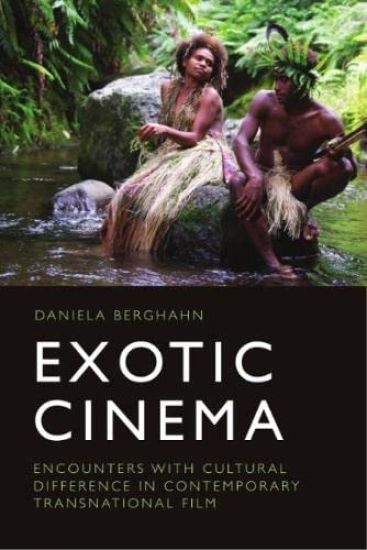
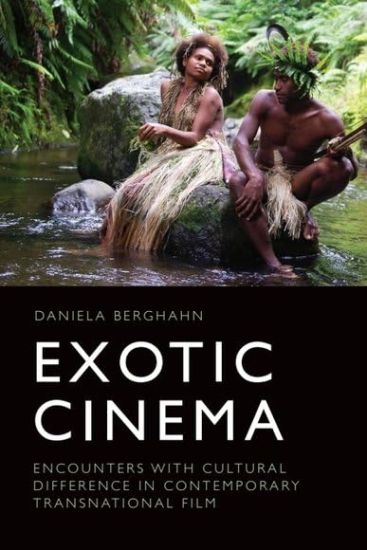
A critical reassessment of the aesthetic strategies and cultural value of exoticism in contemporary transnational cinemas Offers an original, critical reappraisal of decentred exoticism in contemporary transnational and world cinema Includes eighteen case studies that are embedded in rich contextual detail and discussions of thematically similar films Brings exoticism into dialogue with cognate frameworks that conceptualise cross-cultural encounters, including primitivism, Orientalism, cultural translation, cultural appropriation, cosmopolitanism and autoethnography, thereby shifting the terms of the debate into a direction that opens new lines of inquiry Analyses examples of global art, Indigenous and popular mainstream cinema from East Asia, India, South America, Canada, Australia, Europe and the US Comes with a companion website: www.exotic-cinema.org Exotic Cinema is the first systematic analysis of decentred exoticism in contemporary transnational and world cinema. By critically examining regimes of visuality such as the imperial, the ethnographic and the exotic gaze, which have colonised our minds and ways of looking, Daniela Berghahn makes an important contribution to the urgent agenda of decolonising film studies. Berghahn demonstrates that decentred exoticism's aesthetic versatility and alluring alterity are uniquely relevant for understanding the transnational appeal of world cinema. She addresses prevalent controversies surrounding exoticism and illustrates that, in contemporary world cinema, it is utilised to draw attention to new ethical and socio-political goals. Global in scope and transnational in perspective, Exotic Cinema invites students and researchers to reassess this prominent mode of cultural representation.
Exotic Cinema is the first systematic analysis of decentred exoticism in contemporary transnational and world cinema. By critically examining regimes of visuality such as the imperial, the ethnographic and the exotic gaze, which have colonised our minds and ways of looking, Daniela Berghahn makes an important contribution to the urgent agenda of decolonising film studies.Berghahn demonstrates that decentred exoticism's aesthetic versatility and alluring alterity are uniquely relevant for understanding the transnational appeal of world cinema. She addresses prevalent controversies surrounding exoticism and illustrates that, in contemporary world cinema, it is utilised to draw attention to new ethical and socio-political goals. Global in scope and transnational in perspective, Exotic Cinema invites students and researchers to reassess this prominent mode of cultural representation.
"Di Pizza e Pizzerie" e' un viaggio alla scoperta di un mestiere antico. Ma sempre attuale. E che non conosce crisi.Tra arte e tecnica, tradizione e innovazione, pratiche secolari e moderne re-interpretazioni.Per neofiti e apprendisti, professionisti esperti o semplici estimatori. E per tutti gli appassionati di una pratica che travalica da sempre gusti, paesi, mode e generazioni.
Gibt es denn einen Weg Zueinander? Kann es je ein Verstehen geben zwischen Dir und mir? Geschichten ber Dich und mich, ber das Zueinander und deren Grenzen, zusammengew rfelt und stringent zugleich, wie das Leben selbst.
Rebekka von Kral, die Heldin des Romans, liest und schreibt mit Leidenschaft, ganz zum Leidwesen Ihrer Mutter, Roxana, die ausschlie lich an u erlichkeiten, Pomp, Tand und gesellschaftlichen Ansehen Interesse zeigt. Rebekkas Stiefschwestern, Rabea und Bertha, scheinen ihrer Mutter nachzueifern. Clemens, Rebekkas Vater, der ein Wissenschaftler ist, sich jedoch seiner Frau g nzlich unterordnet, steht am Rande. Wie trist Rebekkas Lage innerhalb dieser Familie ist, wird darin deutlich, dass ihr ihr Herzenswunsch, eine ganz besondere, rubinrote Feder, nicht erf llt wird. Dennoch wendet sich das Blatt in diesen Weihnachtstagen f r Rebekka v llig. Bertha enth llt Rebekka ihre eigene, jedoch bisher heimliche, Rebellion gegen die Mutter, und als die ganze Familie am zweiten Weihnachtstag Rebekkas Gro mutter, Ada von Kral, ihres Zeichens Besch tzerin und H terin der Weltliteratur, besuchen, bekommt Rebekka nicht nur die sehnlichst gew nschte Feder und findet Aufnahme bei ihrer Gro mutter, sondern auch Bertha stellt sich auf ihre Seite. Mit Hilfe der Feder und des dazugeh rigen Pergaments, die dereinst Rebekkas Urgro mutter geh rt hatten, entdeckt Rebekka ihre F higkeit Geschichten in Wirklichkeit setzen zu k nnen, d.h. das, was sie mit dieser Feder auf dieses Pergament schreibt, geschieht wirklich. Diese F higkeit wird auch dringend ben tigt, denn ein u erer Feind - es wird angenommen, es handelt sich um Zoticus, einen ehemaligen Mitstreiter Adas - bedroht den Berg der Inspiration, und damit die gesamte Weltliteratur. Bertha, Rebekka und Peter, Adas Assistent, machen sich auf Zoticus unsch dlich zu machen, doch als sie diesen in seinem Schlo in Rum nien treffen, stellt sich heraus, dass sie den Falschen verd chtigt hatten, w hrend der wahre belt ter, Clemens von Kral, inzwischen den Berg der Inspiration in Besitz genommen hat, und die Quelle der Inspiration, die den Berg bis dahin sch tzte, versiegen lie . Mutig und entschlossen kehren die drei Freunde Rebekka, Bertha und Peter mit Zoticus, ihrem neuen Verb ndeten, zum Berg zur ck, um diesen und damit die Weltliteratur zu retten, was ihnen, nach berwindung einiger Schwierigkeiten, auch gelingt.
Drei Dimensionen des Umgangs werden im Anschluss an Augustinus besprochen, 1.der Umgang mit den Dingen, 2.der Umgang mit der Zeit, 3.der Umgang mit den Menschen, mit uns selbst und mit anderen. Im Umgang mit den Dingen stellen wir fest, dass alle Dinge verg nglich sind. Eine Fehlform zeigt im H ngen an Dingen als w ren sie lebendige Wesen. Darin l sst sich eine Leere erkennen, denn das Ding steht stellvertretend zum Bezug zu anderen Menschen, der offenbar fehlt. Eine weitere Fehlform zeigt sich im Konsumwahn, dem der zweckm ige Konsum gegen bergestellt wird. Diese Fehlformen im Umgang mit den Dingen entstehen aus dem Verlust Sch pfer zu sein, Sch pfer, der sich in seinem Werk wiederfindet. Dieser Werkcharakter ging mit der modernen, industriellen, arbeitsteiligen Produktion verloren. Der Werkcharakter kann insofern wiedergewonnen werden, als wir anstelle eines handgreiflichen Werks Ziele setzen, die wir erreichen wollen, und die wir eigenverantwortlich anstreben. Die Zeit ist etwas, wor ber ich irgendwie immer schon Bescheid wei , weil ich tagt glich damit umgehe, und doch nicht wei , was sie ist. Zeit ist, so haben wir festgestellt, vergangene, gegenw rtige und zuk nftige, genauerhin vergangene Gegenwart, gegenw rtige Gegenwart und zuk nftige Gegenwart, denn die Vergangenheit gibt es nur als erinnerte Gegenwart, d.h. in unserem Erinnern wird eine Zeit gegenw rtig, die nicht mehr ist, die Zukunft gibt es nur in unserem Planen als vorweggenommene, d.h. antizipierte Gegenwart, und nur die Gegenwart ist. Wir m ssen ber das Verstehen der Zeit wegkommen von der Fixierung auf die mechanisch, mit der Uhr gemessenen Zeit, hin zu einer Zeit mit menschlicher Qualit t, d.h. einem Zeitverst ndnis, das der menschlichen Erfahrung entspricht. Dies ist darin zu erreichen, dass der Mensch als Erlebender seine Zeit qualifiziert, und nicht die Zeit ihn. Der Umgang mit dem Menschen setzt die Kenntnis ber den Menschen voraus. So ist der Mensch der Fragende, der seine Umwelt t tig bearbeitet, also auf sie zugehen muss und sie verstehen will, wobei der Mensch darin nicht eins ist, sondern eine Dreiheit als K rper, Geist und Seele, die in ihm widerstreiten, so wie im Menschen drei Kr fte wirken, leben, wollen und wissen. Diese drei Kr fte werden im Denken geeint, wobei unter dem Denken nicht nur das rationale, sondern auch das emotionale verstanden werden soll, das den Menschen erst ganz macht. Als Mensch strebe ich, und zwar letztendlich dorthin gl cklich zu sein. Auf dem Weg gibt es vieles, was mich ablenken k nnte, was der echten Erkenntnis im Wege steht. So versuchen wir die emotionale Leere des aufgekl rten Zeitalters durch Aberglauben zu f llen. Nehmen wir jedoch unsere Welterfahrung, unsere Erfahrung als uns selbst in der Welt, und unsere Ich-Erfahrung ernst, dann f hrt uns das dorthin, dass die Leere nur im Bezug zum Anderen lebendig gef llt werden kann. Im personalen Bezug spielt die Sprache eine sehr zentrale Rolle, doch die wichtigste Voraussetzung ist die Liebe, die Liebe als aktive Achtung des Anderen. Erst wenn wir aktiv lieben, k nnen wir uns Augustinus anschlie en, wenn er sagt, dass wir als Liebende tun sollen was wir wollen
Ich habe mich zur ckgezogen, in meine Welt der Nacht. Hier erwarte ich Dich, und ob Du kommst oder nicht, hier erz hle ich Dir meine Geschichten - erz hle Dich mir. Hier erz hlst Du mir Deine Geschichten - Du Dich mir. Hier erz hle ich Geschichten, reale und fiktive, erlebte und getr umte, erfundene und zugefl sterte. Hier erz hle ich von all den Wundern der Nacht und des Lebens. In diesem Buch sind die besten Nachtgeschichten vereint. Geschichten ber das Miteinander, ber Dich und mich, ber die Liebe und das Leben, aber auch ber den Schmerz und das Leid, die Trauer und das Getrennt-Sein, ber Abschied und Neubeginn.
Hermann ist Annas gro e Liebe und sie kann es kaum erwarten seine Frau zu werden. Doch noch am Tage ihrer Hochzeit wird das junge P rchen durch den Krieg auseinander gerissen. Erst ein halbes Jahrzehnt sp ter sehen sie sich wieder, doch der Krieg hat sie und ihr Leben auf brutale Art und Weise ver ndert.
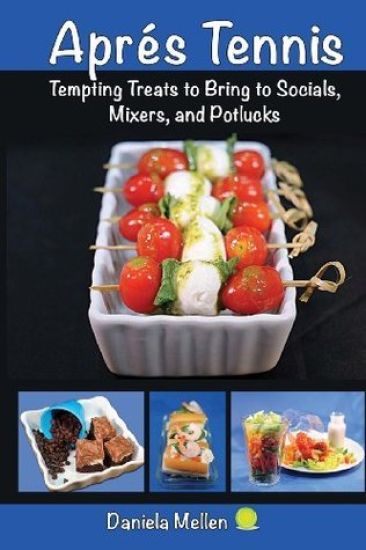
Potlucks are ways of sharing food and time with friends. Whether you are having a meeting that ends with a shared meal, an old fashioned covered dish social or even a BBQ, all involve bringing and sharing food. Potlucks and socials are part of the tennis culture, but also, part of any group activity. It's a fun and cooperative way to spend time together while sharing a meal and introducing friends to new and fun dishes. But any sport lends itself to sharing a meal together. You work up an appetite so why not get together and eat. Each recipe in Apr s Tennis has been modified to meet the challenges of early preparation, transportation, taste and presentation for a potluck party. Recipes are tailored to be prepared ahead of time with tips on what to pack, ways to present your dish and a photo of each recipe. You don't have to be a tennis player to enjoy this book because all the recipes are welcome at potluck dinners, mixers and socials. These easy and tasty recipes can even be used for meals at home and will soon become dinner staples. The recipes in Apr s Tennis are designed for the cook who wants quality homemade food. Apr s Tennis offers 26 tested and true recipes. All the recipes were chosen because they are tasty, uncomplicated and have been modified to be transportable. Some recipes use prepared ingredients from the grocery store to save time, but can easily be altered by the gourmet cook. There are suggested options for altering the recipes to make them your own, but they are delicious just as stated. Each recipe comes with a serving tool reminder, variations or accompaniments to make each dish complete.
When Oliver spent the day at the beach with granddad. He didn't expect an old sailing ship to take him on wild adventure.Stunning illustrations and engaging age-appropriate stories in the Oliver Boo and Ruby reading scheme a multi-level reading.Will capture children's interest while developing their reading skills and general knowledge.
Nastasja wird, als Hexe verschrien, fast das Opfer eines Anschlages, w re da nicht Geri, der sie aus den Flammen rettet. Gemeinsam suchen sie sich eine neue Bleibe und finden diese in einer H tte im Wald. Eines Tages finden sie Nathanael schwer verletzt neben seinem kaputten Auto. Nastasja gelingt es seine k rperlichen Wunden zu heilen, doch da ist eine Krankheit, die viel tiefer sitzt. Als nun Nathanael von Unruhe getrieben in sein altes Leben zur ck flieht und kurz darauf Nastasja berfallen wird, beschlie t sie der Sache auf den Grund zu gehen und auch noch Nathanaels Geist zu heilen. Ein packender Roman rund um die Abgr nde des menschlichen Geistes, aber auch die Heilkr fte eines t tigen Miteinander und aktiven Verstehens