

Kirjahaku
Etsi kirjoja tekijän nimen, kirjan nimen tai ISBN:n perusteella.
1000 tulosta hakusanalla David N Rodriguez


Psychopharmacology Algorithms: Print + eBook with Multimedia
DAVID N. OSSER
Wolters Kluwer Health
2025
pokkari
Unique in the field, Psychopharmacology Algorithms, 2nd Edition, compiles key papers from the Psychopharmacology Algorithm Project at the Harvard South Shore Psychiatry Residency Training Program and presents practical ways to adopt evidence-based practices into the day-to-day treatment of patients. Prepared by Dr. David N. Osser, this up-to-date reference contains thirteen psychopharmacology treatment algorithms designed to assist with the clinical use of psychiatric medications, each complete with extensive critical evaluation of the evidence supporting the rationales for each treatment step and the advantages and disadvantages of various alternatives to the recommended treatments. An accompanying video lecture for each algorithm recorded especially for the new edition is available in the eBook. Presents the background on the development of each algorithm before providing a node-by-node walk-through, flowcharts, and key takeaways; each algorithm paper is in its full and original form followed by updated recommendations where necessary Includes four all-new algorithms on agitation in acute psychotic and manic episodes, generalized anxiety disorder in older adults, core symptoms of autism spectrum disorder in adults, and behavioral/psychological symptoms in dementia, as well as thorough updates to all previous algorithms in the first edition algorithms Features new videos of Dr. Osser’s highly popular lectures in the eBook, each an hour-long or more Contains introductory material examining the evidence-base supporting the usefulness of algorithms as clinical tools and how to make best use of the algorithms in the book A useful resource for practicing psychiatrists, residents, and fellows, as well as psychiatric nurse practitioners, psychiatric physician assistants, advanced practice pharmacists who prescribe, primary care clinicians, psychopharmacology instructors, and researchers

Monotone Nonautonomous Dynamical Systems
David N. Cheban
Springer International Publishing AG
2025
nidottu

Geognosy on the Facts and Principles of Geology against Theories
David N. Lord
Antigonos Verlag
2025
nidottu

Functorial Knot Theory: Categories Of Tangles, Coherence, Categorical Deformations And Topological Invariants
David N Yetter
World Scientific Publishing Co Pte Ltd
2001
sidottu
Almost since the advent of skein-theoretic invariants of knots and links (the Jones, HOMFLY, and Kauffman polynomials), the important role of categories of tangles in the connection between low-dimensional topology and quantum-group theory has been recognized. The rich categorical structures naturally arising from the considerations of cobordisms have suggested functorial views of topological field theory.This book begins with a detailed exposition of the key ideas in the discovery of monoidal categories of tangles as central objects of study in low-dimensional topology. The focus then turns to the deformation theory of monoidal categories and the related deformation theory of monoidal functors, which is a proper generalization of Gerstenhaber's deformation theory of associative algebras. These serve as the building blocks for a deformation theory of braided monoidal categories which gives rise to sequences of Vassiliev invariants of framed links, and clarify their interrelations.
Originally published in 1983, The Making of Community Work is the outcome of a two-year study of community work in the United Kingdom. The main purpose of the study was to review the development of community work, and to suggest some of the issues in practice and training that might be important in the 1980s. Much of the first part of the book is taken up with the emergence of community work as an occupation; David Thomas tries to clarify its contribution to a number of political and social processes, and to define community work in a way which distinguishes it from other kinds of interventions. The second part of the book deals with training, research, literature and employment in community work; it includes a review of college and field-based training opportunities, and a critical discussion of the state of theory and ideology in the occupation. It was hoped it would be an important source of ideas and inspiration for the years ahead. It was the first major review of community work since its re-discovery in the 1960s; it will still be of interest to all those involved in community work, or wishing to understand its influence on other professions. The book was intended for fieldworkers, administrators, policy-makers, trainers and students in community work and in related occupations and disciplines. Thomas presents his ideas clearly, and his ability to look critically at some of the basic assumptions in community work makes for stimulating and enjoyable reading.
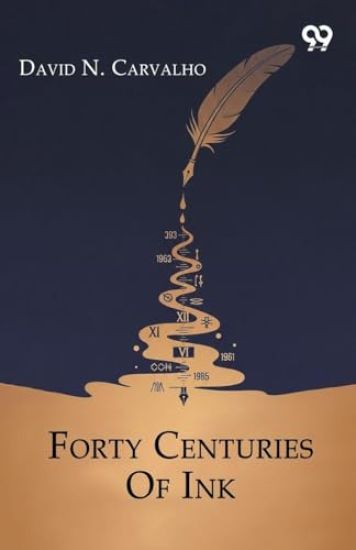
Forty centuries of ink is an extensive historical study that traces the development and cultural importance of ink from antiquity to the modern age. The book combines historical narrative with scientific exploration, examining how ink has served as both a medium of communication and a reflection of civilization's progress. Carvalho presents detailed insights into ancient ink-making techniques, the use of natural pigments, and the evolution of chemical formulations that shaped writing practices across eras. He discusses how the choice of ink affected the preservation of manuscripts and legal documents, linking its composition to issues of authenticity and permanence. The author also highlights the aesthetic and symbolic meanings of different ink colors, showing how they conveyed power, authority, and artistry. By addressing the fragility of modern inks, Carvalho warns about the risks of deterioration in important records. Through its blend of history, science, and commentary, the work elevates ink from a simple tool to a symbol of human expression and continuity.

This volume presents a study of the library of the Cistercian abbey of La Trappe in Normandy from the twelfth century to the French Revolution, together with an annotated edition of the library catalogue of 1752. The abbey was founded as a Savigniac house, became Cistercian in 1147, and is inseparably linked with the name of Armand-Jean de Rance, the great monastic reformer and founder of the Order of Cistercians of the Strict Observance. When he became abbot of La Trappe in 1664, he brought with him many of his own books and had a new library built to house the monastic collection. Rance died in 1700. Other books were then added over time until, in 1752, the abbey possessed about 4,300 volumes. The detailed catalogue is divided into two parts. The first part lists the books by subject, beginning, as might be expected, with bibles; the second part lists the same books by author. The information presented in this study of the abbey and its library is of first importance not only for understanding the nature and development of Cistercian intellectual and spiritual life, but also for the history of early modern libraries and the development of library cataloguing.
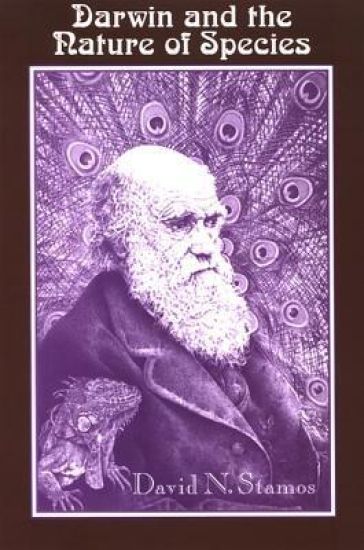
Examines Darwin's concept of species in a philosophical context. Since the 1859 publication of On the Origin of Species, the concept of "species" in biology has been widely debated, with its precise definition far from settled. And yet, amazingly, there have been no books devoted to Charles Darwin's thinking on the term until now. David N. Stamos gives us a groundbreaking, historical reconstruction of Darwin's detailed, yet often misinterpreted, thoughts on this complex concept. Stamos provides a thorough and detailed analysis of Darwin's extensive writings, both published and unpublished, in order to reveal Darwin's actual species concept. Stamos argues that Darwin had a unique evolutionary species concept in mind, one that was not at all a product of his time. Challenging currently accepted views that believe Darwin was merely following the species ascriptions of his fellow naturalists, Stamos works to prove that this prevailing, nominalistic view should be overturned. This book also addresses three issues pertinent to the philosophy of science: the modern species problem, the nature of concept change in scientific revolutions, and the contextualist trend in professional history of science.
Examines Darwin's concept of species in a philosophical context. Since the 1859 publication of On the Origin of Species, the concept of "species" in biology has been widely debated, with its precise definition far from settled. And yet, amazingly, there have been no books devoted to Charles Darwin's thinking on the term until now. David N. Stamos gives us a groundbreaking, historical reconstruction of Darwin's detailed, yet often misinterpreted, thoughts on this complex concept. Stamos provides a thorough and detailed analysis of Darwin's extensive writings, both published and unpublished, in order to reveal Darwin's actual species concept. Stamos argues that Darwin had a unique evolutionary species concept in mind, one that was not at all a product of his time. Challenging currently accepted views that believe Darwin was merely following the species ascriptions of his fellow naturalists, Stamos works to prove that this prevailing, nominalistic view should be overturned. This book also addresses three issues pertinent to the philosophy of science: the modern species problem, the nature of concept change in scientific revolutions, and the contextualist trend in professional history of science.
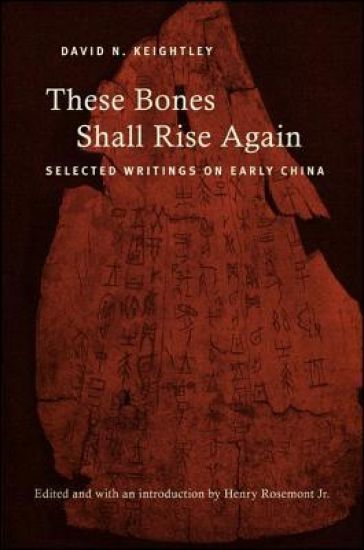
David N. Keightley's seminal essays on the origins of Chinese society are brought together in one volume. These Bones Shall Rise Again, brings together in one volume many of David N. Keightley's seminal essays on the origins of early Chinese civilization. Written over a period of three decades and accessible to the non-specialist, these essays provide a wealth of information and insights on the Shang dynasty, traditionally dated 1766–1122 or 1056 BCE. Of all the eras of Chinese history, the Shang has been a particularly elusive one, long considered more myth than reality. A historian with a keen appreciation for anthropology and archaeology, Keightley has given us many descriptions of Shang life. Best known for his analysis of oracle bones, he has looked beyond the bones themselves and expanded his historical vision to ponder the lives of those who used them. What did the Shang diviner think he was doing? The temerity to ask such questions and the insights they have provided have been provocative and, at times, controversial. Equally intriguing have been Keightley's assertions that many of the distinctive features of Chinese civilization were already in evidence during the Shang, 3000 years ago. In this collection, readers will find not only an essential reference but also the best kind of thought-provoking scholarship.
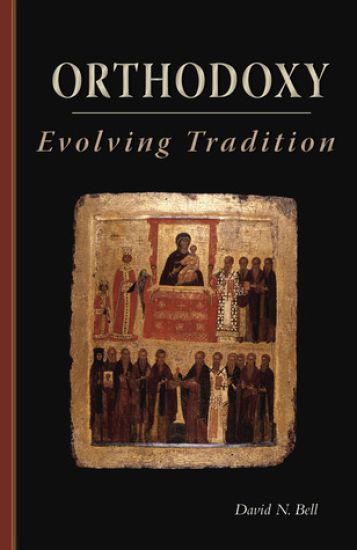
Orthodox Christianity 'divided into two main groups: Eastern Orthodox and Oriental Orthodox 'is now a world-wide phenomenon and one of the fastest growing Christian traditions in the United States. In this introduction to the tradition, the author presents a reasonably wide-ranging account of modern Orthodox beliefs primarily for non-Orthodox readers," and by examining beliefs and attitudes common in the West, explores whether they can be accommodated to traditional Orthodox teachings. Includes an insert of icons in four-color!
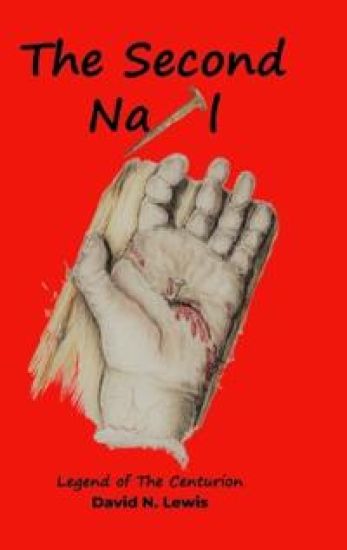
Centurion Artemus Longinus has finished his assigned duty to crucify three Roman prisoners in Jerusalem. Crucifixions were routine in this Roman Province; however, this execution would not be. Lives will be lost, lives will be changed, and a Secret Brotherhood would be born, The Brotherhood of the Nails. Behind the scenes, lurking in the shadows, a sinister presence seeks the power he believes the execution nails have. The power of the Divine for these nails were used to crucify the Son of God. His sacred blood remained on the nails, thus leading many to believe they had supernatural powers. Through the centuries a malevolent being, Sinistrus, searched for the hidden relics, but to no avail save one of the three. Until a modern-day descendant of the centurion, Dr Artemus Long, renowned archeologist from the University of Florida, discovered clues to the locations of the legendary Holy Relics. The three nails of the crucifixion, also known as the ferrum clavorum, had been hidden by the centurion at the instruction of a mysterious slave known as Aratus, a being of Light. Dr. Long's obsession with finding the holy relics was not for fame or professional recognition, but to use the legendary powers of the nails to heal his wife's blindness. Just as the blood from Christ, according to legend, had cured the centurion's ailing eyes as he pierced the side of Jesus, in the same manner the good doctor hoped to cure Sophie's darkness. But the true darkness was not in Sophie, but in Artemus Long's heart, for he had turned from his faith after prayers went unanswered to restore Sophie's eyesight. The inevitable archeological expedition to find one of the nails, the second nail, became more than an adventure to find the holy relic, but a journey back to faith for Doctor Artemus Long PhD. Join the expedition in this riveting novel of intrigue, supernatural battles, mystery, love, and faith. THE SECOND NAIL. A one-of-a-kind gripping plot- unique in countless ways- filled with Truth, good and evil, honesty and betrayal, angelic battles, mayhem and intrigue, swarms and plagues, and so much more It's a book with nail biting suspense, page after page. THE SECOND NAIL has it all
Handy, helpful prayers to use in public worship during Advent and Christmas. The collection includes invocations, opening prayers, prayers of confession, and pastoral prayers for the Sundays of Advent, and Christmas Eve services. Drawn from a variety of traditions, the prayers in this collection will aid any congregation as it worships throughout the journey of Advent.
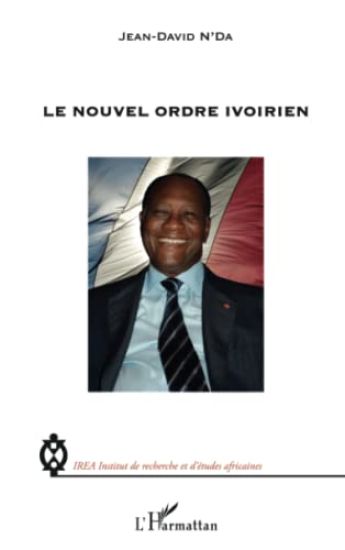
Le nouvel ordre ivoirien
Jean-David N'Da
IREA (Institut de recherche et d'études africaines)
2020
nidottu