Kirjojen hintavertailu. Mukana 12 365 282 kirjaa ja 12 kauppaa.

Kirjahaku

Etsi kirjoja tekijän nimen, kirjan nimen tai ISBN:n perusteella.

1000 tulosta hakusanalla David R Addleman

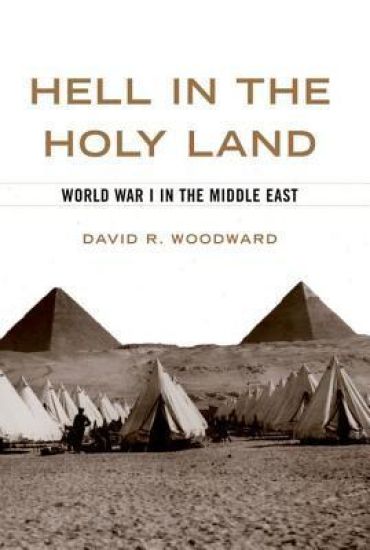
Hell in the Holy Land

Hell in the Holy Land

David R. Woodward

The University Press of Kentucky
2006
sidottu
In the modern popular imagination, the British Army's campaign in the Middle East during World War I is considered somehow less brutal than the fighting on European battlefields. A romantic view of this conflict has been further encouraged by such films as Lawrence of Arabia and The Light Horsemen. In Hell in the Holy Land, David R. Woodward uses graphic eyewitness accounts from the diaries, letters, and memoirs of British soldiers who fought in that war to describe in rigorous detail the genuine experience of the fighting and dying in Egypt and Palestine. The massive flow of troops and equipment to Egypt eventually made that country host to the largest British military base outside of Britain and France. Though many soldiers found the atmosphere in Cairo exotic, the desert countryside made the fundamentals of fighting and troop maintenance extremely difficult. The intense heat frequently sickened soldiers, and unruly camels were the only practical means of transport across the soft sands of the Sinai. The constant shortage of potable water was a persistent problem for the troops; one soldier recalled, "It is impossible to realize the depth a man will sink to endeavor to appease the terrible horror of thirst." The voices of these British soldiers offer a forgotten perspective of the Great War, describing not only the physical and psychological toll of combat but the daily struggles of soldiers who were stationed in an unfamiliar environment that often proved just as antagonistic as the enemy. A soldier of the Dorset Yeomanry, stationed in Egypt, wrote: "There are three sounds in Egypt which never cease - the creaking of the waterwheels, the song of the frogs, and the buzz of flies.... Letter writing is an impossibility in the evening, for as soon as the sun goes down, if a lamp is lighted, the air all round is thick with little grey sand-flies which bite disgustingly." Using archival records, many from the Imperial War Museum in London, England, Woodward paints a vivid picture of the mayhem, terror, boredom, filth, and sacrifice that marked the daily life of British soldiers in the Middle East. In telling the story of these soldiers, Woodward provides a personal history of a campaign that laid the groundwork for the continuing turmoil in the Middle East.
Civil-military Relations

Civil-military Relations

David R Mares

Westview Press Inc
1999
nidottu
This book analyses the normative and institutional aspects of the civil-military relationship to demonstrate that it is the politics of the relationship rather than its form that influences the likelihood of democracy and regional peace. It is useful for policymakers, academics, and general readers.
Nuclear Energy And Security In The Former Soviet Union

Nuclear Energy And Security In The Former Soviet Union

David R Marples; Marilyn J Young

Westview Press Inc
1999
nidottu
Only several years after the collapse of the Soviet Union, nuclear security issues are again at the forefront of international concern. This timely collection addresses issues of cleanup at Chernobyl and other sites of nuclear disasters, nuclear smuggling, safety concerns in the Ukrainian and Russian nuclear industries, and Ukraine’s negotiations with Russia and the West regarding the transference of its nuclear weapons to Russia. Preeminent scholars in their fields, the contributors provide up-to-the-minute information and fresh insights into questions critical to the future of the former Soviet Union and to Russian and Ukrainian relations with the West.
Health Issues in Latino Males

Health Issues in Latino Males

David R. Williams

Rutgers University Press
2010
nidottu
It is estimated that more than 50 million Latinos live in the United States. This is projected to more than double by 2050. In Health Issues in Latino Males experts from public health, medicine, and sociology examine the issues affecting Latino men's health and recommend policies to overcome inequities and better serve this population. The book addresses sexual and reproductive health; alcohol, tobacco, and drug use; mental and physical health among those in the juvenile justice or prison systems; chronic diseases; HIV/AIDS; Alzheimer's and dementia; and health issues among war veterans. It discusses utilization, insurance coverage, and research programs, and includes an extensive appendix charting epidemiological data on Latino health.
Look Closer

Look Closer

David R. Coon

Rutgers University Press
2013
sidottu
In recent years, the media landscape in the United States has followed a pattern similar to that of the physical landscape by becoming increasingly suburbanized. Although it is a far cry from reality, the fantasy of a perfect suburban life still exists in the collective imagination of millions of Americans. This dream of suburban perfection is built around a variety of such ideologically conservative values and ideals as the importance of tradition, the centrality of the nuclear family, the desire for a community of like-minded neighbors, the need for clearly defined gender roles, and the belief that with hard work and determination, anyone can succeed. Building on the relationships between suburban life and American identity, Look Closer examines and interprets recent narratives that challenge the suburban ideal to reveal how directors and producers are mobilizing the spaces of suburbia to tell new kinds of stories about America. David R. Coon argues that the myth of suburban perfection, popularized by postwar sitcoms and advertisements, continues to symbolize a range of intensely debated issues related to tradition, family, gender, race, and citizenship. Through close examinations of such films as American Beauty, The Truman Show, and Mr. & Mrs. Smith as well as such television series as Desperate Housewives, Weeds, and Big Love, the book demonstrates how suburbia is used to critique the ideologies that underpin the suburban American Dream.
Turning the Page

Turning the Page

David R. Coon

Rutgers University Press
2018
nidottu
First runner-up for the 2019 John Leo and Dana Heller Award from the Popular Culture Association Surprisingly, Hollywood is still clumsily grappling with its representation of sexual minorities, and LGBTQ filmmakers struggle to find a place in the mainstream movie industry. However, organizations outside the mainstream are making a difference, helping to produce and distribute authentic stories that are both by and for LGBTQ people. Turning the Page introduces readers to three nonprofit organizations that, in very different ways, have each positively transformed the queer media landscape. David R. Coon takes readers inside In the Life Media, whose groundbreaking documentaries on the LGBTQ experience aired for over twenty years on public television stations nationwide. Coon reveals the successes of POWER UP, a nonprofit production company dedicated to mentoring filmmakers who can turn queer stories into fully realized features and short films. Finally, he turns to Three Dollar Bill Cinema, an organization whose film festivals help queer media find an audience and whose filmmaking camps for LGBTQ youth are nurturing the next generation of queer cinema. Combining a close analysis of specific films and video programs with extensive interviews of industry professionals, Turning the Page demonstrates how queer storytelling in visual media has the potential to empower individuals, strengthen communities, and motivate social justice activism.
Turning the Page

Turning the Page

David R. Coon

Rutgers University Press
2018
sidottu
First runner-up for the 2019 John Leo and Dana Heller Award from the Popular Culture Association Surprisingly, Hollywood is still clumsily grappling with its representation of sexual minorities, and LGBTQ filmmakers struggle to find a place in the mainstream movie industry. However, organizations outside the mainstream are making a difference, helping to produce and distribute authentic stories that are both by and for LGBTQ people. Turning the Page introduces readers to three nonprofit organizations that, in very different ways, have each positively transformed the queer media landscape. David R. Coon takes readers inside In the Life Media, whose groundbreaking documentaries on the LGBTQ experience aired for over twenty years on public television stations nationwide. Coon reveals the successes of POWER UP, a nonprofit production company dedicated to mentoring filmmakers who can turn queer stories into fully realized features and short films. Finally, he turns to Three Dollar Bill Cinema, an organization whose film festivals help queer media find an audience and whose filmmaking camps for LGBTQ youth are nurturing the next generation of queer cinema. Combining a close analysis of specific films and video programs with extensive interviews of industry professionals, Turning the Page demonstrates how queer storytelling in visual media has the potential to empower individuals, strengthen communities, and motivate social justice activism.
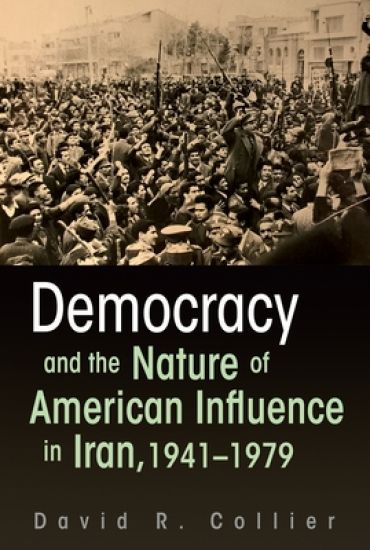
Democracy and the Nature of American Influence in Iran, 1941-1979
Collier presents a timely and fresh reexamination of one of the most important bilateral relationships of the last century. He delves deeply into the American desire to promote democracy in Iran from the 1940s through the early 1960s and examines the myriad factors that contributed to their success in exerting a powerful influence on Iranian politics. By creating a framework to understand the efficacy of external pressure, Collier explains how the United States later relinquished this control during the 1960s and 1970s. During this time, the shah emerged as a dominant and effective political operator who took advantage of waning American influence to assert his authority. Collier reveals how this shifting power dynamic transformed the former client-patron relationship into one approaching equality.
Democracy and the Nature of American Influence in Iran, 1941-1979
Collier presents a timely and fresh reexamination of one of the most important bilateral relationships of the last century. He delves deeply into the American desire to promote democracy in Iran from the 1940s through the early 1960s and examines the myriad factors that contributed to their success in exerting a powerful influence on Iranian politics. By creating a framework to understand the efficacy of external pressure, Collier explains how the United States later relinquished this control during the 1960s and 1970s. During this time, the shah emerged as a dominant and effective political operator who took advantage of waning American influence to assert his authority. Collier reveals how this shifting power dynamic transformed the former client-patron relationship into one approaching equality.
How to Prepare a Dissertation Proposal

How to Prepare a Dissertation Proposal

David R. Krathwohl

Syracuse University Press
2005
nidottu
What are the core elements of a strong proposal? ""How can I accent the strengths of my study design? ""How can computer use facilitate my literature review?"" ""What is the best way to get my proposal reviewed and approved?"" You will find the answers to these and other key issues in this unique ""assembly manual"" for crafting a complete and convincing dissertation proposal. Three extensively annotated proposals of former students provide examples of the guidance offered and illustrate common types of studies. Whether you study best by example, review, memorization, or problem solving, this book's format enables you to follow your own pace and style. This is no ordinary step-by-step guide. The authors begin by identifying and defining the basics of a dissertation proposal. With careful consideration, they explore proposal functions and parts, show how to build your study's chain of reasoning, and carefully review alternate study designs. Chapters are devoted to qualitative studies: (sectioned into case studies, philosophical, and historical investigations); quantitative studies: (sectioned into experimental, causal modeling, and meta-analysis studies); and mixed-method studies: (sectioned into: sample survey, evaluation, development, and demonstration and action projects).
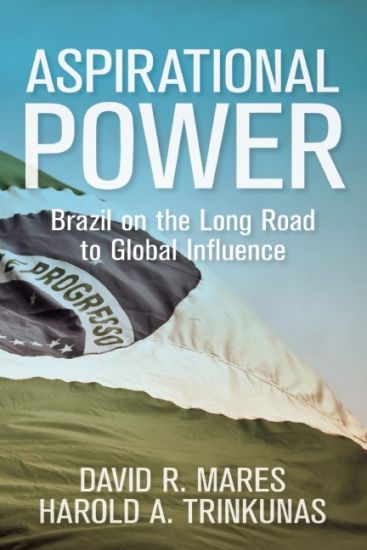
Aspirational Power

Aspirational Power

David R. Mares; Harold A. Trinkunas

Brookings Institution
2016
sidottu
"As the largest country in South America by land mass and population, Brazil has been marked since its’ independence by a belief that it has a potential to be more than merely a very large country. Set apart from the rest of the hemisphere by culture, language and history, Brazil has also been viewed by its neighbors as a potential great power, and at times, a threat. But even though domestic aspirations and foreign perceptions have held out the prospect for Brazil becoming a major power, the country has lacked the capabilities – particularly on the military and economic dimensions – to pursue a traditional path to greatness.Aspirational Power examines Brazil as a rising power. It explains Brazil’s predilection for soft power through a historical analysis of Brazil’s three previous attempts to achieve major power status, each of which shaped its present strategy. Though Brazil’s efforts to rise have fallen short it will continue to try to overcome the obstacles to its rise, whether those obstacles are domestic or international."
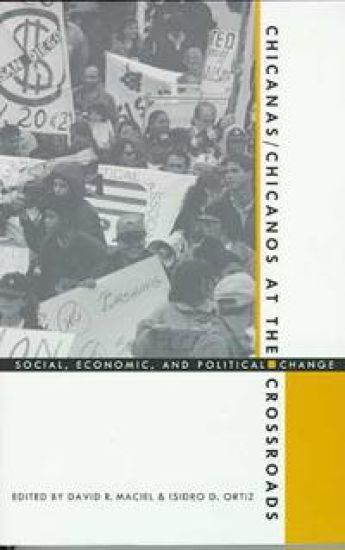
Chicanas/Chicanos at the Crossroads

Chicanas/Chicanos at the Crossroads

David R. Maciel

University of Arizona Press
1996
nidottu
Dubbed the ""decade of the Hispanic,"" the 1980s was instead a period of retrenchment for Chicanas/os as they continued to confront many of the problems and issues of earlier years in the face of a more conservative political environment. Following a substantial increase in activism in the early 1990s, Chicana/o scholars are now prepared to take stock of the Chicano Movement's accomplishments and shortcomings--and the challenges it yet faces--on the eve of a new millennium. Chicanas/Chicanos at the Crossroads is a state-of-the-art assessment of the most significant developments in the conditions, fortunes, and experiences of Chicanas/os since the late seventies, with an emphasis on the years after 1980, which have thus far received little scholarly attention. Ten essays by leading Chicana and Chicano scholars on economic, social, educational, and political trends in Chicana/o life examine such issues as the rapid population growth of Chicanas/os and other Latinos; the ascendancy of Reaganomics and the turn to the right of American politics; the rise of anti-immigrant sentiment; the launching of new initiatives by the Mexican government toward the Chicano community; and the emergence of a new generation of political activists. The authors have been drawn from a broad array of disciplines, ranging from economics to women's studies, in order to offer a multidisciplinary perspective on Chicana/o developments in the contemporary era. The inclusion of authors from different regions of the United States and from divergent backgrounds enhances the broad perspective of the volume. The editors offer this anthology with the intent of providing timely and useful insights and stimulating reflection and scholarship on a diverse and complex population. A testament to three decades of intense social struggle, Chicanas/Chicanos at the Crossroads is ample evidence that the legacy of the Movimiento is alive and well. Contents- Part One: Demographic and Economic Trends Among Chicanas/os-1. Demographic Trends in the Chicano Population: Policy Implications for the Twenty First Century, Susan Gonzalez-Baker-2. Mexican Immigration in the 1980s and Beyond: Implications for Chicanos/as, Leo R. Chavez and Rebecca Martinez-3. Chicanas/os in the Economy: Issues and Challenges Since 1970, Refugio Rochin and Adela de la Torre- Part Two: Chicano Politics: Trajectories and Consequences-4. The Chicano Movement: Its Legacy for Politics and Policy, John A. Garcia-5. Chicano Organizational Politics and Strategies in the Era of Retrenchment, Isidro D. Ortiz-6. Return to Aztlan: Mexican Policy Design Toward Chicanos, Maria Rosa Garcia-Acevedo- Part Three: Chicana/o Educational Struggles: Dimensions, Accomplishments and Challenges-7. Actors Not Victims: Chicanos in the Struggle for Educational Equality, Guadalupe San Miguel-8. Juncture in the Road: Chincano Studies Since El Plan de Santa Barbara, Ignacio Garcia- Part Four: Gender Feminism and Chicanas/os: Developments and Perspectives-9. Gender and Its Discontinuities in Male/Female Domestic Relations: Mexicans in Cross Cultural Context, Adelaida R. Del Castillo-10. With Quill and Torch: A Chicana Perspective on the American Women's Movement and Feminist Theories, Beatriz Pesquera and Denise A. Segura
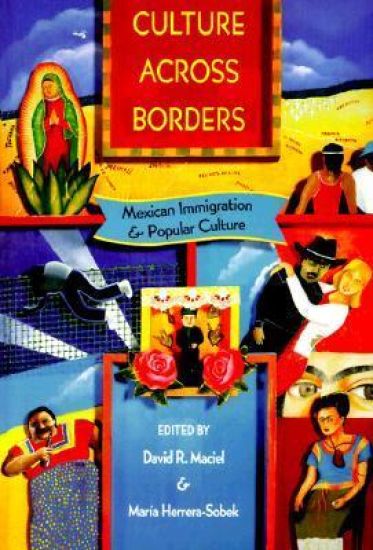
Culture Across Borders

Culture Across Borders

David R. Maciel; Maria Herrera-Sobek

University of Arizona Press
1998
nidottu
For as long as Mexicans have emigrated to the United States they have responded creatively to the challenges of making a new home. But although historical, sociological, and other aspects of Mexican immigration have been widely studied, its cultural and artistic manifestations have been largely overlooked by scholars even though Mexico has produced the greatest number of cultural works inspired by the immigration process. And recently Chicana/o artists have addressed immigration as a central theme in their cultural productions and motifs. Culture across Borders is the first and only book-length study to analyze a wide range of cultural manifestations of the immigration experience, including art, literature, cinema, corridos, and humor. It shows how Mexican immigrants have been depicted in popular culture both in Mexico and the United States and how Mexican and Chicano/Chicana artists, intellectuals, and others have used artistic means to protest the unjust treatment of immigrants by U.S. authorities. Established and upcoming scholars from both sides of the border contribute their expertise in art history, literary criticism, history, cultural studies, and other fields, capturing the many facets of the immigrant experience in popular culture. Topics include the difference between Chicano/a and Mexican representation of immigration; how films dealing with immigrants are treated differently by Mexican, Chicano, and Hollywood producers; the rich literary and artistic production on immigration themes; and the significance of immigration in Chicano jokes. As a first step in addressing the cultural dimensions of Mexican immigration to the United States, this book captures how the immigration process has inspired powerful creative responses on both sides of the border.
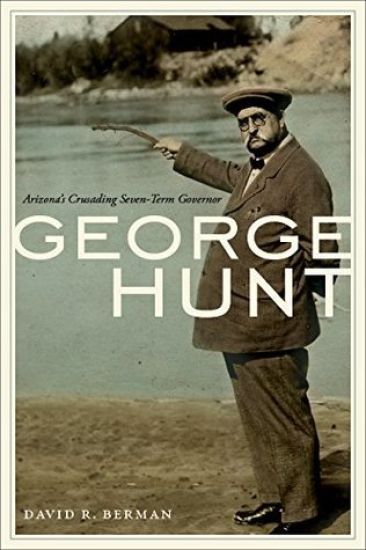
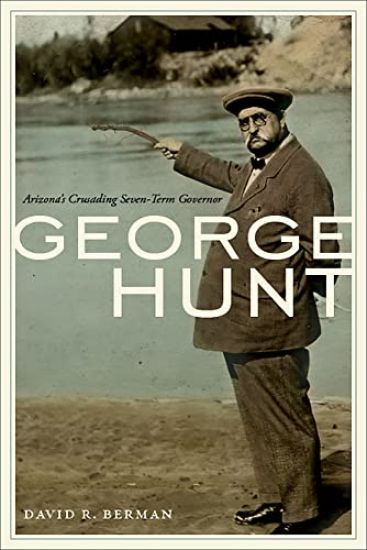
George Hunt

George Hunt

David R. Berman

University of Arizona Press
2015
sidottu
George W. P. Hunt was a highly colorful Arizona politician. A territorial representative and seven-time Arizona state governow, Hunt joined Woodrow Wilson in making the Democratic Party the party of Progressive reform. This political biography follows Hunt through his years in the territorial legislature, and then as governor. Author David R. Berman's well-researched and detailed work features Hunt's battles to stem the powers of large corporations, democratize the political system, defend labor rights, reform the prison system, abolish the death penalty, and protect Arizona's interests in the Colorado River. He had a special concern for the down and out. He found the “forgotten man” long before Franklin Roosevelt.Hunt was proof that style and physical appearance neither guarantee nor preclude political success, for the three-hundred-pound man of odd dress and bumbling speech had a political career that spanned the state's Populism of the 1890s to the 1930s New Deal. Driven by causes, he was very active in public office but took little pleasure in doing the job. Called names by opponents and embarrassed by his lack of formal education, Hunt sometimes showed rage, self-pity, and bitterness at what he saw as betrayals and conspiracies against him.The author assesses Hunt's successes and failings as a political leader and take-charge governor struggling to produce results in a political system hostile to executive authority. Berman offers a nuanced look at Arizona's first governor, providing an important new understanding of Arizona's complex political history.
George Hunt

George Hunt

David R. Berman

University of Arizona Press
2025
nidottu
George W. P. Hunt was a highly colorful Arizona politician. A territorial representative and seven-time Arizona state governor, Hunt joined Woodrow Wilson in making the Democratic Party the party of Progressive reform. This political biography follows Hunt through his years in the territorial legislature, and then as governor. Author David R. Berman’s well-researched and detailed work features Hunt’s battles to stem the powers of large corporations, democratize the political system, defend labor rights, reform the prison system, abolish the death penalty, and protect Arizona’s interests in the Colorado River. He had a special concern for the down and out. He found the "forgotten man" long before Franklin Roosevelt. Hunt was proof that style and physical appearance neither guarantee nor preclude political success, for the three-hundred-pound man of odd dress and bumbling speech had a political career that spanned the state’s Populism of the 1890s to the 1930s New Deal. Driven by causes, he was very active in public office but took little pleasure in doing the job. Called names by opponents and embarrassed by his lack of formal education, Hunt sometimes showed rage, self-pity, and bitterness at what he saw as betrayals and conspiracies against him. The author assesses Hunt’s successes and failings as a political leader and take-charge governor struggling to produce results in a political system hostile to executive authority. Berman offers a nuanced look at Arizona’s first governor, providing an important new understanding of Arizona’s complex political history.
Caretakers

Caretakers

David R. Buckholdt; Jaber F. Gubrium

University Press of America
1984
nidottu
Originally published by Sage Publications in 1979, the authors observed life at a residential treatment center for emotionally disturbed children and reported on staffings, activities, and individual treatment sessions. This important book points out the great need for improvement in the quality of care and services given to these special children and their families.
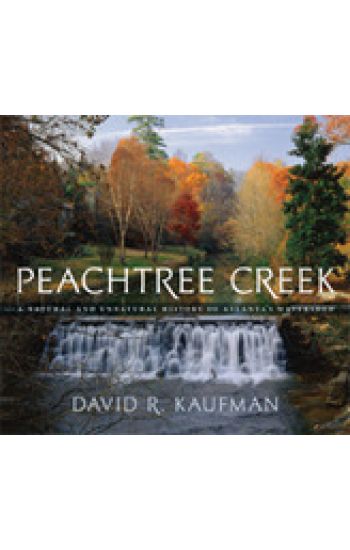
Peachtree Creek

Peachtree Creek

David R. Kaufman

University of Georgia Press
2007
sidottu
In 1990 David Kaufman decided to explore Peachtree Creek from its headwaters to its confluence with the Chattahoochee River. For thirteen years he paddled the creek, photographed it, and researched its history as the Atlanta area's major watershed. The result is Peachtree Creek, a compelling mix of urban travelogue, local history, and call for conservation. Historical images and Kaufman's evocative color photographs help capture the creek's many faces, past and present.Most Atlantans only glimpse Peachtree Creek briefly, as they pass over it on their daily commute, if at all. Looking down on the creek from Piedmont or Peachtree Roads, few contemplate how it courses through the city, where it originates and flows to. Fewer still-many fewer-would ever consider paddling down it, with its pollution and flash floods.Through his expeditions down Peachtree Creek and its five tributaries—North Fork, South Fork, Clear Creek, Nancy Creek, and Tanyard Creek—Kaufman takes readers through such places as Piedmont and Chastain Parks, which, aside from the polluted water, are beautiful, even bucolic. Other stretches of creek, like those draining Midtown and Atlantic Station, are channeled into massive culverts and choked with discarded waste from the city. One day, floating past the Bobby Jones Golf Course, he surprises a golfer searching for his stray ball along the creek bank; another he spends talking to a homeless man living under a bridge near Buckhead.Kaufman reveals fascinating aspects of Atlanta by examining how Peachtree Creek shaped and was shaped by the history of the area. Street names like Moore's Mill Road and Howell Mill Road take on new meaning. He explains the dynamics of water run off that cause the creek to go from a trickle to a torrent in a matter of hours. Kaufman asks how a waterway that was once people's source of water, power, and livelihood became, at its worst, an open sewer and flooding hazard. Portraying some of our worst mishandling of the environment, Kaufman suggests ways to a more sustainable stewardship of Peachtree Creek.