The Playbook for Self-Directed Learning offers school leaders a student-centered, relationship-driven approach to fostering learner-led success and autonomy at school. In self-directed learning, learners set their own goals, manage their own progress, and assess their own outcomes, all under the guidance of teachers and administrators. This accessible book offers evidence-based insights, real-world examples, and practical techniques for leaders seeking to transform their schools and empower students to become responsible for their own learning within an interdependent network of relationships with educators, peers, and involved adults. Each chapter includes a variety of strategies for supporting the conditions in which students can enthusiastically develop self-regulation, time management, adaptability, problem-solving, and other important skills. Principals, superintendents, teacher-leaders, and curriculum/assessment designers will come away with bold, yet intuitive methods for transforming schools into self-directed learning environments.
The Playbook for Self-Directed Learning offers school leaders a student-centered, relationship-driven approach to fostering learner-led success and autonomy at school. In self-directed learning, learners set their own goals, manage their own progress, and assess their own outcomes, all under the guidance of teachers and administrators. This accessible book offers evidence-based insights, real-world examples, and practical techniques for leaders seeking to transform their schools and empower students to become responsible for their own learning within an interdependent network of relationships with educators, peers, and involved adults. Each chapter includes a variety of strategies for supporting the conditions in which students can enthusiastically develop self-regulation, time management, adaptability, problem-solving, and other important skills. Principals, superintendents, teacher-leaders, and curriculum/assessment designers will come away with bold, yet intuitive methods for transforming schools into self-directed learning environments.
An important question for the health and longevity of democratic governance is how institutions may be fashioned to prevent electoral victors from drawing on the resources of the state to perpetuate themselves in power. This book addresses the issue by examining how the structure of electoral institutions - the rules of democratic contestation that determine the manner in which citizens choose their representatives - affects political corruption, defined as the abuse of state power or resources for campaign finance or party-building purposes. To this end, the book develops a novel theoretical framework that examines electoral institutions as a potential vehicle for political parties to exploit the state as a source of political finance. Hypotheses derived from this framework are assessed using an unprecedented public employees' survey conducted by the author in Bolivia, Brazil and Chile.
Originally published in 1909, this book presents the complete text of George Savile's 'Letter to a Dissenter' (1687), which was produced following James II's Declaration of Indulgence regarding Nonconformism. Detailed textual notes are incorporated throughout. This book will be of value to anyone with an interest in James II, British Church history and the writings of Savile.
An important question for the health and longevity of democratic governance is how institutions may be fashioned to prevent electoral victors from drawing on the resources of the state to perpetuate themselves in power. This book addresses the issue by examining how the structure of electoral institutions - the rules of democratic contestation that determine the manner in which citizens choose their representatives - affects political corruption, defined as the abuse of state power or resources for campaign finance or party-building purposes. To this end, the book develops a novel theoretical framework that examines electoral institutions as a potential vehicle for political parties to exploit the state as a source of political finance. Hypotheses derived from this framework are assessed using an unprecedented public employees' survey conducted by the author in Bolivia, Brazil and Chile.
Hazlitt the Dissenter is unique in providing the first book-length account of Hazlitt's early life as a dissenter. As the first multi-disciplinary account of Hazlitt's early literary career, it provides a new insight into the literary, intellectual, political and religious culture of the late eighteenth and early nineteenth century.
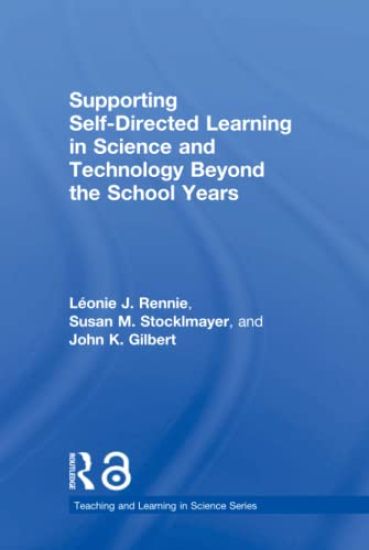
While much has been written about science education from pre-K through to postgraduate study, interaction with science and technology does not stop when schooling ends. Moving beyond scholarship on conventional education, this book extends the research and provides an original in-depth look at adult and lifelong learning in science and technology. By identifying the knowledge and skills that individuals need to engage in self-directed learning, the book highlights how educators can best support adult learners beyond the years of formal schooling. Through case studies and empirical analysis, the authors offer a research-based exploration of adults’ self-directed learning and provide tools to support adults’ learning experiences in a wide range of environments while being inclusive of all educational backgrounds.
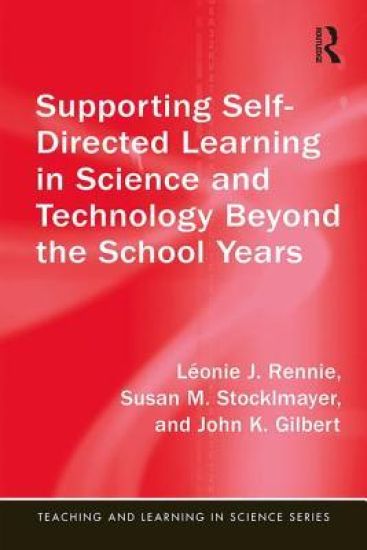
While much has been written about science education from pre-K through to postgraduate study, interaction with science and technology does not stop when schooling ends. Moving beyond scholarship on conventional education, this book extends the research and provides an original in-depth look at adult and lifelong learning in science and technology. By identifying the knowledge and skills that individuals need to engage in self-directed learning, the book highlights how educators can best support adult learners beyond the years of formal schooling. Through case studies and empirical analysis, the authors offer a research-based exploration of adults’ self-directed learning and provide tools to support adults’ learning experiences in a wide range of environments while being inclusive of all educational backgrounds.