Kirjahaku
Etsi kirjoja tekijän nimen, kirjan nimen tai ISBN:n perusteella.
1000 tulosta hakusanalla ELDRIDGE JIM
This book has been considered important throughout the human history, and so that this work is never forgotten we have made efforts in its preservation by republishing this book in a modern format for present and future generations. This whole book has been reformatted, retyped and designed. These books are not made of scanned copies of their original work and hence the text is clear and readable.
Expressive Voice Culture, Including the Emerson System
Jessie Eldridge Southwick
ALPHA EDITION
2021
pokkari
The book "" Expressive Voice Culture, Including the Emerson System, has been considered important throughout the human history, and so that this work is never forgotten we have made efforts in its preservation by republishing this book in a modern format for present and future generations. This whole book has been reformatted, retyped and designed. These books are not made of scanned copies and hence the text is clear and readable.
Werner Herzog has produced some of the most powerful, haunting, and memorable images ever captured on film. Both his fiction films and his documentaries address fundamental issues about nature, selfhood, and history in ways that engage with but also criticize and qualify the best philosophical thinking about these topics. In focusing on figures from Aguirre, Kasper Hauser, and Stroszek to Timothy Treadwell, Graham Dorrington, Dieter Dengler, and Walter Steiner, among many others, Herzog investigates the nature of human life in time and the possibilities of meaning that might be available within it. His films demonstrate the importance of the image in coming to terms with the plights of contemporary industrial and commercial culture. Eldridge unpacks and develops Herzog’s achievement by bringing his work into engagement with the thinking of Freud, Merleau-Ponty, Nietzsche, Hegel, Cavell, and Benjamin, but more importantly also by attending closely to the logic and development of the films themselves and to Herzog’s own extensive writings about filmmaking.

Every love story has a final chapter Alfie and Julie’s love story has been one of music, laughter, and heartache. On one early morning in June, they must write their ending. Following the critically acclaimed Beginning and Middle, End is the final play in David Eldridge’s trilogy exploring love and relationships. This edition was published to coincide with the National Theatre production in November 2025, directed by Rachel O'Riordan (Romeo and Julie) and starring Clive Owen (Closer) as Alfie and Saskia Reeves (Slow Horses) as Julie in this touching and funny play on a life well lived.

A suspicious death on a Kohala Mountain ranch draws ranger Makalani Pahukula into a tangled family tree in an emotional and suspenseful adventure by the bestselling author of the Lily Wong series. Makalani Pahukula, interpretive ranger for Pu‘ukohola Heiau National Historic Site, craves some rejuvenating hard work on Hawai‘i Island. When cousin-in-law Rosie offers Makalani a chance to help at the Hiapo family ranch, it’s the perfect opportunity. But something else weighs on Rosie’s mind. Her father recently died in a gruesome accident—trapped and cornered in a pit by an aggressive bull. The wrong place at the wrong time? Rosie suspects something more sinister. Not long into her work, Makalani’s suspicions rise too. The Hiapos aren’t as close as Makalani thought. All family members—the grandfather, the widow, the adversarial brothers co-running the ranch, the sister who wants anything but a paniolo life for her son, and the cowgirl who becomes Makalani’s friend—are hiding secrets from one another. And from Makalani. When more dangerous accidents occur, Makalani has no choice but to follow the clues that lead her into the dark history of Hiapo Ranch and draw out the culprit before someone else dies.
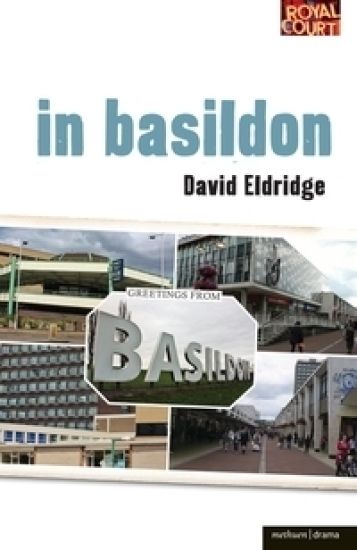
'People always get the wrong idea about Essex don't they?' Len's on his death bed and the family gather to say their final farewells. His sisters still aren't speaking after nearly 20 years, his nephew's trying for a baby - and a bigger house, while his best mate Ken remembers ‘Bas-vegas' when it was a village. As the spread is laid out and the ham sandwiches sit next to the wreaths, it's hard to see who's hungry and who's just greedy. In Basildon is full of explosive family dynamics and knotty relationships, embracing history, emotion and a strong sense of homeland. This depiction of indigenous Essex dwellers is uncompromising and at times harsh, but Eldridge also elicits deep sympathy for his characters as they face death, grief and crumbling familial bonds. The play is an epic family drama exploring inheritance and the myth of place.
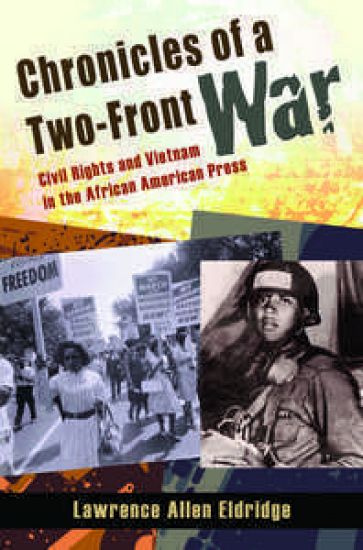
During the Vietnam War, young African Americans fought to protect the freedoms of Southeast Asians and died in disproportionate numbers compared to their white counterparts. Despite their sacrifices, black Americans were unable to secure equal rights at home, and because the importance of the war overshadowed the civil rights movement in the minds of politicians and the public, it seemed that further progress might never come. For many African Americans, the bloodshed, loss, and disappointment of war became just another chapter in the history of the civil rights movement. Lawrence Allen Eldridge explores this two-front war, showing how the African American press grappled with the Vietnam War and its impact on the struggle for civil rights. Written in a clear narrative style, Chronicles of a Two-Front War is the first book to examine coverage of the Vietnam War by black news publications, from the Gulf of Tonkin incident in August 1964 to the final withdrawal of American ground forces in the spring of 1973 and the fall of Saigon in the spring of 1975. Eldridge reveals how the black press not only reported the war but also weighed its significance in the context of the civil rights movement. The author researched seventeen African American newspapers, including the Chicago Defender, the Baltimore Afro-American, and the New Courier, and two magazines, Jet and Ebony. He augmented the study with a rich array of primary sources - including interviews with black journalists and editors, oral history collections, the personal papers of key figures in the black press, and government documents, including those from the presidential libraries of Lyndon Johnson, Richard Nixon, and Gerald Ford - to trace the ups and downs of U.S. domestic and wartime policy especially as it related to the impact of the war on civil rights. Eldridge examines not only the role of reporters during the war, but also those of editors, commentators, and cartoonists. Especially enlightening is the research drawn from extensive oral histories by prominent journalist Ethel Payne, the first African American woman to receive the title of war correspondent. She described a widespread practice in black papers of reworking material from major white papers without providing proper credit, as the demand for news swamped the small budgets and limited staffs of African American papers. The author analyzes both the strengths of the black print media and the weaknesses in their coverage. The black press ultimately viewed the Vietnam War through the lens of African American experience, blaming the war for crippling LBJ's Great Society and the War on Poverty. Despite its waning hopes for an improved life, the black press soldiered on.
Footprints...fingerprints...clothing fibers...hair. Wherever we go, we leave some evidence, or pick some up and take it with us. For this reason, detectives and forensic scientists have been using trace evidence to catch criminals for more than a hundred years. Readers find out the techniques scientists use to collect and analyze evidence with these fascinating stories about how trace evidence helped solve crimes.

Beakers, Burners, and Balance Scales! Equipment in the Lab
Alison Eldridge; Stephen Eldridge
PowerKids Press
2020
nidottu
Doing experiments in a laboratory requires equipment. After all, you can't test all the properties of salt and sugar without beakers, a Bunsen burner, and a crucible. With this book, readers will learn about the pieces of equipment found in most science labs, what they're used for, and how to use them. Full-color photographs, helpful diagrams, and informative fact boxes aid readers in understanding the importance of lab safety and proper lab equipment care.
Although only a small portion of the electromagnetic spectrum can be seen by the human eye, people depend on the energy from the waves in the electromagnetic spectrum every day. Gamma rays might be familiar from comic books and superhero movies, but few know that gamma ray bursts are the most spectacular explosions observed in the universe. This book gives readers a look into the discovery, history, and uses of gamma rays. It's a perfect complement to the Next Generation Science Standards in electromagnetic radiation, and a perfect glimpse into how electromagnetic radiation is affecting us every day.
From tuning a radio to sending text messages or popping popcorn, people use electromagnetic energy all the time. What is the electromagnetic spectrum and how do people depend on it? This book offers a look into the discovery, history, and uses of microwave energy. You might be familiar with microwaves for their use in microwave ovens, but did you know microwaves are also used in astronomy? Complete with a glossary, color images, intriguing sidebars, and chapter notes, this book is a fascinating look at how electromagnetic radiation is affecting us every day.
Metrical Claims and Poetic Experience
Hannah Vandegrift Eldridge
Oxford University Press
2022
sidottu
This volume contributes to the fields of lyric poetry and poetics (especially poetic form), aesthetics, and German literature by intervening in debates on the social functions, cognitive and emotional effects, and the value of poetry. It builds on, and moves beyond, previous theories of rhythm to tie meter more particularly to the specificities of poetic language in blending of embodied responses, cultural situations, and linguistic particularities. The book examines the German-language tradition across three centuries, arguing that the interdisciplinarity and richness of metrical theory and practice emerge in the heterogeneity of poetry and its defenders in their specific historical moments. Focusing on Friedrich Gottlieb Klopstock, Friedrich Nietzsche, and Durs Grünbein, the book contextualizes each in the metrical and aesthetic debates of his epoch, showing how questions of meter are linked with overarching poetic goals such as the relationship between form and meaning, the adaptation of the Classical past for German literature, and the ways poetry's sounds work in the body. It argues that Klopstock's, Nietzsche's, and Grünbein's metrical theory and practice offer valuable insights for thinking about the ways poetry works and why it matters.
Four hundred years after their entry Egypt, God's chosen people have managed to get themselves all enslaved. How can the omnipotent creator of the Universe free his people from bondage and deliver them to the promised land? By sending a random shepherd with a speech impediment to repeatedly threaten Pharaoh, that's how. In this satirical retelling of the biblical books of Exodus to Deuteronomy, the long-suffering Moses leads a tribe of grumbling Israelites through the desert whilst trying to appease a petulant deity who turns smitey at the drop of a hat. Will he ever reach the promised land? Will there be any Israelites left unsmitten by the time he gets there? And what exactly is the Lord's beef with yeast anyway?