Edward Wild, the controversial Union general who headed the all-black African Brigade in the Civil War, was one of the most loved and most hated figures of the 19th century. The man was neither understood nor appreciated by military or civilian, black or white, Northerner or Southerner. After enlisting at the outbreak of the war, Wild was promoted to Brigadier General and placed in charge of the United States Colored Troops. In fulfilling his assignment to free slaves and gain recruits, he took three women as hostages and ordered a great deal of property destruction. He freed hundreds, perhaps thousands, of slaves and settled them safely on Roanoke Island. Wild then not only recruited the newly freed blacks but trained them and gave them the opportunity to prove their worth in battle. Nobody, it seems, was happy about serving with them, but the African Brigade performed courageously in several battles. Wild did some inexplicable things. Were his actions typical of the 19th century or did he act outside the norm? Was the criticism he suffered from his fellow Union officers valid--or was it due to personality conflicts? Did he deserve to be arrested, court-martialed, and even wiped from the history books--or was he the victim of discrimination? This work draws its answers from extensive research and includes many rare letters to and from Wild, including one from one of the North Carolinian hostages.
This work covers the canon of playwright Edward Albee, perhaps best known as the author of Who's Afraid of Virginia Woolf? Comprehensive entries detail the plays and major characters. Other features include biographical information and insights into Albee's artistic beliefs, his understanding of the playwright's responsibility, the importance of music in drama, and the technical craft of writing plays.
Edward Hopper was one of the most prominent American realist painters of the twentieth century. This comprehensive encyclopedia is a cross-referenced guide to Hopper's life and art. More than 200 entries focus on his oeuvre, including his most noteworthy oil paintings, watercolors and etchings. The remaining entries highlight individuals central to Hopper's life and career, places where he created art, as well as relevant art terminology. The 350 entries offer a quick and easy source for information for teachers, students, museum and gallery devotees, as well as anyone interested in learning about Hopper.
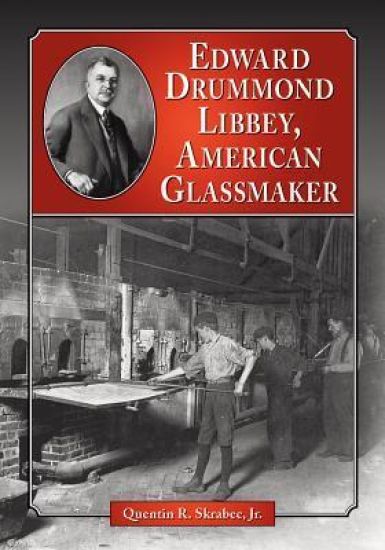
Edward Drummond Libbey was a glassmaker, industrialist, artist, innovator and an art collector. This examines the long career of Libbey, particularly his innovation of American flint cut glass, his contributions to the middle-class American table through affordable glassware, and his enormous art glass and painting collections.
Shows the full breadth and scope of Edward Said's work and of his role as a public intellectual.On Edward Said at the Limits, Mustapha Marrouchi offers a sensitive critique of Edward Said, one of America's foremost commentators on the Palestinian cause. Marrouchi does justice to the extraordinary life of a complex figure who was fundamentally a humanist committed to the eradication of domination and whose angry and eloquent writings are of fierce relevance to the fragmented world in which we live. The Said story has become the model for the struggle to rewrite colonial history.Offering the most up-to-date and comprehensive bibliography of Said's work, this is the only single author book devoted solely to Edward Said and his writing.
This first full-scale biography of Edward Sapir (1884–1939) does justice to the life and ideas of the most distinguished linguist of Boasian anthropology, who contributed substantially to the professionalization of linguistics as an independent discipline. Sapir was the first to apply comparative Indo-European methods to the study of American Indian languages, pursuing fieldwork on more than twenty of them. His theoretical work on the relationship between the individual personality and culture remains a major part of culture theory in anthropology, as does his insistence on the symbolic nature of culture and the importance of culture as understood and articulated by its members. The first professional anthropologist in Canada and teacher of a whole generation of North American linguists and anthropologists at Chicago and Yale, Sapir also wrote poetry and literary criticism. He insisted on the humanistic nature of anthropology and was the most articulate spokesman for the interdisciplinary social science of the late 1920s and 1930s. All the richness and diversity of Sapir’s relatively short life are conveyed by Regna Darnell in an engrossing narrative that combines profound knowledge of her subject with historical reconstruction.
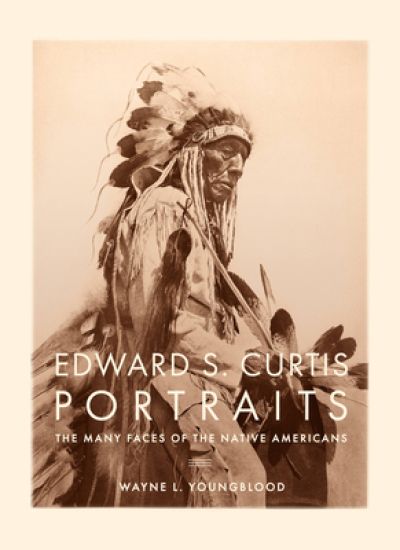
Mick Gidley provides an intimate and informative glimpse of photographer Edward S. Curtis (1868–1952) and his associates as they embarked on their epic quest to document through word and picture the traditional cultures of Native Americans in the western United States—cultures that Curtis believed were inevitably doomed. Curtis's project in the early decades of the twentieth century became the largest anthropological enterprise ever undertaken in this country, yielding the monumental work The North American Indian. Its publication was a watershed in the anthropological study of Native Americans, inspiring the first feature-length documentary film, popular magazine articles, books for young readers, lectures, and photography exhibitions. Housing a wealth of ethnographic information yet steeped in nostalgia and predicated on the assumption that Native Americans were a "vanishing race," Curtis's work has been both influential and controversial, and its vision of Native Americans must still be reckoned with today. Gidley draws on reports and reflections by Curtis and the project's assistants, memoirs by Curtis family members, and eyewitness accounts by newspaper reporters in presenting an unprecedented look at anthropological fieldwork as it was commonly practiced during this period. He also examines the views of Curtis and his contemporaries concerning their enterprise and how both Native Americans and the mainstream American public perceived their efforts.
An unlikely bookseller in New York City became the leading dealer in rare Western Americana for most of the twentieth century. After working in western-U.S. and South American gold mines at the turn of the twentieth century, Edward Eberstadt (1883-1958) returned to his home in New York City in 1907. Through luck and happenstance, he purchased an old book for fifty cents that turned out to be a rare sixteenth-century Mexican imprint. From this bit of serendipity, Eberstadt quickly became one of the leading western Americana rare book dealers. In this book Michael Vinson tells the story of how Edward Eberstadt & Sons developed its legendary book collection, which formed the backbone of many of today's top western Americana archives.Although the firm's business records have not survived, Edward and his sons, Charles and Lindley, were all prodigious letter writers, and nearly every collector kept his or her correspondence. Drawing upon these letters and on his own extensive experience in the rare book trade, Vinson gives the reader a vivid sense of how the commerce in rare books and manuscripts unfolded during the era of the Eberstadts, particularly in the relationships between dealers and customers. He explores the backstory that scholars of art history and museology have pursued in recent decades: the assembling of cultural treasures, their organization for use, and the establishment of institutions to support that use. His work describes the important role this key bookselling firm played in the western Americana trade from the early 1900s to Eberstadt & Sons' dissolution in 1975. From Yale University and the American Antiquarian Society to the Newberry Library and the Huntington Library, the firm of Edward Eberstadt & Sons has left its mark in western Americana repositories across the nation. Told here for the first time, the Eberstadt story reveals how one family's business and legacy have shaped the study of the American West.
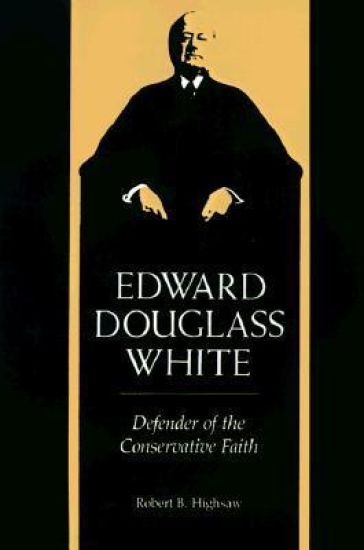
Elite, personable, and persuasive, Edward Douglass White, a ''large and bearish man from Louisiana,'' served on the United States Supreme Court for twenty-seven years. During his tenure, first as an associate justice (1894-1910) and then as the ninth chief justice (1910-1921), White significantly influenced American public law. Robert Highsaw' s extensive judicial biography stresses White's constitutional thought and philosophy. Several chapters discuss his early years in Louisiana, his training in Jesuit schools there and at Georgetown University, and his early legal career in New Orleans. The emphasis, however, remains on White's theories and applications of the judicial and constitutional processes. Edward Douglass White ""looked upon the American constitutional system as a model for a well-ordered society that must be preserved."" White's concept of a federal system in which the national and state governments each operated within a defined sphere of powers underlay many of his opinions. White considered farm issues that developed after the closing of the western frontier, economic issues precipitated by a growing laboring class, and tense political issues of civil liberties that emerged during World War I. He played an important part in developing administrative law and was, perhaps, most responsible for strengthening dual federalism of commerce and taxing powers. His pragmatism, evidenced in the Insular cases where his doctrine of ""incorporated"" and ""unincorporated"" territories, synthesized American constitutional law with the political reality of American imperialism. White was a conservative, but unlike the conservative justices of the 1920s and 1930s whose intransigence produced the judicial revolution of 1937, he saw that injury to the Constitution might result from its consistent use as a barrier to social progress. Significantly, Edward Douglass White demonstrates that ""the judicial revolution of 1937 and the ensuing decades of the Court's history are meaningless unless we know what happened fifty or so years earlier.